
Michael Roberts
Walter Terence STACE was a British man born in Ireland in 1886 who entered the British colonial service after a university education and was assigned to Sri Lanka in 1910. He married a Burgher lady, MM Beven in 1928 – is second marriage this – and then resigned in 1932 and moved on to USA where he pursued a successful university teaching career in Philosophy. Following his retirement, he composed an autobiography in 1964 with the intriguing title FOOTPRINTS ON WATER.
 This work has been edited by Bernd Pflug with an excellent and readable “Critique” at the end of the autobiography and presented in Sri Lanka in a slim volume of 218 pages by the Perera Hussein Publishing House.
Walter Stace’s reflections are presented in a lucid and clinical manner that should be a guideline for all authors. Indeed, it is remarkably clinical.
On reaching Ceylon in 1910, Stace and his wife were sent to Galle at the south-west corner of the island where there was a small port alongside its large and extensive Dutch-built “Fort of Galle”. His salary of Rs 300/ per month was such that the couple chose to reside at the principal hotel within the Fort: that is, to add my local knowledge, the “New Oriental Hotel” run by the (Burgher) Ephraums family.[1]

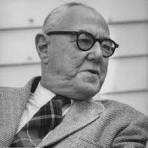 Walter and Adelaide were not in agreement with the aloofness of British colonials in the race and class-conscious colonial society of the time. He notes in critical voice: “The British, being the ruling class, behaved as superior beings and kept themselves aloof from the indigenous communities” (p. 47).
His account of the peculiarities that arose in Galle in the early 1910s is as hilarious as politically meaningful. There were two British clubs in Galle. Both were racially exclusive — with only one Burgher gentleman permtted membership within these superior enclaves. Stace was also made aware of the differentiation between the (‘superior’) Dutch Burghers and the ‘inferior’ Portuguese Burghers.[2]
Galle in his time in 1910-and-therabouts was also unusual in having a British “police constable” from London posted to its echelons there – as a “sergeant”. Sergeant maybe; but not socially high enough to secure membership in the two clubs. In defiance of convention Stace made it a point to go for walks with this gentleman in the evening (page 50). These walks, I add, would have been around the perimeter of the fort –the “ramparts” as they are called.


Among the residents at the NOH was the “Provincial Surgeon” – who happened to be a Burgher educated in England and married to an English lady. In step with the rigid socio-political ‘rules’ of imperial British society, this ‘mixed’ family were “outcasts from the British community” (Stace’s phrase: p. 52). Thus, the “Provincial Surgeon and his wife became our best friends in Galle” (p. 52). This little circle was then augmented by a new arrival – a British cadet who happened to be a batchelor and one who resided in the NOH. “Often in the evenings Adelaide and I and the new cadet would foregather in the quarters of the Provincial Surgeon, largely because he had a piano thee and his daughter played on it. Sometimes we all sang popular songs because his daughter played on it.”
Ahh! Thereupon the British cadet was quickly posted to another town in the island. It seems that – in Stace’s accounting – the race conscious British authorities feared contamination of their superior ‘alignments’ from the potential outcome of ‘crossbreeding’ (my words in this instance).
[1] This hotel is on Church Street about 200 yards from the main entrance to the Fort. Originally called the “Oriental Hotel”, it received its name as the “New Oriental Hotel” [thus “NOH” to those familiar with the town] in 1998 from the new owners — the Ephraums family, an upper-crust Burgher lineage of some renown. In recent decades a further change of ownership saw its name changed to “Amangalla.” See https//en.wikipedia.org/wiki/Amangalla. For some information on the Ephraums lineage in Dutch and British Ceylon, see ttps://en.wikipedia.org/wiki/Amangalla
PS: My initial footnote said that the hotel had changed hands in 2001; but Joe Simpson has indicated the purchase and adjustment in name was in 1998. JOE is a storehouse of information on Richmond College, Galle and its peoples. The distance from Western Canada to the island does not bother him.
[2] One required intimate local knowledge to differentiate these distinctions, though the generality of Portuguese Burghers may have been of a darker shade of colour. The latter were sometimes referred to as “sapaththu lansi” (shoe Burghers) because of one of the specialist trades – that of shoemakers –associated with them. For further insights, refer to Roberts, Colin-Thome & Raheem, People Inbetween, Ratmalana, Sarvodaya Publishers, 1989. Also note ………………… https://www.worldgenweb.org/lkawgw/gen1175.htm


Despite Galle being a provincial town, the distinct influence of the British needs to be understood. Woodward, Small et al produced citizenery with very British attributes which were seamlessly assimilated by the different layers of society and the noteworthy emergence of top notch cricketers from Galle during such period could also be due to such British interests.
The British influence in Sri Lanka was brought in by another strand which is less-well known and publicized. There were several Sri Lankans, like my dad, Dr Isidore John Fernando, who spent three years, accompanied by my mother, in the UK in London and in Edinburgh in the nineteen thirties, even before the commencement of World II, to attain post-graduate qualifications in medicine. When they returned to Ceylon and functioned in various capacities in the medical service they had intimate – in more senses than one – encounters with the British in Ceylon. In fact, one of my own memories is of visiting Count de Mauny in his island off Weligama along with my dad who was visiting the Count as a patient. Similarly, prior to my own schooling in 1953-4 at St Aloysius College Galle, where I joined the College boarders for weekdays’ lunch and for their Saturday swims in the Galle harbour, I also visited Galle alongside my Dad as a little kid when he gave medical evidence in Galle Courts, on which days we lunched at the NOH. When we ventured on longer trips from Matara to Kandy for example, again when my Dad was on court duty, we travelled by train gifted as we were as children of a District Medical Officer at the Matara General Hospital did with free First Class ‘Warrants’ (passes) with other First Class passengers at the time being predominantly those of British ancestry. There were thus well-know physicians and surgeons of Ceylonese ancestry at that time who formed another layer of society as did several other professionals who formed a distinct group and a layer of particular influence in the transition and transformation from colonial to independent status in Sri Lanka.
EMAIL COMMENT From Ranjan De Silva in North America, 22 November 2024:
“I too am quite familiar with this hotel NOH. Galle is the city of my birth. I studied at St Aloysius College, Kaluwella. I still remember those wonderful Jesuit priests; Fr Perniola, Chiriatti, Gaspardt, De’Matiya, Angele, Damelia, Paul Peiris among them.
They were unequalled as teachers. The Nationalisation of schools lowered standards.” ……… Brigadier (Rtd) Ranjan de Silva
Pingback: British Colonial Socio-Political Distinctions via Stace’s Revelation of Life in Galle, 1910 et seq - By Michael Roberts - eLanka
Pingback: British Colonial Socio-Political Distinctions via Stace’s Revelation