Michael Roberts
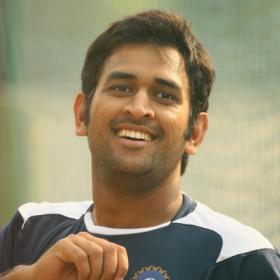
When one of the early LTTE fighters of the period 1974-to-1984, namely, Chinniah Rajeshkumar whose nom de guerre was Rāgavan revealed to the world the processes leading to Tamil militancy in the 1970s and elaborated upon the early activities of the Tamil Tiger underground organisation, one snippet of information was a revelation.  Ragavan – Pic from C’bo Telegraph
Pirapāharan, he said, “had with him a copy of Mein Kampf” and derived “the idea of eliminating the other” from Hitler (Rāgavan in Kadirgamar 2009 and Roberts 2012). Rāgavan’s riveting Q and A session with Ahilan Kadirgamar remains a critical supplement to the studies of Pirapāharan and the LTTE in their early underground guerrilla days. It adds to the stock of information presented by such authors as A. Sabaratnam, MR Narayan Swamy and DBS Jeyaraj.
This information is now augmented by the serialized writings in Tamil by Ganēshan Iyer, another early fighter who was also the LTTE Treasurer at one point. Whereas Rāgavan broke from the Tigers in 1984, Iyer was part of a faction that split earlier in 1980.
Rāgavan’s interview was among the material that I utilised for a draft article entitled “Inspirations and Caste Threads and in the Early LTTE” (2009, still unpublished), so I immediately arranged for a translation of two chapters of Iyer’s account. This body of writing has provided key information for the composition of an article “Inspirations: Hero Figures and Hitler in Young Pirapāharan’s Thinking” which has since appeared in two web sites (Roberts 2012 a, b). However, I also offered one of Iyer’s chapters – a translation by Parames Blacker — immediately to the editors of the web site, Colombo Telegraph, because it was important for the world-at-large to have this material for their reflections (see Iyer, “Hitler’s Rejuvenation of Germany as Inspiration for Prabhakaran”).
This memoir from Iyer was also circulated to the clusters of chain mail addresses at my disposal. I do not have a computer brain that makes the addressees vivid in mind. Victor Rājakulendran in Sydney was one of those who received this communication. It clearly stoked his anger because he immediately sent me a sharp memorandum of protest. This is a document of significance in itself, though hardly matching that of Ganēshan Iyer.
 Pic from Tamil Nation
Rājakulendran is no ordinary Tom, Dick or Harry. The following presentation of self in the site sauce provides his biography in brief:[i]
“Sixty-two year old Dr Victor Rajakulendran was born into a Tamil family in the north of Sri Lanka and studied at Columbo University (sic), before taking up post-graduate studies in America and finally settling in Australia 20 years ago. Today Dr Rajakulendran works as a research entomologist and lives with his wife in Quakers Hill, west of Sydney. He has a daughter who recently married, and in his spare time he likes to play tennis. He also works tirelessly on behalf on the Tamil people of Sri Lanka. Dr Rajakulendran hosts a regular Tamil language radio program on Sydney community radio and is involved in representations made to the Australian government on behalf of Sri Lankan Tamils…”
He is featured in the web site TamilNation.com as “an active campaigner for the Tamil cause [and] a Tamil Community broadcaster in Australia.”[ii] More vitally, he was recently the Secretary of the Australasian Federation of Tamil Associations. It was in this capacity that he marshalled a body of Tamil youth from Sydney (for the most part) to gain entry to Manuka Oval in Canberra during Sri Lanka’s ODI cricket match against India on 12 February 2008, there to mass at a strategic point, display red flags and present a declamation of the Sri Lankan government in the language of liberalism, namely, as the voice of “humanity” (Roberts 2011: 99-103).
 Insofar as this demonstration did not deploy Tamil Tiger flags in the fashion adopted by LTTE functionaries at other venues in the world, this was an act of subterfuge (Roberts 2011: 99-103). But that is by the by. What matters is Rājakulendran’s official position as a LTTE and/or Tamil spokesperson in the recent past. Indeed, he has appeared regularly in the airwaves in this capacity, on one occasion being engaged by SBS in a debate entitled “The Tiger Trap” which involved such renowned figures as the security analyst, Rohan Gunaratna and Sam Zarifi, an Amnesty International spokesman.[iii] It was at this session that Rajakulendran even intimated that he could be a target for cloak-and-dagger interdiction from the Sri Lankan government in the manner which befell KP Pathmanathan, the head of LTTE’s international operations in late 2009.[iv]
He is clearly part of the Tamil Tiger lobby in Australia today which is vigorously targeting the government of Sri Lanka with allegations of war crimes. This engagement as well as his history of advocacy means that he will be known to the university intellectuals, radical-liberal journalists and human rights activists who have shown sympathy for the cause of the Tamils of Sri Lanka as underdogs and ‘oppressed minority,’ namely, such individuals as Jake Lynch, Antony Lowenstein, Gordon Weiss, Damien Kingsbury, Bruce Haigh, John Dowd, David Feith, Lee Rhiannon, Julian Burnside and John Zubrzycki. Indeed, to this day he assiduously attends all forums in Sydney where the Sri Lankan situation is discussed.
For these reasons his thinking is of some relevance to anybody interested in “Tamilness” and the worldwide Sri Lankan Tamil lobby as it stands today. The Tamil lobby in the diaspora, of course, is not of one mind. It will contain a wide spectrum of views besides factions seeking to attain a significant position. After the downfall of the de facto LTTE state in Sri Lanka and Pirapāharan’s death under fire on 19 May 2009, the many LTTE international arms subject to Pirapāharan’s control in the halcyon days of the LTTE split into three factions. The faction under Rudrakumaran of USA emerged as the principal flag-bearer and has institutionalized itself as Thamililam in exile under the rubric “Transnational Government of Tamil Eelam” which is also linked to the Global Tamil Forum.
I have no information regarding Rajakulendran’s present position within these new alignments and re-arrangements. But, on the basis of a priori reasoning, I suggest that he is one with the majority of those Tamils remaining associated with the Tiger and Tamil cause (a) in being deeply attached to “Tamilness” in the sense Sri Lankan Tamil;[v] (b) in continuing to regard Pirapāharan with some reverence; (c) in remaining firm in his support for the LTTE endeavour and its goal of Thamilīlam; while (d) also being eager at every opportunity to bring the government of Sri Lanka into disrepute in the court of world public opinion.
It is within this context, therefore, that readers must dwell on the angry note he sent me by email on the 31st January 2012 as soon as he received the translation of a chapter from Ganeshan Iyer’s work (and also my immediate reply in the same spirit):

Dear Michael
I think we have met once briefly in Zurich at “Geneva Call” workshop.
Thanks for sending this. But, what is the purpose of circulating this at this time. Tamil Diaspora who knows LTTE well are very clear in their mind, VP called off the armed struggle just before he disappeared and gave the responsibility in the hands of the Tamil Diaspora to carry on the struggle in a democratic and nonviolent way. Not a single shot has been fired by any of the LTTE cadres who still remain elusive in Eelam jungles and suburbia since then. That is the discipline VP has built into his armed forces and that is what this goon Ganeshan Iyer is trying to criticize after leaving the movement and you people are clamoring to translate and circulate. What do you think you gain by doing this? All what I can guess is that you get a good night sleep with the satisfaction that you have done something great.
 As I have told Damien Kingsbury last year in a workshop in Melbourne, LTTE is a History now but a Good History. I told him that if not for LTTE, he (Damien) and myself won’t be in that room in Melbourne and discussing about the Sri Lankan crisis for two days leaving all our weekend chores neglected at home front.
That is reality my dear Michael. Thanks to “Sept 11” and George Bush Senior, that Gothabaya could claim that he annihilated the invincible LTTE and pretend like you to be a recent day Dutagemunu and fool all the Singhalese. whole world knows who annihilated LTTE. Therefore basking on this pseudo-victory and trampling on the democracy in Sri Lanka, especially in the North and East, and pitching China against India and surviving for the moment, will not take Sri Lanka anywhere and will not save the War Criminals from the Jaws of Justice either.
As Mahintha is worried and expresses again and again, “We have annihilated LTTE but we have to deal with the Tamil Diaspora”, Sri Lanka has the darkest days ahead for her as well as for her leaders in the present government. Why don’t you start writing on the future than circulating some dead horse stuff from the past?
With regards, Victor
Roberts to Victor Rajakulendran, 31 January 2012
Victor,
I cannot remember you, but I am old and forgetful.
I am also a historian and a historian of ideology including all forms of nationalism and extremism, including Burgher, Tamil, Sinhala, German etc. Since you have not comprehended that, there is no point in us exchanging views.
Stuff my stuff in your wastepaper basket. I will continue to decipher your stuff.
Michael
Concluding Remarks
This short essay will adhere to the promise held out in the last line of my response, albeit briefly. The principal objective, however, is to make the world at large and Australians in particular aware of the lines of thought favoured by an important Tamil Australian activist.
In his view the LTTE remains a shining example, a “good history,” for all Sri Lankan Tamils to follow. Tamil migrants must now pursue a democratic non-violent path, while gaining inspiration from the fact that Tiger cadres “still remain” hidden in the “Eelam jungles and suburbia” (whatever the latter word means). This claim beggars belief.
It is a notion that he has held from May 2009 onwards. When Hamish McDonald of the Sydney Morning Herald compiled a news item (McDonald 2009) on the demise of the LTTE in May 2009, he noted that:
 “Even after Prabhakaran’s corpse had been shown on television and identified by former senior colleagues now co-operating with the Sri Lankan Government, Tamil settlers in Australia refused for days to accept Colombo’s word. Victor Rajakulendran, a spokesman for Australian Tamils, insisted the images had been Photoshopped. “The only question is: when the man is going to resurface,” he told me.”
 Pic from Daily Mirror
In mid-2009 Rajakulendran was not alone in affirming that Pirapāharan was alive and would resurrect their struggle. As indicated in blog comments and pro-LTTE web-sites, a number of true believers lapsed into a state of denial. The shock arising from the comprehensive military defeat of the LTTE by the forces marshalled by the Sri Lankan state[vi] appears to have generated strands of catatonic irrationality. Whether the virtual deification of Pirapāharan as a godlike military genius who would lead them to Thamilīlam contributed to this measure of delusion is a conjecture that calls for investigation.

It is unlikely that we will ever know the numbers or proportion of Tamil migrants spread across the world who adhered to this delusion (not unlike the delusion of those Indians who refused to believe that Subhas Chandra Bose had died in a plane crash: Borra 2007). What we do know now is that Victor Rajakulendran continues to believe that the LTTE’s military capacity in Sri Lanka remains dormant, but alive.
The obdurate character of such delusions suggests that some hardcore Tiger supporters in the diaspora had invested so much hope and power in Pirapāharan that they simply could not envisage his passing away. Pirapāharan, their talaivar,[vii] was a man who had achieved so many victories against all the odds and set up a state that was an apotheosis of their sentiments and hopes. For this reason he was revered and worshipped as a god incarnate. Ergo, he remains immortal and could not be dead.
BIBLIOGRAPHY
Bavinck, Ben 2011 “Pirapaharan as uncompromising killer prone to vengeance: testimonies from the Jaffna heartland, 1989-91” http://thuppahi.wordpress. com/2011/11/01/ as uncompromising killer prone to vengeance: testimonies from the Jaffna heartland, 1989-91
Borra, Ranjan 2007 “Subhas Chandra Bose, the Indian National Army, and the War of India’s Liberation,” The Journal of Historical Review, 3/ 4: 407-439.
Iyer, Ganeshan 2012a “Military Training in the German Nazi Mould amidst Internal Dissension in the early LTTE, late 1970s,” trans by Parames Blacker, in http://thuppahi. wordpress.com/2012/01/30/military-training-in-the-german-nazi-mould-amidst-internal-dissension-in-the-early-ltte-late-1970s/.
Iyer, Ganeshan 2012b “My Notes on Experiences with Fellow-Fighters,” chapter 9 in My Entries on the Eelam Struggle,” [as trans, by Gobi Ponnuthurai for Michael Roberts].
Jeyaraj, D. B. S. 2009 “Prabhakaran: Powerful Symbol of Tamil Armed Struggle,” 29 May 2009, in http://www.transcurrents.com.
Kadirgamar, Ahilan 2009 “Interview with Ragavan on Tamil Militancy (Early Years),” http:// kafila.org/2009/02/16/interview-with-ragavan-on-tamil-militancy-part-i/.
McDonald, Hamish 2009 “Beaten by his Hubris,” 30 M ay 2009, http://www.smh.com.au/ world/beaten-by-his-hubris-20090529-bq7q.html.
Montgomery, A. 1994 “Subhas Chandra Bose and India’s Struggle for Independence,” Journal of Historical Review, March-April 1994. 14/2: 2-5.
Narayan Swamy, M. R. 1994. Tigers of Sri Lanka, Delhi: Konark Publishers Pvt Ltd.
Narayan Swamy, M. R. 2003 Inside an Elusive Mind. Prabhakaran, Colombo: Vijitha Yapa Publications.
Narayan Swamy, M. R. 2010 The Tiger Vanquished. LTTE’s story, New Delhi: Sage Publications.
Ragavan, 2009b “Prabhakaran’s Timekeeping. Memories of a Much-Mythologised Rebel Leader by a Former LTTE Fighter,” Sunday Leader, 24 May 2009.
Roberts, Michael 2000“Sinhala-ness and Sinhala Nationalism,” in G. Gunatilleke et al (eds.): A History of Ethnic Conflict in Sri Lanka: Recollection, Reinterpretation and Reconciliation, Colombo: Marga Monograph Series, No 4.
Roberts, Michael 2006 “The Tamil Movement for Eelam,” E-Bulletin of the International Sociological Association No. 4, July 2006, pp. 12-24 [reprinted in Roberts, Fire and Storm, Colombo, Yapa, 2010, pp. 203-18].
Roberts, Michael 2009 Inspirations and Caste Threads in the Early LTTE, unpubd. mss in process.
Roberts, Michael 2010 “Hitler, Nationalism, Sacrifice: Koenigsberg and Beyond … Towards the Tamil Tigers,” in http://thuppahis.com/2010/03/19/hitler-nationalism-sacrifice-koenigsberg-and-beyond-%e2%80%a6-towards-the-tamil-tigers/.
Roberts, Michael 2010 Fire and Storm: Colombo: Vijitha Yapa Publications,
Roberts, Michael 2011 “Cricket as Protest Arena: Tamil Incursions,” in Roberts, Incursions and Excursions in and around Sri Lankan Cricket, Colombo: Author, distributed by Vijitha Yapa Publications, pp. 77-110.
Roberts, Michael 2012a “Inspirations: Hero Figures and Hitler in Young Pirapāharan’s Thinking,” http://colombotelegraph.com/2012/02/10/inspirations-hero-figures-and-hitler-in-young-pirapaharans-thinking/.
Roberts, Michael 2012b “Inspirations: Hero Figures and Hitler in Young Pirapāharan’s Thinking,” http://thuppahis.com/2012/02/13/inspirations-hero-figures-and-hitler-in-young-pirapaharans-thinking/
Sabaratnam, T. 2003 Pirapāharan, [a biography in chapter segments] serialised in http://www. sangam.org/index_orig.html.
Spittel, Gloria “Keeping the Cause Alive: The Post-LTTE Tamil Eelam Support Network,” http://thuppahis.com/2010/11/29/keeping-the-cause-alive-the-post-ltte-tamileelam-support-network/
Tekwani, Shyam 2009 ‘The Man who destroyed Eelam,” http://www.tehelka.com/home /20090523/default.asp.
Thottam, Jyoti 2009 “Prabhakaran: The Life and Death of a Tiger,” Time, 19 May 2009, http://www.time.com/time/world/article/0,8599,1899590,00.html.
[iv] KP was also Pirapaharan’s best man at his wedding in India in 1984.
[v] Not all Sri Lankan Tamils subjectively attached to their “Tamilness” were supporters of the LTTE; and this is even more widely applicable today because some LTTE supporters of the recent past have indicated some disenchantment with the impractical course adopted by the LTTE leadership in the last decade. An understanding of the concept “Tamilness” in my thinking can be gleaned from a reading of my work on “Sinhalaness” (Roberts, 2000).
[vi] Note that Rajakulendran cannot yet bring himself to admit that the victory was secured largely by the efforts of the Sri Lankan armed forces.
[vii] Talaivar means “leader,” ‘big man,” and “boss” in Tamil and is in wide usage for local men of importance. However, it is arguable that its usage for Pirapāharan was such that it developed a meaning akin to “supremo” and “Fuehrer.”

 Mob violence at Borella Junction, 24/25 July 1983 –Pic by Chandragupta Amarasinghe
 Elle Gunawansa with President Rajapaksa —Pic from Colombo Telegraph