Yearly Archives: 2012

“A Third of the RAN is based in the Indian Ocean” says Admiral Griggs

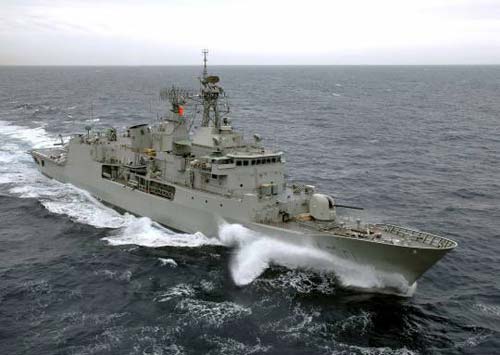
See Feature Interview with Admiral Griggs of the Royal Australian Navy conducted by Sergei DeSilva-Ranasinghe, Research Manager, South & West Asia Programme of Future Directions International (FDI) Pty Ltd. This discussion provides valuable insights into how the Royal Australian Navy views the Indian Ocean’s importance.  HMAS Anzac

  Action stations on HMAS Manoora

The interview can  be downloaded directly from the Future Directions International website at: http://www.futuredirections.org.au/publications.html

Leave a comment

Filed under Indian Ocean politics, military strategy, world events & processes

Foreign Tamils meet ex-Tiger youth at Omanthai

Priyantha Hewage, in The Sunday Times, 12 March 2012, reporting from Omanthai

A group of Tamil youths of Sri Lankan origin living in Europe found themselves in a quandary when ex-LTTE cadres being rehabilitated at a Vavuniya centre spoke to them in Tamil. Inmates said the visitors spoke to them in English and they spoke to them in Tamil and the military officials manning the centre had to act as interpreters. They said they were disappointed because the children of the Tamils who left the country during the early days of the war were unable to speak their mother tongue. “Although they have come to help us we are sad that they could not speak the Tamil language, the very identity of the Tamil people,” B. Senduran, an inmate at the centre said. Continue reading

Leave a comment

Filed under cultural transmission, democratic measures, life stories, LTTE, politIcal discourse, reconciliation, rehabilitation, Sinhala-Tamil Relations, sri lankan society, Tamil migration, world events & processes

Channel Four suggests that English cricket team should boycott Sri Lanka

“Andy Flower has departed for Sri Lanka today as manager of an England team reeling after a test whitewash in the UAE to Pakistan and nervous about playing on yet more slow and turning pitches.

However events off the pitch could be even trickier to handle. Sri Lanka’s cricket board is allegedly ridden by corruption, and the grounds England will play on are now run by a military that Amnesty International, Human Rights Watch, the United Nations and the US State Department say should be investigated for allegations of perhaps the most serious war crimes and crimes against humanity committed this century….”

SEE http://www.channel4.com/news/should-englands-cricket-team-tour-sri-lanka

The friend who sent it to me has this comment: “Here’s an example of human rights fundamentalists getting it fundamentally wrong: Attacking what is perhaps the most unifying symbol for Sri Lankans, an institution whose ethnic representativity has never been in question, and which stands to gain from the promotion of young talent from the north and east that people like Murali, Mahela and Sanga are doing so well, is not only unbelievably stupid, but also unutterably offensive. Seems like no lessons have been learnt from Amnesty’s similarly ill-conceived campaign against the Sri Lankan cricket team in the 2007 World Cup in the Caribbean.”

HE ADDS: “Contrariwise, Harry Solomons’ great little piece from Cricketique celebrates the two maxims of Sri Lankan cricket:

Leave a comment

Filed under accountability, NGOs, politIcal discourse, power politics, propaganda, Rajapaksa regime, Sinhala-Tamil Relations, truth as casualty of war, war crimes, world events & processes

Addressing Two Angry Tamils: Heat, Distortion, Truth, Fact, Mendacity and Eternal Enmity

Michael Roberts, Courtesy of Colombo Telegraph where it appeared on 6 March 2012 under a different title 

Whenever my articles have been posted on web sites, I have generally not engaged those readers who have inserted comments. Unlike Dayan Jayatilleke, I do not have the energy to participate in what often turn into dog fights. Besides, the blog format is not conducive to lengthy clarifications of the article type. It would also be difficult in many instances to defend myself without adopting a pontifical tone that would be self-defeating.

However, my presentation of “Victor Rajakulendran’s Tirade at the Exposure of Pirapaharan’s Admiration for Hitler” in the web outlet Colombo Telegraph drew extended comments of a political character from two Tamil gentlemen that induce me to respond at length in a measured manner for the benefit of the audience-at-large. This is called for because the ideological positions they adopted[i] are of considerable significance, so much so that they have been displayed prominently as separate items in my thuppahi web site.

Let me stress here neither their comments nor my present article can be fully comprehended without a reading of my previous article “Inspirations: Hero Figures and Hitler in Young Pirapāharan’s Thinking;”[ii] and the preceding companion piece involving the work of Ganeshan Iyer, namely, “Military Training in the German Nazi Mould amidst Internal Dissension in the early LTTE, late 1970s,” translated by Parames Blacker.[iii]

Kathiravan and Thanga are clearly Tamils of the diaspora who are explicitly committed to the cause of Thamilīlam and its pursuit by the Transnational Government of Tamil Eelam (TGTE) and its affiliates. In my reading they are hard core Tamil nationalists and are strongly committed to the Tamil Tiger legacy. It is precisely because of this commitment that their lines of thought call for analysis. In pursuing this work of decoding I am not seeking to convert them. In my conjecture both are incorrigible ultra-nationalists. Continue reading

10 Comments

Filed under citizen journalism, communal relations, cultural transmission, Eelam, historical interpretation, Hitler, life stories, LTTE, military strategy, politIcal discourse, racist thinking, Sinhala-Tamil Relations, sri lankan society, Tamil civilians, Tamil migration, Tamil Tiger fighters, terrorism, truth as casualty of war

Todays’ EROS bite the bullet: admit their men kidnapped Kandiah Kandasamy under orders from RA&W

Nesan Shankar Raji, in the Sri Lanka Guardian, 5 March 2012, with title: “The truth behind TRRO Kandiah Kandasamy’s death

There have been numerous publications in the media regarding the life and death of Kandiah Kandasamy who operated the Tamil Refugee’s Rehabilitation Organisation (TRRO) in Sri Lanka. He was also a founder member of what is presently known as the Tamil Information Centre (TiC) based in the United Kingdom. Having consulted with senior members within EROS now based in Sri Lanka and abroad and discussed this matter at length, we felt that it is important to set the record straight and highlight the truth and facts surrounding Kandiah Kandasamy’s death. Continue reading

4 Comments

Filed under accountability, Eelam, historical interpretation, politIcal discourse, sri lankan society, Tamil migration, terrorism, truth as casualty of war

Against Hate-Speech and Extremist Virulence

Padraig Colman, from the Nation, 2 March 2012, where a different title was used

Post-modernist theory suggests the past is unknowable. There is no objective fact that we can call ‘history’. There is no way of deciding whether one representation of the past or another is true. Up to a point. Much of what we know is a garbled version of what historians have written. We might make mistakes in our search for the truth about the past, and new discoveries are always being made. That does not mean that the concept of truth itself is relative.
The narrative of what ‘happened’ can attract layers of interpretation and develop into nationalist myths which are exploited by demagogues. This happened in my own country where the true story of oppression gained accretions of myth, leading to further suffering and violence. Fortunately, Irish historians are questioning the foundation myths of Irish nationalism. For example, Roy Foster: “The construction of ‘advanced’ Irish nationalism at home relied on buttressing from abroad, and so did the creation of Irish identity.” The Irish diaspora kept alive the fairy tales. Sinister men rattled collection boxes in north London pubs ‘for the boys’. Continue reading

Leave a comment

Filed under atrocities, cultural transmission, disparagement, Eelam, historical interpretation, LTTE, politIcal discourse, prabhakaran, propaganda, reconciliation, Sinhala-Tamil Relations, world events & processes

Rudrakumaran presents Tamil Diaspora arguments via Q and A

Maryam Azwer, in The Sunday Leader, 4 March 2012, where the tite is “Tamil Diaspora wants Justice”

Since the end of the war in 2009, the Tamil diaspora has been incessantly pushing for an independent investigation into alleged war crimes in Sri Lanka. Despite the government claiming that local mechanisms are in place to look into such issues, diaspora groups like the ‘Transnational Government of Tamil Eelam’ (TGTE) have refused to accept that this is enough, and have continued to call for an ‘independent international investigation.’
In an email interview with The Sunday Leader, the TGTE’s prime minister, Visuvanathan Rudrakumaran, commented on the US backed Resolution recently drafted for the ongoing UNHRC sessions in Geneva, and why the TGTE wanted international involvement in investigating alleged war crimes.

Excerpts from the interview:

Q: Do you feel that the UN Resolution against alleged war crimes in Sri Lanka is worded strongly enough to produce some results?
A: We are calling for an Independent International Investigation for the mass killing of Tamils in 2009 in this island of Sri Lanka. According to a UNSG Expert Panel report, over 40,000 civilians were killed in five months in 2009 and women were sexually assaulted. Sri Lankan Government restricted food and medicine to Tamils, resulting in several deaths from starvation and being allowed to bleed to death.
UN Secretary General Ban Ki-moon referred the Panel Report to the UN Human Rights Council to act. Now the UN Human Rights Council is beginning to act. Even though the current draft Resolution is not calling for an Independent International Investigation, negotiations are still going on about the wording of this draft Resolution. We want that the final draft Resolution should be strong, reflecting our desire to bring those responsible for the killing of our people and let them face international justice. Continue reading

Leave a comment

Filed under accountability, atrocities, Eelam, historical interpretation, law of armed conflict, life stories, LTTE, politIcal discourse, power politics, prabhakaran, propaganda, Rajapaksa regime, Sinhala-Tamil Relations, sri lankan society, Tamil migration, tamil refugees, truth as casualty of war, world events & processes

Issues arising from the preliminary census of the Northern Province

Faraz Shauketaly, in The Sunday Leader, 4 March 2012 where the ttiel reads Where Are They? 6,352 Listed As Missing” …. This is an important starting point though all sorts of other questions and factors have to be added to this review. I have simply not had the time to insert these queries after I posted two reports on this preliminary census. My essay challenging Rohan Gunaratna’s estiamate of deaths in the last stages of Eelam War IV is also pertinent.Web Editor.

A staggering 6,352 persons from Sri Lanka’s former conflict areas are listed as missing without any plausible explanation. According to Sri Lanka’s Department of Census and Statistics in their report “Enumeration of Vital Information 2011 Northern Province” a total of 71,201 persons were reported as either Dead, Untraceable or Not Stated between 1982 and 2011. 61,651 persons were reported as dead including death caused by natural causes, illnesses as well as due to acts of terrorism during the so-called “war years”. These figures do not include members of the armed forces and Police who lost their lives during Sri Lanka’s fight with the terror group, the LTTE. It appeared that the information provided in the report may well be incomplete if not downright flawed. Under the Outward Migration statistics, the report claims a figure of 26,927. These figures have not been matched with embarkation records from the airport and ports and when compared to the numbers living in key western states like England, the USA, France, Scandinavia, Far East, India and Australasia, proves that the rushed report is not worth the paper it is printed on. For a proper evaluation of the data the census for the rest of the country too would have to be completed: thereby begging the question as to why over zealous employees at the Department rushed to put out the Northern report so rapidly. Continue reading

Leave a comment

Filed under accountability, historical interpretation, life stories, LTTE, politIcal discourse, population, reconciliation, rehabilitation, Tamil civilians, Tamil migration, Tamil Tiger fighters, world events & processes

Ganeshan Iyer’s Book on LTTE launched in Toronto: Pics

Courtesy of a Tamil Friend…. Also see http://thuppahis.com/2012/01/30/military-training-in-the-german-nazi-mould-amidst-internal-dissension-in-the-early-ltte-late-1970s/ The book was launched on the 25 th of February 2012 at the Scarborough Civic Centre, Toronto. It was organised by the Tamil Resource Centre (Thedaham). Amomg the audience were two former parliamentarians, M.K.Elaventhan (TNA) and Kanapathipillai Thillainathan(EROS) as well as the LTTE’s former Swiss strongman Nadarajah Muralitharan.


The titles of the books on display are as follows:

1. My Notes on Eelam Struggle: Forming Tamil Tigers with Prabhakaran by Ganeshan Iyer.

2. Viewham — A Tamil Journal published by the Tamil Resource Centre. Continue reading

8 Comments

Filed under citizen journalism, Eelam, historical interpretation, Hitler, life stories, LTTE, politIcal discourse, prabhakaran, Tamil migration, tamil refugees, Tamil Tiger fighters, world events & processes

Another Angry Tamil: Thanga sees Pirapaharan as an indelible “part of the Tamil psyche”

Thanga, 24 February 2011 in http://colombotelegraph.com/2012/02/21/victor-rajakulendrans-tirade-at-the-exposure-of-pirapaharans-admiration-for-hitler/ ***

I must confess that I am ignorant about the self-styled “historian and a historian of ideology including all forms of nationalism and extremism, including Burgher, Tamil, Sinhala, German etc….” Dr.Michael Roberts.
If in fact he is a renowned historian, how come he is ignorant of whoVisvanathan Rudrakumaran is? How come he mis- identifies “The faction under Rudrakumaran of USA emerged as the principal flag-bearer and has institutionalized itself as Thamililam in exile under the rubric “Global Tamil Forum.” This slip is not ignorance, but stark ignorance. Rudrakumaran is the Prime Minister of the democratically elected Transnational Government of Tamil Eelam(TGTE). The Global Tamil Forum is a different kettle of fish based mainly in Britain. Yes, there are factions among Diaspora, but all of them are committed to the goal of Thamil Eelam!

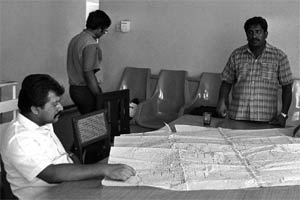
Pic by Shyam Tekwani, mid-1980s

Again what is this song and dance about LTTE leader “had with him a copy of Mein Kampf” and derived “the idea of eliminating the other” from Hitler (Rāgavan in Kadirgamar 2009 and Roberts 2012)…..” This is the first time I am hearing that the LTTE leader had with him a copy Mein Kampf. This notwithstanding, what is the logic behind the argument that Prabhakaran was another Hitler or he was an admirer of Hitler? Prabhakaran was a voracious reader. He himself has said that he was inspired by reading Hindu epics like Mahabharata and Ramayana and its

Continue reading

3 Comments

Filed under communal relations, cultural transmission, Eelam, historical interpretation, Hitler, life stories, LTTE, politIcal discourse, prabhakaran, propaganda, Sinhala-Tamil Relations, sri lankan society, Tamil civilians, violence of language