Yearly Archives: 2011

Politics via Cricket: Peter Roebuck had the rare ability to speak truth to power

Andy Bull, courtesy of The Guardian, 14 November 2011

Pic from SMH

on Sunday, roused by the buzzing of my phone on the  bedside table. A text message from Rob Smyth. What does he want at this
hour? “Roebuck …” it began. What a way to start a day. Like most people in this profession I have been feeling both angry and sad ever since,
sad that he died so young, and angry that he reached the point where he  felt that the best choice in he could make in the circumstance was to
jump. “One emotion is never enough,” a friend told me later that day.  Least of all for a man like Roebuck. It seemed that his opinions were
the only thing about him that came in black and white, everything else could only be captured in shades of grey.

Continue reading

Leave a comment

Filed under life stories, politIcal discourse, unusual people, world affairs

Simon Jenkins pulverized Miliband’s assinine foreign interventions in 2009

Simon Jenkins, courtesy of The Guardian, 19 May 2009 —  with title  David Miliband’s piccolo diplomacy

Blair at least walked the walk. But this foreign secretary can offer only feel good gestures of episcopal concern. I hope President Rajapaksa of Sri Lanka takes time out today to comment on the resignation of Mr Speaker. What the Sri Lankan government has “wanted to see”, he might say in the jargon of the new interventionism, is clean and transparent democracy in Britain. Speaking for all Sri Lankans, he would regard the affair of MPs’ expenses as “unacceptable” and “not living up to their commitments”. A group of Sri Lankan MPs would be visiting Britain to monitor developments.

Ridiculous? Yet those are exactly the words and tone of voice used byBritain’s foreign secretary, David Miliband, in his dealings with what seems like half the globe. The Foreign Office wakes each morning and scans the world’s conflicts to ponder where it might score a quick headline with a call for peace, reform, a ceasefire or “United Nations action Continue reading

7 Comments

Filed under LTTE, politIcal discourse, power politics, Sinhala-Tamil Relations, terrorism, world events & processes

Huge rally backs Imran Khan as Pakistan leader

Amanda Hodge in The Australian, 1 November 2011 … SEE http://www.theaustralian.com.au/news/world/huge-rally-backs-imran-khan-as-pakistan-leader/story-e6frg6so-1226181910208 …..PAKISTANI cricket legend Imran Khan vaulted into the political mainstream at the weekend, drawing at least 100,000 people to a rally at which he vowed to build relations with China, stop CIA drone attacks on Pakistan and end dependence on US aid.

Leave a comment

Filed under american imperialism, political demonstrations, politIcal discourse, power politics, world events & processes

BBC on “The World at seven billion”

A must visit site posting = http://www.bbc.co.uk/news/world-15391515

The world at seven billion

The world’s population is expected to hit seven billion in the next few weeks. After growing very slowly for most of human history, the number of people on Earth has more than doubled in the last 50 years. Where do you fit into this story of human life? Fill in your date of birth below to find out.

10002587

Every hour, there are:

15,347 Births 6,418 Deaths Continue reading

Leave a comment

Filed under historical interpretation, population, world events & processes

Bavinck as a “Lord of Life” in a land of conflict and death

Charles Sarvan [Ponnadurai], courtesy of the author –with title being the Web Editor’s imposition …… This is a review of Ben Bavinck, Of Tamils and Tigers: a journey through Sri Lanka’s war yearsVijitha Yapa Publications, Colombo, 2011.                                                                                              

“The moving finger writes”, and having written, it moves on.  Neither virtue nor intelligence can erase half a line, and tears cannot “wash out” even one word. (Adapted from ‘The Ruba’iyat’)
 Bavinck, missionary-teacher, born in 1924 to Dutch missionary parents, came toCeylonat the age of thirty; lived, worked on, and for, the island for about thirty years. He died in 2011, age 97, having helped in the publication of this Diary, Volume 1, covering the years 1988-94. The brutal occupation of Holland by the Nazis left a deep mark on him, strengthening moral commitment and deepening humanitarian resolve. At the outset, one should try to understand what being a missionary-teacher meant to Bavinck. To the best of my recollection, neither the word “Jesus” nor “Christ” appears in the Diary. Bavinck does not attempt to seduce with the joys of heaven nor frighten with the torment of hell. Some Christian sects may see “speaking in tongues” (p. 273) as the distinguishing mark of spiritual salvation but for Bavinck what marks a true Christian is a life of quiet, but active, commitment to other human beings. (1992 finds him in Baddegama, attempting to learn the Sinhala “tongue”, so as to better understand, and work for, the Sinhalese poor.) He felt that the missionary today shouldn’t primarily preach doctrine but be, in his person and action, “a messenger and a symbol of solidarity” (p. 126) with the unfortunate. There was for Bavinck a “connection” (p. 249) between the suffering of “the Lord and the concrete liberation of the suffering poor and oppressed” of this world. The messengers of Christian peace (p. 279) should directly share in “the bloody reality faced by the ordinary people”. As I have written elsewhere, prayer must be prelude and preparation – and not an easy substitute – for action. (Here, Bavinck reminds me of Fr Paul Caspersz of Satyodaya.) For Bavinck, to be religious meant, above all, a life of care for others. The Introduction suggests that some Protestant Christian groups had an affinity with Tamils because of certain shared characteristics: independence, individualism, industriousness, thrift, privacy, plainness “and the voluntary self-deprivation of needs and desires and / or their delayed gratification” (p. 16). Continue reading

1 Comment

Filed under atrocities, life stories, LTTE, power politics, Sinhala-Tamil Relations, sri lankan society, Tamil civilians, welfare & philanthophy

Switching on ‘Trilingual Competence’ without learning languages!

Chandre Dharmawardana, an original article*

The proposed “trilingual” vision for Sri Lanka, hopes to make every citizen acquire at least a good working knowledge of English, Sinhala and Tamil. This is the opposite of the “Indian model” where, e.g., in Tamil Nadu, Tamil is the only language ‘recognized’ by the state, even with substantial non-Tamil minorities. One ‘justification’ for trilingualism is the view that ‘language Politics” caused communal strife and Eelam violence in post-independent Sri Lanka. There were other, deep systemic reasons for the strife. However, this essay examines the issue of trilingualism and how it can be cheaply and rapidly implement via a technological solution by accepting the fact that most people will not learn three, or even two languages. We argue the following: (i) A form of trilingualism can be provided rapidly and cheaply via available information technology without everyone learning the other two languages. (ii) Attempts at trilingual competency using an educational system already burdened by ‘tuition’ would not succeed. (iii) Even inCanada, after four decades of effort at bilingualism, 80% of the people are unilingual. (iv) Sri Lanka’s effort should be directed to creating interest in the other linguistic and cultural heritage of the land.  (v) The incorporation of automatic translation at the level of business and social interactions into cell-phone conversations or text-messages is eminently feasible and opens up the ‘language barrier’.  Continue reading

3 Comments

Filed under cultural transmission, historical interpretation, language policies, politIcal discourse, Sinhala-Tamil Relations, world events & processes

Education and its (dis)contents:a critique of state policy on education and a call to action

Sivamohan Sumathy, from The Island, 2 November 2011 Education is not an undertaking of A about B; it is not an undertaking of A for/on behalf of B; it is an undertaking of A and B together.”This is a paraphrase of mine of Paulo Friere’s initial premise of what ‘true’ education is in Pedagogy of the Oppressed. The ‘enterprise’ of education energizes society toward change, to energize individuals to become active agents. This underlining theme of Friere’s has inspired thousands of educators over the years to make education a weapon of social justice. This is what underlay the Kannangara vision of free education when he proposed free education for all to the State Council in 1943, which was implemented in 1945. While Friere envisioned it as a socio-pedagogical project, C. W. W. Kanangara conceptualized it as a socio-economic project. But there is an intertwining, an intertextuality here. Can free education really free one, give impetus to a theory of freedom? Continue reading

Leave a comment

Filed under cultural transmission, democratic measures, sri lankan society, world events & processes

Two war fronts 66 years apart

ONE:  Libya’s rebels take revenge, by John Lyons in The Weekend Australian, 5-6 November 2011

SITTING in their home on the outskirts of Tripoli, a Libyan family is afraid. Their fear is that a knock on the door could come from the rebel militias that toppled Muammar Gaddafi. This situation is extraordinary. Only weeks ago, these people were enthusiastic supporters of the uprising against the Gaddafi regime. One of the members of the family sitting in the living room was a rebel fighter. He spent two days in a gunfight in Tripoli battling the bodyguards of Gaddafi’s son Mutassim, and still keeps a Kalashnikov in the boot of his car. FOR THE REST SEE http://www.theaustralian.com.au/news/world/libyas-rebels-take-revenge/story-e6frg6ux-1226186182145

Hiroshima–Pic from Getty Images

TWO:  When the flames of hell rained on Japan, by Paul Ham in The Weekend Australian, 5-6 November 2011

GENERAL Curtis LeMay, commanding XXI Bomber Command, led America’s strategic air offensive against the Japanese home islands and earned the cold respect, if not the affection, of the pilots in his charge. He had flown, with courage and skill, several air raids against the Germans in 1943; he was willing to do so overJapan, and would have done so had not his knowledge of S-1 – the atomic bomb development project – grounded him at the US air base in Saipan; his superiors could not risk the secret’s extraction under torture. FOR THE RESTS. SEE http://www.theaustralian.com.au/news/features/when-the-flames-of-hell-rained-on-japan/story-e6frg6z6-1226186152605

Leave a comment

Filed under accountability, american imperialism, atrocities, historical interpretation, truth as casualty of war, war crimes, world events & processes

Sheridan on skewed perspectives that ignore LTTE threat then and now

Greg Sheridan, courtesy of the Australian Weekend, 5-6 November 2011, under a different title

THE criticism of Sri Lanka’s President Mahinda Rajapaksa, when he visited Australia for the Commonwealth Heads of Government Meeting in Perth, left the key Sri Lankan villain out of the story. The criticism was that the Sri Lankan government engaged in serious human rights abuses, shelling areas where civilians were present, at the end of its civil war with the Liberation Tigers of Tamil Eelam, in May last year. Both sides committed atrocities in this war, but the defeat of the Tamil Tigers was a decisive defeat of perhaps the bloodiest and most murderous terrorist group the world has seen. Alexander Downer, Australia’s foreign minister for 11 years of the war, tells me: “I know the Sri Lankan government played very hard ball and committed some human rights abuses, but it’s a wonderful thing the Sri Lankan government won that war. I have always regarded the Tamil Tigers as absolutely a terrorist organisation.”

It is easy to forget how bloody the Tamil Tigers were. In their 2 1/2-decade campaign, perhaps 70,000 people died. The Tamil Tigers pioneered the suicide bomber, conducting hundreds of such attacks and using a woman with a suicide vest to murder India’s prime minister Rajiv Gandhi in 1991. They also murdered a Sri Lankan president. Rohan Gunaratna, an authority on terrorism based in Singapore, tells me the Tamil Tigers also pioneered suicide attacks at sea. The sinking of the USS Cole was an imitation of a Tiger operation.

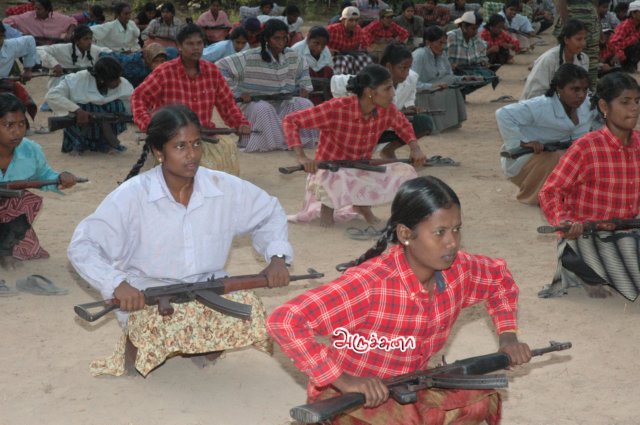
 Garlanding with the suicide vial at passing out ceremony for Tiger fighters– from BBC documentary 1991 in web editor’s possession courtesy of Chris Morris

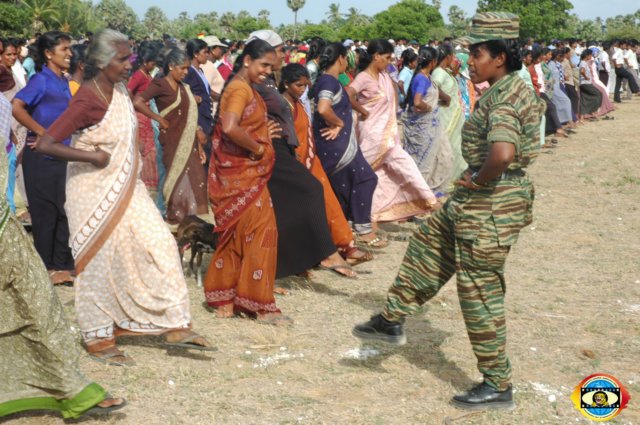
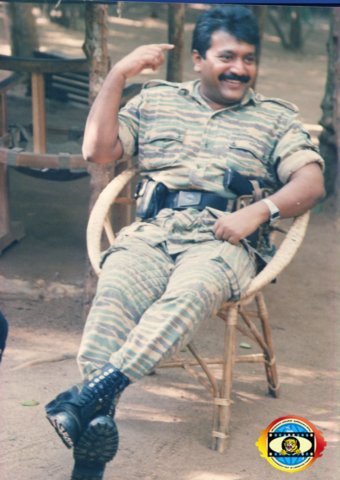
The Tigers were authoritarian under the leadership of Vellupillai Prabakaran. They murdered Tamil and Sinhalese civilians, within the areas they controlled and within Sri Lanka generally. They used civilians as human shields, engaged in forced recruitment, routinely bombed civilian targets, used child soldiers and refused to let civilians leave the combat zone. They also engaged in sectarian attacks against Muslims.

Continue reading

Leave a comment

Filed under accountability, asylum-seekers, australian media, authoritarian regimes, fundamentalism, historical interpretation, LTTE, politIcal discourse, reconciliation, Sinhala-Tamil Relations, tamil refugees, Tamil Tiger fighters, terrorism, world events & processes

Post-Civil War Sri Lankan Electoral Politics and the Future of Liberal Democracy

Laksiri Jayasuriya

ABSTRACT: The critical analysis of the 2010 Sri Lankan Elections – Presidential and Parliamentary – situates it within the foundational political institutions and practices of a liberal democracy which it argues have been dramatically reshaped by post-colonial politics which saw the introduction of an Executive Presidential style of government, and the regionalisation of politics resultingin a new genre of alliance politics. Post-colonial state politics have however been radically transformed by the 2010 national elections conducted immediately after the ending of the 25 year old civil war. This has witnessed the emergence of a new illiberal political culture of a partial authoritarian constitutionalism that has been fortified by the constitutional changes relating to the 18th Amendment, introduced in 2010 by the new Rajapaksa government. The paper concludes by posing the question: What are the prospects for the future of liberal democracy in Sri Lanka?

published in Asia Pacific World, Volume 2, Number 1, Spring 2011 , pp. 25-53(29) … details from http://www.ingentaconnect.com/content/berghahn/apw/2011/00000002/00000001/art00003

Leave a comment

Filed under authoritarian regimes, democratic measures, power politics, power sharing, Sinhala-Tamil Relations, sri lankan society, welfare & philanthophy