Jaffna and the North today: Jehan Perera’s visit

Jehan Perera, in the Island, 27 November 2012

The landscape in the more densely populated parts of the once war ravaged North is a rapidly changing one. The government’s focus on investing in physical infrastructure such as public buildings and roads is showing visible results. Suddenly the skeletal structures of buildings get filled out and transform the appearance of an entire area. When we passed the town of Kilinochchi, the onetime administrative capital of the LTTE, it was lighted up even though the hour was late in the night. It looked like a model town. The challenge for the government will be to make this external change an internal one as well, in which the people who meant to be the beneficiaries also rejoice in the transformation and feel that justice is being done to them. Continue reading

1 Comment

Filed under accountability, island economy, life stories, politIcal discourse, population, power sharing, Rajapaksa regime, reconciliation, rehabilitation, Sinhala-Tamil Relations, sri lankan society, Tamil civilians, welfare & philanthophy, world affairs

Adelaide University establishes scholarship link in Sri Lanka

Courtesy of The Island, 27 November 2012

 Professor Quester is the lady in a blouse and Dr. Amal Karunaratne is the elegant gent with silver-hair to our right

The University of Adelaide, one of Australia’s leading research-intensive universities and ranked among the top one per cent worldwide, is for the first time offering a scholarship for a Sri Lankan student to study for a bachelor’s degree. Prof. Pascale Quester, Pro Vice Chancellor (Academic), Adelaide University, addressing a ceremony to announce the Lindsay McWha Accomodation Scholarship, valued at AUD 6,250, to a Sri Lankan student, at the Cinnamon Grand in Colombo on Friday, said that selection would be strictly on merit and it had to be taken in the year for which it was offered and could not be deferred. Continue reading

Leave a comment

Filed under Australian culture, australian media, cultural transmission, economic processes, education policy, life stories, sri lankan society, world events & processes

Chandrika bewails recent encroachments on the judiciary

Chandrika Bandaranaike Kumaratunga, in The Island, 27 November 2012, where the title is “Democracy, the State and the Judiciary”

The last few months have seen several attempts at interference with the proper functioning of the judiciary. The Mannar incident, the unprecedented statement of the Judicial Service Commission, the physical attack on the Secretary of the JSC who released the statement on the direction of the JSC, use of State media to attack the judiciary, especially the Chief Justice, and now a Motion to impeach the Chief Justice. A Member of Parliament who submitted the motion to the Speaker has publicly stated that the reason for the impeachment motion is the Supreme Court’s determination on the Divineguma Bill. As that Bill seeks to make severe inroads into the areas of competence of Provincial Councils while concentrating power in the hands of a single Cabinet Minister, such a determination was only to be expected. But, in the intolerant political environment that pertains today, judicial decision unpalatable to the Government are not tolerated. Continue reading

Leave a comment

Filed under accountability, life stories, nationalism, politIcal discourse, power politics, propaganda, Rajapaksa regime, Sinhala-Tamil Relations, sri lankan society, Tamil civilians, unusual people, world affairs

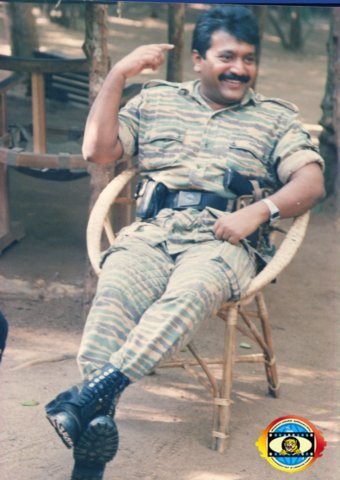
Velupillai Pirapāharan: VEERA MARANAM

Michael Roberts

 That the LTTE talaivar, Velupillai Pirapāharan, died a heroic death as a vīra maranam on the 18th or 19th May 2009 is now certain.[1]Though Tamil sources claim that he shot himself with his pistol when he and his troops were trapped in the mangrove swamps on the eastern shoreline of Nandhikadal lagoon, the weight of evidence suggests that he was hit by a bullet “traveling diagonally across VP’s skull, probably from left forehead to right rear of skull –[a bullet that was part of] either a rifle round, or a rifle-calibre round”(David Blacker, email to Roberts, 14 February 2012).


Continue reading

35 Comments

Filed under accountability, Eelam, historical interpretation, life stories, LTTE, martyrdom, military strategy, patriotism, power politics, Sinhala-Tamil Relations, Tamil Tiger fighters, truth as casualty of war, unusual people, world affairs

India hangs Ajmal Kasab, the one surviving gunman of 2008 Mumbai attacks

Mohamed Ajmal Kasab

NBC News staff and wire reports

India hanged Mohammad Ajmal Kasab, the only militant to have survived the 2008 attacks on the financial capital Mumbai, officials said Wednesday.In August, India’s Supreme Court upheld Kasab’s death sentence over the attack on a string of targets in Mumbai that killed 166 people. Kasab, 25, was a Pakistani national. He was executed at 7:30 a.m. local time.

The execution at Yerawada Prison in Pune, near Mumbai, came just hours after President Pranab Mukherjee rejected a mercy plea by Kasab, who had said he belonged to the militant group Lashkar-e-Taiba. Continue reading

1 Comment

Filed under accountability, fundamentalism, terrorism, world affairs

The UN hacks off its own toes

Kath Noble, courtesy of the Island, 21 November 2012, where the title isThe UN’s plan for making white people feel better”

Last week I felt like I had been transported back in time. We were back in those awful first six months of 2009, when I was by turns horrified at the plight of the people caught up in the fighting in the Vanni and disgusted with the way in which the international community was responding.

Of course, we all wanted to stop the war. I hate violence. But as I argued then and continue to believe, at that point, the only way the war was going to stop was with the defeat of the LTTE. Prabhakaran would not give up on Eelam. He was going to continue his vicious campaign against the Sri Lankan state and all its communities until he was caught or killed. Our task, therefore, was to minimise the damage. We had to try to ensure that it was done with as little death and destruction as possible. Continue reading

1 Comment

Filed under accountability, authoritarian regimes, Eelam, historical interpretation, Indian Ocean politics, life stories, martyrdom, mass conscription, military strategy, news fabrication, NGOs, power politics, prabhakaran, propaganda, Sinhala-Tamil Relations, sri lankan society, UN reports, world events & processes

Rajapaksa Dynasty’s Concentrated Power: Question Marks

CHINA POST where the title reads “Power concentration in Sri Lanka threatens economic possibilities”

From foreign hotel towers sprouting on Colombo’s seafront to the new motorcycles and mobile phones buzzing in war-ravaged Jaffna, at first glance, Sri Lanka seems to be living up to its claim as Asia’s latest frontier market. But private businesses are not investing enough, threatening the boom that has swept the island since the end of a long ethnic conflict, while President Mahinda Rajapaksa and his family are tightening their grip on the economy and institutions with what critics see as an unusually personalized system of government. The global economy may be in poor shape, but with 17 percent growth since the war ended in 2009 and an eye-popping 200-percent rise in the stock market, investors should be flocking to Sri Lanka’s palm-fringed shores. Instead, even home-grown businesses are shy. Continue reading

Leave a comment

Filed under accountability, economic processes, growth pole, historical interpretation, island economy, life stories, LTTE, politIcal discourse, power politics, Sinhala-Tamil Relations, sri lankan society, Tamil civilians, welfare & philanthophy, world events & processes

Tamil Goodbye — Sri Lanka

Journeyman Pictures anchored by Mark Davis of SBS

SEE   http://youtu.be/owDY94bpY2A ………

…. AND   http://thuppahis.com/2012/07/30/a-flourishing-bibliographical-tree-tamil-migration-asylum-seekers-and-australia/#more-6461

Leave a comment

Filed under asylum-seekers, australian media, economic processes, ethnicity, immigration, island economy, life stories, LTTE, Sinhala-Tamil Relations, sri lankan society, Tamil migration, tamil refugees, truth as casualty of war, world events & processes

From Bio-tale and Anecdote to Issues of Housing and Ethnic Rapprochement in the North

TWO IRIN ESSAYS

I:  “Needs outstrip housing construction in north”

SELVANAGAR, 14 November 2012 (IRIN) – Rajina Mary, a 38-year-old widow and mother of four looks at her new home in Sri Lanka’s northern former conflict zone as if admiring a long-lost relative. But in reality, the home’s mostly unplastered walls bruise anyone who leans on them too hard, and there are large holes in the walls for non-existent windows and doors; the floor is cemented only in the living area. No one wants to stay indoors between mid-morning and late-afternoon because the house heats up like a furnace due to asbestos roofing sheets. Continue reading

Leave a comment

Filed under historical interpretation, life stories, LTTE, pilgrimages, politIcal discourse, propaganda, reconciliation, rehabilitation, Sinhala-Tamil Relations, sri lankan society, Tamil civilians, truth as casualty of war, welfare & philanthophy, working class conditions, world events & processes

Kavudha Rajaa! Who is to be King? Mahinda or Prabhaa? Misjudgements that changed the course of history

Somapala Gunadheera, in The Sunday Island, 11 November 2012

Misjudgements are anathema to justice. Nevertheless even they may accidentally ensure ‘the greater good of the greater number’ in very exceptional circumstances. The following judgements made by the Supreme Court since 2005 have turned out to be one such instance.

1. Injunction to prevent the Police from further investigating alleged misappropriation of tsunami funds by Mr. Mahinda Rajapaksa (MR)

2. Ruling that President Kumaratunga (PK), steps down from office one year earlier than stipulated

3. Decision that allowed any “cross over” in Parliament to continue as an elected MP, despite his or her political party’s objections

These decisions have been widely criticized with cogent reasons by legal luminaries. Recently there has even been an implied confession on the tenability of the injunction at 1 above. However, my intention is not to go into the legality of these decisions but to reflect on how they changed the course of history of this island. Continue reading

Leave a comment

Filed under accountability, Fascism, historical interpretation, Hitler, Indian Ocean politics, LTTE, military strategy, politIcal discourse, power politics, prabhakaran, propaganda, racist thinking, Rajapaksa regime, Sinhala-Tamil Relations, sri lankan society, terrorism, violence of language, world events & processes