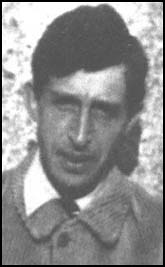
Random Reflections on the Public Service

Leelananda de Silva, from the Sunday Island,

Introduction: It is called the Public Service as its members are paid from the public purse. The term has nothing to do with the larger and more noble concept of performing a public service, which can be done by anyone from the larger society. A public service employee is a government and state employee, and whether the tasks they perform contribute to the welfare of the public depends on the nature of the government and the state that they serve. In ancient times, those paid by the state served the monarch. Under the British, public service employees served his or her majesty’s government, and whether they served the public was a subsidiary issue. Some did, more than others. The golden era of the public service in the country was arguably the period from 1948 – 1977, when there was parliamentary government. During this period, there was a democratic polity, elected by the people, and where the government and the state, and their employees served the public in a relatively transparent manner, and accountable to the public and parliament. Under the presidential system, public employees are serving the government more and the public less. Continue reading

Leave a comment

Filed under governance, historical interpretation, legal issues, politIcal discourse, power politics

Stirring the Pot about Sri Lankan Asylum-Seekers

TRAWLER--NATION JAN 2013

SEE a range of articles plus Emily Howie’s summary of previous news items

I: Surge Sri Lanka ‘payback’ … by Cameron Stewart & Paul Maley in The Australian, 2 February 2013

THE surge in asylum-seeker boats to Australia may have been quietly sanctioned at senior levels of the Sri Lankan government as a political payback for Australia’s attempts to make Colombo answer for alleged atrocities committed during its civil war. The theory has been discussed by Gillard government officials. It follows a widely asserted belief within the Australian government that a powerful Sri Lankan government official may be “complicit” in the people-smuggling trade and has facilitated the passage of dozens of boats to Australia during the past 10 months. The Australian yesterday revealed that the official is close to President Mahinda Rajapaksa. The Gillard government has chosen not to confront the official, fearing that a confrontation could cause the official to step up his alleged people-smuggling activities and further undermine what has otherwise been good co-operation with members of the Sri Lankan government on people-smuggling. Continue reading

2 Comments

Filed under asylum-seekers, Australian culture, australian media, disparagement, historical interpretation, immigration, Indian Ocean politics, island economy, politIcal discourse, population, power politics, propaganda, Sinhala-Tamil Relations, sri lankan society, Tamil civilians, truth as casualty of war, world events & processes

An evening with Leonard Woolf in Ceylon in 1960

Neville Jayaweera, reprint from the Sunday Island, 7 August 2005

Obsequious ceremonial: Upon Woolf’s arrival in Ceylon in early 1960 (he was 80 years old then) the Home Ministry arranged for him to tour the districts in which he had served as a Civil Servant. One leg of the tour took him through Hambantota, Tanamalwila, Wellawaya, Bandarawela, Welimada and Nuwara Eliya. At that time I was the AGA of the Badulla District which covered the entire route, and my GA was V. A. J. Senaratne  (Vicky) one of the most brilliant minds of the Civil Service — Physics First Class, and first in the CCS exam in his year, but for all that, utterly self effacing and therefore little known to the public. Continue reading

Leave a comment

Filed under cultural transmission, life stories, literary achievements, self-reflexivity, sri lankan society, unusual people

Symposium on Leonard Woolf’s Village in the Jungle

WOOLFVenue: Haldane Room, Wolfson College, Oxford. OX2 6UD. 

The Oxford Centre for Life-Writing at Wolfson College is delighted to host this workshop marking the centenary of the publication of Leonard Woolf’s path-breaking first novel, set in then Ceylon, The Village in the Jungle.  Woolf’s novel (the first of only two) is a leading yet often overlooked modernist document and is increasingly recognized as an extraordinarily far-sighted colonial text, an oblique record of his years as a colonial officer in Ceylon (1904-11).  It has also become a foundational novel in the Sri Lankan literary canon.  The workshop will consider Woolf’s radical colonialist legacy, and will explore the relationship of The Village in the Jungle to his later oeuvre of economic theory and political commentary, as well as to the field of post/colonial and empire writing more broadly. We will be interested, too, in the many intertextual links running between the 1910s work of Virginia Woolf, Lytton Strachey, E.M. Forster and others of and related to the Bloomsbury group, and that of Leonard Woolf, and consider some of the intersections between their works and their lives.

 Please address any queries about the symposium to Dominic Davies by emailing leonard.woolf.symposium@gmail.com Continue reading

3 Comments

Filed under cultural transmission, life stories, literary achievements, sri lankan society, unusual people

The Plane Man explores the History of Civil Aviation in Ceylon

3(1)

100 years of Aviation in Sri Lanka

Capt. Elmo Jayawardena, a veteran passenger jet pilot, requested me to narrate events of Air Ceylon, the first civil aviation operator in Sri Lanka, from its inauguration in December 1947; he knew that my wife and I was the only Air Ceylon flight crew remaining out of the first batch of pioneer aviators.

I had to back track my memory almost 65 years into the dim past and was able to provide him pictures and the history of Air Ceylon from its first flight in 1947 to its closure in 1979, succeeded by Air Lanka to continue as the national flag carrier. Elmo’s assignment was to produce a book within three months to celebrate 100 years of aviation in Sri Lanka on 7th December 2012, a rather gargantuan task within such a short time.

I expected him to produce a mediocre book with narrations and pictures in black and white.

To my surprise, three months later, he gifted me and my wife a beautiful book titled ‘A CENTENARY SKY’ with an impressive peacock blue hard cover with the History of 100 years of Aviation amply illustrated with glossy pictures from the time the first single engine aircraft flew from the Race Course over Colombo in 1912 and up to now, where Sri Lanka is now flying giant wide-bodied jet aircraft capable of carrying over 450 passengers from Colombo to dozens of cities all over the world flying millions of miles by our own Sri Lankan pilots in command, a great achievement we are very proud of.

Air Ceylon crew in their ceremonial uniform taken in 1949 at the farewell to Mr.L.S.B. Perera, the first Director of Civil Aviation. (From left to right) R/o D.L.Sirimanne, F/o Noel Peiris, Capt. Kenneth Joachim, Stewardess Olga de Silva, Capt. M.R. de Silva, Mr. L.S.B. Perera Director of CiviAviation, Capt. Peter Fernando, Chief Pilot and Operations Manager, Capt. Emil Jayawardena, F/o P.B. Mawalagedera, F/o George Ferdinand, R/o John Vethavanam, R/o Hector Fernando.

In this beautiful volume, Elmo delightfully sets his Centenary Year on a heading from 1912 to its present time on a straight track homing on all the important happenings in historical sequence over the clear blue skies of our beautiful Sri Lanka and its luscious tourists’ destinations leaving a memory trail of white moisturized exhaust, the tell tale history of Aviation in Sri Lanka.

Credit should be given to all our pioneers of Civil Aviation and present aircrews, the maintenance engineers and the air traffic controllers for having an unblemished record of accident free operations from the inception of Air Ceylon in 1947 and Airlanka, and the present day Srilankan Airlines and Mihinair, and we wish them safe flight and happy landings. I recommend this publication to all those interested in Aviation and others, to offer this book as a birthday gift to their children as an incentive to take up to this noble profession as aviators, aviation engineers and air traffic controllers and hitch their wagons for future space travel.

D.L.Sirimanne, [Retired Air Ceylon and KLM Flight Radio Officer and Navigator] … in Daily News 6 Feb 2013

2 Comments

January 31, 2013 · 10:15 am

Leading Buddhist Activists in 1889 … with Olcott too

LEADING BUDDHISTS IN bR CEYLON  Pic from The Golden Book of the Theosophical Society, 1925.

seated on ground: Anagarika Dharmapala, Weragama Banda, C. Don Carolis, William de Abrew, CP Gunawardane, .., Aliph

middle row: two Japanese monks, Revd Devamitta, Revd SH. Sri Sumangala, Col. Olcott, Japanese monk, Muhandiram Dharmagunawardana

standing back: …, Dullewa, C Wijeysinghe,.. ……..CW Leadbeater, ….  NS Fernando, “Bob’ (Olcott’s servant), NP Fernando, James Perera.

The Three Japanese monks seated may be Y. Ato, C. Tokugawa and Shaku Kozen (also known as Kozen Gunaratana who hailed from Yokohama and lived in Sri Lanka till 1893) . who became new members of the Maha Bodhi Society pursuant to the trip made to Japan in 1884 by Colonel Olcott  and Anagarika Dharmapala then a youth of 20 years. Continue reading

1 Comment

Filed under historical interpretation, life stories, sri lankan society

The Other Side of the Impeachment Drama

S. L. Gunasekera, in the Daily Mirror, 20 January 2013

The impeachment of a judge of a superior court is indisputably a tragic event to be dealt with  due solemnity and wholly divorced from all considerations of extraneous matters such as party affiliations and `loyalties’; prospects of rewards; political gain etc. It is a solemn occasion where Members of Parliament are required and indeed bound to discard and ignore completely their party affiliations, the  decisions of their respective parties on such matter as well as the instructions of their party whips and decide wholly dispassionately and objectively whether on the evidence adduced before them, the Judge concerned was or was not guilty of any one or more of the charges against him that gave rise to the resolution for his impeachment and whether such charges were of sufficient gravity to warrant his dismissal. Continue reading

Leave a comment

Filed under accountability, authoritarian regimes, discrimination, legal issues, life stories, patriotism, politIcal discourse, Rajapaksa regime, sri lankan society

The Constitution of the Democratic Socialist Republic of Sri Lanka: A Genre Defying Future Classic on the Psyche of a Republic

Amal de Chickera, courtesy of the National Youth Front and Groundviews

A contemporary masterpiece that interweaves fact, fiction and fantasy with seamless and vibrant prose, the Constitution is a must read for all literature lovers. The Constitution was first published in 1978 in not one, but three languages – the only piece of literature in the reviewers understanding to be thus translated at its very outset – an indication of the confidence that the authors had in its literary value and broad appeal. Due to popular demand, eighteen new editions have been published since, each with minor (and sometimes major) improvements. The book is so popular that moves in 2000 to cease publication and replace with another text were met with vehement protests and organised book burning ceremonies. In its 34-plus years of existence, the Constitution has truly proved to be a ‘living text’ – an accolade usually reserved for the masterpieces that have stood the test of time – Moby Dick, War and Peace, Mrs. Dalloway – and just like those other works it is sufficiently rich and nuanced to accommodate multiple and even contradictory interpretations based on the readers aptitude, wisdom, politics and indeed mood. Continue reading

Leave a comment

Filed under accountability, cultural transmission, democratic measures, politIcal discourse, power politics, power sharing, Rajapaksa regime, self-reflexivity, sri lankan society, trauma, unusual people

British parliamentarians praise Sri Lanka’s reconciliation paths

Janaka Alahapperuma, using different title

westminster parliamentNorthern Ireland parliamentarian for North Antrim from Democratic Unionist Party (DUP) Ian Paisley Jr said that Sri Lanka has made more measurable gains post-conflict than Northern Ireland. That is what he has seen on the ground, and British politicians should recognise it and stop the suffocation of a country by its past and help Sri Lanka to move forward to a better future. He made these strong comments with passion at Westminister Hall, UK Parliament during the debate on ‘Sri Lanka and the United Nations responsibility to protect’ from 9.30am to 11.00am on Tuesday 08 January 2013. Continue reading

1 Comment

Filed under accountability, historical interpretation, politIcal discourse, Rajapaksa regime, reconciliation, Sinhala-Tamil Relations, sri lankan society, Tamil civilians, truth as casualty of war, welfare & philanthophy, world events & processes

Bikes for Life, Sanga and the Lanerolles reach out to the north

Smriti Daniel, in the Sunday Times, where the title is “Kumar’s push to help children ride into a brighter future. The cricket legend’s Bikes For Life (BFL) initiative takes a tuneful turn with the De Lanerolle Brothers joining hands”

For the smiling children clustered around him, the chance to meet cricketer Kumar Sangakkara must have been a bigger thrill than receiving the bikes he had brought them as gifts. However, in the months to come, these bikes will make a significant difference in their lives. For many of these children this will be their primary mode of transport to school – and Kumar hopes – to a better life.

Kumar FOG + bikesA bicycle from a cricketing hero: A shy schoolgirl in the North is all smiles as Kumar Sangakkara gives her a brand new bike Continue reading

Leave a comment

Filed under life stories, NGOs, patriotism, reconciliation, Sinhala-Tamil Relations, Tamil civilians, unusual people, welfare & philanthophy