Farrer and Roberts discuss War Magic and the Sacrificial Devotion of Tamil Tigers

Q and A reprinted courtesy of Berghahn Press … at … http://ht.ly/VIYQMThis post is the transcript of an electronic interview between D. S. Farrer and Michael Roberts. Farrer is the special issue editor for Social Analysis Volume 58, Issue 1, and Roberts is the author of the article Encompassing Empowerment in Ritual, War, and Assassination: Tantric Principles in Tamil Tiger Instrumentalities” appearing in that issue. Below, Roberts answers a series of questions related to her article in Social Analysis.

This is the seventh in a series of interviews with contributors to this volume. Find the previous contributions on our blog. 

WAR MAGIC doug in fight Doug Farrer in action Continue reading

2 Comments

Filed under Al Qaeda, arab regimes, cultural transmission, disparagement, fundamentalism, governance, historical interpretation, Indian Ocean politics, Indian traditions, Islamic fundamentalism, landscape wondrous, life stories, LTTE, martyrdom, mass conscription, modernity & modernization, nationalism, news fabrication, pilgrimages, politIcal discourse, power politics, prabhakaran, propaganda, racist thinking, Rajapaksa regime, religiosity, Saivism, self-reflexivity, Sinhala-Tamil Relations, slanted reportage, sri lankan society, suicide bombing, Taliban, Tamil Tiger fighters, terrorism, the imaginary and the real, truth as casualty of war, vengeance, violence of language, war reportage, world events & processes, zealotry, Zen at war

Featuring Sujit Suvisundaram’s ISLANDED and Other Works

Radhika Coomaraswamy, in The Daily News, 22 December 2015, where the title reads “Original interpretation of historical fact, backed by detailed evidence, perceptive insights”

Let me say that ISLANDED by Sujit Sivasunderam is a seminal work. It is an original interpretation of historical fact, backed by detailed evidence and perceptive insights. It also questions received wisdom, entrenched narratives and the way we think about our country and ourselves. For over a century now, colonialism for Sri Lankans has always been seen as a terrible period of subjugation and oppression. As Frantz Fanon so forcefully argued, the psychological disempowerment coming from colonial exploitation and racism had not only submerged aspects of our culture, denigrated our self-respect but also destroyed our sense of being.

ISLANDED SUJIT 22 Sujit Suvisundaram…https://www.youtube.com/watch?v=RRokQbarKzM

This has therefore always led to a black and white narrative on colonialism accompanied with a great deal of anger- and perhaps rightfully so. As a result, we were never ready to look at the possible intricacies and nuances of the colonial experience. I wonder even today whether we have found the self-confidence to do it thoughtfully and without rancour.

Sujit Sivasunderam in this book ISLANDED is perhaps the first to make this attempt. He does so, not only by presenting new theories of colonial interaction, but by analyzing in detail the political and non political aspects of the colonial encounter- from the mixing of peoples, trade, archaeology, land, science and what he terms the “publics”.

Continue reading

Leave a comment

Filed under British imperialism, cultural transmission, economic processes, heritage, historical interpretation, landscape wondrous, life stories, modernity & modernization, plural society, politIcal discourse, power politics, racist thinking, religiosity, the imaginary and the real, transport and communications, unusual people, world affairs

Rajiva Wijesinha’s Essays on “Good Governance” reaches the Bookshelves

Rajiva Wijesinha: Reform, Rights and Good Governance, Colombo: S. Godage and brothers, 2015, ISBN 978-955-30-6555-1 … selling at Rs 1750 and $22.50 (without postage)

17780---Reform

ABSTRACT: This book brings together articles on governance issues written in the last few years. The main theme is the need for structural change, to ensure fulfilment of governmental and social responsibilities. Though there is stress now on corrective action, the greater need is for understanding of the root causes of abuse so these can be addressed, and abuse at least limited. The long second section of the book is based on the series entitled Sri Lanka Rights Watch which began in the Daily News in 2012. It arose from the author’s appointment to convene the Task Force to implement the National Human Rights Action Plan, which he had been instrumental in drafting when there was a dedicated Ministry for Human Rights under Mahinda Samarasinghe. Continue reading

Leave a comment

Filed under accountability, constitutional amendments, democratic measures, devolution, education, governance, historical interpretation, human rights, island economy, language policies, legal issues, life stories, LTTE, modernity & modernization, politIcal discourse, power politics, power sharing, Rajapaksa regime, reconciliation, self-reflexivity, Sinhala-Tamil Relations, social justice, sri lankan society, tolerance, welfare & philanthophy, world affairs

Onward Tamil Soldiers! Pirapāharan’s Inspiration remains Potent

Michael Roberts, courtesy of Colombo Telegraph, 19 December 2015, where it appears under a different title.  Note that the images deployed here are not found in the CT version, where the  Bibliography is also less expansive. Do also attend to the reasons why I have expanded the Bibliography: viz., a desire to elaborate the concept ofsacrificial devotion” ……. ……. = http://sacrificialdevotionnetwork.wordpress.com/ a tool used extensively in my studies of Tamil Tiger devotion to cause and suicide attacks plus defensive suicide on capture as one facet of this commitment.

Way back in the 1960s the scholar Sinnappah Arasaratnam noted that in Sri Lanka two (communal) extremisms were feeding off each other and thereby sharpening conflict (1967, 1974 & 1979). This was, of course, just one factor contributing to a developing crisis that requires a careful analysis that identifies the multiple factors aggravating division. The tragic tale remains true today: Sinhalese and Tamil extremists continue to stir the pot and gain vigour by attacking each other (and others too).

The vehemence is all the greater because the vanguard of such fervour resides among migrants in Western lands who are encouraged by the freedom of the internet to ride the waves of communication with slander and sarcasm as their principal weapons. Among the Sri Lankan Tamils of the diaspora, of course, this venom has been grounded in the bitter experiences that induced so many to leave Sri Lanka in the last three decades of the 20th century.

Via familial stories as well as the vast propaganda machinery built up by the LTTE over the last 25 years this fervour has been transmitted to some of the second/third generation migrants brought up in these lands. As with so many Tamils living in Sri Lanka in the 1990s and 2000s Velupillai Pirapāharan, the talaivar of Thamilīlam, was more or less a deity among these migrant peoples. In fact, he was likened to a Sun God (Jeyaraj 2009).
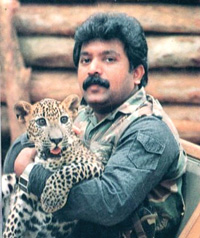
PRABHA + Tiger Figs 1 & 2 raghavan_prabhakaran3 Pirapāharan in his early days as freedom fighter … Fig 3 image019  

VP 22 Fig 3Pirapāharan pays homage to Black Tigers on 5th July 2005, with garlanded image of Miller, the first Black Tiger suicide bomber, as principal symbol — Pic from TamilNet. Note that Miller’s target on 5 July 1987was a SL Army compound at Nelliyadi and cannot in any way be considered an act of “terrorism”

Continue reading

2 Comments

Filed under atrocities, authoritarian regimes, cultural transmission, doctoring evidence, Eelam, historical interpretation, Indian Ocean politics, Indian traditions, law of armed conflict, legal issues, life stories, LTTE, martyrdom, military strategy, nationalism, political demonstrations, politIcal discourse, power politics, power sharing, prabhakaran, propaganda, racist thinking, Rajapaksa regime, reconciliation, self-reflexivity, Sinhala-Tamil Relations, slanted reportage, sri lankan society, Tamil civilians, Tamil migration, terrorism, the imaginary and the real, TNA, truth as casualty of war, unusual people, vengeance, violence of language, war crimes, war reportage, world events & processes, zealotry

Shemara Wikramanayake: Macquarie Bank’s Brightest Star in Meteoric Rise

John Kehoe, in 2013 at http://www.brw.com.au/p/business/companies/macquarie_brightest_star_bDTc0elFOgDy45qIeS6hsK

Shemara WikramanayakShemara Wikramanayake is not your typical Macquarie banker. As a diminutive female and immigrant with Sri Lankan heritage, she has already busted the stereotypical assumption that being male, white and egotistical is a prerequisite for success in the testosterone-driven world of investment banking. The head of Macquarie’s most profitable division, funds management, Wikramanayake is being billed for even greater things.

When talk turns to who will be Macquarie’s next chief executive after Nicholas Moore, Wikramanayake’s name figures prominently as a leading candidate. For outsiders that may come as a surprise, but colleagues such as 2011 Australian of the year Simon McKeon say Wikramanayake has been making an impression at the bank for many years. “She is an extraordinary individual, both professionally and what she does outside of Macquarie,” McKeon says. Continue reading

Leave a comment

Filed under accountability, cultural transmission, education, governance, life stories, performance, unusual people, welfare & philanthophy, world affairs

Bandarawela: Enchanting Hub in Sri Lanka’s Hill-Country

Manu Gunasena

Bandarawela is situated 210km from Colombo. At 1,220m (4,000ft) above sea level, the town is blessed with a salubrious climate that many regard as the healthiest in Sri Lanka.  Its temperature hovers between 12oC in December and 27oC in June with an average rainfall of 1,100 to 1,400mm annually. Its rich verdancy and its cool clean air make its climate invigorating, creating a health resort to keep both mind and body beautiful.

B'WELA 11

Continue reading

Leave a comment

Filed under landscape wondrous, sri lankan society, tourism, transport and communications, travelogue

Massaging the Message: USA shapes the Path towards its Constitutional Design for Sri Lanka

Daya Gamage, courtesy of The Asian Tribune, 19 December 2015, where the title reads “U.S. to persuade ‘Sinhala Hardliner’ Ranawaka for federalism in Sri Lanka”

A hard-line advocate for the retention of the unitary system in Sri Lanka whose advocacy resonates well with the majority Sinhalese sentiments met a strong advocate for a federal system for Sri Lanka in the U.S. Department of State on December 18 at a time the Sirisena-Wickremasinghe administration announced the formation of a constitutional assembly to discuss a new constitution for Sri Lanka. Minister Patali Champika Ranawaka, the leader of the nationalist Jathika Hela Urumaya and a leading minister who could influence the Sinhalese opinion in favor of the current administration on the issue of federalism, met with Atul Keshap, the U.S. ambassador in Colombo, who has gone on record tilting in favor of the Tamil political agitation for a federal structure for the north-east region of Sri Lanka.

aa--ranawaka 22 U.S. Ambassador Atul Keshap meets Minister of Megapolis and Western Development Champika Ranawaka.
Continue reading

2 Comments

Filed under accountability, american imperialism, devolution, governance, historical interpretation, Indian Ocean politics, nationalism, politIcal discourse, power politics, propaganda, security, self-reflexivity, Sinhala-Tamil Relations, sri lankan society, the imaginary and the real, truth as casualty of war, world events & processes

Messages from Ranil. Razeen and Rohan

ONE: “A Constituional Court required,” says Ranil …. http://www.chatter.lk/constitutional-court-needed-to-uphold-credibility-of-judicial-system-pm/

Prime Minister Ranil Wickremesinghe said today a separate Constitutional Court should be established to uphold the confidence of the people in the judicial system as politicization of the judiciary in the last decade had led to a loss of public confidence in the judicial system. Prime Minister Wickremesinghe expressed these views while delivering the 12th Sujata Jayawardena memorial oration organised by the Alumni Association of the Colombo University on “Strengthening Democratic Institutions” at the BMICH in Colombo. The Premier said politicization of the judiciary had been an obstacle to enshrining the Constitution as the supreme law and declaring all other laws which are inconsistent with the Constitution as invalid. “When establishing a separate Constitutional Court, we have to consider two issues. The first is the tenure of the Judges. Should it be decreed by an age limit or a time period? The second would be a possible method of ensuring the independence of the Constitutional Court,’ he said.

Ranil at SUja Continue reading

Leave a comment

Filed under accountability, economic processes, foreign policy, legal issues, politIcal discourse, power politics, Rajapaksa regime, self-reflexivity, Sinhala-Tamil Relations, sri lankan society, welfare & philanthophy, world affairs

The Open Society’s Exposure in 2013 of USA’s Secret Rendition Programme

In document entitled GLOBALIZING TORTURE. CIA SECRET DETENTIONAND EXTRAORDINARY RENDITION ….

SEE https://www.opensocietyfoundations.org/sites/default/files/globalizing-torture-20120205.pdf = for full version **

“We also have to work through, sort of the dark side, if you will. We’ve got to spend time in the shadows in the intelligence world. A lot of what needs to be done here will have to be done quietly, without any discussion, using sources and methods that are available to our intelligence agencies, if we’re going to be successful. That’s the world these folks operate in, and so it’s going to be vital for us to use any means at our disposal, basically, to achieve our objective.” U.S. Vice President Dick Cheney, September 16, 2011 DICK C 2 Dick Cheney dick-cheney

Following the terrorist attacks of September 11, 2001, the U.S. Central Intelligence Agency (CIA) commenced a secret detention program under which suspected terrorists were held in CIA prisons, also known as “black sites,” outside the United States, where they were subjected to “enhanced interrogation techniques” that involved torture and other abuse. At about the same time, the CIA gained expansive authority to engage in “extraordinary rendition,” defined here as the transfer— without legal process—of a detainee to the custody of a foreign government for purposes of detention and interrogation.2 Both the secret detention program and the extraordinary rendition program were highly classified, conducted outside the United States, and designed to place detainee interrogations beyond the reach of the law. Torture was a hallmark of both. The two programs entailed the abduction and disappearance of detainees and their extra-legal transfer on secret flights to undisclosed locations around the world, followed by their incommunicado detention, interrogation, torture, and abuse. The administration of President George W. Bush embraced the “dark side,” a new paradigm for countering terrorism with little regard for the constraints of domestic and international law. Continue reading

Leave a comment

Filed under accountability, american imperialism, democratic measures, governance, human rights, military strategy, politIcal discourse, power politics, terrorism, the imaginary and the real, truth as casualty of war, vengeance, war crimes, world events & processes

USA in Praise of Sri Lanka: Under-Secretary of State Thomas Shannon’s Address

Remarks at the Lakshman Kadirgamar Institute of International Relations and Strategic Studies, 16 December 2015

Good morning, and to all of you Ayubowan, Vanakkam. Thank you for being here. It’s a tremendous honor and a great pleasure to be here today.

sSHANNON SPEAKINGThank you, Mr. Minister, for your very kind introduction.  To be at this respected institute, named in honor of the late and great Lakshman Kadirgamar, and an institute dedicated to the study of Sri Lanka’s strategic interests, is the right place to be today to talk to all of you, about the partnership between the United States and Sri Lanka. Few understood the strategic interests of Sri Lanka better than Kadirgamar, who was an accomplished international civil servant, and an unparalleled expert on foreign affairs – appointed three times as foreign minister.  It has been nearly 10 years since his assassination, but his vision of a united, inclusive, and peaceful Sri Lanka is becoming more real by the day. Continue reading

1 Comment

Filed under american imperialism, cultural transmission, democratic measures, economic processes, governance, growth pole, historical interpretation, Indian Ocean politics, island economy, legal issues, military strategy, politIcal discourse, power politics, propaganda, Rajapaksa regime, Responsibility to Protect or R2P, Sinhala-Tamil Relations, slanted reportage, sri lankan society, the imaginary and the real, transport and communications, truth as casualty of war, world events & processes
