Disappearances and Torture in Sri Lanka, 2011-13 … or Thereabouts: Soundings and Question-Marks

Michael Roberts

In studying the blog-comments on “Sinhala Mind-Set” and presenting the lot for public scrutiny a specific claim by a person identifying himself as “Flloyd” caught my attention. Whether Flloyd is a Tamil is of lesser moment than his allegation. It is the sort of claim that is widely peddled by reporters and VIPs who drop in and fly out after short stays and have the clout to reach a worldwide audience – for instance Roger Draper in the National Geographic and Greg Bearup in The Weekend Australian recently.   Thus prodded,  I took the initiative to test the degree of validity that we could attach to this type of assertion by approaching a selected body of personnel (mostly Sri Lankan) via a one-on-one letter presenting the QUESTION repeated here [in blue].

“I came across a blog comment from one “Flloyd” in April 2013 which adopted a reasonably moderate stance on the ethnic situation in the country but which also presented this assertion: “The presence of an organized rebel group is no more, but the Tamils continue to be tortured, raped, and killed by the state. Many still mention the brutality of the rebels, but in no way can that justify the current situation, as the rebel activity is gone.”

05-april-2009-exodus 09-yatawara-2figure-10a-tamil-people-at-the-last-redoubt-after-the-final-battles-2009 Continue reading

8 Comments

Filed under accountability, communal relations, disparagement, doctoring evidence, governance, historical interpretation, human rights, life stories, LTTE, politIcal discourse, Rajapaksa regime, reconciliation, rehabilitation, Sinhala-Tamil Relations, slanted reportage, social justice, sri lankan society, Tamil civilians, the imaginary and the real, truth as casualty of war, welfare & philanthophy, women in ethnic conflcits, working class conditions, world affairs

India & Lanka and the Devolution of Land Powers: Critical Comments

Gerald H. Peiris, courtesy of The Island , where the title is “Devolution of Land Powers – A Comment” … Note that emphasis via highlighting is the work of The Editor, Thuppahi

Among the writings published in the wake of release of the Report submitted to Parliament by the Constitutional Reform Sub-Committee on ‘Centre-Periphery Relations’ are those that appeared in recent issues of The Island – C. A. Chandraprema’s ‘Analysis’ of the report, and a more general piece titled ‘Constitutional reform and devolution of power’ by Harim Peiris. The former, needless to say, is an incisive critique written at a level of expertise which the ‘Panel of Experts’ that served the sub-committee appears to have lacked. The latter, I respectfully submit, is a feeble attempt that contains misrepresentations, intended no doubt to reinforce the recommendations made by the sub-committee on ‘devolution’.


aagp-devolution Figure 2

This paper is being written with the twin objective of supplementing Chandraprema’s criticisms with a few sets of information relevant to a study of ‘Centre-Periphery Relations’ in a multi-ethnic polity such as ours, and to highlight with special reference to Harim Peiris’ article, the superficiality typical of the on-going campaign intended to emaciate the unitary character of the nation-state of Sri Lanka. This campaign is also represented by recent publications such as the reports produced by the ‘Public Representations Committee on Constitutional Reform’ (chaired by Lal Wijenayake) and the ‘Constitutional Reform Sub-Committee’ referred to above, alongside the sustained literary efforts by self-professed “Sri Lanka experts” in India ̶for example those associated with the ‘Centre for South and Southeast Asian Studies’ of the University of Madras̶ whose barely concealed objective all along has been that of promoting the hegemonic interests of India in the South Asia Region.


Continue reading

1 Comment

Filed under accountability, democratic measures, devolution, economic processes, electoral structures, ethnicity, historical interpretation, Indian Ocean politics, island economy, LTTE, modernity & modernization, politIcal discourse, power politics, power sharing, security, Sinhala-Tamil Relations, world affairs

Sins And Kills: The Rajapaksa Clan And Their Messy Cupboard

Greg Bearup in The Weekend Australian, 26/27 November 2016, where the title is “Phantoms of Sri Lanka’s Reign of Terror”

Mahinda Rajapaksa sits at a desk in his party office beneath a photo of himself. He’s not especially tall but solid in the chest and arms; like an old rugby prop, his head seems to rest on his shoulders without much need for a neck. He’s never seen in public without his brown scarf, supposedly signifying the sweaty rags of Sri Lanka’s hard-toiling farmers. On his fingers this man of the people wears three chunky gold rings and on his wrist a bracelet of jade balls. Everyone here still calls him Mr President.

aa-thzaju-protest Public Protest on bhalf of Thajudeen 

mahinda-r-lefterispitarakis Photo by Jefteris Pitakaris

The photo hanging over him was shot a few years ago, back when he was Mr President, and back when things were very different for the Rajapaksa clan. His rule was absolute. The Rajapaksas controlled the treasury and Sri Lanka became one of the most expensive places on the planet to “build” a road. He and his family ran the country as if they owned it. They acted with impunity. His sons, ordinary footballers by all accounts, were selected to play rugby for Sri Lanka. Foreign coaches who dropped them were deported. They were lucky; others who displeased the clan disappeared. Continue reading

1 Comment

Filed under accountability, australian media, discrimination, disparagement, doctoring evidence, governance, historical interpretation, human rights, Indian Ocean politics, landscape wondrous, legal issues, life stories, politIcal discourse, power politics, self-reflexivity, sri lankan society, the imaginary and the real, truth as casualty of war, vengeance, world events & processes

Creeping Self-Determination: Committee on Centre-Periphery Relations paves that road

CA Chandraprema, in The Island, 23 & 24 November 2016,

“The purpose of the Subcommittee on Centre Periphery Relations appears to be to empower the provinces to such an extent that the central government is rendered irrelevant. What they envisage is a nominal central government with nine virtually independent provinces.” (Analyses of the other subcommittee reports will appear from Monday onwards.)

 aa-rajiv-22aa-rajiv-11

Part ONE: Constitutional Assembly: Analysis of Centre-Periphery Relations Report

The Provincial Governor: The report submitted to the Constitutional Assembly by its Subcommittee on Centre-Periphery Relations focuses on several areas such as the role of the provincial Governor, and the fiscal, administrative, land and police powers of the provincial councils. What the subcommittee report says about the institution of the provincial governor is plain and direct as follows: “The present powers of the Governors are excessive and should be curtailed. The Thirteenth Amendment and the Provincial Councils Act No. 42 of 1987 vests a multitude of powers to the unelected Governor to intervene, control and regulate the executive and legislative functions of the provinces. The position of the Governor with such powers represents central dominance in the province…”

Continue reading

4 Comments

Filed under accountability, legal issues, modernity & modernization, performance, politIcal discourse, power politics, power sharing, reconciliation, security, Sinhala-Tamil Relations, sri lankan society, the imaginary and the real

Gamage on USA’s Machinations in Support of the Tamil Tigers

daya-profile-pixDaya Gamage, via review notice in Asian Tribune with title New book discloses U.S. machinations that globally- revived Tamil Tigers”

Continue reading

Leave a comment

Filed under accountability, american imperialism, authoritarian regimes, historical interpretation, Indian Ocean politics, landscape wondrous, LTTE, military strategy, politIcal discourse, power politics, Rajapaksa regime, Sinhala-Tamil Relations, sri lankan society, Tamil Tiger fighters, the imaginary and the real, truth as casualty of war, vengeance, war reportage, world events & processes

Two Sri Lankan Tamil Voices from the North Today

Frances Bulathsinghala, courtesy of Daily FT, 5 August 2016, where the title reads “Post-war voices from the north.” The emphases in highlighted colours, however, are additions by The Editor, Thuppahi

Jaffna, Kilinochchi, Mullaitivu: Rajini is 46 years old and an ex-LTTE Commander with a 10-year-old daughter. She is a widow. She has few visitors. Tamil politicians are rarely among them.  Occasionally she chases off military officers who enter her premises in her absence and make themselves at home for hours in her garden. She flies into a rage at them. She informs them that they have no right to enter her garden in her absence. They accept, grin, make some lame excuses and good-naturedly lope off after the cursory examination of the military reference documentation that is as important for ex-militants in post-war times as it was for civilians in peace times. 

It is peace. At least there is no gunfire now. Of the memories of fire that continue to burn in hearts and minds we do not know.

fb-ranjini

Continue reading

1 Comment

Filed under accountability, authoritarian regimes, communal relations, cultural transmission, economic processes, Eelam, ethnicity, female empowerment, governance, historical interpretation, human rights, IDP camps, landscape wondrous, legal issues, life stories, literary achievements, nationalism, politIcal discourse, power politics, Rajapaksa regime, self-reflexivity, Sinhala-Tamil Relations, sri lankan society, Tamil civilians, Tamil Tiger fighters, tolerance, trauma, truth as casualty of war, war crimes, war reportage

Gilani on Trump’s Trans Pacific Partnership

Iftikhar Gilani,  23 November 2016, courtesy of DNA

Compared to the previous UPA government’s preference to steer clear of the US-China rivalry, Prime Minister Modi’s tenure so far has been responsive towards US proposals for cooperation in the defence sector. US President-elect Donald Trump’s policy outline to withdraw from the Trans-Pacific Partnership (TPP) within his first 100 days in the Oval Office has sounded alarm bells in India. The policy means the death knell for outgoing President Barack Obama’s strategic outline of a “pivot” to rebalance Asia, in which India and Japan would be the two anchors. Though an economic alliance, the TTP was meant to counter China’s rise through enhanced military, political and economic cooperation with regional allies.donald-trump_3

Continue reading

Leave a comment

Filed under accountability, economic processes, foreign policy, Indian Ocean politics, transport and communications, world events & processes

Leonard Woolf, The Anti-Imperialist

Thiru Arumugam, Courtesy of The Ceylankan: Journal of the Ceylon Society of Australia, journal 76, Vol. XIX, 4 November 2016

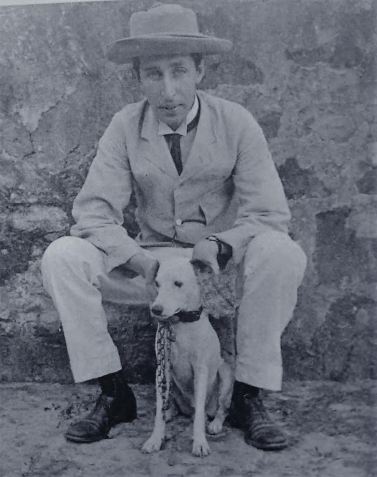
aawoolf-dogWoolf and his dog “Charles” in Jaffna

Introduction: The Ceylankan has carried three articles about Leonard Woolf. In the May 2004 issue Vama Vamadevan wrote an article titled Leonard Woolf  which mainly covered Woolf’s years in Ceylon (1904-1910). In the November 2004 issue Yasmine Gooneratne wrote an article titled Lone Woolf in which she presents a scholarly analysis of Woolf’s book Village in the Jungle and describes a forthcoming new edition of the book with misprints in the first (1913) edition corrected and excised passages restored. Yasmine’s article mentions Leonards “patient devotion with which he had nursed Virginia Woolf through her spells of mental illness, thereby guaranteeing to the world the emergence of its foremost female literary genius”.  Finally, in the February 2009 issue Philip Sansoni wrote an article titled Leonard Woolf – The Lonely Cadet and the Maiden in which he describes in great detail Woolf’s affair in Jaffna with Kitty Leyden. Woolf in the second volume of his autobiography1 says briefly that it was only a one-night stand where he lost his virginity, which had survived his days at Cambridge. However, in a letter to his good friend Lytton Strachey in England dated 12 November 1905written from Jaffna, Woolf said something more “… what do you think of my new one alone with a burgher concubine in a long whitewashed bungalow overlooking a lagoon, where time is only divided between reading Voltaire on the immense verandah and copulating in the vast and empty rooms …” Continue reading

2 Comments

Filed under British imperialism, caste issues, cultural transmission, governance, heritage, historical interpretation, island economy, landscape wondrous, life stories, literary achievements, modernity & modernization, politIcal discourse, self-reflexivity, sri lankan society, the imaginary and the real, unusual people, world events & processes

Supreme Court Ruling: Namo-Namo in Mother Tongues As Constitutional Right

Daily Mirror News Item … http://www.dailymirror.lk/article/Let-the-National-Anthem-unite-us-EDITORIAL-119464.html

aa-s-court

On Friday, November 18, 2016 the Supreme Court (SC) of Sri Lanka upheld the right of the people of Sri Lanka to sing the national anthem of the country, Namo Namo Matha in one’s own mother-tongue. What makes Namo Namo Matha unique is that it is a song of praise to the country alone. It does not glorify any race, caste, creed, community or religion. It is absolutely non-partisan and appeals to the patriotism of all the people of our country –Mother Lanka. It was because of this, that the Tamil people once the anthem was translated found nothing objectionable in the verses and took the anthem to heart and sang it with pride in their mother-tongue.

Continue reading

2 Comments

Filed under communal relations, cultural transmission, heritage, historical interpretation

Down the Hatch: US Presidents evaluated by Their Very Own Secret Service

Ronald Kessler : Secrets of the Secret Service
https://urldefense.proofpoint.com/v2/url?u=https-3A__sites.google.com_site_sundayfamilyhumour9_sunday-2Dfamily-2Dhumour-2D-2D26th-2Djuly_Never-2520stand-2520in-2520line-25201-2520jpg.jpg-3Fattredirects-3D0&d=BQMFaQ&c=hLS_V_MyRCwXDjNCFvC1XhVzdhW2dOtrP9xQj43rEYI&r=yaq9JNRjQaAIhTSE38klpw&m=IcClHpP-NSAlfp_PTuCKTXKx5LyYGkXLETbB9ipuceQ&s=BeWovGg8skQK5Flv-XSybu4Kh_pfiuZSjGDiL9RW7Dk&e=

Continue reading

Leave a comment

Filed under american imperialism, politIcal discourse, power politics, taking the piss, the imaginary and the real, truth as casualty of war, unusual people, vengeance, world affairs