
Leonard Woolf, The Anti-Imperialist

Thiru Arumugam, Courtesy of The Ceylankan: Journal of the Ceylon Society of Australia, journal 76, Vol. XIX, 4 November 2016
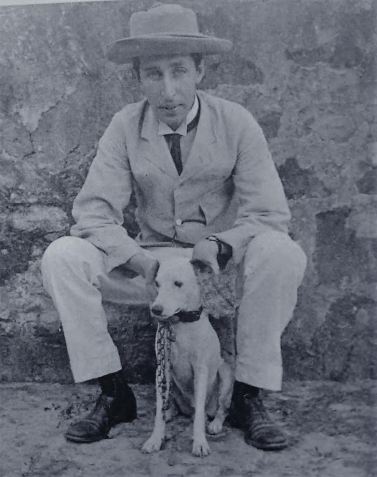
aawoolf-dogWoolf and his dog “Charles” in Jaffna

Introduction: The Ceylankan has carried three articles about Leonard Woolf. In the May 2004 issue Vama Vamadevan wrote an article titled Leonard Woolf  which mainly covered Woolf’s years in Ceylon (1904-1910). In the November 2004 issue Yasmine Gooneratne wrote an article titled Lone Woolf in which she presents a scholarly analysis of Woolf’s book Village in the Jungle and describes a forthcoming new edition of the book with misprints in the first (1913) edition corrected and excised passages restored. Yasmine’s article mentions Leonards “patient devotion with which he had nursed Virginia Woolf through her spells of mental illness, thereby guaranteeing to the world the emergence of its foremost female literary genius”.  Finally, in the February 2009 issue Philip Sansoni wrote an article titled Leonard Woolf – The Lonely Cadet and the Maiden in which he describes in great detail Woolf’s affair in Jaffna with Kitty Leyden. Woolf in the second volume of his autobiography1 says briefly that it was only a one-night stand where he lost his virginity, which had survived his days at Cambridge. However, in a letter to his good friend Lytton Strachey in England dated 12 November 1905written from Jaffna, Woolf said something more “… what do you think of my new one alone with a burgher concubine in a long whitewashed bungalow overlooking a lagoon, where time is only divided between reading Voltaire on the immense verandah and copulating in the vast and empty rooms …” Continue reading

2 Comments

Filed under British imperialism, caste issues, cultural transmission, governance, heritage, historical interpretation, island economy, landscape wondrous, life stories, literary achievements, modernity & modernization, politIcal discourse, self-reflexivity, sri lankan society, the imaginary and the real, unusual people, world events & processes

Supreme Court Ruling: Namo-Namo in Mother Tongues As Constitutional Right

Daily Mirror News Item … http://www.dailymirror.lk/article/Let-the-National-Anthem-unite-us-EDITORIAL-119464.html

aa-s-court

On Friday, November 18, 2016 the Supreme Court (SC) of Sri Lanka upheld the right of the people of Sri Lanka to sing the national anthem of the country, Namo Namo Matha in one’s own mother-tongue. What makes Namo Namo Matha unique is that it is a song of praise to the country alone. It does not glorify any race, caste, creed, community or religion. It is absolutely non-partisan and appeals to the patriotism of all the people of our country –Mother Lanka. It was because of this, that the Tamil people once the anthem was translated found nothing objectionable in the verses and took the anthem to heart and sang it with pride in their mother-tongue.

Continue reading

2 Comments

Filed under communal relations, cultural transmission, heritage, historical interpretation

Down the Hatch: US Presidents evaluated by Their Very Own Secret Service

Ronald Kessler : Secrets of the Secret Service
https://urldefense.proofpoint.com/v2/url?u=https-3A__sites.google.com_site_sundayfamilyhumour9_sunday-2Dfamily-2Dhumour-2D-2D26th-2Djuly_Never-2520stand-2520in-2520line-25201-2520jpg.jpg-3Fattredirects-3D0&d=BQMFaQ&c=hLS_V_MyRCwXDjNCFvC1XhVzdhW2dOtrP9xQj43rEYI&r=yaq9JNRjQaAIhTSE38klpw&m=IcClHpP-NSAlfp_PTuCKTXKx5LyYGkXLETbB9ipuceQ&s=BeWovGg8skQK5Flv-XSybu4Kh_pfiuZSjGDiL9RW7Dk&e=

Continue reading

Leave a comment

Filed under american imperialism, politIcal discourse, power politics, taking the piss, the imaginary and the real, truth as casualty of war, unusual people, vengeance, world affairs

Understanding Extreme Sinhala Nationalism

aa-lionelLionel Bopage, in The Island, 10 April 2002, reviewing article entitled  Sinhala-ness and Sinhala Nationalism by Michael Roberts (see details below)

Current conflict in Sri Lanka is explicable by nothing less than an analysis of Sri Lanka’s entire history. But “all history becomes subjective; in other words, there is properly no history; only biography. Every mind must know the whole lesson for itself,” says Emerson. In his article “Sinhala-ness and Sinhala Nationalism” Dr. Michael Roberts presents a broad but concise ‘culturalogical’ perspective of the development of Sinhala consciousness between the 16th and 20th centuries. This helps us to better understand today’s events in Sri Lanka that are mostly justified in the name of history and culture.

There was a continuing force of oral story telling and poetry among Sinhala people until the mid-twentieth century. However, faced with the task of superimposing capitalism on a feudal (or Asiatic type) set-up, the British colonialists proceeded with building infrastructure needed for the capitalist economy, bringing the country under one administration and making English the language of administration. Against this background, Michael explains how various communities such as Burghers, Jas, Yons and Ceylon Tamils came to occupy niches in that socio-economic order.

ssinhala-ness Continue reading

Leave a comment

Filed under British colonialism, Indian Ocean politics, island economy, language policies, modernity & modernization, nationalism, politIcal discourse, power politics, racist thinking, self-reflexivity, Sinhala-Tamil Relations, sri lankan society, world events & processes, zealotry

Gems and Nuggets within the Commentary on SINHALA MINDSET: Reflections

Michael Roberts

A chance event led me to study the comments responding to “Sinhala Mind-Set,” one of the signature ‘tunes’ introducing my web-site thuppahi.wordpress.com – the other being WHY THUPPAHI. The present collection of responses has been cast in spasmodic fashion between 2009 and 2013. They are from Sri Lankans for the most part, with Mel Glickman, Jane Russell and one “Duque” being the only personnel outside this specific ‘embrace’ of nationality. Several facets of the information and thinking inscribed in these comments are pertinent to the situation facing Sri Lanka in the 2010s. I have therefore presented them again with significant segments highlighted to assist or stir readers, while proceeding to add reflections of my own in this companion piece. The aim is to promote provoke debate.

1364002696fea9-4 ssinhala-ness

Continue reading

1 Comment

Filed under British colonialism, communal relations, devolution, discrimination, economic processes, electoral structures, ethnicity, governance, historical interpretation, human rights, island economy, language policies, legal issues, life stories, LTTE, modernity & modernization, Muslims in Lanka, nationalism, politIcal discourse, power politics, racist thinking, Rajapaksa regime, reconciliation, rehabilitation, self-reflexivity, Sinhala-Tamil Relations, sri lankan society, Tamil civilians, tamil refugees, Tamil Tiger fighters, truth as casualty of war, world events & processes

Leonard Woolf as a Judge in Ceylon

Prabath de Silva

“I welcome the publication of this second and revised edition of Prabhath de Silva’s book on the judicial work of Leonard Woolf, who tried many civil and criminal court cases when serving as a member of the Ceylon Civil Service at Hambantota from 1908 to 1911.  De Silva has taken pains to collect extensive evidence from many sources, including Woolf’s official diary, his autobiography, manuscripts found in the record room of Hambantota District Court, and his famous novel, The Village in the Jungle.  These sources are woven together to provide a vivid account of Woolf’s approach to law and justice.  In this new edition, de Silva has expanded his use of foreign and local secondary sources in order to place Woolf’s judicial work in a wider context.  De Silva’s analysis shows that Woolf’s distinctive personality affected the way he approached the cases he heard.  At the same time, the book also has wider implications for understanding colonial justice and the ideological foundations of British rule in Ceylon.”  Foreword by Dr.John D. Rogers:

a21 Woolf with Hambantota kachcheri staff Mudaliyars, Muhandiram and Engelbrecht

Continue reading

8 Comments

Filed under accountability, British colonialism, cultural transmission, governance, heritage, historical interpretation, landscape wondrous, legal issues, life stories, literary achievements, modernity & modernization, politIcal discourse, power politics, social justice, sri lankan society, unusual people, world affairs

The Full Monty: Commentary and Debate around Thuppahi’s Sinhala Mind-Set

I reproduce here the series of sporadic comments on my opening ‘signature’ entitled SINHALA MIND-SET. These occurred for the most part between 2010 and 2013 and I have taken the liberty of highlighting segments of the commentary as guidance and as a stirring of the brew. I invite readers to use these thoughts as an inspiration to serious reflection on the situation in Sri Lanka today in its recent ‘evolution’ after the end of Eelam War IV. I will be presenting an article with my own thoughts so you will have scope for two bites at this mango. This second post will include a bibliography, but an even more extensive bibliography on “Disappearances” is in the planning stage.

 aa-jane-r Jane Russel aa-xcharlieCharles Ponnadurai aka Sarvan michael-2015Roberts

Continue reading

3 Comments

Filed under accountability, citizen journalism, communal relations, cultural transmission, democratic measures, disparagement, ethnicity, governance, historical interpretation, Indian Ocean politics, landscape wondrous, language policies, life stories, modernity & modernization, plural society, politIcal discourse, power politics, reconciliation, self-reflexivity, Sinhala-Tamil Relations, social justice, sri lankan society, Tamil migration, terrorism, the imaginary and the real, tolerance, truth as casualty of war, vengeance, world events & processes

Asian English Cricketers undermine Farage and UKIP

Andy Bull, 1 November 2016, in The Spin,where the title runs “Farage’s canvassing shows English cricket must embrace other cultures” … and where the subtitle says “Canvassing counties and alienating communities” … . and the first lines stresses that “When Nigel Farage leafleted Yorkshire fans he tried to tap into outdated notions at odds with the example being set by England’s four Muslim players”

ansri-moeen  Ansari and Moeen for Blighty in Cricket …. “Zafar Ansari, left, does not practise Islam but identifies as one of four British Muslims in England’s Test side: ‘That’s really exciting and something we’re proud of.’ Photograph: Philip Brown/Getty Images

Back in June, a little less than half a year and a little more than half a lifetime ago, Nigel Farage visited Headingley. It was the fourth day of Yorkshire’s match against Lancashire, but he had not come for the cricket so much as the opportunity to pose for a photos and press some flesh. He stopped off in the Long Room, where his assistants started handing around Ukip leaflets. Farage often talks about what a keen fan he is of the game. But here, perhaps, was a first clue that this may not be entirely true. Because anyone who understood the sport would surely know better than to try to proselytise Yorkshire fans while they were attending to the serious business of watching the Roses match. Farage was, apparently, told to either leave off or leave altogether. One of Yorkshire’s members wrote a fine follow-up letter to the club. “You only have to look at the newspapers which people read at Headingley to see that Yorkshire cricket supporters hold diverse political views,” he wrote, “but we are all united by a love of cricket in general and Yorkshire cricket in particular.” Headingley wasn’t the only cricket ground Farage campaigned at in the summer. He also held a rally at New Road in Worcester, stopped in at Lord’s, and had lunch at the Nevill Ground in Tunbridge Wells, where he spoke about how much he enjoyed the “very English scene”. Continue reading

Leave a comment

Filed under cricket for amity, cultural transmission, economic processes, governance, Indian religions, landscape wondrous, life stories, meditations, modernity & modernization, performance, politIcal discourse, self-reflexivity, tolerance, unusual people, welfare & philanthophy, world events & processes

Leonard Woolf as An Accidental Civil Servant in Ceylon

addendum:Joe Kovacs in Literary Traveller,  23 June 2005, …. http://www.literarytraveler.com/articles/leonard_woolf_ceylon/ where the title runs The Accidental British Servant: Leonard Woolf in Ceylon”

When I joined the Peace Corps and went to Sri Lanka in 1997, I took a leave of absence from a graduate program in English literature at Fordham University. I was unhappy with academia as an aspiring creative writer; I wanted to make literature, not analyze it. I had no idea how international development work in Asia could help, but at least it would provide a long-overdue vacation from education. I’d never left the United States before, and after an exhausting trip west from New York through San Francisco, Tokyo and Bangkok, the third flight of my trans-global journey arrived in the Sri Lankan capital of Colombo at two in the morning. I spent the rest of those benighted, pre-dawn hours in a retreat center in the jungle, trying to sleep. But the dense heat drenched me in sweat, even as I lay still in bed, the uncompromising mattress made my back sore and a swooping blue mosquito net left me entombed. Had I just made a mistake? From the jungle outside came a sudden high-pitched screech, convincing me that I’d come to a land of monsters. llw-222 lw-11

Continue reading

1 Comment

Filed under accountability, american imperialism, cultural transmission, governance, heritage, historical interpretation, Indian Ocean politics, landscape wondrous, life stories, literary achievements, modernity & modernization, news fabrication, performance, politIcal discourse, self-reflexivity, Sinhala-Tamil Relations, slanted reportage, sri lankan society, the imaginary and the real, travelogue, world events & processes

Sri Lankan Festival in Canberra is An Ebullient Success

Sri Lanka Festival 2016 draws unprecedented crowds in Canberra

Canberra community came in large numbers to savour a little of Sri Lanka at the  by the High Commission on Saturday 12th November in the High Commission premises. Over 3000 people and children representing the Commonwealth and Australian Capital Territory (ACT) governments, diplomatic corps, and the local community visited the Festival and enjoyed the food, culture and crafts of Sri Lanka.  Australian Assistant Minister for Social Services and Multicultural Affairs Senator Zed Seselja was the Chief Guest. Former Sri Lanka cricketer Asanka Gurusinghe travelled all the way from Melbourne to be present at the Festival. Addressing the Opening Ceremony, the Assistant Minister emphasised the importance of multiculturalism for Australia, and congratulated the High Commission and the Sri Lankan community for coming together in promoting Sri Lanka.

a1-1ceremonical-escort-of-special-inivtees

Continue reading

Leave a comment

Filed under australian media, cultural transmission, education, performance, sri lankan society, unusual people, welfare & philanthophy, world affairs