
Well ! What do you know!

Filed under accountability, american imperialism, Islamic fundamentalism, landscape wondrous, life stories, military expenditure, military strategy, politIcal discourse, security, self-reflexivity, taking the piss, transport and communications, trauma, truth as casualty of war, vengeance, war crimes, war reportage, world events & processes, zealotry
MEVAN PIERIS has recently turned his mind to artwork with paintbrush, while yet sustaining his commitment to the academic disciplines in which he has devoted his endeavours during the past few decades by reproducing and/or renovating portraitures of eminent scientists; while also creating paintings of his own — both portraits and scenarios.
 This is a photograph of the restored painting of Professor Juan Pedige Charles Chandrasena who joined the University College in 1923 and was Professor of Chemistry in 1932 and retired or died soon afterwards. This Portrait is unsigned and the guess is that it is the work of David Paynter. The painting was in a very bad state with certain areas of the canvas having deteriorated and sprinkled all over with wall paint through neglect. The frame was also damaged and here and there the paint had begun to peel off.
Filed under Australian culture, cricket for amity, education, Eelam, ethnicity, heritage, landscape wondrous, life stories, patriotism, performance, photography, self-reflexivity, sri lankan society, Tamil civilians, teaching profession, travelogue, Uncategorized, unusual people, world events & processes
Chandre Dharmawardana

The word stub “ket,”, கேத, in the place name: Tiru-k-keteeswaram, திருக்கேதீசுவரம்
In finding a meaning for the component –ket– in Tiru-ket-heesvaram, well known Engineer Thiru Arumugam has quoted an interpretation given in 1849 by Pridham which leans on a mythological tale of Vishnu’s exlir of mortality that fell into the hands of a demon. The demon was said to be cut into two and became Rahu and Ketu (.இராகு கேது) recognized in astrology. Predham stretches his imagination very far to convert the Tamil -கேத- sound to கேது in finding an “explanation” or rationalization for the stub -கேத- found in the place name.
Filed under ancient civilisations, architects & architecture, art & allure bewitching, centre-periphery relations, cultural transmission, demography, economic processes, ethnicity, heritage, Hinduism, historical interpretation, Indian religions, Indian traditions, island economy, landscape wondrous, life stories, literary achievements, pilgrimages, religiosity, self-reflexivity, Sinhala-Tamil Relations, sri lankan society, Tamil migration, the imaginary and the real, transport and communications, travelogue, world events & processes
David Von Drehle, in Washington Post, 8 August 2021, with this title … “Sherlock holmes & Winston Churchill: Cautionary tales on Afghanistan”
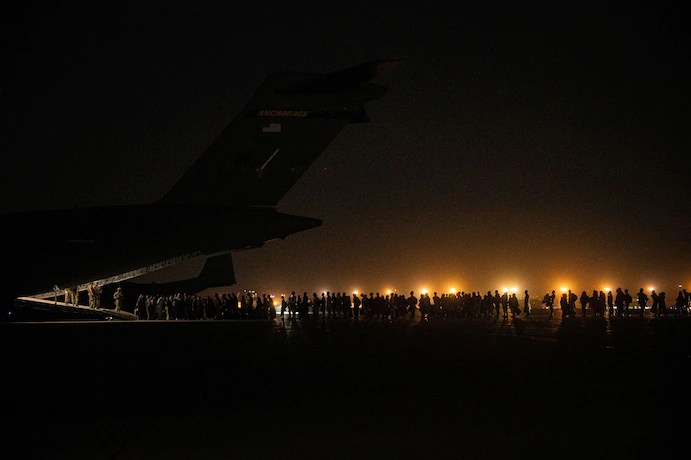

I learned of a place called Afghanistan as many Americans used to do: by reading one of the most famous opening chapters in literary history. I was 11 years old, and my new book introduced a young English doctor. Sent to an outpost of the Empire, he was hurried ahead to the front lines of a persistent war. He united with his assigned unit in Kandahar, and nearly died in combat when his shoulder was shattered by a bullet. Recuperating back in London, seeking an affordable apartment, he met a potential roommate — a strange fellow among whose first words to him were:
“You have been in Afghanistan, I perceive.”
Thus Dr. Watson met Sherlock Holmes.
Filed under accountability, Afghanistan, american imperialism, British imperialism, economic processes, fundamentalism, historical interpretation, insurrections, Islamic fundamentalism, landscape wondrous, life stories, military strategy, patriotism, politIcal discourse, power politics, self-reflexivity, slanted reportage, taking the piss, Taliban, the imaginary and the real, transport and communications, trauma, travelogue, truth as casualty of war, unusual people, world events & processes
Chandre Dharmawardana
Cholas, Pandyas, and Cheras, are mentioned in the Ashokasthamba (Asoka-Pillar) inscriptions (3rd century BC although some historians think the pillar inscriptions may have been even earlier). When did Vijaya come to Tambrapanni? Is Vijaya even a real person?
I believe there have been many invasions (basically, not necessarily invasions, but people coming in even to farm, fish or trade, and by boats and settling down). Even Vijaya’s landing as described in the Pali chronicles was accidental.

Filed under Aboriginality, ancient civilisations, art & allure bewitching, cultural transmission, heritage, historical interpretation, Indian religions, Indian traditions, landscape wondrous, life stories, literary achievements, politIcal discourse, self-reflexivity, Sinhala-Tamil Relations, sri lankan society, Tamil migration, the imaginary and the real, transport and communications, travelogue, unusual people, world events & processes
Jehan Perera, in The Island, 3 August 2021, with this title “Restoring reconciliation process cannot be piecemeal”


The government is making a resolute effort to turn Sri Lanka around and put it in the direction of rapid economic development. The systematic manner in which it has been conducting the Covid vaccinations has earned recognition by WHO as well as the international community. The value of the military in getting things done on a large scale with minimum of delay has been manifested in the partnership that they have struck with the health authorities. The memory is fading of how some of the government leaders dabbled in alchemy and the spirit world to find an antidote to the COVID virus, despite being vested with the responsibility to strengthen the health of the country’s people. There is also increased space being given to civil society to engage in protests, such as the protracted teachers’ strike and the agitation against the expanding mandate of the Kotelawala Defence University.
Filed under accountability, centre-periphery relations, citizen journalism, communal relations, democratic measures, devolution, economic processes, governance, historical interpretation, Indian Ocean politics, landscape wondrous, life stories, LTTE, nationalism, patriotism, performance, political demonstrations, politIcal discourse, power politics, power sharing, Rajapaksa regime, reconciliation, rehabilitation, security, self-reflexivity, Sinhala-Tamil Relations, slanted reportage, sri lankan society, Tamil civilians, Tamil migration, tamil refugees, the imaginary and the real, truth as casualty of war, unusual people, vengeance, war reportage, welfare & philanthophy, world events & processes
F. C. De Saram, Cricketer Extraordinary
 FC de Saram pulling during he course of his century for Oxford University against the touring Australian team at “The Parks” in Oxford in the mi-1930s
John Pilger in Consortium News, Volume 26, Number 240, 28 August 2021, with this title ““The Great Game of Smashing Nations”
More than a generation ago, Afghanistan won its freedom, which the U.S., Britain and their “allies” destroyed.
 Outside the gate of the Arg, the presidential palace, in Kabul, the day after the Saur revolution on April 28, 1978. (Cleric77, CC BY-SA 3.0, Wikimedia Commons)
As a tsunami of crocodile tears engulfs Western politicians, history is suppressed. More than a generation ago, Afghanistan won its freedom, which the United States, Britain and their “allies” [then] destroyed.
Filed under accountability, Al Qaeda, american imperialism, authoritarian regimes, British imperialism, conspiracies, fundamentalism, governance, historical interpretation, Indian Ocean politics, insurrections, Islamic fundamentalism, life stories, military strategy, politIcal discourse, power politics, security, self-reflexivity, slanted reportage, truth as casualty of war, unusual people, vengeance, war crimes, war reportage, world events & processes, zealotry
Courtesy of communications from Avril Thurgood, Helen Fernando & Moninna Guanwardena ….. stressing the Revd Malcolm Ranjith’s Pragmatic Benevolence in These Hours of Covid-Threat

Thiru Arumugam, being an article presented recently in The CEYLANKAN, Journal of the Ceylon Society of Australia. No. 3, August 2021
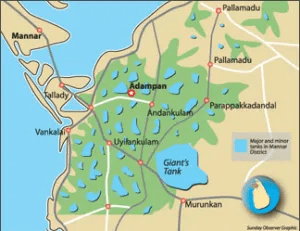
Thiruketheeswaram is located about eight km north of Mannar Town. It is on the coastal mainland of Ceylon, near the seashore on the direct coast road from Mannar to Jaffna. It has been the site of a Temple dedicated to Siva from pre-historic times. The place name of Thiru-Kethu-Iswaram has been devised as follows. ‘Thiru’ means sacred or holy and “Iswaran” is another name for Siva. As regards ‘Kethu’, Charles Pridham in his 1849 book A Historical, Political and Statistical account of Ceylon and its Dependencies describes how the gods asked Vishnu to prepare an elixir which would make them immortal. The elixir was prepared by churning the oceans but a demon who was a bystander also managed to drink the elixir. When Vishnu realised this, he cut off the demon’s head, but he was too late as the elixir had already made him immortal. The two parts became Rahu and Kethu, which are significant planets in the Hindu astrological system. In order to propitiate his sin, Kethu (Fig. 1) wandered from place to place and ultimately reached the shores of Lanka. He performed severe penances and he was ultimately blessed with the Lord’s vision and the place where this occurred was named Thiru-Kethu-Iswaram or Thiruketheeswaram.

Filed under ancient civilisations, architects & architecture, art & allure bewitching, cultural transmission, economic processes, heritage, Hinduism, historical interpretation, Indian religions, Indian traditions, landscape wondrous, life stories, literary achievements, meditations, photography, pilgrimages, politIcal discourse, religiosity, self-reflexivity, Sinhala-Tamil Relations, sri lankan society, tolerance, travelogue, world events & processes
 thuppahi