Orphaned. Abandoned. Illegitimate. Children cared for by the Evelyn Nurseries of Kandy, 1920 et seq

Michael Roberts

 The tale of the lifeworld of Charles Braine (1877-1944) in British Ceylon presented by one of his descendants https://thuppahis.com/2022/09/21/charles-s-braine-a-rajah-of-a-planter-in-british-ceylon/ generated a side-issue: sex and/or marriage between the British personnel managing the tea, rubber and coconut plantations in British Ceylon and the labour force they commanded. The inequalities in power placed unequal sexual advantages for the planter periya dorais …. and illicit children were one outcome in some instances – a process that probably continued into the second third of the 20th century when Sri Lankans of upper-crust status with an educational background in the best local schools began to gain entry to planter-jobs.

Unlike some of his compatriots, the Englishman Charles Braine kept house with his common-law Sinhalese wife, Engracia Nona: together they fostered and educated a lively family of nine children.

Interest in this tale and comments from Joe Paiva and Errol Fernando led me to two topics of some consequence: (A) the presence in the island of an ethnic category identified as “Eurasians” as distinct from the Burghers;** and (B) the endearing and enduring work of an orphanage known as the Evelyn Nursery that had been launched by a British lady with a large heart that was matched by her architectural and organisational skill: Ms Lena Chapman ( ….).


Continue reading

2 Comments

Filed under accountability, charitable outreach, cultural transmission, economic processes, education, female empowerment, heritage, historical interpretation, island economy, landscape wondrous, patriotism, performance, population, rehabilitation, self-reflexivity, teaching profession, tolerance, travelogue, unusual people, voluntary workers, welfare & philanthophy, world events & processes

Gustave Eiffel’s Unique EIFFEL TOWER

Visit https://historia.nationalgeographic.com.es/a/torre-eiffel-construccion-coloso_11345 for the full version of “ARCHITECTURAL CHALLENGE. THE EIFFEL TOWER: THE CONSTRUCTION OF A COLOSSUS”  …………………… an item made available by Group Capt Kumar Kirinde and his RAFOP collective …. with only some segments reproduced here.

Thanks to his experience in the design of great works of iron, in 1889 Gustave Eiffel managed to erect a tower over 300 meters high for the Universal Exhibition in Paris.

Face of Gustave Eiffel at the base of the tower

Although he was an excellent engineer, Gustave Eiffel’s success rested even more on his skills as an entrepreneur. In 1887 he signed a contract by which the French State and the city of Paris would provide a subsidy of 1.5 million francs; 25 percent of the total construction cost. To obtain the remaining funds, Eiffel created a joint-stock company with a capital of five million francs, half of which was contributed by three banks and the other by Eiffel himself. Despite the fact that the expenses rose 2.5 million more, Eiffel managed to recover the entire investment in a few months thanks to the income from the sale of tickets, which he received by virtue of a 20-year operating license.

Continue reading

1 Comment

Filed under architects & architecture, art & allure bewitching, cultural transmission, heritage, historical interpretation, landscape wondrous, life stories, performance, photography, travelogue, unusual people, world events & processes

From The Sublime to The Ridiculous: “Little Akio’s” Breadth of Quotable quotes

Item sent by Dulip Karunaratne of St. Aloysius in Galle then & Queensland now

The teacher said, “Let’s begin by reviewing some History.” Who said *’Give me Liberty, or give me Death?”* ………………….. She saw a sea of blank faces, except for Little Akio, a bright foreign exchange student from Japan, who had his hand up: *”Patrick Henry, 1775,”* he said.

“Very good! — Who said, *’Government of the People, by the People, for the People, shall not perish from the Earth’ ?“* ………….Again, no response except from Little Akio: *”Abraham Lincoln, 1863.”*

Continue reading

2 Comments

Filed under accountability, landscape wondrous, life stories, performance, psychological urges, self-reflexivity, taking the piss, the imaginary and the real, travelogue

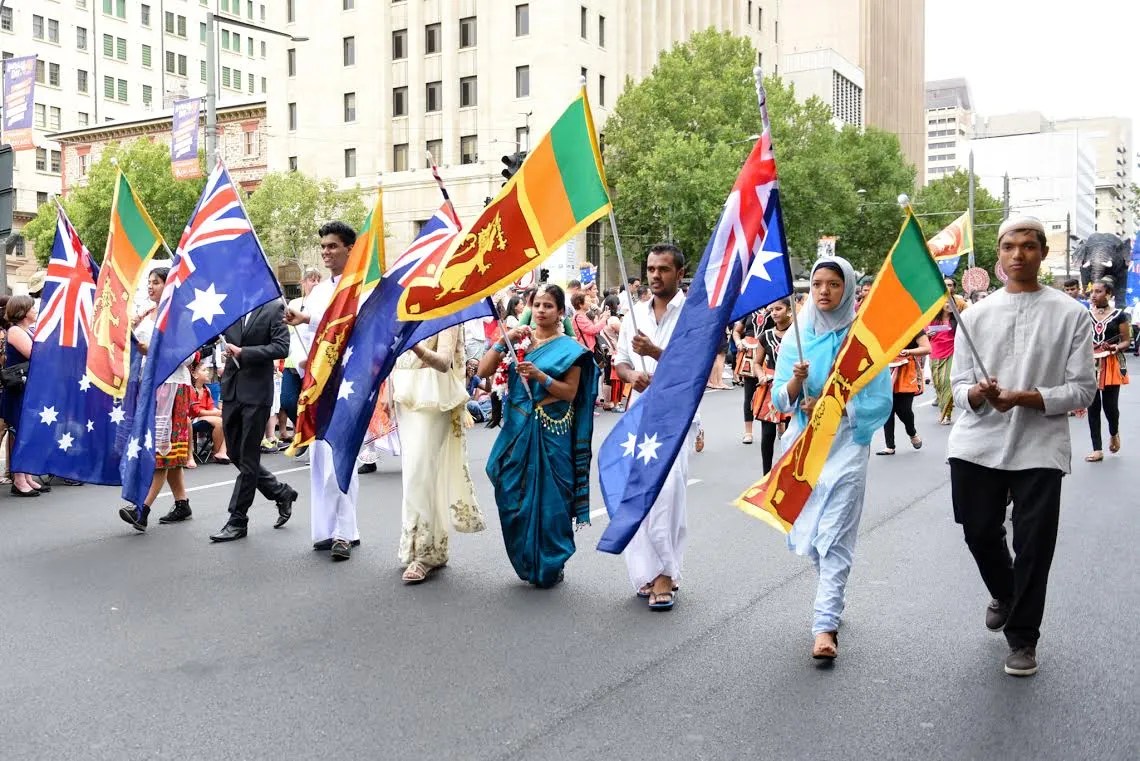
Sri Lankans in Australia: 2016 Census Data …… The Demographic Profile

Item sent to Thuppahi by Victor Melder ….  at https://www.abs.gov.au/census/find-census-data/quickstats/2016/7107_0 …. presented here with some selective highlights from the Thuppahi pen

People 109,853
Male 57,280
Female 52,573
Australian citizen 60.3%
Not an Australian citizen 38.3%

Families 43,816
Couples with children 26,914
Couples without children 13,326
One parent families 2,972
Other families 592

All private dwellings 52,548
Median monthly mortgage repayment $2,100
Median weekly rent paid $351


Continue reading

1 Comment

Filed under accountability, Australian culture, australian media, communal relations, demography, economic processes, education, ethnicity, governance, heritage, historical interpretation, immigration, island economy, legal issues, life stories, literary achievements, performance, population, self-reflexivity, sri lankan society, travelogue, unusual people, working class conditions, world events & processes

Macron’s Warnings: France’s Immediate Future Bleak

Continue reading

1 Comment

Filed under cultural transmission, democratic measures, economic processes, European history, foreign policy, governance, historical interpretation, life stories, modernity & modernization, politIcal discourse, power politics, security, self-reflexivity, world events & processes

Frank Rees George: Intrepid Cameleer & Pioneer in Outback Australia

Rob George to Anne Scherer, 25 September 2022

Hi Anne, Michael has passed on your request to me and I am delighted to respond!  George was the camel driver on a geological expedition in 1905/6 led by my great uncle Frank Rees George that led ultimately to Frank’s death in Alice Springs in early 1906.  George wrote a letter to Frank’s mother, Ediva, (known as Nora) and my great grandmother, explaining to her the details of Frank’s incredible journey and his final hours.  It’s a wonderful letter made even more poignant by the fact that it was penned by a man who cannot have had a lot of education.  Please find a copy of the letter attached together with a photo that I think is George with the camels on the expedition.  The letter was originally in a box of family memorabilia that we carted around rural South Australia (my father was a bank manager so we moved frequently) and which he donated to the State Archives in the mid 60’s.  The letter is available at the archives.

Continue reading

1 Comment

Filed under Aboriginality, ancient civilisations, centre-periphery relations, communal relations, cultural transmission, demography, economic processes, ethnicity, heritage, historical interpretation, landscape wondrous, life stories, nature's wonders, self-reflexivity, travelogue, unusual people, world events & processes

Queen Elizabeth in Parliamentary Pageantry in Ceylon, 1954

Queen Elizabeth honoured by and honouring the House of Representatives

Prime Minister John Kotelawela greets the Queen …  and she  is ushered in pageant mode into the chambers


Continue reading

Leave a comment

Filed under art & allure bewitching, British colonialism, centre-periphery relations, charitable outreach, cultural transmission, Empire loyalism, heritage, landscape wondrous, life stories, patriotism, performance, politIcal discourse, self-reflexivity, sri lankan society, travelogue, unusual people, world events & processes

Queen Elizabeth in Ceylon, 1954: Pomp & Pageantry in Picture Mode

the Cadillac that conveyed Her Majesty Queen elizabeth


Continue reading

Leave a comment

Filed under British colonialism, heritage, landscape wondrous, life stories, patriotism, self-reflexivity, sri lankan society, travelogue, world events & processes

Rare Items marking Queen Elizabeth’s Visit to Ceylon in 1954

The Rupee Notes and A Stamp


Continue reading

Leave a comment

Filed under accountability, British colonialism, cultural transmission, Empire loyalism, heritage, island economy, landscape wondrous, life stories, patriotism, performance, politIcal discourse, power politics, self-reflexivity, sri lankan society, the imaginary and the real, world events & processes

The Cricketing Agars on Camera

https://www.youtube.com/watch?v=d-

PVqnlU3KQhttps://www.youtube.com/watch?v=On5s-Dgvd28 Continue reading

Leave a comment

Filed under Australian culture, australian media, cricket for amity, cricket selections, heritage, performance