Working on the Book PEOPLE INBETWEEN

Michael Roberts

The ‘discovery’ of the Lorenz Cabinet in the Royal Asiatic Society in the 1980s led me to combine with Percy Colin-Thome[1] and Ismeth Raheem in working up this material into a plan envisaging a  set of books (four volumes).[2] The first in this projected series was drafted by me and came out in 1989 courtesy of Sarvodaya Publishing Services (within the limitations of book production in that period).[3] This book, People Inbetween,  has been out of print for quite a while.


Continue reading

Leave a comment

Filed under architects & architecture, British colonialism, centre-periphery relations, Colombo and Its Spaces, communal relations, cultural transmission, economic processes, education, Empire loyalism, ethnicity, governance, heritage, historical interpretation, island economy, landscape wondrous, life stories, martyrdom, patriotism, performance, politIcal discourse, self-reflexivity, sri lankan society, the imaginary and the real, travelogue, unusual people, world events & processes

Glenquarry Farm: In The Steps of Don Bradman

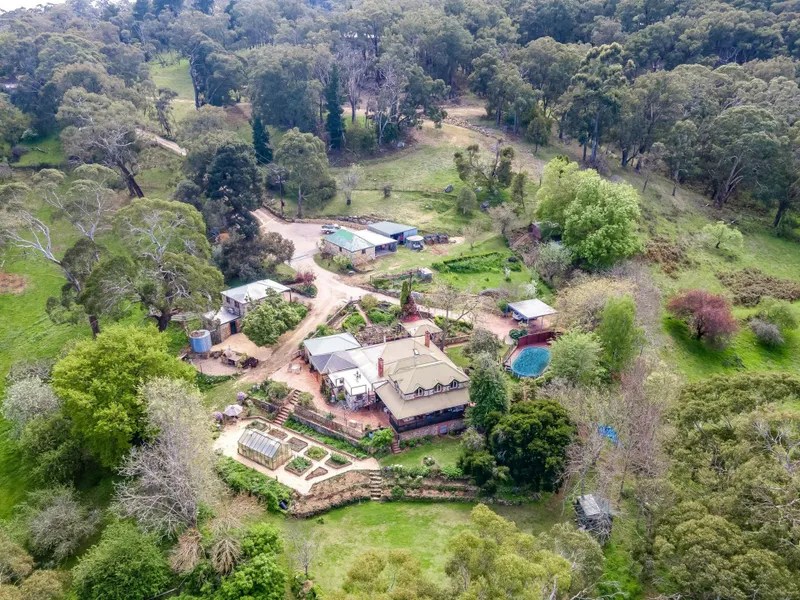
If so motivated and financially capable, one can rent out Glenquarry Farm at 117 Sheok Rd, Crafers West, off Adelaide, for only (!@#!) …. and bask in the imaginary footsteps of the one and only Don Bradman.


Continue reading

2 Comments

Filed under architects & architecture, Australian culture, australian media, commoditification, cultural transmission, economic processes, heritage, landscape wondrous, life stories, performance, travelogue, unusual people

Bracegirdle’s AntI-Slavery Struggle in British Ceylon, 1937

A Section translated  from Robert Gunawardena, Satanaka Satahan, Kosgama: 2007, Vijith Gunawardena: ….. provided here by Vinod Moonesinghe  …. with highlighting imposed by The Editor, Thuppahi

In April 1937, a remarkable incident took place which strengthened the anti-imperialist struggle [in Sri Lanka} and aroused the interest of the masses. That is, the Bracegirdle Incident which is spoken about by older people to this day.

 Mark Antony Lyster Bracegirdle, an Australian, came to Lanka in December 1936 to gain appointment as the assistant superintendant of a tea estate owned by a British plantation company. It is possible that the plantation company which appointed him to this position did not know that he had been a young member of the Australian Communist Party. Having come to Lanka, Bracegirdle took up his duties in a tea estate not far from Madulkele, beyond Katugastota.

Continue reading

Leave a comment

Filed under accountability, anti-racism, authoritarian regimes, British colonialism, centre-periphery relations, democratic measures, discrimination, disparagement, ethnicity, governance, historical interpretation, landscape wondrous, legal issues, life stories, nationalism, plantations, political demonstrations, politIcal discourse, power politics, sri lankan society, unusual people, working class conditions, world events & processes

Nationalist Excess as Spark for Warfare

Uditha Devapriya, in The Island, 9 December 2022, where the title runs thus:  “Some reflections on nationalism, extremism, and warfare”

“Ethnonationalism was not a chance detour in European history: it corresponds to some enduring propensities of the human spirit that are heightened by the process of modern state creation. It is a crucial source of both solidarity and enmity, and in one form or another, it will remain for many generations to come. One can only profit from facing it directly.” …. Jerry Muller, “Us and Them: The Enduring Power of Ethnic Nationalism”, Foreign Affairs (Council on Foreign Relations), March 2008 The first Human Security Report, published by the Human Security Centre, released in 2005, and subtitled “War and Peace in the 21st century”, strikes a dissonant chord in a world still reeling from the horrors of the September 11 attacks. Noting a decline in armed warfare since the end of the Cold War, its authors dismiss worries of increasing conflict in a section tellingly titled “Myths and misunderstandings.”


Continue reading

Leave a comment

Filed under accountability, centre-periphery relations, communal relations, economic processes, European history, foreign policy, historical interpretation, life stories, military strategy, nationalism, politIcal discourse, power politics, religious nationalism, security, self-reflexivity, truth as casualty of war, world events & processes

The House of Lords’ Recent Debate on Sri Lanka, 2022

The Debate in the House of Lords in the UK on “The Truth and Recpncilaition Commission in Sri Lanka”

A topical question on Sri Lanka was raised by Conservative peer Lord Daniel Moylan in the House of Lords on Thursday, December 1st which was followed by additional supplementary questions that were answered by Lord Tariq Ahmad of Wimbledon, Minister of State at the Foreign & Commonwealth Development Office (Middle East, North Africa, South Asia & the UN).

Continue reading

Leave a comment

Filed under accountability, British imperialism, centre-periphery relations, economic processes, foreign policy, historical interpretation, human rights, life stories, politIcal discourse, power politics, propaganda, Sinhala-Tamil Relations, slanted reportage, sri lankan society, the imaginary and the real, truth as casualty of war, world events & processes

Rendered Speechless! England’s Marvellous Victory over Pakistan at Rawalpindi

Errol Fernando in an Email Note to his Bosom Pal, Gavin, early December 2022

Perhaps once or twice in a lifetime there could be a ‘speechless’ Test match.  I actually watched it and am totally speechless.

SEE ... https://www.reuters.com/lifestyle/sports/england-beat-pakistan-by-74-runs-rawalpindi-test-2022-12-05/#:~:text=RAWALPINDI%2C%20Pakistan%2C%2

Continue reading

1 Comment

Filed under accountability, cricket for amity, cricket selections, historical interpretation, landscape wondrous, life stories, meditations, performance, the imaginary and the real, unusual people

Marital Bliss. In Bed. At Night.

Courtesy of Sanath Jayatilaka in Colombo

Husband: I won’t be able to sleep afterward.

Wife: I can’t sleep without it.

Husband: Why do you think of things like this in the middle of the night?

Wife: I can’t sleep without it.

Continue reading

1 Comment

Filed under accountability, charitable outreach, female empowerment, performance

The Malay Pioneers of Cricket in British Ceylon

Michael Roberts

The Thuppahi item on “The Malays of Sri Lanka” ……………………………… (https://thuppahis.com/2022/12/04/the-malays-of-sri-lanka-a-new-book/#more-68598) encourages me to elaborate, albeit inadequately, on the pioneering role of Malay personnel in the development of cricket in British times in the 19th century. On this issue my own work in the 1980s which led to the book People Inbetween (Colombo, Sarvodaya, 1989) can be supplemented by the information compiled by two indomitable cricket historians of yesteryear: SP Foenander and SS ‘Chandra’ Perera.

SP Foenander with Don Bradman in Colombo, 1930


Continue reading

2 Comments

Filed under British colonialism, communal relations, cricket for amity, cricket selections, cultural transmission, ethnicity, heritage, historical interpretation, island economy, landscape wondrous, life stories, patriotism, performance, Sri Lankan cricket, sri lankan society, unusual people, world events & processes

Maithri Panagoda: A Legal Luminary in Australia

Sunil Thenabadu, in ELanka, December 2022 …. where the title is both lengthy and different 

Maithri Panagoda is one of Australia’s prominent litigation lawyers. Educated in both Sydney and Sri Lanka, Maithri has over 40 years skill in lawsuit and dispute resolution. The Law Society of NSW accredits him as an accredited specialist in personal injury law. 


Continue reading

1 Comment

Filed under accountability, Australian culture, australian media, education, heritage, life stories, literary achievements, performance, unusual people

IMF Intrusions on Sri Lanka’s Economy

Asoka Bandarage, in Asia Times, 2 December 2022, where the title reads thus: “IMF forcing privatization, land and resource grab on Sri Lanka” …

On September 1, debt-trapped Sri Lanka reached a preliminary agreement with the International Monetary Fund for a 48-month extended fund facility of US$2.9 billion, which hardly covers the country’s outstanding debt, nor its immediate survival needs.

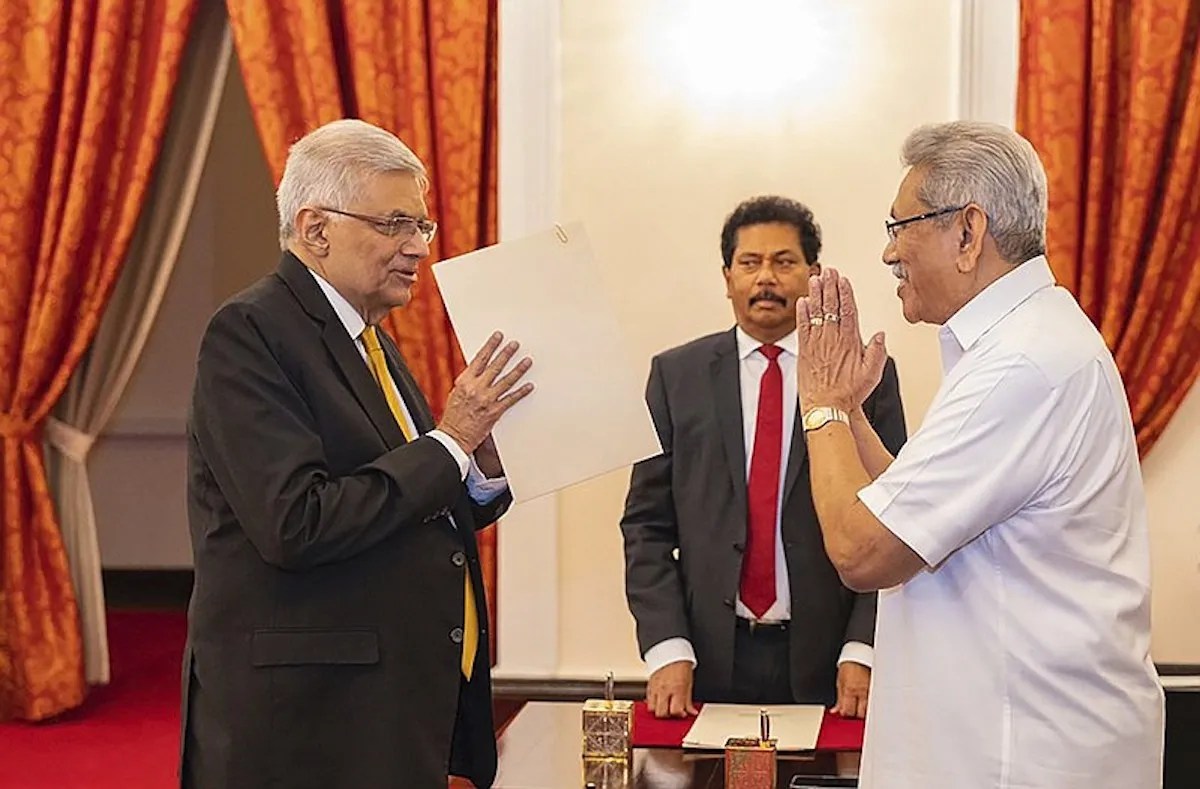
  Outgoing president Gotabaya Rajapaksa (right) greets Ranil Wickremesinghe during the latter’s oath-taking ceremony as the new leader in Colombo, Sri Lanka, in July 2022. Photo: Sri Lankan President’s Office

Continue reading

1 Comment

Filed under accountability, american imperialism, authoritarian regimes, centre-periphery relations, disparagement, economic processes, governance, historical interpretation, IMF as monster, island economy, life stories, politIcal discourse, power politics, self-reflexivity, sri lankan society, taking the piss, transport and communications, world events & processes