Conflicting Readings of Sri Lanka’s Pre-Capitalist Past

Presenting a Review Essay compiled by Michael Roberts in 2010 that was presented in the SRI LANKA GUARDIAN on the 15th August 2010 … with this title:  “Ethnic Identity in Sri Lanka’s Pre-Capitalist Past: Shanie, Darshanie and Roberts”

When Darshanie Ratnawalli penned a blog comment on one of the articles reproduced in the thuppahi site, I jumped to the erroneous conclusion that it was a response to one of my articles on myth and history.[1] In fact it was a critical note directed at an essay in Shanie’s Notebook of a Nobody series in The Island, one entitled “Writing history and myth,” which I had borrowed for my own web site.

Let me quote an extract from Darshanie’s note, with colours distinguishing Darshanie [blue] from Shanie [brown]: “Isn’t Shani (the writer of this article) actually displaying mediocre scholarship and a lamentable lack of intellectual rigor when she says: “Scholars like HL Seneviratne and Michael Roberts have in recent contributions to the Island pointed out that there is no evidence of any distinctiveness in our ethnic identities. HL Seneviratne pointed out that many of the Kandyan chieftains signed the 1915 [sic—1815] Convention in Tamil.”

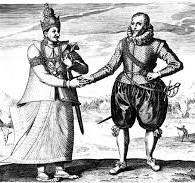
Sri Vikrama Rajasinghe

By placing the second sentence after the first hasn’t Shani made out the second assertion to be some kind proof of the first assertion? But signing the Convention in Tamil is not indicative of any lack of distinctiveness of ethnic identity no? it is actually more an elitist thing isn’t it? Tamil was made the current language of the ‘inner circle’ by the Royal family and their powerful contingent of Royal relations present at court no? It’s rather like the pre revolutionary Russian nobility speaking French isn’t it or the way people speak and write in English in Sri Lanka even when they are among their own with no need of a lingua franca?

I am entirely in agreement with Darshanie’s reasoning in her second paragraph. Let me add that as far as I know the signatures deemed Tamil in the Kandyan Convention are in fact written in Grantha which is a script not a language. I leave it to scholars versed in that field to engage that issue.”

Continue reading

Leave a comment

Filed under accountability, ancient civilisations, authoritarian regimes, British imperialism, centre-periphery relations, cultural transmission, Dutch colonialism, ethnicity, heritage, historical interpretation, Indian traditions, island economy, Kandyan kingdom, landscape wondrous, life stories, patriotism, politIcal discourse, power politics, Sinhala-Tamil Relations, sri lankan society, the imaginary and the real

The Changing World Order

Alastair Crooke … with Judge Napolitano … about “Israel and Reality”

Alastair explores the historical context that has shaped modern Israel, the ongoing conflicts and peace processes, and the broader implications for the Middle East and beyond. Alastair provides unique perspectives on the challenges and opportunities facing Israel today, from security concerns to socio-political developments.

Continue reading

Leave a comment

Filed under accountability, american imperialism, authoritarian regimes, Britain's politics, centre-periphery relations, economic processes, electoral structures, foreign policy, governance, historical interpretation, life stories, Middle Eastern Politics, politIcal discourse, power politics, security, self-reflexivity, truth as casualty of war, war reportage, world events & processes

Us/Them Semantics in Sinhalese Confrontations with Other Forces Over Time

Michael Roberts presenting the Synopsis of an Article published after a refereeing process in the journal NATIONALISM and ETHNIC POLITICS  Vol 9/3 Summer 2003, pp. 75-102

The collective identity of Sinhala-speakers over four centuries dating from the 1590s is analyzed with due attention to the structural form of (a) the Kingdom of Kandy and (b) the British colonial regime that took control of the whole island by 1815/18. The analysis dwells on the modes of oral, visual-iconic and written forms of cultural transmission that pre-dated print technology, while drawing attention to the relative uniformity of the Sinhala language in both geographical and temporal scale. A semantic pattern of political alliances based on the opposition of inside to outside which works contextually like a nestling Chinese-box is one dimension of this linguistic order. This supported the tendency of Sinhalese representations to adopt an associational logic which merged past enemies (the wicked Tamils) with contemporary enemies (the Portuguese, the English) during the liberation struggles of the Kandyan state and its militia in the pre-1818 period. Such tendencies and the continuation of disparaging epithets coined during the period of Portuguese imperial intrusion into the vocabulary of the twentieth century must inform any theoretical efforts to distinguish the collective consciousness of the Sinhalese after the substantial transformations initiated under the British from that which is expressed so powerfully in the war poems of the pre-British period. 
VISIT this Digital-Reference:
https://www.semanticscholar.org/paper/Language-and-national-identi ty%3A-the-Sinhalese-and-Roberts/003324e5fbcdd
Special ADDITIONS for TPS …. The “US vs THEM” Phenomenon

Leave a comment

Filed under authoritarian regimes, British colonialism, centre-periphery relations, communal relations, cultural transmission, demography, Dutch colonialism, economic processes, ethnicity, governance, hatan kavi, heritage, historical interpretation, Indian Ocean politics, island economy, Kandyan kingdom, language policies, law of armed conflict, life stories, literary achievements, nationalism, patriotism, politIcal discourse, population, Portuguese imperialism, power politics, racism, security, self-reflexivity, Sinhala-Tamil Relations, Sri Lankan scoiety, transport and communications, world events & processes, zealotry

Commemorating D-DAY in Normandy, 2024

Item in The Economist, 30 May 2024 …. with highlighting imposed by The Editor, Thuppahi

Bob Fagan was a 21-year-old private from Texas when he plunged from his assault craft into the cold sea off Utah Beach in Normandy, under the rattle of Nazi machinegun fire and air bombardment. “The water was red with blood,” he later recalled. “There were bodies floating all around us.” A fellow member of the 299th combat battalion landing on Omaha Beach had a simpler description: “Hell.”

A beach landing by the Royal Marines of 47 Commando and civilians at Asnelles before their annual ‘yomp’ to Port-en-Bessin, in Normandy, France, to commemorate the 80th anniversary of the D-Day landings. Picture date: Thursday June 6, 2024. PA Photo. See PA story MEMORIAL DDay. Photo credit should read: Aaron Chown/PA Wire

Continue reading

3 Comments

Filed under accountability, cultural transmission, education, ethnicity, European history, heritage, historical interpretation, landscape wondrous, life stories, martyrdom, meditations, military strategy, patriotism, performance, photography, pilgrimages, politIcal discourse, sea warfare, the imaginary and the real, trauma, world events & processes, World War II

Deciphering the Work of Caste in Sri Lanka’s Lifeworld

Thuppahi is delighted to present a new research venture in keeping with its own spirit — with TUDOR SILVA in Lanka and MARK BALMFORTH in Canada in command.

CASTE: A Global Journal on Social Exclusion …..  Call for Submissions ….. with a Focus on Sri Lanka

Deadlines for Submissions: ….. Abstract: June 15, 2024 …… Full Paper: September 30, 2024

Compared to the expanding body of literature on caste in the Indian subcontinent, caste in Sri Lanka has received only sporadic academic attention and has been largely ignored in policy debates and social development interventions on the island. This can partially be explained by a widespread, public belief in Sri Lanka that despite its past importance, caste is no longer a vital social institution. While open discussion on the topic is largely absent, this does not mean that caste is dead or dying. Rather, caste remains hidden in much of Sri Lankan social life (Jiggins 1979; Silva, Sivapragasam, & Thanges 2009a). Reports from the north and east of the country indicate a certain resurgence of caste issues in post-war society, and new research findings suggest that caste plays a role in social, economic, and political dynamics that affect access to limited resources such as land, drinking water, employment, and political power (Thanges 2015; Hashmi and Kuganathan 2017; Kadirgamar 2019; Silva 2020; Tiruchandran 2021). Caste also continues to play an important role in the social life of south and central Sri Lanka through marriage partner selection, land tenure, temple rituals, politics, economic relations, and the performing arts (Silva, Sivapragasam, & Thanges 2009b; Reed 2010). Recent dissertation work, particularly in overseas universities, suggests that a body of new Sri Lankan caste-related evidence is just on the horizon (Räsänen 2015; Aimee 2017; Thanges 2018; Balmforth 2020; Esler 2020; Pathmanesan 2020).

Continue reading

Leave a comment

Filed under accountability, British colonialism, Buddhism, caste issues, centre-periphery relations, chauvinism, commoditification, communal relations, cultural transmission, democratic measures, demography, discrimination, Dutch colonialism, economic processes, education policy, electoral structures, ethnicity, female empowerment, governance, heritage, historical interpretation, Indian traditions, island economy, language policies, Left politics, legal issues, life stories, plantations, plural society, politIcal discourse, power politics, racist thinking, self-reflexivity, social justice, sri lankan society, Tamil civilians, tolerance, unusual people, working class conditions, world events & processes

Dr Siri Kannangara: A Life of Service in Australia

Michael Roberts

The volume of sighs and messages that erupted when news of Dr siri Kannangara’s demise reahced the air waves speaks volumes for the regard with which he was held. I haad occasion to interact with him way way back when writing about our Sri Lankan cricketers and  athletes. Alas, my memory has not retained the details. But there is plenty of meaningful detail in the items that are referred to below ….. and we can be certain that there will be a volume of Vales that tell the world about Siri’s outreach.

Continue reading

2 Comments

Filed under Australian culture, australian media, charitable outreach, cultural transmission, ethnicity, heritage, life stories, patriotism, performance, Sri Lankan cricket, sri lankan society, unusual people, welfare & philanthophy, world events & processes

Facing Fortress Australia: Ceylonese Migrants in the 1950s & 1960s

Earlson Forbes, whose title in THE CEYLANKAN, vol 27/2, May 2024 is Fortress White Australia: What early Ceylonese migrants [1949 t0 1969] were up against” … [now … with most of the author’s documentary illustrations]

The Six Australian Colonies came together on the 1st  of January 1901 to form the independent Nation of the Commonwealth of Australia.  From 1788 (First Fleet arrival at Sydney Cove) to the time of Federation, Australia was populated by convict and free settlers almost exclusively from Britain.  The 1901 census put the population at 3.7 million.   Aboriginals were not counted in this census. A small percentage of the population was made up of Pacific Islanders and Chinese.  The Chinese entered Australia in the second half of the 19th century at the time of the Gold Rush in Australia (mid-19th century) and in the years following. Between 1851 and 1870 about 50,000 Chinese were estimated to have entered Australia. Pacific Islanders had been brought to Australia in the second half of the 19th century as labourers.

From its inception the Nation of Australia embarked on a highly protective policy regarding entry into the country.  Within one year of formation of the Nation, the Australian Parliament passed two Acts limiting immigration.  These two Acts were The Immigration Restriction Act 1901, and the Pacific Islander Labourers Act 1901.  The Pacific Islander Labourers Act aimed specifically at putting a stop to admission of persons from this region.  The Act stated, ‘No Pacific Island Labourer shall enter Australia on or after the thirty first day of March one thousand nine hundred and four’.

Continue reading

Leave a comment

Filed under accountability, Australian culture, australian media, centre-periphery relations, charitable outreach, communal relations, cultural transmission, demography, discrimination, disparagement, economic processes, education, ethnicity, governance, heritage, historical interpretation, immigration, island economy, landscape wondrous, language policies, legal issues, life stories, patriotism, plural society, politIcal discourse, racist thinking, self-reflexivity, social justice, sri lankan society, taking the piss, transport and communications, travelogue, unusual people, world events & processes

Don Bradman Memorabilia in Adelaide Sri Lankan Realms

Michael Roberts in Adelaide, June 2024

Sir Donald Bradman chose to reside in Adelaide following his retirement…rather than in his hometown of Bowral in New South Wales. This had incidental benefits for Sri Lankan cricket lovers in Adelaide; and even for cricketing enthusiasts of the Harry Solomons kind.

Continue reading

1 Comment

Filed under accountability, art & allure bewitching, Australian culture, australian media, centre-periphery relations, cricket for amity, cricket selections, cultural transmission, ethnicity, heritage, historical interpretation, landscape wondrous, life stories, patriotism, performance, Sri Lankan cricket, travelogue, unusual people, world events & processes

Reading Donald Friend’s Paintbrush ‘Reading’ of the Bandaranaike Assassination

Thuppahi invited its Limited Circle of Readers to Interpret the Brushwork Reading of the Awful Act of a Buddhist Monk a named Somarama Thero on  29th September 1959 …. who pulled out a revolver as the Prime Minister bowed in the customary worship of a Buddhist religiosi…. and killed him.[1]

Continue reading

3 Comments

Filed under accountability, art & allure bewitching, atrocities, Buddhism, centre-periphery relations, Colombo and Its Spaces, conspiracies, disparagement, ethnicity, fundamentalism, historical interpretation, landscape wondrous, life stories, meditations, paintings, politIcal discourse, religious nationalism, self-reflexivity, sri lankan society, the imaginary and the real, trauma, unusual people, world events & processes

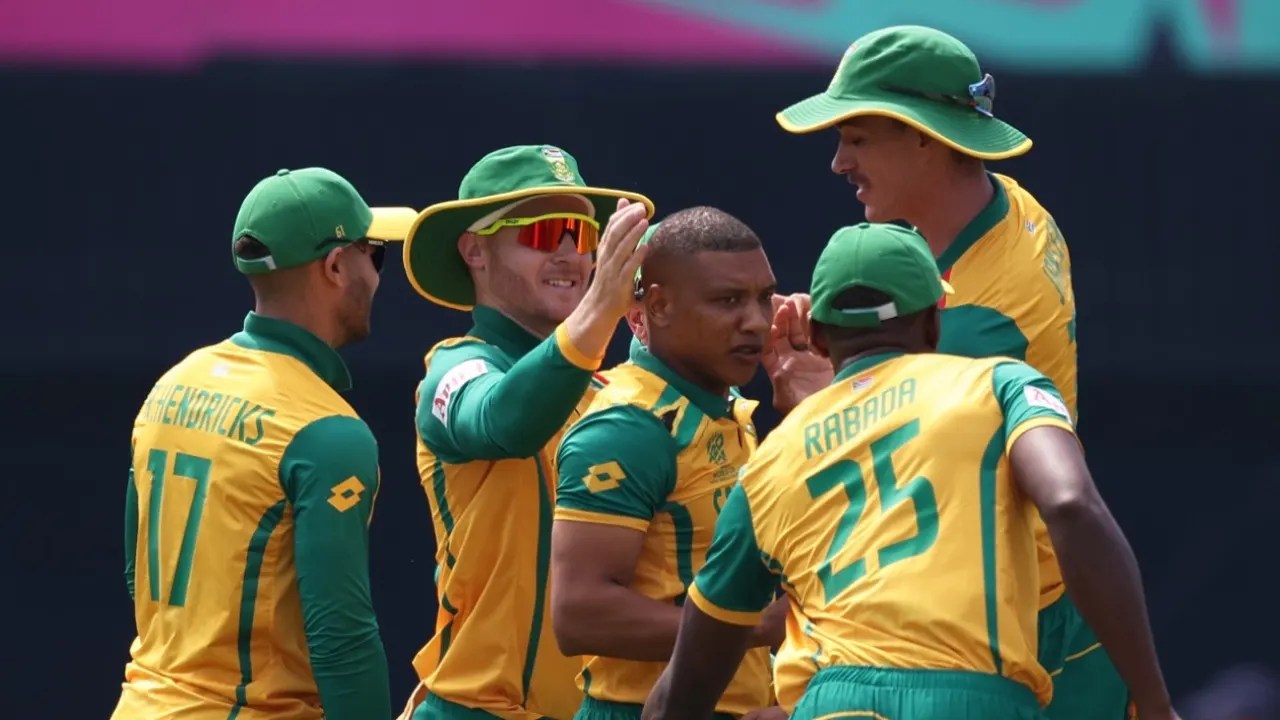
Lankan Cricketers Mauled by Travel-Toss Decision-Safs

Sidarth Monga, in ESPNcricinfo, 3 June 2024 where the title reads thus: “So unfair – Sri Lanka, given a raw scheduling deal, struggle to find their bearings”

Delayed flights, matches at different venues, hotels far from the game venues have made life difficult for Hasaranga’s team. Sri Lanka’s players were in a hurry to complete the media commitments after their first match of this T20 World Cup. That’s because immediately after the match, they had to rush to their hotel in Brooklyn, an hour-and-a-half away, pack, check out, and then make their 6pm flight to Dallas where they will be playing what is now a must-win match against Bangladesh. This after they had to wait for seven hours at the Miami airport to take their delayed flight to New York to play this match.

Continue reading

1 Comment

Filed under accountability, atrocities, centre-periphery relations, cricket selections, discrimination, disparagement, governance, life stories, meditations, performance, self-reflexivity, taking the piss, trauma, travelogue, world events & processes