Category Archives: world events & processes

Anecdotal Tit Bits: Making “The Bridge on the River Kwai”

Michael Roberts

ONE: The Theme Tune and George Siegertsz

The mainline tale about the production process in Ceylon in the composition of the outstanding film The Bridge on the River Kwai – a film based on an actual wartime commando operation involving the destruction of a bridge being built with POW labour by the Japanese war machine in Thailand – can be read at https://thuppahis.com/2021/08/02/kitulgala-and-the-classic-movie-bridge-on-the-river-kwai/

Continue reading

5 Comments

Filed under art & allure bewitching, British colonialism, centre-periphery relations, heritage, historical interpretation, island economy, landscape wondrous, life stories, meditations, performance, photography, self-reflexivity, sri lankan society, the imaginary and the real, travelogue, unusual people, world events & processes, World War II and Ceylon

Afghanistan’s Turmoil Replayed at Lords Cricket Ground

Michael Roberts

In my reading, the spirit of cricket was spiked and shattered at its iconic home-ground of Lords yesterday. Not only yesterday –the fifth day. IThe “spiking” occurred throughout the match  with (A) tailenders’ bombarded with headhigh short-pitched bowling by both sides; (B) verbal badinage and assualts — camouflaged as “badinage” and presented with smiles — from both parties; and (C) the spiking of the ball by Jimmy Anderson [according to one report] among the events on the ground.

Kumar Oh Kumar …. what future for “The Spirit of Cricket” talk you delivered during the famous COWDREY LECTURE some years back!

https://www.espncricinfo.com/story/kumar-sangakkara-s-mcc-spirit-of-cricket-lecture-522183

….. https://www.cricketcountry.com/articles/kumar-sangakkaras-spirit-of-cricket-speech-tugs-the-heart-3891

Continue reading

1 Comment

Filed under accountability, cricket for amity, disparagement, fundamentalism, life stories, patriotism, performance, psychological urges, world events & processes

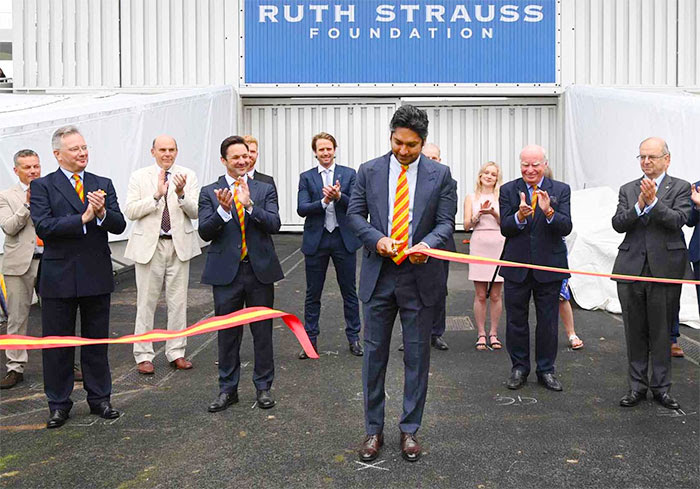
Sanga Rules at the Lords’ Cricket Establishment

News Item in The Island, 14 August 2021, with this headline “Kumar Sangakkara opens new Compton and Edrich stands at Lord’s”

MCC President and Sri Lankan cricket great, Kumar Sangakkara, officially opened the new £53 million Compton and Edrich stands at Lord’s Cricket Ground on Thursday (12), in front of the first full crowds for a Test match at Lord’s since 2019.

Leave a comment

Filed under accountability, cricket for amity, cultural transmission, education, governance, historical interpretation, landscape wondrous, life stories, unusual people, world events & processes

Portuguese Nomenclature in Sri Lanka

Unknown Author** … in https://www.elanka.com.au/portuguese-sri-lankan-surnames-and-their-meanings-2/

The Portuguese arrived in Ceylon, or Ceilão, as they called it, by chance. In 1505, a fleet commanded by Lourenço de Almeida—the son of Francisco de Almeida, the first viceroy of Portuguese India—was blown into Galle by adverse winds. It was thirteen years later, in 1518, that the Portuguese established formal contact with the Kingdom of Kotte, ruled by Vira Parakrama Bahu, and were permitted to build a fort in Colombo.

Continue reading

3 Comments

Filed under centre-periphery relations, cultural transmission, demography, economic processes, education, governance, heritage, historical interpretation, Indian Ocean politics, Indian traditions, island economy, landscape wondrous, life stories, politIcal discourse, Portuguese imperialism, Portuguese in Indian Ocean, power politics, self-reflexivity, sri lankan society, transport and communications, travelogue, unusual people, world events & processes

Valentine Gunasekara: His Architectural Virtuosity and Heritage

Anoma Pieris, with highlighting emphasis imposed by The Editor of Thuppahi

Architect Valentine Gunasekara passed away peacefully at sunset on Monday 4, September 2017; and I felt it was important that his passing did not go unnoticed. The ebook version of Imagining Modernity: The Architecture of Valentine Gunasekara published 14 years after my 2007 book is an effort at ensuring he would not be forgotten. He mirrored the struggles of my parent’s generation across the hard years of import-substitution and Socialist policies when every bag of cement was purchased with a special permit.  In fact, even attempting to build with concrete appeared foolhardy. However, he persevered, leaving a small coterie of buildings that are comparable to the works of Van Molyvann (1926-2017) in Cambodia or the Malayan Architects Co-Partnership (1960-67) in Singapore.  These buildings have not garnered the attention and care that is afforded mid century modernism elsewhere, largely because their attempts at design synthesis are overlooked. The tropical climate is also hostile to pristine architectures and plastered concrete surfaces are high maintenance. But if one is willing to look beyond everyday tolerances to the aspirations behind the aesthetic responses that surround us in our rapidly growing cities, one needs to engage with Gunasekara’s repertoire.

Continue reading

5 Comments

Filed under architects & architecture, art & allure bewitching, British colonialism, centre-periphery relations, cultural transmission, economic processes, education, ethnicity, female empowerment, gender norms, heritage, historical interpretation, island economy, landscape wondrous, life stories, modernity & modernization, performance, self-reflexivity, travelogue, unusual people, world events & processes

The Changing Face of Cricket

Kerry Packer’s World Series Cricketers assembled together

QUESTION FOR Aficianados: In what way are they different from Today’s Cricketers in the 2010s and 2020s?

MY  TRUMP-CARD ANSWER = They are all clean-shaven and beardless …. and distinctly better-looking as a result.

A FOOTNOTE: When one of the World Series matches pitted a combined team against the West Indies Squad at the huge football stadium at West Lakes in Adelaide in January !978 (or 1979?), Michael Roberts was one of the mere 800 or 900 spectators in that giant arena. 

I consider WHAT WE the few WITNESSED to be a privilege that I shared with that small cluster of cricket fans: we were seeing great cricketers in action within a form of televsion documentation that was revolutionizing the format–notably by having cameras at both ends and others cameras for special side-shots …. besides drop-in wickets, et cetera, et cetera.

Leave a comment

Filed under accountability, art & allure bewitching, australian media, cricket for amity, cultural transmission, governance, heritage, historical interpretation, landscape wondrous, life stories, modernity & modernization, taking the piss, unusual people, world events & processes

Dual Citizens in Australia: Statistics

   Courtesy of Harry de Sayrah of Sydney

Continue reading

Leave a comment

Filed under accountability, Australian culture, demography, economic processes, ethnicity, heritage, historical interpretation, landscape wondrous, life stories, population, refugees, self-reflexivity, transport and communications, unusual people, world events & processes

Fortifying Self against Covid: Dr Dr. Zhong Nanshan’s Guidelines

A MESSAGE for ONE and ALL

Kindly take note of the following practical advice by Dr. Zhong Nanshan (China’s top authority on Covid-19)*.

Dr Zhong predicted that, sooner or early later, the widespread community infection of Covid-19 will be inevitable. This is because there now is increasing numbers of infected people who are asymptomatic but with varying incubation periods moving around undetected. As the above scenario is almost uncontrollable and unavoidable, it’s now crucial for us to prime our own immune system first.

Continue reading

Leave a comment

Filed under coronavirus, medical puzzles, security, self-reflexivity, world events & processes

Qadri Ismail’s Challenging Essay: An Iconoclastic Hurrah!

Qadri Ismail, in Groundviews in 2015 with this title “The Import Of Sri Lankan Muslim Names”

My name is Mohamed Qadri Ismail. Mohamed Qadri Ismail is not my name.

The statements may prompt a wtf. (The acronym, btw, of the World Taekwondo Federation.) Surely one cannot affirm a position and its contradiction. Yet I do.  The second sentence doesn’t necessarily negate the first.

Continue reading

1 Comment

Filed under Aboriginality, accountability, atrocities, authoritarian regimes, centre-periphery relations, communal relations, cultural transmission, economic processes, education, fundamentalism, governance, heritage, historical interpretation, Indian religions, landscape wondrous, legal issues, life stories, modernity & modernization, Muslims in Lanka, nationalism, politIcal discourse, power politics, self-reflexivity, Sri Lankan scoiety, teaching profession, truth as casualty of war, unusual people, world events & processes, zealotry

Crossing Boundaries: The Indo-Portuguese Religious and Cultural Encounter

Chandra R. de Silva, aka “CR”, being the Inaugural Tessa Bartholomeusz Memorial Lecture, Department of Religion, Florida State University, Tallahassee, FL, delivered on March 4, 2002

Let me begin by thanking the Department of Religion and Florida State University for inviting me to deliver the inaugural Tessa Bartholomeusz Memorial Lecture. As many of you are aware, Tessa and I worked together in two academic projects in the last few years and we were part of a group that worked hard and successfully to set up an American Research Center in Sri Lanka. I miss her both as a scholar and a friend and thus, my appreciation for all you have done in her memory is immense.

Continue reading

Leave a comment

Filed under art & allure bewitching, centre-periphery relations, discrimination, economic processes, ethnicity, governance, heritage, historical interpretation, Indian traditions, island economy, landscape wondrous, life stories, paintings, politIcal discourse, Portuguese imperialism, Portuguese in Indian Ocean, self-reflexivity, sri lankan society, transport and communications, travelogue, world events & processes