Category Archives: voluntary workers

Elmo’s YANA MAGA revealed and reviewed in two sketches

 Review One = YANA MAGA: Sri Lanka, a gift for all

“Whatever are our aspirations, it is based on our journey and it is the journey – the yana maga – that matters, not the destination,” says Captain Elmo Jayawardena. And it is this sentiment that holds as premise for his new coffee table book.

 click on Pics

Capt Elmo is no newcomer to the literary world with three notable novels to his name that include ‘Sam’s Story’ which was awarded the Gratiaen Prize in 2001. For his second, The Last Kingdom of Sinhalay he received the State Literary Award and the third Rainbows in Braille’ was short listed for the Singapore Literary Prize. Launched in January of 2012, is the latest addition, ‘Yana Maga, Sri Lanka a gift for all..’, a coffee table book that aspires to be more than a mere keepsake. Most importantly, the author’s share of the proceeds from the book goes towards a charity organisation, CandleAid Lanka founded in 1996 by Capt Elmo. Among his many passions that include piloting of which spans his career, he is emphatic about his humanitarian work. The efforts towards alleviating poverty is one which he regards as his greatest contribution to life.

Continue reading

Leave a comment

Filed under cultural transmission, historical interpretation, life stories, patriotism, reconciliation, rehabilitation, Sinhala-Tamil Relations, sri lankan society, tolerance, voluntary workers, welfare & philanthophy

TRAILS Walk from Dondra to Jaffna in Aid of Pediatrics Cancer Ward in Jaffna Hospital

Rajah Kuruppu,  in the Daily News, 26 December 2011

A recent event that underlines the innate good nature of man was the great walk from Dondra in the South to Jaffna in the North covering a distance of 670kms to generate funds to build the Paediatrics Cancer Ward in the Jaffna General Hospital. The walk named Trail, a journey of 27 days was undertaken from July 1 to 27. The Trail was initiated by the Colours of Courage Trust, a nonprofit organization which from its inception in 2008 has dedicated itself to provide the infrastructure for the treatment of cancer in Sri Lanka, a noble task where early detection and care could save numerous lives.

A noteworthy feature of this walk was that numerous people, rich and poor, young and old, spontaneously supported the walk which symbolized a noble gesture providing relief to children in the North who are afflicted with cancer. Some walked a part of the distance to record their support for a noble venture. There were others contributing in cash or kind to raise the necessary funds for the Pediatric Ward. Continue reading

3 Comments

Filed under communal relations, cultural transmission, life stories, reconciliation, rehabilitation, Sinhala-Tamil Relations, sri lankan society, tolerance, voluntary workers, welfare & philanthophy, world events & processes

IRIN probes reconciliation prospects in the light of the LLRC report

Local civil society groups in Sri Lanka view a recently released government-appointed commission report [ http://reliefweb.int/sites/reliefweb.int/files/resources/FINAL%2520LLRC%2520REPORT.pdf ] on the final period of the country’s decades-long civil war as a “springboard” for long-awaited reconciliation, while international human rights groups continue calling for an independent inquiry.

 “This report will enable the country to move forward, addressing accountability issues and concerns on human rights,” said Dinesh Dodamgoda, director of Colombo-based NGO International Centre for Promoting Reconciliation. [ http://promoting-reconciliation.org/programs.php ]

Appointed by President Mahinda Rajapaksa in May 2010 to look into the final stage of the conflict against the separatist Liberation Tigers of Tamil Eelam (LTTE) rebels, the Lessons Learnt and Reconciliation Commission (LLRC) conducted an 18-month inquiry; its findings were submitted to parliament on 16 December.

 According to a UN panel report [http://www.un.org/News/dh/infocus/Sri_Lanka/POE_Report_Full.pdf ] released in April 2011, both government forces and the LTTE flouted international law and civilian rights in their military operations during the final five months of the war when tens of thousands died.  The government declared victory over the rebels in May 2009.

 “Steps are needed to follow positive recommendations of the commission in a systematic and transparent manner for us to hold ourselves responsible,” Rajiva Wijesinha, a parliamentarian and presidential adviser on the peace process, told IRIN.

 Sixty pages of recommendations in the LLRC report include calls for a special commissioner to investigate alleged disappearances [ http://irinnews.org/Report.aspx?ReportId=90117 ] and criminal proceedings; implementation of an amendment to the Registration of Deaths Act which allows a next of kin to apply for a death certificate if a person is missing due to “subversive” activity; an independent advisory committee to examine the detention and arrest of persons in custody to address concerns about indefinite detention [ http://www.irinnews.org/report.aspx?reportid=90570 ] without due process under an anti-terrorist law; criminalization of forced or involuntary disappearances; an island-wide human rights education programme targeting security forces and police; a centralized database of detainees; addressing grievances from minority communities, including Muslims in the north [ http://www.irinnews.org/report.aspx?reportid=88503 ] and Tamils; and improved governance.

Human Rights Watch (HRW) said the recommendations have “serious shortcomings” and fail to “advance accountability for victims of Sri Lanka’s civil armed conflict” in a statement released on 17 December. [ http://www.hrw.org/news/2011/12/16/sri-lanka-report-fails-advance-accountability ]

 Hoping for change: While HRW along with other agencies and diplomats have questioned the impartiality and credibility [ http://irinnews.org/report.aspx?reportid=93719 ] of the commission – demanding an international inquiry thus far rejected by the government – Jeeva Ahilan, a recent returnee, who fled fighting in Kilinochchi District, still hopes the recommendations will lead to change. “People came out and spoke openly [in fact-finding hearings] about their suffering and need for a dignified life,” he said.

LLRC’s fact-finding sessions in the north over the past year were well received among recent returnees who had fled fighting, he added. “People are hopeful that their voices were heard and [that the report will be used] for development,” said Ahilan.

But recommendations are only the first steps towards reconciliation, said another community activist from Jaffna District, also in the north.  “More work needs to be done at the grassroots level to unite [people from] the Sinhalese and Tamil communities,” said Victor Karunairajan, who returned home from overseas after the war. Economic development in minority Tamil communities is a “must”, he concluded.

Limited mandate: According to Jehan Perera, director of Colombo-based NGO National Peace Council, [ http://www.peace-srilanka.org/ ] the recommendations are not likely to meet human rights organizations’ expectations.  “[They] will not be able to address the issue of war crimes in the manner expected by human rights organizations on account of [the LLRC’s] limited mandate. The commission was set up to learn why a 2002 truce failed, and recommend ways to prevent the resurgence of ethnic conflict.”
Perera called for the establishment of a truth and reconciliation commission based on the South African model, with a mandate to address the entire period of the war, waged for decades, rather than only the last phase.

The LLRC could only hear evidence, but not investigate, Jayasuriya Welimuna, head of the national chapter in Sri Lanka of corruption watchdog NGO Transparency International, [ http://www.tisrilanka.org/ ] told IRIN.

 The LLRC report’s authors recognized past commissions’ recommendations for investigations have gone unimplemented, and “give rise to understandable criticism and skepticism regarding government-appointed commissions from which the LLRC has not been spared.”

Bharathi Iniyavan, 45, who spoke to IRIN from Kilinochchi, said LLRC’s work was in vain if the recommendations were not enacted.  “There are commissions here and there but what we need is action on the ground to change lives,” he added. “We need action not research.”

Leave a comment

Filed under life stories, politIcal discourse, Rajapaksa regime, reconciliation, rehabilitation, Sinhala-Tamil Relations, sri lankan society, Tamil civilians, tolerance, voluntary workers, welfare & philanthophy

Arun Thambimuttu steps out as a Tamil and Lankan Patriot — like Father like Son

Q and A Interview with Rohan Abewardena, in The Island, 25 & 26 September 2011 under title “Batti political family scion beckons Tamils”

Q: You have grand ideas, but you are yet relatively unknown here as a businessman and politician so can you tell us something about your self and your background.

I come from a famous political family in Batticaloa. My father was Sam Tambimuttu, a member of parliament. He was assassinated by the LTTE along with my mother in 1990. They were gunned down in front of the Canadian High Commission at Gregory’s Road. My mother passed away ten days after the shooting. At the time I was about 14 years of age. After the assassination of my parents I went to UKand did my secondary and higher education there. I obtained a degree in economics from theUniversity ofDurham. Then I got involved in investment fund management and I lived away for 20 years. I returned toSri Lanka three times after the assassination of my parents – all three times to renew my passport. I still hold a Sri Lankan passport. I never took a foreign citizenship. I never thought the day would arrive when I would come back to Sri Lanka and specifically to Batticaloa where we are hailing from. When I came back it struck me, it struck me a lot because I travelled the length and breadth of Eastern Province and Sri Lanka as a whole. I always knew our country is very beautiful and resourceful, but if you look at the past 60 years, since independence I feel we failed. We failed in many areas, but primarily our resources and what we have been given in this blessed island,

Sam Thambimuttu  but we have not achieved our full potential. So I had to ask questions, especially about Batticaloa, because I feel Batticaloa is immensely resource rich, but nothing has moved. People have not exploited the natural resources of the region. People are still quite poor with lot of unemployment. So I began to ask questions because my family members were part of the political process there. My mother’s father, Senator Manickckam was one of the founding leaders of the Federal Party along with H.A.V. Chelvanayakam. My father of course was a representative of TULF and my mother was an activist from the late 60s. My great granduncle was also a State Council member. He was more a Ceylonese nationalist and not a Tamil nationalist       … [For a note on the assassiantion of Sam Thambimuttu in Ben Bavinck’s diary see the end of this item in thuppahi].

Continue reading

1 Comment

Filed under accountability, communal relations, cultural transmission, democratic measures, island economy, life stories, LTTE, patriotism, politIcal discourse, power sharing, Rajapaksa regime, reconciliation, rehabilitation, Tamil civilians, tolerance, unusual people, voluntary workers, world events & processes

Melbourne hosts Mental Health Practitioners from Vietnam and Sri Lanka

The Centre for International Mental Health is hosting 29 delegates from Sri Lanka and Vietnam to participate in the 10th International Mental Health Leadership Program1 from 5th-30th September2011 as part of mental health system development programs in both countries. These lectures will  highlight the impressive work of our colleagues. It is open to the public via previous arrangement. This gathering will be held at 12 – 26 September 2011 at the Centre for International Mental Health, Melbourne School of Population Health Basement Theatre 1, School of Population Health,207 Bouverie St, Carlton.

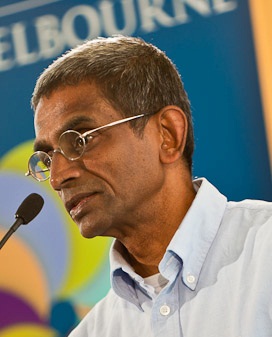
Pic = Daya Somasundaram

Programme:

Monday 12 September 2011, 5.30–6.30 pm Friday 16 September 2011, 5.30–6.30 pm

Dr To Xuan Lan (National Psychiatric Hospital No.1,Vietnam)An overview of Vietnam Mental Health System

Friday 16 September 2011, 5.30–7.30 -pm 

Dr Prasantha De Silva (Ministry of Health, Sri Lanka): A review of implementation of the Sri Lankan National Mental Health Policy and its way forward

Wednesday, 21 September 2011, 5.30–6.30

Mrs Thi Thu Thao Nguyen (from VVAF) :   VietnamVeterans of America Foundation and the expanding role of NGOs in Vietnam Continue reading

2 Comments

Filed under accountability, IDP camps, reconciliation, rehabilitation, Sinhala-Tamil Relations, sri lankan society, Tamil civilians, unusual people, voluntary workers, welfare & philanthophy, world events & processes

Mental Health Facilities for the Tamils at the IDP Camps and Now for Those Being Resettled … Reports from Manori Unambuwe

Michael Roberts, 9 September 2011

When I was shown round the health facilities at some of the IDP camps – “detention centres” as they were in my view up to 1 December 2009 — in the Menik Farm area in early June 2010 by Dr. Safras [who had worked there from April 2009], he happened to mention the fact that one of the Psycho-Social units he was in the process of showing me had been set up with the aid of a friend in Colombo, namely Manori Unambuwe, who had rustled up the monies required.

Psycho-Social Centre at midiay – Pic by Roberts

The hard work done by all sorts of agencies in alleviating the life of some 280,000 Tamil civilians[i]in these camps has hardly been revealed to the outside world in Colombo and beyond by anyone – not even by the government media outfits who follow His Majesty’s Command; though one report on this particular branch of welfare was presented in 2009 by the Sunday Leader [which is ranged against the government].

My uncovering of these dimensions of welfare philanthropy involving body, time and money has only been of the flimsiest character; but something is better than nothing …. … or SILENCE. I know little of the work done by the military personnel overseeing and running the camps; or that of the civilian government functionaries tasked to work alongside them’; or the many camp inmates who undertook tasks – sometimes as paid employees and sometimes as unpaid voluntary workers. Again, my reviews of the NGO activity have only embraced a few agencies.[ii] Hopefully, this partial tale will raise questions about the gross fabrications and/or exaggerations about the camps peddled by Western acolytes of the Tamil migrant lobby, such as David Feith, and other Tamil hands such as Niromi de Soyza.  

9 Comments

Filed under accountability, anton balasingham, australian media, IDP camps, liberation tigers of tamil eelam, life stories, LTTE, propaganda, reconciliation, rehabilitation, Sinhala-Tamil Relations, sri lankan society, Tamil civilians, Tamil migration, unusual people, voluntary workers, welfare & philanthophy