
“In Search of the Malwatu Oya (Sri Lanka)” (45 min; 2019; English) will be screened on 28 October 2022, 06:30 pm at the C.D. Deshmukh Auditorium, IIC main building
Directors: Dr. SinhaRaja Tammita-Delgoda, Hiranya Malwatta

Directors: Dr. SinhaRaja Tammita-Delgoda, Hiranya Malwatta
Jeremy Partyka …. at https://www.youtube.com/watch?v=ZS9VHvupRek
Video and Editing by Jeremy Partyka. Made in conjunction w/ final paper for my Independent Study Project during ISLE Fall 2017 🙂 Special shoutout to all the helpful lighthouse staff and locals who assisted me with my project!
 .… with still shots of the newer lighthouse at Galle Fort located at its south-eastern corner provided by a person born and bred in the Fort and familair with its beaches and ramparts, one Michael Roberts … and with several of the images being refined for Thuppahi by David Sansoni of Sydney
Shihan De Silva Jayasuriya et al

PREFACE to her new book entitled “Sustaining Support for Intangible Cultural Heritage” (ICH)
Sustaining Support for Intangible Cultural Heritage (ICH) continues the conversations on cultural heritage which commenced at a virtual conference held on August 3, 2020, at the Institute of Commonwealth Studies. The conference was spurred by the screening of my film – “Indian Ocean Memories and African Migrants” – at the Social Scientists Association, Colombo. The interest shown by UNESCO Global Network Facilitators, Dr Bilinda Nandadeva and Dr Gamini Wijesuriya, who attended the screening, was a catalyst to convening the conference. The Covid-19 pandemic further exposed the significance of heritage and the vulnerability of intangible culture. The book is a call to value ICH and an inspiration for academics, researchers, stakeholders, civil society, cultural practitioners and policymakers to understand the threats to sustaining heritage.
Filed under Aboriginality, Africans in Asia, ancient civilisations, art & allure bewitching, centre-periphery relations, cultural transmission, demography, economic processes, ethnicity, female empowerment, heritage, historical interpretation, Indian traditions, landscape wondrous, life stories, literary achievements, performance, population, religiosity, self-reflexivity, sri lankan society, the imaginary and the real, transport and communications, travelogue, unusual people, working class conditions, world events & processes
Ismeth Raheem ++
 Presented here is the stone and concrete lighthouse constructed around 1851-52 at the south-western corner of Galle Fort ………. replacing the cast-iron structure that was specially fabricated in England and shipped to Ceylon. That cast-iron lighting ‘unit’ was burnt down by accident in 1849-50.
The rare image was recently made available to Thuppahi by Bunchy Rahuman — an old Aloysian mate of Michael Roberts and one time resident in the fort.
The image is one of the earliest datable calotype photographs the world has seen. Calotype photographs are partly hand-coloured. Calotype was concurrently invented not soon after the Daguerreotype.
Filed under accountability, architects & architecture, art & allure bewitching, British colonialism, citizen journalism, cultural transmission, economic processes, heritage, historical interpretation, landscape wondrous, life stories, modernity & modernization, photography, photography & its history, sri lankan society, transport and communications, travelogue, unusual people, world events & processes
Michael Roberts
The tale of the lifeworld of Charles Braine (1877-1944) in British Ceylon presented by one of his descendants https://thuppahis.com/2022/09/21/charles-s-braine-a-rajah-of-a-planter-in-british-ceylon/ generated a side-issue: sex and/or marriage between the British personnel managing the tea, rubber and coconut plantations in British Ceylon and the labour force they commanded. The inequalities in power placed unequal sexual advantages for the planter periya dorais …. and illicit children were one outcome in some instances – a process that probably continued into the second third of the 20th century when Sri Lankans of upper-crust status with an educational background in the best local schools began to gain entry to planter-jobs.
Unlike some of his compatriots, the Englishman Charles Braine kept house with his common-law Sinhalese wife, Engracia Nona: together they fostered and educated a lively family of nine children.

Interest in this tale and comments from Joe Paiva and Errol Fernando led me to two topics of some consequence: (A) the presence in the island of an ethnic category identified as “Eurasians” as distinct from the Burghers;** and (B) the endearing and enduring work of an orphanage known as the Evelyn Nursery that had been launched by a British lady with a large heart that was matched by her architectural and organisational skill: Ms Lena Chapman ( ….).
Filed under accountability, charitable outreach, cultural transmission, economic processes, education, female empowerment, heritage, historical interpretation, island economy, landscape wondrous, patriotism, performance, population, rehabilitation, self-reflexivity, teaching profession, tolerance, travelogue, unusual people, voluntary workers, welfare & philanthophy, world events & processes
Visit https://historia.nationalgeographic.com.es/a/torre-eiffel-construccion-coloso_11345 for the full version of “ARCHITECTURAL CHALLENGE. THE EIFFEL TOWER: THE CONSTRUCTION OF A COLOSSUS” …………………… an item made available by Group Capt Kumar Kirinde and his RAFOP collective …. with only some segments reproduced here.
Thanks to his experience in the design of great works of iron, in 1889 Gustave Eiffel managed to erect a tower over 300 meters high for the Universal Exhibition in Paris.

Face of Gustave Eiffel at the base of the tower
Although he was an excellent engineer, Gustave Eiffel’s success rested even more on his skills as an entrepreneur. In 1887 he signed a contract by which the French State and the city of Paris would provide a subsidy of 1.5 million francs; 25 percent of the total construction cost. To obtain the remaining funds, Eiffel created a joint-stock company with a capital of five million francs, half of which was contributed by three banks and the other by Eiffel himself. Despite the fact that the expenses rose 2.5 million more, Eiffel managed to recover the entire investment in a few months thanks to the income from the sale of tickets, which he received by virtue of a 20-year operating license.
Item sent by Dulip Karunaratne of St. Aloysius in Galle then & Queensland now
The teacher said, “Let’s begin by reviewing some History.” Who said *’Give me Liberty, or give me Death?”* ………………….. She saw a sea of blank faces, except for Little Akio, a bright foreign exchange student from Japan, who had his hand up: *”Patrick Henry, 1775,”* he said.
“Very good! — Who said, *’Government of the People, by the People, for the People, shall not perish from the Earth’ ?“* ………….Again, no response except from Little Akio: *”Abraham Lincoln, 1863.”*

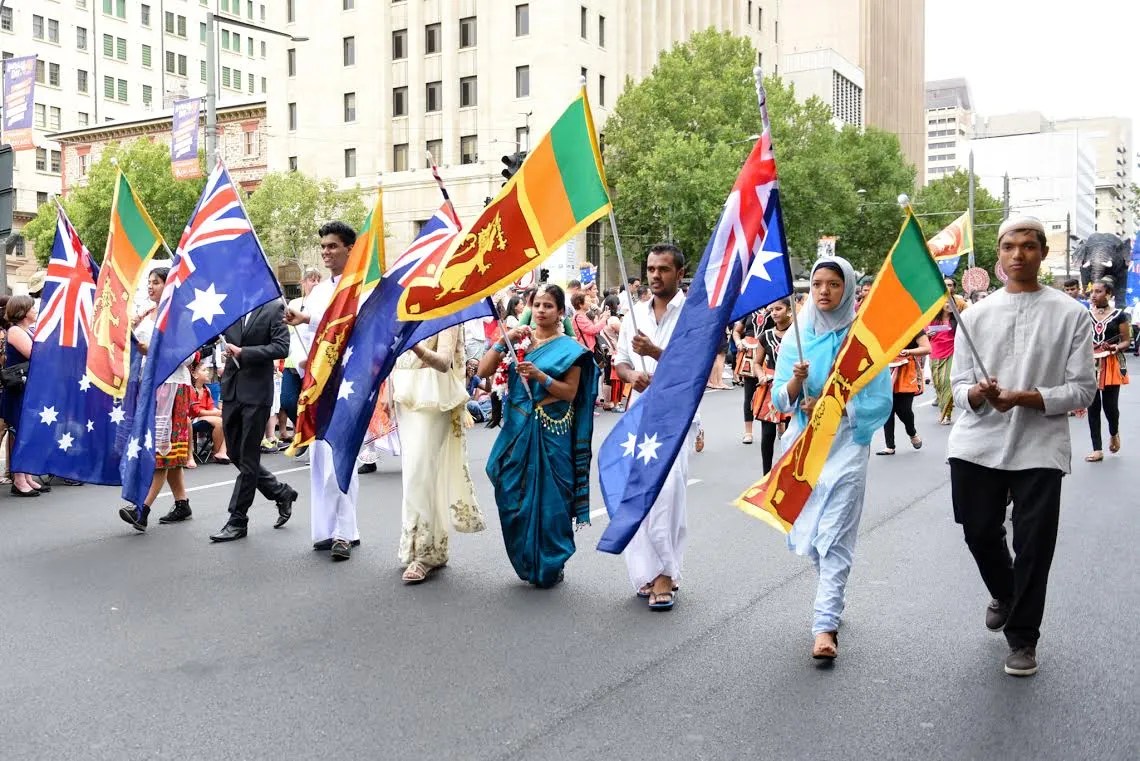
Item sent to Thuppahi by Victor Melder …. at https://www.abs.gov.au/census/find-census-data/quickstats/2016/7107_0 …. presented here with some selective highlights from the Thuppahi pen
| People | 109,853 |
|---|---|
| Male | 57,280 |
| Female | 52,573 |
| Australian citizen | 60.3% |
| Not an Australian citizen | 38.3% |

| Families | 43,816 |
|---|---|
| Couples with children | 26,914 |
| Couples without children | 13,326 |
| One parent families | 2,972 |
| Other families | 592 |

| All private dwellings | 52,548 |
|---|---|
| Median monthly mortgage repayment | $2,100 |
| Median weekly rent paid | $351 |
Filed under accountability, Australian culture, australian media, communal relations, demography, economic processes, education, ethnicity, governance, heritage, historical interpretation, immigration, island economy, legal issues, life stories, literary achievements, performance, population, self-reflexivity, sri lankan society, travelogue, unusual people, working class conditions, world events & processes
Rob George to Anne Scherer, 25 September 2022
Hi Anne, Michael has passed on your request to me and I am delighted to respond! George was the camel driver on a geological expedition in 1905/6 led by my great uncle Frank Rees George that led ultimately to Frank’s death in Alice Springs in early 1906. George wrote a letter to Frank’s mother, Ediva, (known as Nora) and my great grandmother, explaining to her the details of Frank’s incredible journey and his final hours. It’s a wonderful letter made even more poignant by the fact that it was penned by a man who cannot have had a lot of education. Please find a copy of the letter attached together with a photo that I think is George with the camels on the expedition. The letter was originally in a box of family memorabilia that we carted around rural South Australia (my father was a bank manager so we moved frequently) and which he donated to the State Archives in the mid 60’s. The letter is available at the archives.


Filed under Aboriginality, ancient civilisations, centre-periphery relations, communal relations, cultural transmission, demography, economic processes, ethnicity, heritage, historical interpretation, landscape wondrous, life stories, nature's wonders, self-reflexivity, travelogue, unusual people, world events & processes
Queen Elizabeth honoured by and honouring the House of Representatives
 Prime Minister John Kotelawela greets the Queen … and she is ushered in pageant mode into the chambers


Filed under art & allure bewitching, British colonialism, centre-periphery relations, charitable outreach, cultural transmission, Empire loyalism, heritage, landscape wondrous, life stories, patriotism, performance, politIcal discourse, self-reflexivity, sri lankan society, travelogue, unusual people, world events & processes
 thuppahi

