
Category Archives: transport and communications

Us/Them Semantics in Sinhalese Confrontations with Other Forces Over Time

Michael Roberts presenting the Synopsis of an Article published after a refereeing process in the journal NATIONALISM and ETHNIC POLITICS  Vol 9/3 Summer 2003, pp. 75-102

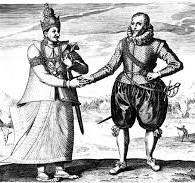
The collective identity of Sinhala-speakers over four centuries dating from the 1590s is analyzed with due attention to the structural form of (a) the Kingdom of Kandy and (b) the British colonial regime that took control of the whole island by 1815/18. The analysis dwells on the modes of oral, visual-iconic and written forms of cultural transmission that pre-dated print technology, while drawing attention to the relative uniformity of the Sinhala language in both geographical and temporal scale. A semantic pattern of political alliances based on the opposition of inside to outside which works contextually like a nestling Chinese-box is one dimension of this linguistic order. This supported the tendency of Sinhalese representations to adopt an associational logic which merged past enemies (the wicked Tamils) with contemporary enemies (the Portuguese, the English) during the liberation struggles of the Kandyan state and its militia in the pre-1818 period. Such tendencies and the continuation of disparaging epithets coined during the period of Portuguese imperial intrusion into the vocabulary of the twentieth century must inform any theoretical efforts to distinguish the collective consciousness of the Sinhalese after the substantial transformations initiated under the British from that which is expressed so powerfully in the war poems of the pre-British period. 
VISIT this Digital-Reference:
https://www.semanticscholar.org/paper/Language-and-national-identi ty%3A-the-Sinhalese-and-Roberts/003324e5fbcdd
Special ADDITIONS for TPS …. The “US vs THEM” Phenomenon

Leave a comment

Filed under authoritarian regimes, British colonialism, centre-periphery relations, communal relations, cultural transmission, demography, Dutch colonialism, economic processes, ethnicity, governance, hatan kavi, heritage, historical interpretation, Indian Ocean politics, island economy, Kandyan kingdom, language policies, law of armed conflict, life stories, literary achievements, nationalism, patriotism, politIcal discourse, population, Portuguese imperialism, power politics, racism, security, self-reflexivity, Sinhala-Tamil Relations, Sri Lankan scoiety, transport and communications, world events & processes, zealotry

Facing Fortress Australia: Ceylonese Migrants in the 1950s & 1960s

Earlson Forbes, whose title in THE CEYLANKAN, vol 27/2, May 2024 is Fortress White Australia: What early Ceylonese migrants [1949 t0 1969] were up against” … [now … with most of the author’s documentary illustrations]

The Six Australian Colonies came together on the 1st  of January 1901 to form the independent Nation of the Commonwealth of Australia.  From 1788 (First Fleet arrival at Sydney Cove) to the time of Federation, Australia was populated by convict and free settlers almost exclusively from Britain.  The 1901 census put the population at 3.7 million.   Aboriginals were not counted in this census. A small percentage of the population was made up of Pacific Islanders and Chinese.  The Chinese entered Australia in the second half of the 19th century at the time of the Gold Rush in Australia (mid-19th century) and in the years following. Between 1851 and 1870 about 50,000 Chinese were estimated to have entered Australia. Pacific Islanders had been brought to Australia in the second half of the 19th century as labourers.

From its inception the Nation of Australia embarked on a highly protective policy regarding entry into the country.  Within one year of formation of the Nation, the Australian Parliament passed two Acts limiting immigration.  These two Acts were The Immigration Restriction Act 1901, and the Pacific Islander Labourers Act 1901.  The Pacific Islander Labourers Act aimed specifically at putting a stop to admission of persons from this region.  The Act stated, ‘No Pacific Island Labourer shall enter Australia on or after the thirty first day of March one thousand nine hundred and four’.

Continue reading

Leave a comment

Filed under accountability, Australian culture, australian media, centre-periphery relations, charitable outreach, communal relations, cultural transmission, demography, discrimination, disparagement, economic processes, education, ethnicity, governance, heritage, historical interpretation, immigration, island economy, landscape wondrous, language policies, legal issues, life stories, patriotism, plural society, politIcal discourse, racist thinking, self-reflexivity, social justice, sri lankan society, taking the piss, transport and communications, travelogue, unusual people, world events & processes

Eisenhower Park Cricket Stadium: An Overnight ‘Ali Baba’ Creation

Nagraj Gollapudi, in The Cricket Monthly at ESPNcricinfo, 31 May 2024, where the title reads “New York’s beautiful monster: how a cricket venue was created from scratch”

In Eisenhower Park on the outskirts of the city, a stadium has come up in a race against the clock.

The Cricket World Cup Trophy on display Wednesday March 19, 2024 at Eisenhower Memorial Park in East Meadow.

It was in August of 2023 that Don Lockerbie started to get anxious. The ICC had tasked him, a former chief executive of the United States Cricket Association, now venue development officer for the 2024 men’s T20 World Cup, to find a suitable venue in New York that could host matches in the marquee event.

Continue reading

1 Comment

Filed under accountability, architects & architecture, architectural innovation, centre-periphery relations, commoditification, cricket for amity, economic processes, ethnicity, heritage, historical interpretation, landscape wondrous, life stories, modernity & modernization, performance, the imaginary and the real, transport and communications, unusual people, world events & processes

The Global Contest for Influence/Power

Fair Dinkum

What is astonishing is that while China and Europe are doing trade to the tune of 783 billion, the US and NATO  are waging war to the combined tune of 500 billion. One is about construction,  the other destruction. One is about peaceful cooperation,  the other is about perpetual war.

The 500 billion from the US/NATO has all gone up in smoke with 500,000 dead Ukrainians and about 100,000 dead Russians (rough estimates), and the loss of Ukraine looming on the horizon.

Continue reading

Leave a comment

Filed under accountability, american imperialism, China and Chinese influences, disparagement, economic processes, foreign policy, governance, historical interpretation, Indian Ocean politics, modernity & modernization, Pacific Ocean politics, politIcal discourse, power politics, transport and communications, truth as casualty of war, world events & processes

Amiable Academic Reciprocities: Peebles & Roberts, 1970

Michael Roberts

The academic world and its scholarship is marked by cooperative work as well as animosities and rivalry – whether personal or based on political affiliations. The Sri Lankan scenario was/is no different. As I participated in this environment as a lecturer in History at Peradeniya University,[1] I was extremely fortunate in: (A) benefitting from a salubrious physical setting and a favourable arrangement of buildings and a super library; and (B) a bunch of dons who were as inspiring as amiable –so that the “Senior Common Room’ in the Faculty of Arts was not only a spot for invigorating tea, but also a site for the exchange of ideas.

Continue reading

3 Comments

Filed under accountability, British colonialism, centre-periphery relations, communal relations, cultural transmission, education, ethnicity, historical interpretation, island economy, land policies, language policies, Left politics, life stories, modernity & modernization, nationalism, plantations, plural society, politIcal discourse, power politics, self-reflexivity, Sinhala-Tamil Relations, sri lankan society, teaching profession, transport and communications

“Colonization and Ethnic Conflict in the Dry Zone of Sri Lanka” – Article in 1990

Patrick Peebles in a refereed article in The Journal of Asian Studies, Vol. 49, No. 1 (Feb., 1990), pp. 30-55 …. which John De Silva in Melbourne, my Aloysian sporting mate, has worked on to make it feasible for me to present it in the Thuppahi format-style. The supporting Maps & Diagrams are presented via web-references, while the web-reference to the article as a whole is placed herein in pdf format.

Sri LANKA’S INABILITY to contain ethnic violence as it escalated from sporadic terrorism to mob violence to civil war in recent years has disheartened observers who had looked to the nation as a success story of social and political development. In retrospect, Sri Lanka lacked effective local institutions to integrate the society, and the Sinhalese elite relied on welfare and preferential policies for the Sinhalese majority to maintain power. These alienated the minorities and resulted in Tamil demands for a separate state. 1

Continue reading

1 Comment

Filed under authoritarian regimes, British colonialism, centre-periphery relations, chauvinism, colonisation schemes, cultural transmission, demography, economic processes, ethnicity, governance, heritage, island economy, land policies, landscape wondrous, language policies, Left politics, life stories, plural society, politIcal discourse, power politics, racism, self-reflexivity, Sinhala-Tamil Relations, sri lankan society, Tamil civilians, transport and communications, working class conditions, world events & processes

Idyllic Explorations: Sri Lanka’s Marvellous Ruins & Monuments

Bernard VanCuylenberg, whose chosen title for this essay was  “An Odyssey – A Search for Heritage” …. with pictorial illustrations selected in arbitrary manner by the Editor, Thuppahi

Pursuant to the articles which I wrote last year, “An Odyssey – A Search for Heritage, parts 1 and 2 “) following a foray into the cornucopia of ruins buried in deep jungle well off the beaten track, I embarked on a similar venture in March this year. I am passionately moved by the treasure trove of what could be the best in ancient Sinhala civilization, possibly the life force of Sinhala culture which remains buried in the sands still awaiting the archaeologists spade, and I wish to share my experience with a wider circle of lovers of history. Parting the veil of time, an unknown sculptor, architect, engineer, master craftsman, even a poet reached out to me and held my hand leading me across the centuries in my quest.
 Degaldoruva …. off Kandy

Continue reading

2 Comments

Filed under architects & architecture, art & allure bewitching, authoritarian regimes, cultural transmission, education, heritage, historical interpretation, Indian traditions, landscape wondrous, life stories, paintings, photography, pilgrimages, religiosity, self-reflexivity, sri lankan society, transport and communications, travelogue, unusual people, world events & processes

Pictorials: Roman Szechowycz in the Dry Zone in the 1950s

Michael Roberts

Dr Roman Szechowycz and  his brother served the newly independent island of Ceylon in its hydraulic agriculture projects in the Dry Zone in the period 1950 to 1961 …. mostly from a base at Inginiyagala in the Eastern Province where the Gal Oya Tank was constructed. We are fortunate to have some photographic ‘asides’ of a “personnel nature” — so to speak — associated with this work  The detailed descriptions presented elsewhere in TPS: viz.; …..

Experiences: Working on the Gal Oya Project in Ceylon, 1950-61

Continue reading

2 Comments

Filed under accountability, ancient civilisations, architects & architecture, British colonialism, centre-periphery relations, colonisation schemes, commoditification, demography, economic processes, ethnicity, governance, heritage, historical interpretation, irrigation, island economy, land policies, landscape wondrous, life stories, modernity & modernization, nationalism, patriotism, photography, politIcal discourse, population, self-reflexivity, sri lankan society, transport and communications, unusual people, welfare & philanthophy, world events & processes

For Ceylon. Roman Szechowycz in Gal Oya, 1950-61

Andreas Szechowycz … detailing his father’s dedicated work in the Gal Oya Project in the 1950s and in communication with  Michael Roberts in ways that mark his deep attachment to the island

Group Photo – Dr. Roman Szechowycz in middle.

L-R: Mr. (not legible), Mr. P. W. Richards, Mr. Coel Menai North Wales UK, Dr. Roman Szechowycz, Dr. A. J. Kostreamaks Bongor, Mr.. Anwari Dilmy Indonesia, Mr. B. A. Abeyvickram Colombo, Mr. R. A. DeRosaryro Colombo

Continue reading

4 Comments

Filed under architects & architecture, centre-periphery relations, colonisation schemes, cultural transmission, demography, economic processes, ethnicity, governance, heritage, historical interpretation, island economy, land policies, landscape wondrous, life stories, modernity & modernization, patriotism, performance, photography, politIcal discourse, population, rehabilitation, sri lankan society, transport and communications, unusual people, welfare & philanthophy, working class conditions, world events & processes

For Colombo … the DALI shatters the Bridge at Baltimore: Dramatic Scenario

HOT PRESS …. Numerous News Items

Continue reading

Leave a comment

Filed under accountability, landscape wondrous, life stories, security, self-reflexivity, the imaginary and the real, transport and communications, trauma, world events & processes