Category Archives: sri lankan society

My Decision to leave Ceylon in 1981

Sachi Sri Kantha      

Sachi examining a winged bean pod in 1981

Prelude

Willingly, I opt to use the ‘Ceylon’ word, because I was born in the blessed island Ceylon in May 1953. The place of my birth was Chilaw, solely for the reason it was the then work location of my father Sachithanantham, then employed as a clerk in the hospital services of the Department of Health. He was 30, but my mother was only 17. My parents are from Point Pedro, and it was an arranged marriage among the kin in Point Pedro’s adjacent regions.

From 1961 to 1971, I had primary and secondly schooling at the Colombo Hindu College (Bambalapitiya, Ratmalana) and Aquinas University College. I entered the University of Sri Lanka (Colombo Campus) in January 1972, at the age of 18 years and 8 months. This entry was delayed by months, due to the JVP insurrection in April 1971. Ceylon was re-named as Sri Lanka in May 1972.

Continue reading

4 Comments

Filed under accountability, atrocities, centre-periphery relations, communal relations, cultural transmission, discrimination, economic processes, education, ethnicity, heritage, historical interpretation, language policies, life stories, nationalism, outmigration, politIcal discourse, racism, riots and pogroms, self-reflexivity, Sinhala-Tamil Relations, sri lankan society, Tamil civilians, Tamil migration, teaching profession, travelogue, unusual people, world events & processes

When S. Thomas’ College Stormed into the Rugby Arena in Lanka

Sajeewa Jayakody, in  an article entitled S.Thomas’ College ’s bold beginning in rugby,” August 6, 2025 …. with  highlighting being  an  imposition by The Editor, Thuppahi

The 1961 S. Thomas’ College rugby team captained by Tony Sirimanne….

Back Row: M.Flamer Caldera, C.R. Dickson, H.R. C . D’Silva, M.N.A. Gunasekera, H.L.C. D’Silva, C.L.Perera, G. D’Silva, S.J. P. Guneratne, B.C. Molligoda, R.Jayatileke, N.Dias- Abeysinghe.

Seated: Mr P. Perera (Coach), J. Cader, H.S.Kanagaabai, T.Sirimanne (Captain), The Warden, M.G. Koch, M.Samarasinghe, Mr L.W. Abeywardena. ….

Ground: C. Asirwatham, C.H. Weerasooriya.

Continue reading

Leave a comment

Filed under accountability, art & allure bewitching, Colombo and Its Spaces, cultural transmission, education, heritage, life stories, performance, S. Thomas College, sri lankan society, teaching profession, unusual people, welfare & philanthophy

Facing A Tsunami & A Civil War

Dennis  M. McGilvray, in an  article  pubd in 2006 in the India Review, vol. 5, nos. 3–4, July/October, 2006, pp. 372–393 Copyright © Taylor & Francis Group, LLC  …. ISSN 1473-6489 print; 1557-3036 online DOI:10.1080/14736480600939132 … one bearing this title:  “Tsunami and Civil War in Sri Lanka: An Anthropologist Confronts the Real World

Recent calls for a new “public anthropology” to promote greater visibility for ethnographic research in the eyes of the press and the general public, and to bolster the courage of anthropologists to address urgent issues of the day, are laudable although probably also too hopeful. Yet, while public anthropology could certainly be more salient in American life, it already exists in parts of the world such as Sri Lanka where social change, ethnic conflict, and natural catastrophe have unavoidably altered the local context of ethnographic fieldwork. Much of the anthropology of Sri Lanka in the last three decades would have to count as “public” scholarship, because it has been forced to address the contemporary realities of labor migration, religious politics, the global economy, and the rise of violent ethno-nationalist movements. As a long-term observer of the Tamil-speaking Hindu and Muslim communities in Sri Lanka’s eastern coastal region, I have always been attracted to the classic anthropological issues of caste, popular religion, and matrilineal kinship. However, in the wake of the civil wars for Tamil Eelam and the 2004 tsunami disaster, I have been forced to confront (somewhat uneasily) a fundamentally altered field- work situation. This gives my current work a stronger flavor of public anthropology, while providing an opportunity for me to trace older matrilocal family patterns and Hindu-Muslim religious traditions under radically changed conditions.

 BEACHFRONT HOME DESTROYED BY TSUNAMI, MARUTHAMUNAI. AUGUST 2005

Continue reading

Leave a comment

Filed under accountability, atrocities, authoritarian regimes, centre-periphery relations, charitable outreach, communal relations, counter-insurgency, demography, disaster relief team, economic processes, Eelam, ethnicity, governance, historical interpretation, human rights, insurrections, island economy, landscape wondrous, life stories, LTTE, military strategy, Muslims in Lanka, politIcal discourse, racist thinking, rehabilitation, religiosity, security, self-reflexivity, Sinhala-Tamil Relations, sri lankan society, Tamil civilians, the imaginary and the real, the tsunami 2004, transport and communications, truth as casualty of war, voluntary workers, war crimes, war reportage, welfare & philanthophy, world events & processes

UNHRO Calls for Investigation of Past Killings in Lanka


Tamil and Sinhala versions attached

Sri Lanka has opportunity to break from past – Türk

GENEVA (13 August 2025) – A report published today by the UN Human Rights Office calls on Sri Lanka’s Government to seize the historic opportunity to break with entrenched impunity, implement transformative reforms, and deliver long-overdue justice and accountability for serious violations and abuses committed in the past, including international crimes.

Continue reading

1 Comment

Filed under accountability, atrocities, authoritarian regimes, centre-periphery relations, communal relations, demography, Eelam, ethnicity, governance, historical interpretation, landscape wondrous, life stories, LTTE, migrant experiences, military expenditure, military strategy, parliamentary elections, patriotism, photography, political demonstrations, politIcal discourse, population, power politics, racism, Rajapaksa regime, security, self-reflexivity, Sinhala-Tamil Relations, social justice, sri lankan society, suicide bombing, Tamil civilians, Tamil migration, tamil refugees, Tamil Tiger fighters, the imaginary and the real, trauma, truth as casualty of war, vengeance, violence of language, war crimes, world events & processes, zealotry

Turbines at Mannar are A Threat to Vital Bird Corridor

Dilum Alagiyawanna, in Daily Mirror,  August 2025

Local-based renewable projects, unlike Adani’s mega 5.2 MW high-efficiency turbines, show that cleaner energy is possible, without harming Sri Lanka’s sensitive bird habitat. 


The Central Asian Flyway is one of the most significant bird migration corridors globally, stretching from Siberia and Central Asia to the Indian Ocean.

Continue reading

5 Comments

Filed under accountability, animal world, energy resources, governance, island economy, landscape wondrous, marine life, protecting wild lifeways, self-reflexivity, sri lankan society, travelogue, world events & processes

Public or Private Health Care? The Dilemma Sri Lankans Face

Fazli Sameer, at Those Fuzzy Days where the title of the article runs thus: “Ethics of Health Care: Waiting, Paying and Weeping,” … with highlighting here imposed by The  Editor, Thuppahi

When my sister, Kumari, went for her annual cardiac check-up to the elite Makalanka hospital, we expected the usual strain, long hours of waiting, some tests, and maybe a bit of worry. What we didn’t expect was to be caught between two worlds: one where care came with a steep price and hidden payments, and another where care seemed trapped in endless waiting and fading patience.

Waiting. It’s the first and most universal experience patients face when seeking medical care in today’s clinics and hospitals. Whether public or private, the hours-long wait, without explanation or apology, has become the norm.

Continue reading

Leave a comment

Filed under accountability, Colombo and Its Spaces, disparagement, human rights, life stories, politIcal discourse, self-reflexivity, social justice, sri lankan society, taking the piss, trauma

Neelan Tiruchelvam: An Appreciation of His Mediatory Politics

Kagusthan Ariaratnam in Groundviews, 8 August 2025, where the title  reads “Neelan Unsilenced …” while highlights here have been added by The Editor, Thuppahi

Photo courtesy of Pitasanna Shanmugathas

NEELAN: UNSILENCED is a compelling and vital documentary that successfully situates the life of Dr. Neelan Tiruchelvam within the turbulent history of the Sri Lankan conflict. Its greatest achievement is providing a nuanced entry point into the war by focusing on the non-violent, intellectual and pluralistic dimensions of Tamil resistance – a perspective often eclipsed by the narrative of armed struggle. By foregrounding Neelan’s journey, the film illuminates a leader who dedicated his life to constitutional reform and reconciliation.

   Photo courtesy of Pitasanna Shanmugathas

Continue reading

1 Comment

Filed under accountability, anti-racism, centre-periphery relations, communal relations, democratic measures, economic processes, education, Eelam, electoral structures, ethnicity, governance, historical interpretation, human rights, Indian Ocean politics, landscape wondrous, language policies, Left politics, legal issues, life stories, modernity & modernization, nationalism, NGOs, patriotism, performance, politIcal discourse, power politics, power sharing, reconciliation, self-reflexivity, Sinhala-Tamil Relations, social justice, sri lankan society, unusual people

Appreciating Ravindra Randeniya’s Multi-Faceted Career

Uditha Devapriya  in SAPNnews,  August 2025, where the title runs thus: “Ravindra  Randeniya: Sri Lankan Actor, South Asian Artist”


 Ravindra (left) & Dilip Kumar (right) in New DelhiCourtesy Ravindra Randeniya

In South Asia, cinema is more than an art: it is a way of life. Sri Lanka is no exception. Despite its size, the small island-state boasts of a film industry that has won renown abroad, even if it is facing a downturn today. At its peak in the 1960s and 1970s, Sri Lankan films travelled to New Delhi, Tehran, Tashkent, even Cannes and New York.

Continue reading

1 Comment

Filed under accountability, art & allure bewitching, Colombo and Its Spaces, cultural transmission, economic processes, education, heritage, landscape wondrous, life stories, patriotism, performance, politIcal discourse, self-reflexivity, sri lankan society, the imaginary and the real, theatre world, travelogue, unusual people

About Sharika Thiranagama ……. Today

Rohan Gunaratna  in  FACEBOOK, August 2025

Rohan Gunaratna

nopordtesS43ag881f170i0ihg99ic5ay0ic8luml74u9m2l8 61t4Mct4a0 ·

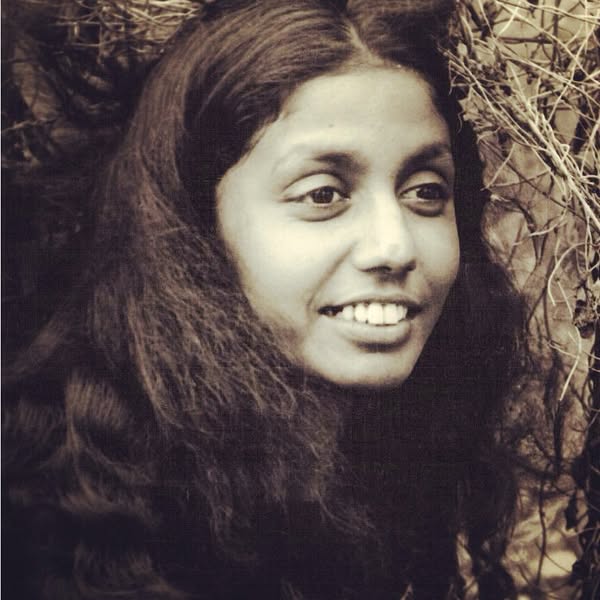
Congratulations to Sri Lankan-born American Anthropologist, Prof. Sharika Thiranagama, on winning the Davidson Prize at Cambridge University, where she was appointed a Scholar of St Johns.

Winner of Stanford University’s “Lifetime award for Academic achievement in Archaeology and Anthropology”, Sharika wrote “In My Mother’s House: Civil War in Sri Lanka” published by University of Pennsylvania Press in 2011.

Sharika

…Rajini Continue reading

2 Comments

Filed under accountability, atrocities, authoritarian regimes, communal relations, Eelam, ethnicity, governance, historical interpretation, human rights, life stories, literary achievements, performance, politIcal discourse, refugees, self-reflexivity, Sinhala-Tamil Relations, sri lankan society, Tamil migration, tamil refugees, teaching profession, trauma, unusual people, war crimes, world events & processes, zealotry

The Sri Lanka Diaspora: Demographic Basics … 2009

Courtesy of Sunil Thenabadu  & Keith Bennett

The Sri Lankan diaspora consists of approximately three million Sri Lankans living abroad, significantly contributing to their host countries and maintaining ties with Sri Lanka.

Demographics and Distribution

The Sri Lankan diaspora includes emigrants and expatriates from Sri Lanka residing in various countries, with significant populations in Europe, the Middle East, East Asia, Australia, and North America. An estimate from 2013 indicated that around three million Sri Lankans live outside their home country, with about one million permanently settled abroad. This diaspora is characterized by a diverse mix of ethnicities, including Tamils, Sinhalese, and Burghers, each contributing uniquely to the cultural landscape of their host nations. 

Wikipedia+1

Continue reading

Leave a comment

Filed under accountability, centre-periphery relations, demography, historical interpretation, life stories, security, self-reflexivity, sri lankan society, world events & processes