Category Archives: sri lankan society

The NPC election destroys the myth of “no more minorities”

Muttukrishna Sarvananthan, courtesy of Ceylon Today

The Northern Provincial Council (NPC) election that took place on September 21, 2013 was relatively the most peaceful election in the North after the 1977 parliamentary elections, in spite of couple of violent incidences and numerous threats, intimidations, and abuse of public property. The first-ever NPC election was also relatively calmer than the elections in the North Western Province (NWP) and Central Province (CP) that took place on the same day. The government, security forces, Eelam People’s Democratic Party (EPDP), and the Tamil National Alliance (TNA) should be jointly lauded for the peaceful conduct of the elections.

Tamil nationalism was at its peak in 1977 when the Tamil United Liberation Front (TULF – predecessor to the Tamil National Alliance) secured highest number of seats at the parliamentary elections and even more importantly highest-ever share of votes (57%) amidst 84% voter turnout in the combined eastern and northern electoral districts. The landslide victory resulted in TULF becoming the single largest opposition party and hence securing the position of Leader of Opposition in 1977.   Continue reading

Leave a comment

Filed under constitutional amendments, legal issues, life stories, LTTE, nationalism, political demonstrations, politIcal discourse, population, power politics, power sharing, Rajapaksa regime, reconciliation, Sinhala-Tamil Relations, slanted reportage, sri lankan society, Tamil civilians, truth as casualty of war, world affairs

One musical step across the ethnic divide with Tanya Ekanayake of Edinburgh

Laura Cummings, in The Edinburgh News, where the title reads Music fights the ravages of civil war

TANYA PRFILE IT was a conflict that spanned a quarter of a century and claimed the lives of more than 80,000 people. Now, an Edinburgh tutor has helped Sri Lankan children to cope with the aftermath of the island’s civil war through a music workshop. Dr Tanya Ekanayaka, who was born in Sri Lanka and lectures part-time in the music department at the Edinburgh College of Art, staged the event in the northern part of Sri Lanka, which bore the brunt of the 25-year-long conflict. A noted pianist, Dr Ekanayaka is also a composer and linguistic expert. She believes that children in her homeland can benefit from music therapy to help overcome the effects of the civil war. Continue reading

Leave a comment

Filed under cultural transmission, education policy, life stories, performance, politIcal discourse, Sinhala-Tamil Relations, sri lankan society, teaching profession, tolerance, trauma, welfare & philanthophy, women in ethnic conflcits, world affairs

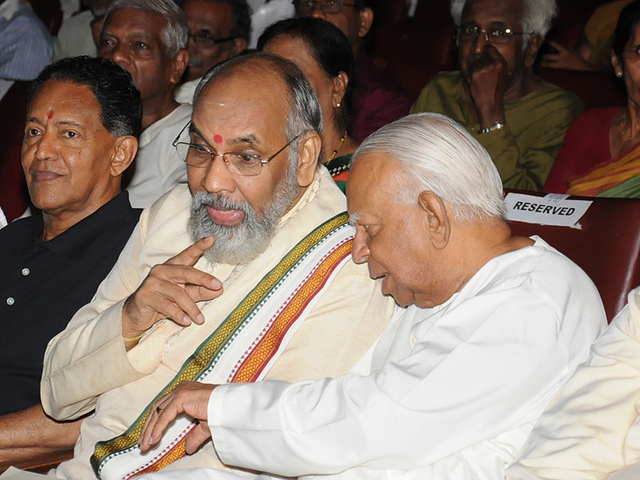
Wigneswaran, Chief Minister NPC, addresses Sri Lankans: “I Took Oaths A Little While Ago”

C. V. Wigneswaran

WI8GNESWARAN 11

I took oaths a little while ago this morning undertaking to faithfully perform the functions of my office. My office is a gift from my people. They have mandated me to perform my duties on a long term as well as a short term perspective. The former behoves us to confirm our individuality. To do so we have to learn lessons from our struggles of the past, our previous political perspectives and our past experiences and then forge ahead. It is the need of the hour that we remove the misunderstandings and doubts that have crept into the minds of various communities. It is as a part of such an exercise that we decided that I take oaths before the President of this Country. We believe our decision would convey to our brethren our desire to settle our differences within a united Sri Lanka. Our action today buttresses our close–up perspectives too, in that we expect to bring immediate relief to our war affected people. I hope the Sinhala people would endeavour to prod on their political representatives in every manner whatsoever to bring sunshine into the lives of our disturbed and affected Tamil speaking people. I expect my Sinhala brothers and sisters to impress upon their political representatives that internal self determination does not divide the country but facilitate a journey on the path of unity. I sincerely ask the Sinhala people to realize that to the same extent the Sinhala people cherish and respect their language and culture so do the Tamil speaking people cherish and respect their own language and their traditions. There is no place for violence in this realization. None could force such realization. It is such sincere realization that would take us all on the path of peace and brotherhood. Therefore let my simple symbolic act today pave the way for the unity of the people of the two communities in our Island. May Divine blessings be with all of us!

Justice

C.V.Wigneswaran

Chief Minister, Northern

Provincial Council Continue reading

Leave a comment

Filed under accountability, nationalism, politIcal discourse, power politics, power sharing, self-reflexivity, Sinhala-Tamil Relations, sri lankan society

Remembering and Applauding A. Jeyaratnam Wilson

Laksiri Fernando, courtesy of the Island, 9 October 2013

SJV CHELVA A J WILSON SL TAMIL N'LISM

This tribute is not only from me but also from a friend of mine who had associated Professor Alfred Jeyaratnam Wilson, even more than me, for over two and a half decades very closely even living in his home in Frederickton, Canada, for few years. I am writing this not only as a tribute to this great man and an undisputed silent humanist, Wilson, but also to show how some of the hidden stories of Sinhala Tamil relations could bring certain sanity to the otherwise poisoned atmosphere in Sri Lanka and promote reconciliation and harmony among different communities. Continue reading

1 Comment

Filed under constitutional amendments, education, historical interpretation, Left politics, life stories, LTTE, politIcal discourse, power politics, prabhakaran, self-reflexivity, Sinhala-Tamil Relations, sri lankan society, Tamil migration, tolerance, unusual people

Reflections on the Rise and Fall of Sama Samājism in Lanka

 M. Haris Deen, in Daily News, 10 October 2013

Following my earlier piece, “78 Years of Sama-Samajism – Where Art Thou Now”, there were several letters of appreciation for what I wrote – All bouquets not brickbats. However, one reader, while acknowledging the bottom line that highest number of seats the LSSP were able to secure in any Parliament were 14 pointed to some inaccuracies in my article. The corrections my reader pointed out were that Moratuwa was won by Merril Fernando and Bandarawela elected M.P. Jothipala under the Hammer and Sickle with the embossed No.4 signifying the Trotskyite Fourth International LSSP banner. It was Dr. Hector Fernando and not Hugh Fernando who secured the seat of Negombo for the LSSP. By that time T.B. Subasingha, Philip Goonewardena and Somaweera Chandrasiri having joined the MEP. While thanking the reader who pointed these out, I was actually going to put the record straight in this issue. Continue reading

Leave a comment

Filed under historical interpretation, language policies, Left politics, life stories, politIcal discourse, power politics, self-reflexivity, Sinhala-Tamil Relations, sri lankan society

Tributary Overlordship and Cakravarti Figures in Pre-British Lanka

Michael Roberts


Darshani Ratnawalli* has recently deployed one motif within my book Sinhala Consciousness in the Kandyan Period, 1590s to 1815 in a perceptive and telling manner. The motif is the concept of “tributary overlordship.” Details from Robert Knox and Philippus Baldaeus[2] are presented in useful ways by Ratnawalli to underline the weight of this concept in the political relations between “centre” and “periphery” in the 17th and 18th centuries. The notion of centre-versus-periphery, I stress, is an adjunct concept that serves to strengthen my argument about “tributary overlordship.

P1Ratnawalli tells her readers that tributary overlordship refers to a “political mechanism” that linked “satellite states” to the “superior Chakravarti figure” – thereby serving as a “form of allegiance and rule that accommodated localized dominion[s].” This is a succinct summary. However, one cannot be certain that the generality of readers will comprehend the import of this distillation because they do not have the benefit of the elaborations within Sinhala Consciousness that Ratnawalli has absorbed. These amplifications, I stress, include considerable detail and also use charts and illustrative photographs (examples of the latter will embellish this article). Central to the argument was the set of meanings attached to the rite of däkuma in its various forms, a practice that overlapped with the personalized exchange relations that were termed panduru pakkudam. Continue reading

8 Comments

Filed under authoritarian regimes, British colonialism, citizen journalism, cultural transmission, ethnicity, historical interpretation, island economy, life stories, politIcal discourse, power politics, Sinhala-Tamil Relations, slanted reportage, sri lankan society, truth as casualty of war

Into the Vanni and Jaffna of the 17th Century

Darshani Ratnawalli

tiers of lordship

His name was Knox. Robert Knox. English. He was a prisoner in Lanka from 1660 to 1680. Finally he escaped from Kandy or more specifically from Rajasinha II, who claimed to be the sovereign overlord of the whole of Lanka and its people. The world-view Rajasinha II inherited as a ruler of Sinhalē (a perception of pan island chakravartihood) comes across in his correspondence with the Dutch. He told them that “the black people of this island of Ceilao, wheresoever they might be, [are] my vassals by right”- (Roberts: 2004[i]:78). In the royal view, the Dutch were the “faithful Hollanders, the guardians of his coast” and earlier during his enterprise to oust the Portuguese, they were “his hired guns”. In Rajasinha II’s early letters to the Hollanders (written in Portuguese) he was “The most potent Emperor of Ceilao” while they were “My Hollanders” and the fortresses held by them were “my fortresses” as in “my fortress at Gale”. What with “my black folk”, “my vidanas,” “these lowland territories of mine” and “my said island”, Rajasinha II was asserting that he “did not recognize Dutch claims to sovereignty over the coastal areas”- (ibid and Dewaraja 1995:189). The Dutch kept up the appearance of concurring with this assertion in their diplomatic relations. “The governor, Pijil, referred to himself as the “king’s most faithful governor and humble servant”, called the king “His Majesty” and spoke of “the king’s castle at Colombo.” He even “declared that all the island belonged to the Sinhalese King.”- (Roberts: 2004: 79). Continue reading

1 Comment

Filed under authoritarian regimes, British imperialism, cultural transmission, ethnicity, heritage, historical interpretation, life stories, politIcal discourse, power politics, Sinhala-Tamil Relations, slanted reportage, sri lankan society, truth as casualty of war

Forgotten woes: Sri Lanka’s neoliberal politics

Chaminda Weerawardhana, courtesy of Open Democracy forum and web site27 September 2013, where the essay has attracted a few laudatory comment

In light of Commonwealth support for the upcoming Heads of Government Meeting to be held in Colombo this November,  here we are reminded of the dangers of Sri Lanka
becoming a model for other governments in the global South to follow. Sri Lanka’s thirty-year war, which ended in May 2009, is fast being forgotten. In the post-2009 context, pressing fundamental rights issues in the island nation have been considerably sidelined. Key players in the international community do not perceive Sri Lanka as a strategic priority. In the most recent development, Colombo interprets its decision to hold a Northern Provincial Council Election on 21 September 2013, after a lapse of some twenty-five years, as a means of demonstrating its apparent respect for democratic best practice. The campaign, however, has been fraught with violence, especially against candidates of the Tamil National Alliance (TNA), the main exponent of constitutional Tamil nationalism, polemical concerns over the TNA manifesto, and anti-TNA smear campaigns emanating from governmental sources. Continue reading

1 Comment

Filed under accountability, citizen journalism, communal relations, constitutional amendments, historical interpretation, LTTE, politIcal discourse, power politics, Rajapaksa regime, reconciliation, Sinhala-Tamil Relations, slanted reportage, sri lankan society, truth as casualty of war, world affairs

A Chola Tiger within Wigneswaran Swamy and the TNA?

Sebastian Rasalingam, courtesy of the Sri Lanka Guardian, where the title reads “Wigneswaran the latest Human Sacrifice to the Chola Tiger?”

It is extremely worrisome to read the election speeches in the Tamil language coming from those who are fighting it out in the North. It is also fortunate that most Sinhalese cannot read Tamil and recognize the return of the Tiger’s growl. Nevertheless it is surely designed to infuriate the south. The diaspora would love to see another communal pogram and stridently call for R2P.

Wig_SamThis is only a provincial election. However, the sounds are unmistakable to some of us who heard these rumblings even in 1952, when the clarion call for Arasu in our ‘own exclusive homeland’ was called for, with glorified accounts of reviving the old Tamil kingdom of Jaffna. In 1952, it seemed to be the political platform of the lunatic racist-fringe of the Tamils, led by some upper-caste lawyers living in Karuvakaddu (Cinnamon Gardens). They were roundly rejected. At that time the Tamils were doing very well, with in-roads to everything in Ceylonese society, just like the Jews of New York who were into every fountain of power. However, unlike the Jews of New York, the Tamils of Colombo ran the government -Arasu- for the British. Once the British left, this became less clear. Continue reading

2 Comments

Filed under accountability, fundamentalism, Indian Ocean politics, life stories, LTTE, politIcal discourse, power politics, prabhakaran, Rajapaksa regime, Sinhala-Tamil Relations, slanted reportage, sri lankan society, Tamil civilians, truth as casualty of war, violence of language, world affairs, zealotry

Rajan Philips on the NPC Elections and Political Paths

Rajan Philips

I. “Provincial Council Elections: Rajapaksa Economics and TNA Politics,” in Sunday Island, 21 Sept 2013

wigneswaranThe voting is over in the three Provincial Council elections that concluded yesterday. The news over the coming days and weeks and even months will be saturated with election results analyses and commentaries, especially the results of the Northern Provincial Council election. If predictions hold, the UPFA will triumph as usual in the North Western Province and the Central Province, but it is the TNA that is expected to topple the UPFA cart in the Northern Province. So there will be one part of the country where the Rajapaksa regime will not be in total control. After trying everything to cancel the Northern PC election and to dilute PC powers pre-emptively, government leaders, i.e. Rajapaksa brothers and their inner circles, seem to have conceded the North to the TNA. Continue reading

Leave a comment

Filed under citizen journalism, democratic measures, governance, historical interpretation, politIcal discourse, power politics, Rajapaksa regime, Sinhala-Tamil Relations, sri lankan society