Category Archives: sri lankan society

Vigneswaran’s Fundamentalism and Present Political Manoeuvres spell Danger for Us Tamils

Mylvaganam Sooriasegaram, courtesy of Ceylon Today, where it will appear with the title Logic behind the actions and politics of the NPC”

aa-wigneswaran-www.hirunews.lkVigneswaran–Pic from www.hirunews.lk

It is essential to try to go deep into the actions and politics of the NPC, led by TNA’s breakaway group centred around the Chief Minister, C. Vigneswaran and assess the inherent dangers. Separatist ideology and an attempt to return to the barren politics of the LTTE can be seen in every one of their actions. If this is not identified and exposed, once again the Tamil people will be forced to take the road to disaster and Sri Lanka will be plunged into another civil strife for decades. One such painful experience in our history is too many – we have to mobilize ourselves and act together to prevent its repetition.  Otherwise we will sleepwalk into another disaster like the one we had to endure during the last 30 years. I am not a nationalist but if we have to choose between the nationalism of the TNA and that of the Federal Party, the latter is a tolerable one. Neither is my choice… provided we can collectively work for a truly democratic Sri Lanka where all the different communities can enjoy equal rights, opportunities and privileges, irrespective of their religion, language and ethnicity.   Continue reading

2 Comments

Filed under accountability, devolution, economic processes, energy resources, governance, historical interpretation, island economy, life stories, LTTE, modernity & modernization, politIcal discourse, population, power politics, prabhakaran, reconciliation, Saivism, self-reflexivity, Sinhala-Tamil Relations, sri lankan society, Tamil civilians, welfare & philanthophy, world affairs, zealotry

Fundamentalist Terrorism within the Catholic Church in Lanka: Christmas Tree Banned

THREE NEWS ITEMS presented below report the sweeping decree from the Catholic Bishops of Sri Lanka which banished the Christmas tree from the sacred portals of any and every Catholic Church in the island, arousing critical — and horrified — reactions from local parishioners as well as observers. What we see in this instance is another instance of the sweep of fundamentalisms of all sorts throughout the world. The Salafi/Wahabi currents of Islamic fundamentalism are not alone in the field of extremism. We have free-speech extremists of the Charlie Hebdo type who are ready to, so to speak, place their buttocks on the line in defense of satirical extremism. We have secular fundamentalists of the Gordon Weiss-Trevor Grant type who read complex political situations  in either/or terms that lead them to pick on the good guys and thus to abuse the bad guys via the colossal misrepresentation of the evidence….. et  cetera  et cetera. What a dogmatic world !! Michael Roberts

ONE: News Item in Sunday Times, “Bishops ban Christmas trees and Santas in churches,” ….For the first time in history, the Catholic bishops have decided there should be no Christmas trees or Santas in churches during the festive season, a spokesman said yesterday. Cardinal Malcolm Ranjith, the Archbishop of Colombo and president of the Catholic Bishops Conference of Sri Lanka (CBCSL), has sent out a circular, banning Christmas trees and Santas in Catholic churches of all dioceses.

Rev. Fr. Cyril Gamini, the Church’s Social Communications Director, said the bishops believed that Christmas trees and Santas were only decorations and should not be brought into the sanctity of the church. However, some Catholics were quick to protest against the order by the bishops and asked that it be revoked. One Catholic said that to set up a Christmas tree outside the church was not practical because it would be exposed to the current bad weather and could be damaged.

“Christmas trees and Santas are beautiful and harmless Catholic traditions and they should remain that way,” an irritated parishioner from the Catholic majority area of Moratuwa said.

christmas tree and church Continue reading

Leave a comment

Filed under accountability, cultural transmission, heritage, landscape wondrous, life stories, politIcal discourse, power politics, religiosity, self-reflexivity, sri lankan society, the imaginary and the real, tolerance, world events & processes, zealotry

Jetwing Hotels break New Ground in the Jaffna Peninsula

Himal Kotelawala, courtesy of Daily FT, 13 November 2015, http://www.ft.lk/article/495869/Jetwing-Jaffna-to-jump-start-northern-economy,… where the title is Jetwing Jaffna to jump-start northern economy

The Jaffna peninsula is set to get its first-ever star class hotel, as Jetwing Hotels and Mercantile Merchant Banking Ltd. (MMBL) together near completion of Jetwing Jaffna, a Rs. 1 billion 3+ star hotel with 54 rooms and two suites, expected to generate employment and various other opportunities to the local populace starting January 2016. Yarl Hotels Ltd., a company set up solely to oversee the project, is scheduled to go public as soon as operations begin, at a price that has yet to be determined. With the official opening of the hotel little more than a month away, the Daily FT caught up with senior businessman and Yarl Hotels Independent Director/Chairman Rajan Asirwatham on the projected economic dividends of the hotel for the hitherto neglected people of an entire province ravaged by nearly three decades of war.

ASIRWATAHN--JETWING HOTEL Jetwing Jaffna Continue reading

Leave a comment

Filed under cultural transmission, devolution, governance, heritage, historical interpretation, island economy, landscape wondrous, life stories, plural society, politIcal discourse, security, Sinhala-Tamil Relations, sri lankan society, Tamil civilians, tourism, transport and communications, travelogue, unusual people, world affairs

Sri Lanka as an Investment Frontier — Mark Mobius

Mark Mobius, 18 December 2015, with title Sri Lanka could be the next big investment frontier …. http://mobius.blog.franklintempleton.com/2015/12/17/travels-in-sri-lanka-the-political-and-investment-climate/

My team and I recently traveled to Sri Lanka and saw firsthand its great appeal as a tourist draw. We crisscrossed the country by air and by automobile, visiting a few of its cultural attractions and speaking with officials there. Along the way we gained a better understanding of the people and the business climate. While my previous blog focused on our travel experiences as we visited a few historic sites, here my team and I further explore the country’s business and political climate as we seek out potential investment opportunities.

Ranil plus mobius 11Meeting with Sri Lanka’s Prime Minister Ranil Wickremesinghe Continue reading

Leave a comment

Filed under economic processes, governance, island economy, legal issues, life stories, modernity & modernization, parliamentary elections, performance, politIcal discourse, sri lankan society, transport and communications, travelogue, world events & processes

Sri Lanka as a Travel Destination Today – Mark Mobius

Mark Mobius, 16 December 2015, at http://mobius.blog.franklintempleton.com/2015/12/16/travels-in-sri-lanka-the-tourist-trade/

Sri Lanka has a fascinating history with one of the first written references to the island made in the ancient Indian epic Ramayana, which mentions how Lanka was created by the divine sculptor for the Lord of Wealth. The first recorded kingdom, the Anuradhapura Kingdom, was established in 380 BC. Buddhism arrived in the country around 250 BC and continues to be the dominant religion, affecting many areas of life in Sri Lanka today. I recently visited the country again and, as always, was impressed with its beauty, its dedication to the environment and its friendly people. I encourage travelers to check out Sri Lanka, which has much to offer tourists including warm weather, expansive beaches, and an interesting heritage with many cultural attractions. My team and I weren’t there to simply soak up the sun and sights—we toured the country with an eye on potential investment opportunities. In this first part of a two-part blog, I explore the country, examine the infrastructure and talk to people on the ground—and in the air.

mOBIUS 22 Continue reading

Leave a comment

Filed under economic processes, heritage, landscape wondrous, life stories, modernity & modernization, plural society, sri lankan society, tourism, travelogue, world affairs

The Cancer within Lanka’s Body Politic etched Today by a Female Hand of Vigilante Violence

Sanjana Hattotuwa, Courtesy of The Island, 27 December 2015, where the title is The state of the state”

 sanjana“The truth is that the police reflect America in all of its will and fear, and whatever we might make of this country’s criminal justice policy, it cannot be said that it was imposed by a repressive minority. The abuses that have followed from these policies – the sprawling carceral state, the random detention of black people, the torture of suspects – are the product of democratic will. And so to challenge the police is to challenge the American people… The problem with the police is not that they are fascist pugs but that our country is ruled by majoritarian pigs”. Ta-Nehisi Coates, Between the World and Me

hirunika 11Over the past week, we have been entertained – if that’s the word – by UNP MP Hirunika Premachandra’s public pronouncements explaining the threatening, beating up and abduction of an individual, who was ostensibly having an extra-marital affair with one of her staff members. The reason for the violence? Her lack of faith in the Police. So there we have it. A well-known Member of Parliament, basically affirming through word and deed, and to date with complete impunity, the rule of law is optional and if one has Land Rover Defenders with enough goons on call, it is more desirable to bypass the Police entirely and administer one’s own brand of justice to those suspected of wrongdoing. Meanwhile, the victim has also gone on record in the mainstream media saying he has no connection whatsoever with the MP and has no clue why he was subjected to violence. Continue reading

Leave a comment

Filed under accountability, citizen journalism, cultural transmission, doctoring evidence, female empowerment, human rights, legal issues, life stories, parliamentary elections, politIcal discourse, power politics, press freedom & censorship, security, self-reflexivity, sri lankan society, terrorism, the imaginary and the real, truth as casualty of war, vengeance, women in ethnic conflcits, world events & processes

Little Islands of Reciprocity towards Ethnic Reconciliation: North and South meet at Seenigama

Visit of Northern Province Minister of Education Cultural Affairs and Sports, Honourable Minister Thambyrajah Gurukularajah to the Foundation of Goodness  MCC Centre of Excellence, Seenigama

The Foundation of Goodness hosted a historic visit by Northern Province Minister of Education Cultural Affairs and Sports, Honourable Minister Thambyrajah Gurukularajah at the Foundation of Goodness MCC Centre of Excellence in Seenigama on Saturday the 12th of December. Mr. Gurukularajah participated in a special North/ South exchange of school supplies packs as part of the FoG Essential School Supplies Programme for the 2016 school year as well as visiting FoG’s 30 empowerment sectors in action, including the Seenigama Sports Academy.Northern Province Minister of Education Cultural Affairs and Sports, Honourable Thambyrajah Gurukularajah with Kushil Gunasekera, Founder Trustee, Foundation of Goodness. (Photo by Sanjay Pathmanathan) Northern Province Minister of Education Cultural Affairs and Sports, Honourable Thambyrajah Gurukularajah with Kushil Gunasekera, Founder Trustee, Foundation of Goodness- Pic by Sanjay Pathmanathan-.JPG

Honourable Minister Gurukalarajah with Kushil Gunasekera and FoG Tamil Teacher Ms. K. Varshavithane

Continue reading

Leave a comment

Filed under communal relations, cultural transmission, education, life stories, politIcal discourse, reconciliation, self-reflexivity, Sinhala-Tamil Relations, sri lankan society, Tamil civilians, tolerance, unusual people, welfare & philanthophy

Farrer and Roberts discuss War Magic and the Sacrificial Devotion of Tamil Tigers

Q and A reprinted courtesy of Berghahn Press … at … http://ht.ly/VIYQMThis post is the transcript of an electronic interview between D. S. Farrer and Michael Roberts. Farrer is the special issue editor for Social Analysis Volume 58, Issue 1, and Roberts is the author of the article Encompassing Empowerment in Ritual, War, and Assassination: Tantric Principles in Tamil Tiger Instrumentalities” appearing in that issue. Below, Roberts answers a series of questions related to her article in Social Analysis.

This is the seventh in a series of interviews with contributors to this volume. Find the previous contributions on our blog. 

WAR MAGIC doug in fight Doug Farrer in action Continue reading

2 Comments

Filed under Al Qaeda, arab regimes, cultural transmission, disparagement, fundamentalism, governance, historical interpretation, Indian Ocean politics, Indian traditions, Islamic fundamentalism, landscape wondrous, life stories, LTTE, martyrdom, mass conscription, modernity & modernization, nationalism, news fabrication, pilgrimages, politIcal discourse, power politics, prabhakaran, propaganda, racist thinking, Rajapaksa regime, religiosity, Saivism, self-reflexivity, Sinhala-Tamil Relations, slanted reportage, sri lankan society, suicide bombing, Taliban, Tamil Tiger fighters, terrorism, the imaginary and the real, truth as casualty of war, vengeance, violence of language, war reportage, world events & processes, zealotry, Zen at war

Rajiva Wijesinha’s Essays on “Good Governance” reaches the Bookshelves

Rajiva Wijesinha: Reform, Rights and Good Governance, Colombo: S. Godage and brothers, 2015, ISBN 978-955-30-6555-1 … selling at Rs 1750 and $22.50 (without postage)

17780---Reform

ABSTRACT: This book brings together articles on governance issues written in the last few years. The main theme is the need for structural change, to ensure fulfilment of governmental and social responsibilities. Though there is stress now on corrective action, the greater need is for understanding of the root causes of abuse so these can be addressed, and abuse at least limited. The long second section of the book is based on the series entitled Sri Lanka Rights Watch which began in the Daily News in 2012. It arose from the author’s appointment to convene the Task Force to implement the National Human Rights Action Plan, which he had been instrumental in drafting when there was a dedicated Ministry for Human Rights under Mahinda Samarasinghe. Continue reading

Leave a comment

Filed under accountability, constitutional amendments, democratic measures, devolution, education, governance, historical interpretation, human rights, island economy, language policies, legal issues, life stories, LTTE, modernity & modernization, politIcal discourse, power politics, power sharing, Rajapaksa regime, reconciliation, self-reflexivity, Sinhala-Tamil Relations, social justice, sri lankan society, tolerance, welfare & philanthophy, world affairs

Onward Tamil Soldiers! Pirapāharan’s Inspiration remains Potent

Michael Roberts, courtesy of Colombo Telegraph, 19 December 2015, where it appears under a different title.  Note that the images deployed here are not found in the CT version, where the  Bibliography is also less expansive. Do also attend to the reasons why I have expanded the Bibliography: viz., a desire to elaborate the concept ofsacrificial devotion” ……. ……. = http://sacrificialdevotionnetwork.wordpress.com/ a tool used extensively in my studies of Tamil Tiger devotion to cause and suicide attacks plus defensive suicide on capture as one facet of this commitment.

Way back in the 1960s the scholar Sinnappah Arasaratnam noted that in Sri Lanka two (communal) extremisms were feeding off each other and thereby sharpening conflict (1967, 1974 & 1979). This was, of course, just one factor contributing to a developing crisis that requires a careful analysis that identifies the multiple factors aggravating division. The tragic tale remains true today: Sinhalese and Tamil extremists continue to stir the pot and gain vigour by attacking each other (and others too).

The vehemence is all the greater because the vanguard of such fervour resides among migrants in Western lands who are encouraged by the freedom of the internet to ride the waves of communication with slander and sarcasm as their principal weapons. Among the Sri Lankan Tamils of the diaspora, of course, this venom has been grounded in the bitter experiences that induced so many to leave Sri Lanka in the last three decades of the 20th century.

Via familial stories as well as the vast propaganda machinery built up by the LTTE over the last 25 years this fervour has been transmitted to some of the second/third generation migrants brought up in these lands. As with so many Tamils living in Sri Lanka in the 1990s and 2000s Velupillai Pirapāharan, the talaivar of Thamilīlam, was more or less a deity among these migrant peoples. In fact, he was likened to a Sun God (Jeyaraj 2009).
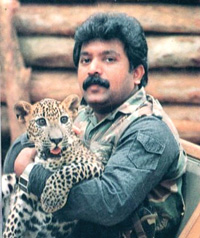
PRABHA + Tiger Figs 1 & 2 raghavan_prabhakaran3 Pirapāharan in his early days as freedom fighter … Fig 3 image019  

VP 22 Fig 3Pirapāharan pays homage to Black Tigers on 5th July 2005, with garlanded image of Miller, the first Black Tiger suicide bomber, as principal symbol — Pic from TamilNet. Note that Miller’s target on 5 July 1987was a SL Army compound at Nelliyadi and cannot in any way be considered an act of “terrorism”

Continue reading

2 Comments

Filed under atrocities, authoritarian regimes, cultural transmission, doctoring evidence, Eelam, historical interpretation, Indian Ocean politics, Indian traditions, law of armed conflict, legal issues, life stories, LTTE, martyrdom, military strategy, nationalism, political demonstrations, politIcal discourse, power politics, power sharing, prabhakaran, propaganda, racist thinking, Rajapaksa regime, reconciliation, self-reflexivity, Sinhala-Tamil Relations, slanted reportage, sri lankan society, Tamil civilians, Tamil migration, terrorism, the imaginary and the real, TNA, truth as casualty of war, unusual people, vengeance, violence of language, war crimes, war reportage, world events & processes, zealotry
