
Simon Gully

Filed under authoritarian regimes, centre-periphery relations, China and Chinese influences, disparagement, governance, human rights, landscape wondrous, life stories, military strategy, performance, politIcal discourse, power politics, security, self-reflexivity, trauma, truth as casualty of war, unusual people, war reportage, world events & processes, zealotry
Meera Srinivasan, in The Hindu 1 September 2025, where the title runs thus: “Decades Later A Difficult Story Finds Its Way to the Sinhala South” … with highlights being the work of The Editor, Thuppahi
Forensic experts has been unearthing human remains from a mass grave in Jaffna, northern Sri Lanka. The number of skeletons retrieved has now crossed 200, including some of children.
 The grave site and the mounting toll of human remains found in it dominate daily headlines in the country’s Tamil media, while receiving little attention in the country’s mainstream English and Sinhala media. In response to this gnawing gap, three young journalists decided they must tell the story to the majority community, Sinhala-speakers. Wasting no time, they pooled resources and made multiple reporting trips and conducted several interviews with locals and experts over the last few months to write Chemmani, a Sinhala-language book on the mass grave site in the locality, believed to contain the remains of Tamil civilians, and dating back to the mid-1990s, shortly after the Sri Lanka military captured Jaffna.
Filed under accountability, atrocities, authoritarian regimes, centre-periphery relations, communal relations, ethnicity, historical interpretation, human rights, legal issues, life stories, LTTE, politIcal discourse, power politics, racist thinking, self-reflexivity, sri lankan society, terrorism, trauma, truth as casualty of war, unusual people, vengeance, war crimes, world events & processes
https://sacrificialdevotionnetwork.wordpress.com/2010/05/26/jacob-copeman_veins-of-devotion/
 ONE …. REVIEW OF Jacob Copeman: Veins of Devotion: Blood Donation and Religious Experience in North India (New Brunswick, NJ: Rutgers University Press, 2009, 233 pp)………….by Ron Barrett of Macalester College …. Taken from the American Ethnologist May 2010, vol. 37/2, pp. 380-81.
Recent years have seen an emerging literature on the sociopolitical dynamics of human tissue exchange. Most of these studies are of a critical nature, focusing on the exploitative aspects of organ trade and other high-profile controversies. Yet few studies have closely examined the apparently mundane forms of biological exchange and the remarkable contexts in which these everyday activities can occur. Jacob Copeman addresses this important gap with Veins of Devotion, a well-researched ethnography about the contributions of several North Indian devotional movements to voluntary blood donation campaigns. Critical in the classical sense, this volume traces the flows of blood, spirit, and power through expanding domains of kinship, asceticism, nationalism, purification, and gift exchange in the urban heart of neoliberal India.
Filed under British colonialism, centre-periphery relations, charitable outreach, cultural transmission, economic processes, ethnicity, heritage, historical interpretation, Indian religions, Indian traditions, landscape wondrous, life stories, medical puzzles, psychological urges, religiosity, self-reflexivity, unusual people, welfare & philanthophy, world events & processes
Stephen Keim, reviewing Richard Glover’s BEST WISHES , ABC Books.
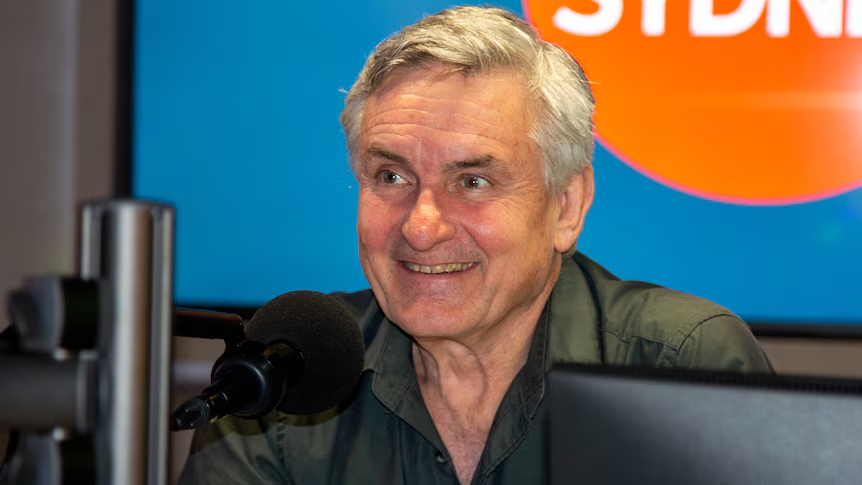 Richard Glover has been in the humour and entertainment business for a very long time. He has written a weekly humour column for the Sydney Morning Herald since 1985. Since January 1996, he has presented the 3.30-6.30 pm drive segment on 702 ABC Sydney. This role came to an end in November 2024, after just short of 29 years. He has published 15 books prior to Best Wishes.
The roles of humour columnist and radio presenter include making observations about various curious things about the way we live in society and presenting them in a way that informs and entertains and, in the best case, brings a smile to people’s faces.
From Wikipedia …………… https://en.wikipedia.org/wiki/Kenneth_Fernando
Kenneth Michael James Fernando (25 July 1932–3 September 2025) was a Sri Lankan Anglican clergyman who was Bishop of Colombo.[1][2][3]
 Born in Moratuwa and educated at Prince of Wales’ College, Moratuwa and Royal College, Colombo and at the University of Oxford, he served as the Secretary of the Diocese before he was elected as the Bishop of Colombo. He served as the Vicar of Maharagama Anglican Church prior to his ordination. Fernando died on 3 September 2025, at the age of 93.[4][5]
ITEM in LUMEN, Adelaide University Magazine, September 2025 or so … no date specified clearly & bearing this title: “The Future and AI” …. Authorship unclear: maybe Carolyn Semmler, maybe Isaac Freeman
Whether we like it, or not, artificial intelligence is here to stay. The genie is out of the bottle. Its rapid evolution has been embraced by some, and met with raised eyebrows by others.
 In our earlier issue of Lumen this year, we asked readers to describe their hopes and fears for the future. AI was an overwhelmingly present theme.
We shared some of these letters with academics from both the University of Adelaide and the University of South Australia to help clarify and respond to concerns on four broad themes: impact on jobs; global security; wellbeing; and the potential for cognitive decline.
Filed under accountability, art & allure bewitching, Australian culture, australian media, centre-periphery relations, economic processes, education, education policy, governance, landscape wondrous, legal issues, life stories, modernity & modernization, news fabrication, politIcal discourse, power politics, security, self-reflexivity, the imaginary and the real, trauma, truth as casualty of war, world events & processes
A Guy named Talagalla, … with highlighting imposed by The Editor, Thuppahi
I am just penning this note after finishing my research for the day, before the thoughts dissipate into the quiet of the evening. The cases I read, the legislation I examined, and the scholarly writings I consulted all converged in my mind, and they brought me back to a lesson I once received from my senior, Mr. D.S. Wijesinghe, President’s Counsel, passed down from his own mentor, Dr. Colvin R. de Silva. The story of how Dr. de Silva engaged with the law has lingered in me for years, and it bears repeating, for stories carry the weight of wisdom in ways instructions never can.


Sanjiva Wijesinha, in Facebook, where the title runs “The loss of habitat and heritage”
Last Sunday morning I went for my usual walk to Galle Face Green.
It is a habit I have cultivated over the years – an early morning walk before the sun gets too hot, when I can inhale the fresh ozone-laden air coming in from the Indian Ocean and invigorate my physical body while refreshing my mind. My custom used to be to start where the Galle Face Hotel stands, walk out towards Galle Buck and the old light house or even as far as the Port Maritime Museum and then walk back, which would take me about an hour. In recent times, I have changed my route from time to time – turning round at the roundabout opposite the old Parliament (now the Presidential Secreta-riat) and walking along the road that passes behind the Shangri-La, the ITC Ratnadipa and the Taj Samudra hotels back to my starting point. As I return along this road I can see on my left across the Beira Lake the Cinnamon City of Dreams hotel.

 thuppahi
