Category Archives: security

Tekwani’s Analysis of “Transnational Security and Postinsurgency Issues” in Sri Lanka

Shyam Tekwani ... taken from …Alas the date of pubn is not indicated clearly… it is probably circa 2010 

  • Sri Lanka’s quarter-century civil war may be over, but many of the underlying causes of the war continue to linger.
  • The international network of the defeated Tamil Tigers continues to control immense financial and logistical resources and is supported by the nearly one million Tamil diaspora. Meanwhile, the victorious Rajapaksa government has been slow in implementing its promise of political settlement and integrating the minorities into the political and socioeconomic life of the country. These realities may contribute to the radicalization of a new generation of Tamils, both on the island and in the diaspora in North America, Europe, Australia and Asia. Continue reading

Leave a comment

Filed under accountability, atrocities, authoritarian regimes, centre-periphery relations, communal relations, Eelam, ethnicity, governance, historical interpretation, insurrections, landscape wondrous, life stories, LTTE, military strategy, nationalism, patriotism, performance, photography, politIcal discourse, power sharing, Rajapaksa regime, security, self-reflexivity, Sinhala-Tamil Relations, sri lankan society, Tamil civilians, tamil refugees, Tamil Tiger fighters, terrorism, trauma, truth as casualty of war, unusual people, vengeance, violence of language, war crimes, war reportage, world events & processes, zealotry

Meirsheimer’s Forecast in 2009 — Seeking to ”Save Israel From Itself”

John Meirsheimer, in The American Conservative, 18 May 2009….. article entitled “Saving Israel From Itself” …. with highlighting emphasis imposed by Tthe editor, Thuppahi

The two-state solution is the only way to guarantee the Jewish state’s long-term security—and our own.

Israel and Palestine in Middle East on contour map. Palestinian territories of Gaza and West Bank. Jerusalem and Jordan River on outline map. Theme of Israel, war, conflict.


The United States and Israel fundamentally disagree about the need to establish a Palestinian state living side by side with Israel. President Obama is committed to a two-state solution, while Israel’s Prime Minister Netanyahu is opposed and has been for many years. To avoid a direct confrontation with Washington, Netanyahu will probably change his rhetoric and talk favorably about two states. But that will not affect Israel’s actions. The never-ending peace process will go on, Israel will continue building settlements, and the Palestinians will remain locked up in a handful of impoverished enclaves in the West Bank and Gaza. Anticipating this outcome, Obama has told Congress to expect a clash with Israel.

Continue reading

2 Comments

Filed under accountability, atrocities, authoritarian regimes, economic processes, ethnicity, historical interpretation, insurrections, landscape wondrous, life stories, Middle Eastern Politics, military strategy, nationalism, politIcal discourse, power politics, racism, religious nationalism, security, self-reflexivity, terrorism, the imaginary and the real, trauma, travelogue, vengeance, violence of language, world events & processes, zealotry

Noel Nadesan’s Critical Reflections on the Sri Lankan Tamils’Armed Struggle

Rajeswary Balasubramaniam, reviewing Odyssey of War by Noel Nadesan **

The ‘Odyssey of War’, a novel by Dr. Noel Nadesan published by Sarasavi Publishers, reflects the struggle for the liberation of Tamils in Sri Lanka (1977-2009) and the failure of interwoven world politics. The novel illustrates how upper-class Tamils overcame caste, religion, and regions and united for the liberation of Tamils, but went beyond the spirit of liberation, migrated, and eventually made the liberation struggle of Tamils a profitable business.

Continue reading

1 Comment

Filed under accountability, anti-racism, asylum-seekers, atrocities, authoritarian regimes, centre-periphery relations, communal relations, constitutional amendments, counter-insurgency, demography, discrimination, Eelam, ethnicity, governance, historical interpretation, Indian Ocean politics, insurrections, language policies, life stories, LTTE, military strategy, patriotism, politIcal discourse, power politics, prabhakaran, refugees, security, self-reflexivity, Sinhala-Tamil Relations, sri lankan society, Tamil migration, tamil refugees, Tamil Tiger fighters, terrorism, trauma, truth as casualty of war, unusual people, vengeance, war reportage, world events & processes

The “Deep State”– Threats to Democracy within Today’s Western States’its

Watch Alastair Crooke & Judge Napolitano in Serious Dialogue ….. on World Poltics & the Anti Democratic strands in Present Western States = https://www.youtube.com/live/mnm9Vzrpkrg

Judge Napolitano …. & …. Alastair Crooke

Reflections from “Observer in a Black Sea Port”

Why are democracies suddenly opposed to free speech and against democracy?

Very interesting argument about how Western democracies are attacking democracy,  shutting down free speech, attacking the first amendment of the US Constitution because the deep structures of the deep state are being challenged.

Continue reading

3 Comments

Filed under accountability, american imperialism, authoritarian regimes, British imperialism, centre-periphery relations, economic processes, foreign policy, governance, historical interpretation, law of armed conflict, Middle Eastern Politics, military expenditure, military strategy, nationalism, politIcal discourse, power politics, security, self-reflexivity, truth as casualty of war, Ukraine & Its Ramifications, world events & processes

Age-old Themes Imbricated within the Palestine-Israel Conflict

 Simon Sebag Montefiore, in The TIMES, 6 September 2024, where the title reads: A conflict built on centuries of myth-making” … with highlighting imposed by The Editor, Thuppahi **

‘Forever wars’ do not exist but bringing peace to the Holy Land is complicated by so much of its history being wilfully misunderstood.

There was a moment during the last significant negotiations between Israel and the Palestinians, in May 2008, that is relevant today. Saeb Erekat, the Palestinian minister of negotiations, told the Israeli foreign minister Tzipi Livni: “It’s no secret we’re offering you the biggest Yerushalayim in history. But we must talk about the concept of al-Quds. We’ve taken your interests and concerns into account … ”


Continue reading

1 Comment

Filed under accountability, ancient civilisations, anti-racism, atrocities, authoritarian regimes, Britain's politics, British imperialism, communal relations, cultural transmission, democratic measures, ethnicity, Fascism, fundamentalism, governance, heritage, historical interpretation, human rights, Islamic fundamentalism, legal issues, life stories, martyrdom, Middle Eastern Politics, military strategy, nationalism, Palestine, politIcal discourse, power politics, racist thinking, religious nationalism, security, self-reflexivity, terrorism, truth as casualty of war, unusual people, vengeance, world events & processes, zealotry

The Siege of Jaffna Fort by the LTTE in 1990

Gamini Goonetilleke, … with a few photographs awaiting insertion later

I had volunteered my services to the Sri Lanka Army and it was my turn of duty at the Palali Base Hospital when the Jaffna Fort came under Tiger attack. Thus I was a witness to a major battle for supremacy in the North. For the State the Jaffna Fort was of symbolic importance to demonstrate its sovereignty over the Jaffna population and as such the Sri Lanka Army was occupying the Jaffna Fort. For the Tigers, dislodging the troops from the Fort was of importance to pave the way for ‘liberation’. Therefore it became an important battle for both sides.

Image  1 – A view of the Jaffna Fort          

Jaffna Fort – main entrance


The siege of Jaffna Fort

The Tigers had surrounded not only the Fort but also the Palali Air Base to prevent the mobility of the troops and also to cut off supplies. They positioned anti-aircraft guns in the Fort area. This threatened the helicopter borne supplies to the stranded troops and the battle for the Fort turned out to be fierce and intense.

Continue reading

2 Comments

Filed under authoritarian regimes, centre-periphery relations, communal relations, Eelam, ethnicity, historical interpretation, insurrections, law of armed conflict, life stories, LTTE, performance, power sharing, security, Sinhala-Tamil Relations, sri lankan society, Tamil Tiger fighters, unusual people, war reportage

Sri Lanka Police: Headless At A Critical Moment

Merril Gunaratne, in morningLK, 11 August 2024, where the headline reads “The Police: A ‘headless’ body for the election” 

Any organisation, be it professional, social, or sports, has to be led. The leader steers the organisation on a charted path to achieve its goals and aspirations. He [or SHE] has a paramount role to guide humans within the organisation towards identified goals and targets. The leader steers it with a mix of inspiration, discipline, delegation of authority, supervision, and monitoring. In an ideal sense, leadership has much to do with its successes or failures. It is a sine qua non or an integral element for any organisation to prosper.


Continue reading

2 Comments

Filed under accountability, centre-periphery relations, communal relations, governance, historical interpretation, landscape wondrous, life stories, patriotism, performance, politIcal discourse, security, self-reflexivity, sri lankan society, world events & processes

Totalizing “Control Rooms” in Every Western State …. Skewing ‘Democracy’

Observer in a Black Sea Port

At 6:02 Judge Napolitano asks Crooke “Is a wider war in the Middle East inevitable?”  ….. Crooke answers this question and then explains why.

He articulates the change that has taken place in Western politics, particularly in the democratic area which has become a “control room” that we don’t see, that is behind it. Even the President or the leader of any Western nation is just a figurehead and is not important any longer.  One figurehead can be removed and then another figurehead is elevated by the media and becomes the new figurehead.  But behind it lies “the control room” which is operating this in a new form of politics which Crooke calls “the whole of state politics” which means there has to be ideological alignment, not just across the party, but among NGOs, the financial world, all of the state apparatus,  the media — all of this has to be the same.

Continue reading

1 Comment

Filed under accountability, american imperialism, authoritarian regimes, British imperialism, centre-periphery relations, disparagement, European history, foreign policy, historical interpretation, legal issues, life stories, nationalism, news fabrication, politIcal discourse, power politics, security, self-reflexivity, truth as casualty of war, world events & processes

Of All Places! Lankan Asylum Seekers stranded in Diego Garcia

News Item in The Island , 23 July 2024 … where the title reads Urgent request to relocate Lankan asylum seekers from Diego Garcia amid escalating crisis”

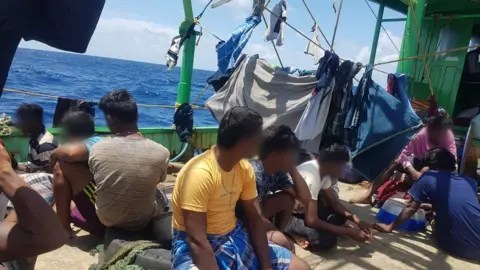
Facing an urgent and escalating threat of harm to migrant children detained on Diego Garcia, British Foreign Secretary David Lammy requested their relocation to the UK on July 16th, as reported in the Solicitors Journal. This request to Home Secretary Yvette Cooper follows a warning from the British Indian Ocean Territory (BIOT) Commissioner, who reported severe living conditions and recent suicide attempts among the detainees....visit The Island web-ref for  photo of  this cluster of refugee boat people

Continue reading

1 Comment

Filed under accountability, anti-racism, asylum-seekers, Britain's politics, centre-periphery relations, charitable outreach, communal relations, demography, disparagement, economic processes, ethnicity, governance, historical interpretation, life stories, politIcal discourse, refugees, security, self-reflexivity, slanted reportage, sri lankan society, trauma, travelogue, world events & processes

That Gathering at Trinco towards Setting Up the ICES ….in Pictures


Neelan is standing on the extreme right, with CR de Silva on his right and Sam Samarasinghe nex to him

This NOTE is part of Professor KM de Silva’s Account of the Process leading to the Formation of the ICES: ” The Taita Hills conference [in Kenya] was followed by a second cross-national workshop held on 7 March 1982; this time at the then Hotel Club Oceanic in Trincomalee, Sri Lanka.

“The photographs attest the considerable cross-national support for this enterprise, albeit wholly weighted towards  the West in the context of world political alignment then. …” Michael Roberts (while anticipating a Memo or essay from Professor Donald Horowitz which will provide other threads in the processes leading to the setting up the ICES).

Robert Goldmann


 Myron Weiner  

the web photos of Donald Horowitz resisted copying

Continue reading

Leave a comment

Filed under accountability, atrocities, Colombo and Its Spaces, communal relations, economic processes, education, ethnicity, governance, historical interpretation, insurrections, legal issues, life stories, LTTE, nationalism, patriotism, performance, politIcal discourse, power politics, prabhakaran, security, self-reflexivity, Sinhala-Tamil Relations, sri lankan society, Tamil Tiger fighters, terrorism, trauma, unusual people, vengeance, world events & processes, zealotry