Category Archives: literary achievements

DB Dhanapala’s AMONG THOSE PRESENT

Ravindra Wijewardhane, in Sunday Observer, 25 July 2021, where the title readsv “One of Dhanapala’s best books”

This is a collection of newspaper articles on important people who shaped events in Sri Lanka and even made history. Published in 1962, includes 22 articles or biographical reviews on 22 people – Anagarika Dharmapala, Ananda Coomaraswami, D.S. Senanayake, Dudley Senanayake, John Kotelawala, S.W.R.D. Bandaranaike, Sirima Bandaranaike, Oliver Goonetileke, Philip Gunawardhane, P. de S. Kularatne, G.P. Malalasekera, L.H. Mettananda, Senarat Paranavitana, G.P. Wickramarachchi, Yakkaduve Thero, Nicholas Attygalle, Herbert Hulugalle, Soliyas Mendis, Nittavela Gunaya, Victor Dhanapala, Arunachalam Mahadeva, Ediriweera Sarathchandra.

Continue reading

1 Comment

Filed under accountability, charitable outreach, cultural transmission, education, heritage, historical interpretation, island economy, landscape wondrous, language policies, life stories, literary achievements, nationalism, patriotism, performance, politIcal discourse, religiosity, self-reflexivity, sri lankan society, teaching profession, the imaginary and the real, unusual people, world events & processes, zealotry

The Nomenclature and Lineaments of White-Brown Cohabitation in British Ceylon: A Puzzle

MEMO from Michael Roberts, October 16 October 2021

Moving from BRIDGE ON THE RIVER KWAI to the Greet and Paynter lineages in British Ceylon-and-thereafter has raised a query in my mind: how is it that the category “ANGLO-Ceylonese” did not take root in Ceylon and Lanka in contrast with British India where the label “Anglo-Indian” became well-entrenched[1] and therefore was carried over to the era after India secured Independence in 1947? As we know,[2] Revd Arthur Paynter was an Anglo-Indian missionary who established the Paynter Homes in the Himalayan region of India and then set up the Paynter Home in Nuwara Eliya. He had also married a fellow-missionary in the Salvation Army who was pursuing her commitment in India, one Miss Weerasooria from Dodanduwa … and together sired a talented lineage.

Photograph on display at the Paynter Home of the Paynter family. David Paynter stands at the centre, behind his mother Agnes

Continue reading

2 Comments

Filed under accountability, architects & architecture, art & allure bewitching, British colonialism, centre-periphery relations, cultural transmission, discrimination, disparagement, economic processes, education, ethnicity, female empowerment, heritage, historical interpretation, Indian Ocean politics, Indian traditions, landscape wondrous, life stories, literary achievements, paintings, patriotism, politIcal discourse, religiosity, S. Thomas College, self-reflexivity, sri lankan society, teaching profession, the imaginary and the real, travelogue, unusual people, welfare & philanthophy, world events & processes

Revd Ernest Poruthota in Q and A on His Life’s Work

Avishka Mario Senewiratne in Q and A with Fr Poruthota (1931-2020) ………… Interview in  May 2018 and originally published in the Messenger, May, 27, 2018. 

Today the Messenger carries a very special and exclusive interview with one of the most senior and popular priests in the Archdiocese of Colombo, Rev. Fr. Ernest Poruthota. Since his ordination in 1957, Fr. Poruthota has served in ten parishes in different parts of the Archdiocese.  As Asst. Parish Priest in Kotahena (1957-59), Moratuwa (1959-60), Pamunugama (1960), Dehiwala (1960-62) and Parish Priest in Dehiyagatha (1962-66), Kelaniya (1967-74), Kalamulla (1974-82), Kotte (1982-87), Wattala (1991-1997), Dehiwala (1997-2004), Kirimatiyagara (2004-2011). Apart from Parishes he has served as the Chaplain of lay Apostolate (1966-67), Director PMS (1971-74), Chaplain YCW, CWM (1983-87), Dean of Colombo (1987-91).

Continue reading

1 Comment

Filed under accountability, art & allure bewitching, charitable outreach, communal relations, cultural transmission, education, education policy, heritage, historical interpretation, Indian religions, life stories, literary achievements, meditations, patriotism, performance, politIcal discourse, self-reflexivity, social justice, sri lankan society, the imaginary and the real, tolerance, unusual people, welfare & philanthophy, world events & processes

Anne Frank: A Dutch Girl whom the Nazis Exterminated …. But Her Diary Lives

Bart Von Es, in The Guardian, 25 May 2019, where the title runs Anne Frank: the real story of the girl behind the diary”

Albert Gomes de Mesquita is one of the last people alive to have known Anne Frank in person. He appears briefly in her diary as a fellow student at the Jewish Lyceum in Amsterdam, where she writes of him: “Albert de Mesquita came from the Montessori School and jumped a year. He’s really clever.” There is nothing else. In all likelihood, Albert more or less vanished from her memory, but for him the situation is, inevitably, very different.

As the years have gone by his memories of Anne have become ever more important. Aged 89, he still travels internationally to conferences on her work and life. Anne has become a strange kind of celebrity and Albert, as someone who was actually there at the birthday party at which she was given her still-empty diary, is a point of contact for that fame.

Continue reading

7 Comments

Filed under accountability, art & allure bewitching, atrocities, ethnicity, historical interpretation, Hitler, landscape wondrous, life stories, literary achievements, politIcal discourse, self-reflexivity, trauma, unusual people, women in ethnic conflcits, world events & processes

Pablo Neruda in British Ceylon: Literary and Sexual Flowerings in Wellawatte and Beyond

  Jamie James, initially presented in Literary Hub, 3 June 2019, with this title “Pablo Neruda’s Life as a Struggling Poet in Sri Lanka: A Young Poet’s Adventures in the Foreign Service”

At 22, Pablo Neruda was an international literary celebrity—and desperately poor. His second book, Twenty Love Poems and a Song of Despair, had been a sensational success and would eventually become one of the bestselling books of poetry in the 20th century (more than 20 million copies to date), but he was paid almost nothing for it. He was a student at the Universidad de Santiago in Chile, and hunger was an issue; he wore a billowing cape to conceal his emaciated physique and a wide-brimmed hat that hoped for an air of mystery.

Continue reading

2 Comments

Filed under art & allure bewitching, British colonialism, cultural transmission, education, ethnicity, heritage, historical interpretation, landscape wondrous, life stories, literary achievements, politIcal discourse, psychological urges, self-reflexivity, sri lankan society, the imaginary and the real, tolerance, travelogue, unusual people, world events & processes

The De Kretser Genealogy

This excellent tome produced by Ivor de Krester has been loaned to me by Warwick and Peggy de Kretser of Adelaide — simple souls who espouse no airs and are friends with all and sundry. As a youngster from the 1950s Bridge on the River Kwai generation in Ceylon I knew of Warwick as a cricketer. Here in Adelaide I discovered that he had been a juvenile motor-cycle hotshot who had bagged several prizes in races at Katukurundu and upcountry. This sporting field was not part of my horizon then in the 1950s and 1960s.

Continue reading

1 Comment

Filed under accountability, Australian culture, australian media, cultural transmission, economic processes, education, ethnicity, heritage, historical interpretation, life stories, literary achievements, unusual people, world events & processes

In Defence of a Voice from the Grave, That of Sunila Abeysekera

Jane Russell presenting “a reply to unjustified criticism ” …. * …. [see endnote]

Foreword: I first met Sunila Abeysekera at a joint exhibition of sculpture and poetry which my Sri Lankan partner, sculptor Malathie de Silva, and I held at the Lionel Wendt Gallery in 1976. Sunila was twenty-four; I was two years older. She brought her father along and he purchased one of my poems which I‘d produced as wall-posters.:

Continue reading

2 Comments

Filed under chauvinism, cultural transmission, disparagement, education, female empowerment, gender norms, heritage, Left politics, life stories, literary achievements, politIcal discourse, power politics, self-reflexivity, sri lankan society, unusual people, vengeance, violence of language, women in ethnic conflcits

Sri Lanka’s Tea Country Trail from Yesteryear with Julia Margaret Cameron

Juliet Coombe

Sri Lanka’s Tea Country Trail. 582 likes · 9 talking about this. The Tea Country Trail is a proposed 310 km long-distance hiking trail through the Sri Lankan Tea Country. The trail winds its way…

https://www.facebook.com/teacountrytrail/

Continue reading

2 Comments

Filed under art & allure bewitching, British colonialism, cultural transmission, economic processes, education, ethnicity, female empowerment, heritage, historical interpretation, island economy, landscape wondrous, life stories, literary achievements, meditations, photography, pilgrimages, self-reflexivity, sri lankan society, the imaginary and the real, travelogue, unusual people, working class conditions, world events & processes

Anne Abayasekara: Telling It Like It Is

Telling It Like It Is …. is a compilation of a few of the journalistic writings of Anne Abayasekara.


She was born Annette Aurelia Ameresekere in April 1925. In the field of journalism, she was a Sri Lankan pioneer, entering what was a male dominated profession in the early 1940s. At Lake House, before reaching 22 years of age, she was appointed Editress of the Women’s Pages in the Ceylon Daily News and Sunday Observer, being the only female in the Editorial Department.

Continue reading

Leave a comment

Filed under charitable outreach, citizen journalism, cultural transmission, education, female empowerment, governance, heritage, historical interpretation, language policies, life stories, literary achievements, patriotism, performance, politIcal discourse, press freedom & censorship, reconciliation, self-reflexivity, Sinhala-Tamil Relations, sri lankan society, tolerance, unusual people, welfare & philanthophy, women in ethnic conflcits, world events & processes

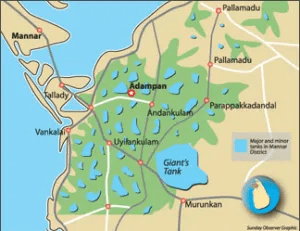
Exploring the Etymological Strands of the Word “Thiruketheeswaram”

Chandre Dharmawardana

The word stub “ket,”, கேத, in the place name:  Tiru-k-keteeswaram,  திருக்கேதீசுவரம்

In finding a meaning for the component –ket– in Tiru-ket-heesvaram, well known Engineer Thiru Arumugam has quoted an interpretation given in 1849 by Pridham which leans on a mythological tale of Vishnu’s exlir of mortality that fell into the hands of a demon. The demon was said to be cut into two and became Rahu and Ketu (.இராகு கேது) recognized in astrology.  Predham stretches his imagination very far to convert the Tamil -கேத- sound to கேது in finding  an “explanation” or rationalization for the stub  -கேத- found in the place name.

Continue reading

Leave a comment

Filed under ancient civilisations, architects & architecture, art & allure bewitching, centre-periphery relations, cultural transmission, demography, economic processes, ethnicity, heritage, Hinduism, historical interpretation, Indian religions, Indian traditions, island economy, landscape wondrous, life stories, literary achievements, pilgrimages, religiosity, self-reflexivity, Sinhala-Tamil Relations, sri lankan society, Tamil migration, the imaginary and the real, transport and communications, travelogue, world events & processes