Category Archives: life stories

Thuppahi enters the august portals of the National Library of Australia

Thuppahi’s Blog

Thuppahi’s Blog was selected for preservation by the National Library of Australia. This title is scheduled to be re-archived regularly. The publisher’s site may provide more current information. Archived 20 Feb 2014 14:58

VISIT http://www.nla.gov.au/ National_Library_of_Australia -commons wikimedia Pic from commons Wikimedia Continue reading

2 Comments

Filed under accountability, asylum-seekers, Australian culture, australian media, cultural transmission, governance, heritage, historical interpretation, life stories, LTTE, photography, politIcal discourse, sri lankan society, world affairs

Velupillai Pirapäharan in his halcyon days with young Bala around swimming pool


PRABHA 1 Continue reading

4 Comments

April 5, 2014 · 1:44 pm

Chris Panabokke, exemplary soil scientist, turns 88

Ranjit Mulleriyawa, in The Nation, 3 March 2014

CHRIS PANABOKKEMention the name CR Panabokke, and the first thing that comes to one’s mind is soil science. Indeed, he is unquestionably the foremost soil scientist produced by our country to date, as well as one of Asia’s most renowned soil scientists. He has authored many books and published over 30 research papers in reputed International journals in addition to presenting 35 scientific papers at national and international workshops/conferences on: Soils of Sri Lanka and fertilizer use, groundwater conditions in Sri Lanka, small village tank systems, and agro-ecological environments of Sri Lanka. Continue reading

3 Comments

Filed under environmental degradation, life stories, sri lankan society, unusual people, world events & processes

Desmond Kelly airs and pictures an Aussie twist on Hai Hoi Babiachchigey bicycle-eka

SEE http://safeshare.tv/w/fcFIDmjYCv

DESMOND KELLY 22  Continue reading

Leave a comment

Filed under cultural transmission, heritage, life stories, performance, pulling the leg, sri lankan society, taking the piss, travelogue, truth as casualty of war, unusual people, world affairs

Dharmasiri Bandaranayake’s Drama crosses divides and inspires exchanges

Asoka Randeniye, in Daily News, 26 March 20i4

Dharmasiri Bandaranayaka.- DN Pix by Roshan Pilipana

Roshan Pitipana

No theatre- lover worth his salt would need an introduction to the great actor/director Dharmasiri Bandaranayaka. Ever the voice who questions the accepted, the safe and the prescribed, Dharmasiri Bandaranayaka is the director of five thought- provoking, discussion- inducing political plays: Ekadipathi (The Dictator) in 1976, Makarakshaya (The Dragon) in 1985, Dhawala Beeshana (Men Without Shadows) in 1988, Yakshagamanaya (Resistible Rise of Arturo) in 1994 and Trojan Kanthavo (Trojan Women) in 1999.

In January, Dharmasiri Bandaranayaka and the cast and crew of Trojan Kanthavo participated in the Bharat Rang Mahotsav (International Theatre Festival) in New Delhi for the third year running. Previously, he applied for and was selected by the festival committee to perform Makarakshaya in 2012 and Dhawala Beeshana in 2013. This year, he was among the six countries which were represented at the festival. Daily News caught up with the maestro at the Trikone Cultural Foundation in Rajagiriya, which documents for posterity the Sinhala and Tamil dramas and other art forms hidden within our country.

Continue reading

2 Comments

Filed under cultural transmission, landscape wondrous, Left politics, life stories, literary achievements, reconciliation, sri lankan society, tolerance, unusual people, world affairs

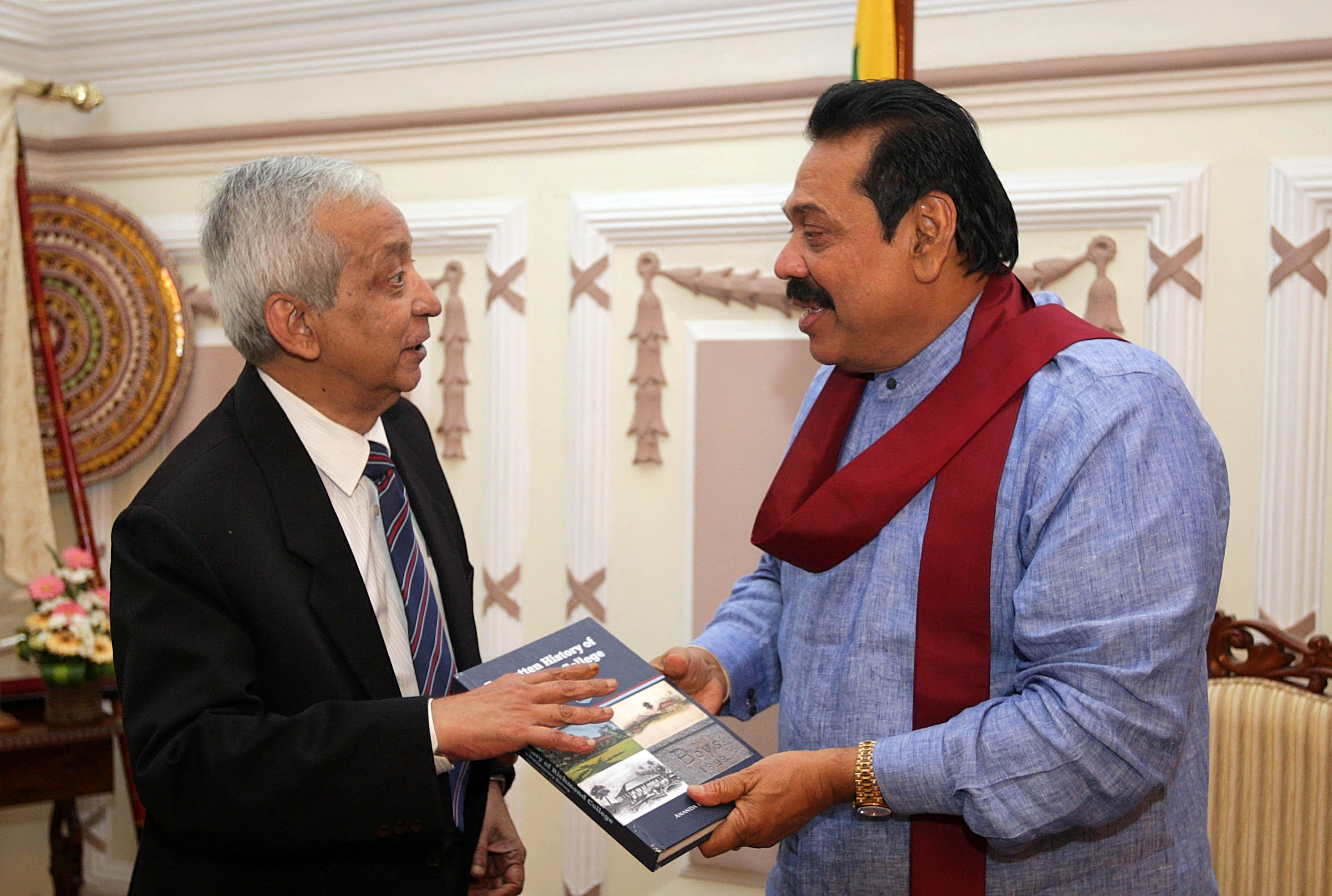
The Forgotten History of Richmond rolls the years back — courtesy of Ananda Dias-Jayasinha

1 Presentation of the first copy of a new publication “Forgotten History of Richmond College – A documentary survey“, to HE the President Mr. Mahinda Rajapaksa and the Hon. Speaker Mr. Chamal Rajapaksa two distinguish old boys of Richmond by the author Ananda Dias-Jayasinha, marking the bicentenary (200 years) falling on 25th July 2014, of the first Methodist Mission School in Sri Lanka and Asia now known as Richmond College, Galle. Continue reading

3 Comments

Filed under education, historical interpretation, life stories, sri lankan society, unusual people, welfare & philanthophy, world affairs

Savage suicide mission at Kunming station: Xinjiang Muslim extremists and their netherworld

I: The Kun Ming attack, 1 March 2014 as in Wikipedia

kUN MING ATTACK -AFPThe 2014 Kunming attack (also called the Kunming massacre[3][4][5]) was a terrorist attack[6][7][8] in the Chinese city of Kunming, Yunnan, on 1 March 2014. The incident, targeted against civilians, left 29 civilians and 4 perpetrators[1] dead with more than 140 others injured.[7][9] At around 9:20 pm local time, a group of eight knife-wielding men and women attacked passengers at the city’s railway station.[10] Both male and female attackers were seen to pull out long-bladed knives and proceed to stab and slash passengers. At the scene, police killed four assailants[11][12] and captured one injured female. In the afternoon of 3 March, police announced that the six-man two-woman group had been neutralized after the arrest of three remaining suspects.[1][4] No group or individual stepped forward to claim responsibility for the attack.[13] China’s official news service, Xinhua, announced within hours of the incident that it was carried out by Xinjiang separatist terrorists.[6][14] The government of Kunming also said the attack had been linked to Xinjiang militants.[10][15] Police said they had confiscated a black, hand-painted East Turkestan flag at the scene.[16][17]

II: A Comment, by Michael Roberts, 13 March 2014

By chance my chain mail circuit brought the exchange between Michael Tan and LSL into my orbit (see below). Having met Michael Tan briefly when I was on a research spell in Singapore way back I weigh his thoughts seriously. They indicate that this has not been the first such venture into terror attacks by Xinjiang zealots, while placing them within the machinations of power politics — more specifically the dirty wars promoted by USA. While wary of conspiracy theories targeting the CIA and USA in this instance I believe we must give serious consideration to this allegation as a probability. Continue reading

Leave a comment

Filed under accountability, american imperialism, atrocities, cultural transmission, historical interpretation, life stories, LTTE, religious nationalism, suicide bombing, Tamil Tiger fighters, terrorism, the imaginary and the real, world affairs, zealotry

Boat People: cannot flee, cannot stay?

Courtesy of Emily Howie

A new report has found that Australia’s cooperation with Sri Lanka to prevent would-be-refugees from seeking protection is riddled with human rights risks and should be stopped immediately. The report, Can’t flee, can’t stay: Australia’s interception and return of Sri Lankan asylum seekers, which is based on interviews with government officials, information obtained through freedom of information requests and statements from the public record, reveals a deeply flawed suite of policy measures and practices. as -seekrs Transcurrents

Continue reading

Leave a comment

Filed under accountability, asylum-seekers, economic processes, historical interpretation, life stories, politIcal discourse, Sinhala-Tamil Relations, slanted reportage, sri lankan society, Tamil migration, the imaginary and the real, welfare & philanthophy, world affairs, zealotry

People of Sri Lankan origin in Australia: Census Data

Ckyters in triumph Sri Lankan cricketers celebrate their downing of Australia

Historical Background: In the late nineteenth century, the first Sri Lankan immigrants to Australia were recruited to work on the cane plantations of northern Queensland. There are also reports of Sri Lankans working in goldfields in New South Wales and Victoria, and as pearlers in Broome, north-western Australia. By 1901, there were 609 Sri Lanka-born people recorded in Australia.

art729-MCG-boxing-day-620x349Following Sri Lanka’s independence in 1948 and the introduction of the Sinhala Only Act (Official Language Act No.33 of 1956), which mandated Sinhalese as the only official language replacing English, many Tamils and Burghers (of mixed European descent) felt disenfranchised. This resulted in significant numbers migrating to other countries including Australia. During the 1960s, Burghers comprised the largest proportion of Sri Lankan migrants to Australia.

In the late 1960s and early 1970s following the easing of Australia’s migration policies, Asian migrants, including Sri Lankan, were admitted to Australia. Sri Lankan migrants at this time included Tamils, Sinhalese, as well as Burghers. Continue reading

2 Comments

Filed under asylum-seekers, cultural transmission, economic processes, education, life stories, population, world events & processes

Defenders of the Faith? or Voices of Intolerance?

Courtesy of Foreign Policy  … taking a leaf from the work of International Crisis Group … http://www.crisisgroup.org/~/media/Files/asia/south-asia/sri-lanka/253-sri-lankas-potemkin-peace-democracy-under-fire.pdf 

Galagoda Atte Gnanasara + Ashin Wirathu Galagoda Atte Gnanasara and Ashin Wirathu exchange symbolic gifts

The photo of the two monks above looks innocent enough. One of the men presents the other with a birthday present. It’s difficult to make out, but it looks to be some sort of gold figurine on a red velvet base. In fact, the photo would be totally uninteresting if it weren’t for the fact that these men are two of the world’s most important leaders of a dangerously radical brand of Buddhism. Continue reading

1 Comment

Filed under cultural transmission, life stories, meditations, politIcal discourse, power politics, religious nationalism, sri lankan society, the imaginary and the real, unusual people, violence of language, world events & processes, zealotry