Category Archives: language policies

Remembering the Unseen Hands Supporting One of My Books

Michael Roberts in the DEDICATION presented on the first page of the book Tamil Person and State: Essays,  Colombo, Vijitha Yapa Publications, 2014, … ISBN 978-955- 665-230-7 

The essays that make up this anthology would not have been possible without the assistance of numerous individuals who provided me with information during face-to-face conversations, Skype and telephone chats or through responses by email. This will be only too evident if readers take note of my citations and footnotes. For this reason, it is entirely appropriate that I dedicate this work to all those who have assisted me in my researches over the last few years. Not all of them will agree with my thrusts. Indeed, there are a few of them in Colombo, such as Ananda Chittambalam, who have disputed some of my arguments, while yet encouraging me in my researches and publication programmes.

Ana Chittambalam: ex-Royal College, raconteur, promoter of causes and a staunch ally and dangerous foe


Continue reading

3 Comments

Filed under accountability, asylum-seekers, atrocities, centre-periphery relations, communal relations, demography, economic processes, Eelam, ethnicity, fundamentalism, governance, historical interpretation, human rights, Indian Ocean politics, insurrections, language policies, law of armed conflict, legal issues, life stories, LTTE, martyrdom, military strategy, nationalism, patriotism, performance, photography, politIcal discourse, power politics, prabhakaran, refugees, self-reflexivity, Sinhala-Tamil Relations, sri lankan society, Tamil civilians, Tamil migration, Tamil Tiger fighters, terrorism, transport and communications, truth as casualty of war, unusual people, war reportage, world events & processes, zealotry

Lamentations: Jeyaraj’s Black Review of Sri Lankan History

DBS Jeyaraj, in The Daily Mirror, 4 February 2023, where the title reads “75 Years of Independence and the Tamils of Sri Lanka

A SUMMARY: They invited Indian political leaders to the peninsula and held mass rallies and processions. Mahatma Gandhi, Jawaharlal Nehru, C. Rajagopalachariar, Sarojini Nayudu and Kamala Devi Chattopadhyay are some of these.

It was only in 1833 after the Colebrooke-Cameron Reforms of 1832 that predominantly Tamil territories were integrated into a unified Ceylon. Until then they were administered separately.

The rationale was that independence from the British had only resulted in being ruled by the Sinhalese. There was only a change of masters. So, Independence Day was nothing to celebrate, but only to be observed as a black day, it was argued.

****

Continue reading

1 Comment

Filed under accountability, authoritarian regimes, British imperialism, centre-periphery relations, communal relations, constitutional amendments, democratic measures, demography, disparagement, doctoring evidence, economic processes, ethnicity, governance, heritage, historical interpretation, Indian Ocean politics, language policies, law of armed conflict, Left politics, legal issues, life stories, LTTE, modernity & modernization, parliamentary elections, politIcal discourse, power politics, self-reflexivity, Sinhala-Tamil Relations, slanted reportage, sri lankan society, taking the piss, Tamil migration, Tamil Tiger fighters, terrorism, the imaginary and the real, truth as casualty of war, world events & processes, zealotry

St. Thomas’ College: A Wide-ranging History of the ‘School by the Sea’

David Sansoni, whose preferred title is “STC – an unauthorised history of Lanka’s greatest Public School”

Richard Simon’s ‘history of Lanka’s greatest public school’, is an epic poem!
Epic, in its reach; poetic, in its lyricism, this towering, magnificent opus is a pearl, of both history and literature. “STC” touches the soul and core, of historophile, linguaphile and bibliophile; Christian, Lankan and, above all, Thomian.


Continue reading

2 Comments

Filed under accountability, architects & architecture, British colonialism, Colombo and Its Spaces, cultural transmission, economic processes, education, ethnicity, governance, heritage, historical interpretation, island economy, landscape wondrous, language policies, life stories, literary achievements, modernity & modernization, patriotism, performance, politIcal discourse, S. Thomas College, self-reflexivity, sri lankan society, teaching profession, unusual people, world affairs

From The Eyes of a 103-Year Old Sri Lankan: 75th Year of Independence!

DL Sirimanne from Kohuwela has reached his century and proceeded another three years beyond. From the vantage of age, he is quite scathing in his concluding summary …. in the Sunday Observer 22 January 2023 … where the title is A bit of Ceylon History. Pass it on to you children”

Continue reading

2 Comments

Filed under accountability, British colonialism, centre-periphery relations, communal relations, democratic measures, demography, disparagement, economic processes, electoral structures, ethnicity, governance, historical interpretation, Indian Ocean politics, island economy, language policies, life stories, meditations, patriotism, performance, politIcal discourse, power politics, Rajapaksa regime, self-reflexivity, Sinhala-Tamil Relations, slanted reportage, sri lankan society, the imaginary and the real, truth as casualty of war, unusual people, world events & processes

Ranil’s Moves to Resolve Ethnic Issues in Rapid-Action Measures

DBS Jeyaraj, in Daily Mirror, 24 December 2022where the title runs thus: President Ranil’s initiative to resolve Tamil national question” …. & a kind-of sub-heading read  The All Party conference was a success of sorts with all participants agreeing on the need for a power-sharing solution”

The Tamil Progressive Alliance (TPA) leader and Colombo District MP, Mano Ganesan received a telephone call from Ranil Wickremesinghe on 19 July 2022

It was a day before the Presidential election where the MPs were scheduled to vote and elect a new executive President to fill the vacancy created by President Gotabaya Rajapaksa’s resignation. Ranil Wickremesinghe, who was the then Prime Minister and acting as the interim President, was a candidate for the Presidential election.


Continue reading

2 Comments

Filed under accountability, american imperialism, centre-periphery relations, communal relations, debt restructuring, democratic measures, devolution, economic processes, electoral structures, ethnicity, foreign policy, governance, historical interpretation, Indian Ocean politics, island economy, landscape wondrous, language policies, legal issues, life stories, parliamentary elections, patriotism, performance, politIcal discourse, power politics, Rajapaksa regime, security, self-reflexivity, Sinhala-Tamil Relations, sri lankan society, Tamil civilians, Tamil migration, Tamil Tiger fighters, the imaginary and the real, unusual people, world events & processes

Crunchtime: Resolving Sri Lanka’s Political Dilemma

Chandre Dharmawardana, in The Island, 02 January 2023 where the preferred title runs thus: Using SORTITION to prevent electing of same crooks to parliament”

The terrorism of the LTTE ended in May 2009, and most Sri Lankans looked forward to a dawn of peace, reconciliation and progress.  Even Poongkothai Chandrahasan, the granddaughter of SJV Chelvanayagam could state that ‘what touched me the most that day was that these were poor people with no agenda ~ wearing their feelings on their sleeves~. Every single person I spoke to said to me, “The war is over, we are so happy”. They were not celebrating the defeat of the Tamils. They were celebrating the fact that now there would be peace in Sri Lanka’ (The Island, 23rd August 2009, http://archive.island.lk/2009/08/23/news15.html).

Continue reading

7 Comments

Filed under accountability, authoritarian regimes, communal relations, cultural transmission, democratic measures, disparagement, economic processes, electoral structures, ethnicity, governance, historical interpretation, island economy, language policies, legal issues, life stories, parliamentary elections, patriotism, political demonstrations, politIcal discourse, power politics, press freedom & censorship, self-reflexivity, Sinhala-Tamil Relations, social justice, sri lankan society, Tamil civilians, trauma, vengeance, world events & processes

Five Sturdy Men Who Saved Murali’s Doosra Innovation

Michael Roberts

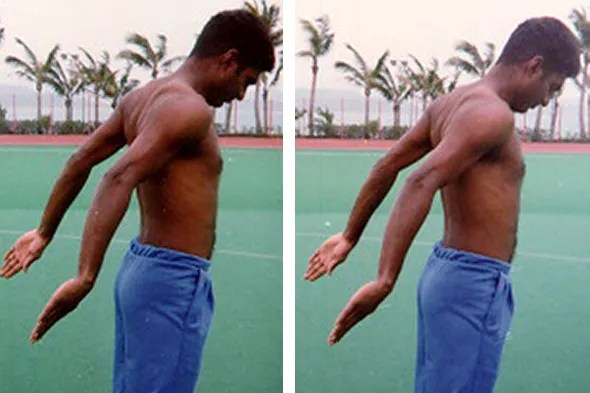
Dr Barclay Reid, “Buddy Reid” in most minds, has this week related his role in medically examining Muralitharan’s peculiar physiognomy and clarifying the  process of mystification that led some Australian umpires to no-ball him in late 1995 as part of a process  — as they thought — of cleansing the cricket field of “throwers” (see https://thuppahis.com/2022/12/21/muralitharan-the-arm-that-did-not-chuck/).

Jacqueline Alderson of UWA’s Technology team preparing Murali for a test as part of Foster’s team …

Continue reading

2 Comments

Filed under accountability, anti-racism, Australian culture, australian media, biotechnology, centre-periphery relations, cultural transmission, discrimination, education, historical interpretation, language policies, life stories, patriotism, performance, photography, politIcal discourse, power politics, self-reflexivity, Sri Lankan cricket, trauma, unusual people, world events & processes

An Ethnological Introduction to the Tamils of Sri Lanka

 Karthigesu Sivathamby

 This item now presented in Thuppahi is the first part of a book in pdf format entitled The Tamils of Sri Lanka. In converting the pdf the whole text went haywire and the paragraph divisions were all over the shop. I cannot guarantee that my painstaking editorial reconstruction stuck to Siva’s original design. I have refrained from inserting any highlighting emphasis on the text: so the highlighting you see is there in the original… As far as I could work out, this work was finalized in 1989, but that point is subject to correction ………….. Michael Roberts Continue reading

4 Comments

Filed under ancient civilisations, art & allure bewitching, caste issues, centre-periphery relations, cultural transmission, demography, economic processes, education, ethnicity, heritage, historical interpretation, Indian traditions, island economy, landscape wondrous, language policies, life stories, patriotism, politIcal discourse, power politics, Saivism, self-reflexivity, Sinhala-Tamil Relations, sri lankan society, Tamil civilians, Tamil migration, unusual people, working class conditions, world events & processes

Michael Wille: A Necessary Hero

Eardley Lieversz

I spoke to Michael Wille over the phone on 7th July of this year. I was visiting a former neighbour and she got Michael on the line.

I confessed to him that he was my first cricketing hero and that the 1957 Royal-Thomian was the first one I remember watching. I repeated what my dad told me about him sleeping on his late father’s bed before the game.


Continue reading

1 Comment

Filed under accountability, art & allure bewitching, Australian culture, australian media, communal relations, cricket for amity, cricket selections, cultural transmission, economic processes, education, ethnicity, heritage, historical interpretation, language policies, life stories, performance, Royal College, self-reflexivity, Sri Lankan cricket, sri lankan society, unusual people, world events & processes

Michael Wille on His Cricketing & Migrant Journeys

Michael Wille passed away in Melbourne this week. His account of cricketing life at Royal College in the mid-1950s and his experiences in Melbourne in subsequent decades was, I am proud to say, featured in oneof my defunct websites a few years back and Ralph Wickremaratne & Justin Labrooy brought it to my attention.  HERE it is word for word. May he rest peacefully …. with a bat alongside him Michael Roberts

Continue reading

Leave a comment

Filed under accountability, art & allure bewitching, cricket for amity, education, ethnicity, heritage, historical interpretation, landscape wondrous, language policies, life stories, meditations, performance, politIcal discourse, Royal College, self-reflexivity, Sri Lankan cricket, sri lankan society, travelogue, unusual people