Category Archives: landscape wondrous

Extending and Protecting Sri Lanka’s Ocean Assets

Ivan Amarasinghe, presenting “A Proposal for Non-Traditional Resources Exploitation  within the UN Allocated EEZ and the Ocean University of Sri Lanka”


Map-of-the-Sri-Lankan-Exclusive-Economic-Zone-EEZ-Source-Maritime-Boundaries_fig1_313525677

Executive Summary of the Proposal

The Indian Ocean around Sri Lanka contains vast, precious minerals which have so far not been explored or exploited by Sri Lanka. A review of recent scientific literature indicates that powerful States and Corporate sectors are active within the area. The support of the United Nations [UN] is sought to legally delineate the national Extended Economic Zone [EEZ] in keeping with the UN Convention on Law of the Sea [UNCLOS]. Sri Lanka must urgently guard its ocean resources before they are exploited to exhaustion by others. Sri Lanka must ensure forex earnings through a new policy on sustainable exploitation of ou ocean resources.

Continue reading

1 Comment

Filed under accountability, biotechnology, centre-periphery relations, economic processes, education, foreign policy, governance, heritage, historical interpretation, Indian Ocean politics, island economy, landscape wondrous, legal issues, modernity & modernization, nature's wonders, politIcal discourse, power politics, self-reflexivity, transport and communications, world events & processes

From Banda to Gota

Laleen Jayamanne, in The Island, 20 & 27 July 2022 where the title runs thus: “Teargas cinema and Rukmani Devi”

“I have never found anything to excite the people in quite the way this language issue does”–– Prime Minister SWRD Bandaranaike to a journalist.

If true, this observation attributed to Prime Minister SWRD Bandaranaike, is quite chilling in its cynicism. ‘Excitement’ is a political emotion here and SWRD appears to take a distance from it, observing somewhat clinically, how ‘this language issue’ stirs up ‘the people’. Politicians are especially crafty, cunning, when they know how to excite people with ideas that they themselves may or may not truly believe in.

A protester covering the eyes of the Bandaranaike statue at Galle Face

Continue reading

1 Comment

Filed under accountability, anti-racism, art & allure bewitching, centre-periphery relations, citizen journalism, communal relations, cultural transmission, democratic measures, economic processes, education policy, electoral structures, ethnicity, governance, historical interpretation, insurrections, island economy, landscape wondrous, legal issues, life stories, modernity & modernization, nationalism, political demonstrations, politIcal discourse, power politics, press freedom, Rajapaksa regime, security, self-reflexivity, Sinhala-Tamil Relations, social justice, sri lankan society, trauma, truth as casualty of war, vengeance, world events & processes

The US Ambassador’s Enthusiasm for the Aragalaya

Malinda Seneviratne … whose title runs thus “Ambassador Chung and Xeroxable Change” …. with highlighting emphasis being impositions by The Editor Thuppahi

Aragalaya. Translatable as revolt, uprising, protest, agitation, struggle or even insurrection. Aragalaya is singular, but considering statements and actions it was certainly not marked by concert, ideological agreement, unity of purpose etc.

Julie CHUNG, US Ambassador in Colombo

Eclecticism was the signature of the rumbling. There was mumbling, nothing more, about system-change, but a revolution it certainly was not. So, aragalaya: singular; aragala: plural. The latter is the better descriptive. And perhaps it is exactly this eclectic and disjointed character that forced the agitators to dilute whatever revolutionary fervour there may have been to a project that targeted an individual and once that ouster was obtained shift focus to another individual.
Continue reading

4 Comments

Filed under accountability, american imperialism, atrocities, authoritarian regimes, centre-periphery relations, citizen journalism, disparagement, economic processes, governance, landscape wondrous, life stories, patriotism, performance, political demonstrations, politIcal discourse, power politics, self-reflexivity, slanted reportage, sri lankan society, truth as casualty of war, unusual people, violence of language, world events & processes

“Ceylon” = A Superior Brand to “Sri Lanka”?

Denzel Perera in Sunday Times, where the title runs thus: “Destination Branding – Sri Lanka or Ceylon?

Sri Lanka was always known as Ceylon and the people of Sri Lanka were known as Ceylonese in the pre-independent era. Sandy beaches, wildlife, hills in the central region, archaeological sites, etc. have given Sri Lanka much more than needed to convert this paradise island into the most sought-after tourist destination. However, there seems to be a fundamental mistake that was done in changing the name of this paradise island from Ceylon to Sri Lanka. Today, our country has Ceylon Tea, Ceylon Cinnamon, Etc. which are unparallel and world-class in their quality. The term Ceylon is generally considered archaic, having been replaced by Sri Lanka, but it is still used in some contexts. At the same time, we are spending a colossal amount of money on establishing brands such as Sri Lankan Airlines, Sri Lankan Cricket, and Sri Lanka as a tourist destination.


Continue reading

2 Comments

Filed under ancient civilisations, art & allure bewitching, charitable outreach, commoditification, cultural transmission, export issues, heritage, historical interpretation, island economy, landscape wondrous, life stories, performance, politIcal discourse, self-reflexivity, sri lankan society, the imaginary and the real, travelogue, world events & processes

The British planted the Seeds of Lanka’s Bankruptcy in 1942

David Graham

I keep watching Karan Thapar’s interview with Dr. Indrajit Coomaraswamy: viz. https://www.youtube.com/watch?v=hLLMdx74-aw. It’s fascinating. Karan Thapar is a skilled, hard-nosed interviewer and Indrajit Coomaraswamy is a knowledgeable and articulate interviewee. So what you get is two clear thinkers who cut to the nub of the issue. It’s a trenchant analysis of how Sri Lanka got into this hole and how it can get out of it.

Continue reading

2 Comments

Filed under accountability, British colonialism, British imperialism, centre-periphery relations, cultural transmission, disparagement, economic processes, ethnicity, governance, historical interpretation, Indian Ocean politics, landscape wondrous, life stories, military strategy, performance, politIcal discourse, power politics, self-reflexivity, sri lankan society, truth as casualty of war, unusual people, war reportage, world events & processes, World War II and Ceylon

The Mahaweli Project: The Mother of All Development Schemes in Sri Lanka

Ajit Kanagasundaram

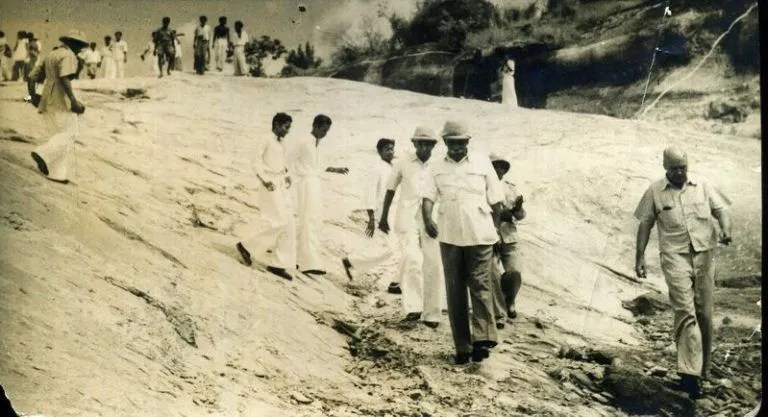
40 years have now elapsed since the launch of the accelerated Mahaweli project, so it is an opportune time to review what was done and the benefits and shortfalls of the project to the nation. This project was the culmination of a 50 yearlong process that started with the rehabilitate ancient irrigation works and settlement of the dry zone lands that was initiated by our first Prime Minister, DS Senanayake, when he was the Agriculture Minister in the State Council during the British Raj. After independence, this moved on to more ambitious projects building large multi-purpose schemes like Gal Oya and Uda Walawe culminating in the accelerated Mahaweli project.

Continue reading

5 Comments

Filed under ancient civilisations, authoritarian regimes, centre-periphery relations, chauvinism, colonisation schemes, communal relations, demography, economic processes, ethnicity, governance, heritage, historical interpretation, island economy, land policies, landscape wondrous, life stories, LTTE, modernity & modernization, Muslims in Lanka, politIcal discourse, power politics, Sinhala-Tamil Relations, social justice, sri lankan society

Yuri Gagarin’s Journey Beyond Our World

Gp Capt Kumar Kirinde, SLAF [retd], as Compiler, …. whose preferred title was “Yuri Gagarin: First Human Being (Man) to go into Space”

Introduction: …. Yuri Alekseyevich Gagarin (9 March 1934–27 March 1968) was a Soviet pilot and cosmonaut who became the first human to journey into outer space. Travelling in the Vostok 1 capsule, Gagarin completed one orbit of Earth on 12 April 1961. By achieving this major milestone in the Space Race he became an international celebrity, and was awarded many medals and titles, including Hero of the Soviet Union, his nation’s highest honour.

Continue reading

Leave a comment

Filed under art & allure bewitching, economic processes, historical interpretation, landscape wondrous, life stories, meditations, modernity & modernization, performance, politIcal discourse, self-reflexivity, the imaginary and the real, transport and communications, travelogue, unusual people, world events & processes

Pastor Jeyaraj and His Missions within the Lankan Prisons

Sam Premaraja …….. executivenationaldirector.lpf@gmail.com

Dear Friends and Family, Pastor Sivarajasingham Jeyaraj was originally a communicant member of the JDCSI Tellippalai Church (1983-1987) and later at the JDCSI Colombo Church (1987-1991) while I served these churches as the Priest-in-Charge. He was equally involved both in our Churches’ ministries as well as that of Youth For Christ (YFC). He was gifted in theatrical skills, deeply committed to serve the most vulnerable, pursued theological studies at Colombo Theological Seminary in Nugegoda (CTS). He displayed Pastoral Leadership skills with a sound and practical theology in his ministries.

Continue reading

2 Comments

Filed under accountability, cultural transmission, economic processes, landscape wondrous, life stories, meditations, patriotism, performance, politIcal discourse, rehabilitation, self-reflexivity, social justice, sri lankan society, Tamil civilians, unusual people, voluntary workers, working class conditions

An American Reading of the Populist Aragalaya in Sri Lanka

German Lopez in The Morning, 24 July 2022

Good morning. Today, we explain what led to Sri Lanka’s recent protests.

Storming the Palace

Sri Lanka’s recent upheaval offers an extreme example of the world’s recent problems. Covid disrupted the country’s major industries, particularly tourism, and then leaders failed to adapt — setting off a chain of economic calamities, including food and fuel shortages. The crisis prompted protests, culminating in the president’s resignation and the installation of a new president on Wednesday.

  Protesters overtaking the prime minister’s office in Colombo, Sri Lanka….. Atul Loke for The New York Times

Continue reading

3 Comments

Filed under accountability, economic processes, governance, landscape wondrous, life stories, political demonstrations, politIcal discourse, power politics, Rajapaksa regime, riots and pogroms, slanted reportage, sri lankan society, truth as casualty of war, world events & processes

Thilan Samaraweera in Australian Coaching Set-Up

Michael Roberts

Thilan Samaraweera may not have possessed the natural talents of an Aravinda, Kumar or Mahela, but he was (and is) an intelligent and industrious man who worked at his trade. He also faced that traumatic episode when the Sri Lankan coach was attacked by Pakistani jihadists as they headed for the Gaddafi stadium in Lahore on the 3rd March 2009.  He was one of those injured by shrapnel (like Tharanga Paranavithana) and despatched to hospital.

Sri Lankan player Thilan Samaraweera is taken aboard an ambulance on March 4, 2009 shortly after flying home from Pakistan where the Sri Lankan team was ambushed by gunmen just before entering a cricket stadium in Lahore. Seven players were wounded in the attack that also killed eight Pakistani nationals and drew wide spread international condemnation. AFP PHOTO/ISHARA S. KODIKARA

03 Mar 2009, LAHORE, Pakistan — epa01653561 Sri Lankan cricketers board a Pakistani Air Force helicopter, as they are air lifted from Gadaffic cricket stadium, after unknown gunmen attacked Sri Lankan cricket team, in Lahore Pakistan on 03 March 2009. Unidentified gunmen attacked Sri Lanka’s cricket team when it was being escorted to a local stadium in Pakistan’s eastern city of Lahore, leaving six policemen and two civilians dead and four Sri Lankan players injured, media reports and officials said. EPA/RAHAT DAR — Image by © RAHAT DAR/epa/Corbis

Continue reading

Leave a comment

Filed under accountability, atrocities, conspiracies, jihad, landscape wondrous, life stories, performance, security, self-reflexivity, Sri Lankan cricket, trauma, unusual people, world events & processes