Category Archives: island economy

Kandy and Its Vistas from “Villa Rosa”… and Beyond

Juliet Coombe, deploying the title “Kandy The Kingdom of Kings & Fiery Tests of Faith” …. with highlighting imposed by The Editor, Thuppahi


Galkande Hill, winding its way up from Kandy’s old town centre, is the perfect place to train for the Pekoe Trail, explore Kandy and enjoy the breathtaking views overlooking the magnificent Mahaweli River, watched over by the Gohagodha, Halloluwa and Yathihelgalle mountain ranges. If you stay at Villa Rosa bungalow you can also enjoy the stunning Hantana mountain range, where Indiana Jones and The Temple Of Doom was filmed.

Continue reading

1 Comment

Filed under ancient civilisations, architects & architecture, art & allure bewitching, cultural transmission, heritage, historical interpretation, island economy, landscape wondrous, life stories, nature's wonders, photography, self-reflexivity, slanted reportage, sri lankan society, travelogue, unusual people, world events & processes

The Russians land on the Moon in Colombo 

Fair Dinkum, an original essay, with highlighting imposed by The Editor, Thuppahi

In August 2022, under coercion from India, the Sri Lankan authorities denied a Chinese research vessel entry into Hambantota port for provisions and refuelling. India falsely accused the vessel of being a spy ship without a shred of evidence. China requested the Sri Lankan authorities reverse its decision and in good faith, China disclosed the activities of the ship to the Sri Lankan authorities, reassuring them the ship was not a spy ship tracking India’s intercontinental missile. Sri Lanka quickly reversed its decision, and a grand ceremony was organized to welcome the Chinese vessel and its crew with Presential staff attending, speeches, and performances of low-country dances, almost like it was the first moon-landing.

  Continue reading

1 Comment

Filed under accountability, centre-periphery relations, charitable outreach, economic processes, ethnicity, foreign policy, governance, historical interpretation, Indian Ocean politics, island economy, landscape wondrous, legal issues, life stories, nationalism, patriotism, performance, politIcal discourse, power politics, self-reflexivity, sri lankan society, tourism, transport and communications, truth as casualty of war, world events & processes

CJR Le Mesurier: A British Civil Servant who challenged the Imperial Order

Michael Powell: article published in 2007 and entitled “Fragile Identities: The Colonial Consequences of CJR Le Mesurier in Ceylon”

ABSTRACT of Article: In the many layered life of CJR Le Mesurier in Ceylon are themes that repeat and recur throughout the British colonial world, touching on marriage and morals, religion and race, archival retention and colonial employment.

Cecil Le Mesurier in Western Australia c 1920s …. Courtesy of Rod Cantley

In particular, his strenuous litigious attack on assumptions of Crown title challenged the philosophic and legal framework of colonial land policy, revealing its ideological foundation, and illuminating the pattern and impulse of land policy throughout Empire.

The increasing effrontery of his actions induces an equally escalating reaction from colonial authority that pares away the preferred patina of civilizing mission to reveal a far more base intent – a colonial impulse more discernible and the actions of authority more disclosing – contributing to a much richer comparative understanding of the dynamics of colonial land dealings.

Continue reading

Leave a comment

Filed under accountability, authoritarian regimes, British colonialism, centre-periphery relations, colonisation schemes, cultural transmission, discrimination, disparagement, economic processes, ethnicity, governance, historical interpretation, island economy, Kandyan kingdom, land policies, landscape wondrous, legal issues, life stories, plantations, politIcal discourse, power politics, religiosity, self-reflexivity, social justice, sri lankan society, trauma, unusual people, welfare & philanthophy, working class conditions, world events & processes

Debating World Politics: “Human Rights” as USA’s Tool in Power Games

Circa 7th October 2022, I inserted  Natasha Gooneratne’s Memo in Thuppahi on Facebook: “An Exposure: Human Rights as a Tool of US Intervention”. …. ………………………………..So, readers should focus initially on this MEMO = https://thuppahis.com/2022/10/04/an-exposure-human-rights-as-a-tool-of-us-intervention-

THAT Item drew the following two comments in Facebook which I then circulated to Natasha and a select few others by EMAIL.

Comment in FACEBOOK by Arun Devan, October 2022: “If you don’t like USA, then don’t go with the begging bowl to US and West. Sri Lanka can choose to stave or be slave. Little choices – thanks to the brutal war and useless spending on military now.”

Comment in FACEBOOK by Richard Simon, October 2022:“Why does the US want to intervene in Sri Lanka? Serious question.”

Continue reading

Leave a comment

Filed under accountability, american imperialism, Australian culture, australian media, centre-periphery relations, China and Chinese influences, debt restructuring, disparagement, economic processes, foreign policy, historical interpretation, human rights, Indian Ocean politics, island economy, landscape wondrous, legal issues, Pacific Ocean politics, politIcal discourse, power politics, Rajapaksa regime, self-reflexivity, social justice, sri lankan society, transport and communications, truth as casualty of war, unusual people, world events & processes

Colonialism Anew. Sri Lanka enmeshed in Western Debt ‘Nets’

Darini Rajasingham-Senanayake, in Colombo Telegraph,  3 October 2022, where the title reads: The Paris Club, Dollar Debt Colonialism & Asia’s New “Donors”: Reforming The International Aid Architecture?”

As the visiting International Monetary Fund (IMF), team boarded a return flight to Washington DC after a week in Colombo, the Paris Club, stepped in though a revolving door at the strategic Indian Ocean island’s Bandaranaike International Airport in the first week of September. 

The signing of a ‘Staff Level Agreement’ with the deeply unpopular ‘Ranil Rajapaksa’ regime accused of Economic Crimes was announced before the IMF team’s departure. However, the contents of the agreement like the IMF’s Debt Sustainability Analysis Report on Sri Lanka remain shrouded in mystery except for news of a $2.9 billion loan to be disbursed over 4 years!

Continue reading

3 Comments

Filed under accountability, american imperialism, debt restructuring, doctoring evidence, economic processes, governance, historical interpretation, IMF, Indian Ocean politics, island economy, legal issues, life stories, modernity & modernization, politIcal discourse, power politics, self-reflexivity, sri lankan society, truth as casualty of war, world events & processes

Religion within Tamil Militancy and the LTTE

  Iselin Frydenlund, presenting her article in Oxford Encyclopedia of Religion, May 2018, …. one entitledTamil Militancy in Sri Lanka and the Role of Religion” …. https://sangam.org/wp-content/uploads/2020/04/Tamil-Militancy-in-Sri-Lanka-and-the-Role-of-Religion.pdf  … OR … https://www.semanticscholar.org/paper/Tamil-Militancy-in-Sri-Lanka-and-the-Role-of-Frydenlund/4cbf5235611dd3407dfa3a2962e6ea635ac50674 … with highlights and pictures being impositions by the Editor, Thuppahi

Induction of Tiger recruits into fighter ranks with receipt of the kuppi containing cyanide

Tiger soldiers relaxing in camp with cyanide kuppi around their necks Pix by Shyam Tekwani


Historical Background

Understanding the role of religion in the Tamil insurgency requires an understanding of Sri Lanka’s cultural mosaic and of the development of modern nationalism before and after independence from British colonial power. Sri Lanka is a geographically small yet culturally rich and complex island, with numerous ethnic, linguistic, religious, and caste subgroups. The majority of the population identify as ethnically Sinhala, and they speak Sinhala, an Indo-European language. The great majority of the Sinhalese are Theravada Buddhists who live mostly in the south and central regions of the island. A small minority of Sinhalese are Catholics, and some also belong to evangelical Christian churches. The largest minority group in Sri Lanka is the Tamils, who speak Tamil (a South Indian Dravidian language) and comprise several subgroups. The largest of these are the so-called Sri Lankan Tamils, who traditionally have lived in the north and east. The so-called Indian Tamils are labor immigrants from India who were brought in by the British to work in the plantation sector in the highlands. The majority of Tamils are Hindus of the Śaiva Siddhanta tradition, but there are also a significant number who are Catholics and a few to smaller Evangelical denominations. The Tamil Muslims identify based on religious belonging, not on a common ethnic identity, and they speak Tamil. Historically, the Muslim communities are scattered throughout the island; they form a stronghold in urban trading centers in the south but are also farmers in the Tamil-majority Eastern Province. Social stratification based on caste and regional identities was strong in precolonial Lanka, and then the colonial classifications of the island’s inhabitants produced new identities with intensified religious and racial signifiers. These were reproduced in the emerging Tamil and Sinhala nationalisms of the late 19th century.

Continue reading

4 Comments

Filed under accountability, art & allure bewitching, atrocities, authoritarian regimes, caste issues, centre-periphery relations, communal relations, cultural transmission, demography, devolution, discrimination, economic processes, Eelam, electoral structures, ethnicity, female empowerment, fundamentalism, governance, heritage, historical interpretation, Indian religions, insurrections, island economy, landscape wondrous, language policies, law of armed conflict, life stories, LTTE, martyrdom, mass conscription, military strategy, nationalism, patriotism, politIcal discourse, power politics, prabhakaran, riots and pogroms, self-reflexivity, Sinhala-Tamil Relations, sri lankan society, suicide bombing, Tamil civilians, Tamil migration, tamil refugees, Tamil Tiger fighters, terrorism, trauma, truth as casualty of war, unusual people, vengeance, world events & processes

Orphaned. Abandoned. Illegitimate. Children cared for by the Evelyn Nurseries of Kandy, 1920 et seq

Michael Roberts

 The tale of the lifeworld of Charles Braine (1877-1944) in British Ceylon presented by one of his descendants https://thuppahis.com/2022/09/21/charles-s-braine-a-rajah-of-a-planter-in-british-ceylon/ generated a side-issue: sex and/or marriage between the British personnel managing the tea, rubber and coconut plantations in British Ceylon and the labour force they commanded. The inequalities in power placed unequal sexual advantages for the planter periya dorais …. and illicit children were one outcome in some instances – a process that probably continued into the second third of the 20th century when Sri Lankans of upper-crust status with an educational background in the best local schools began to gain entry to planter-jobs.

Unlike some of his compatriots, the Englishman Charles Braine kept house with his common-law Sinhalese wife, Engracia Nona: together they fostered and educated a lively family of nine children.

Interest in this tale and comments from Joe Paiva and Errol Fernando led me to two topics of some consequence: (A) the presence in the island of an ethnic category identified as “Eurasians” as distinct from the Burghers;** and (B) the endearing and enduring work of an orphanage known as the Evelyn Nursery that had been launched by a British lady with a large heart that was matched by her architectural and organisational skill: Ms Lena Chapman ( ….).


Continue reading

2 Comments

Filed under accountability, charitable outreach, cultural transmission, economic processes, education, female empowerment, heritage, historical interpretation, island economy, landscape wondrous, patriotism, performance, population, rehabilitation, self-reflexivity, teaching profession, tolerance, travelogue, unusual people, voluntary workers, welfare & philanthophy, world events & processes
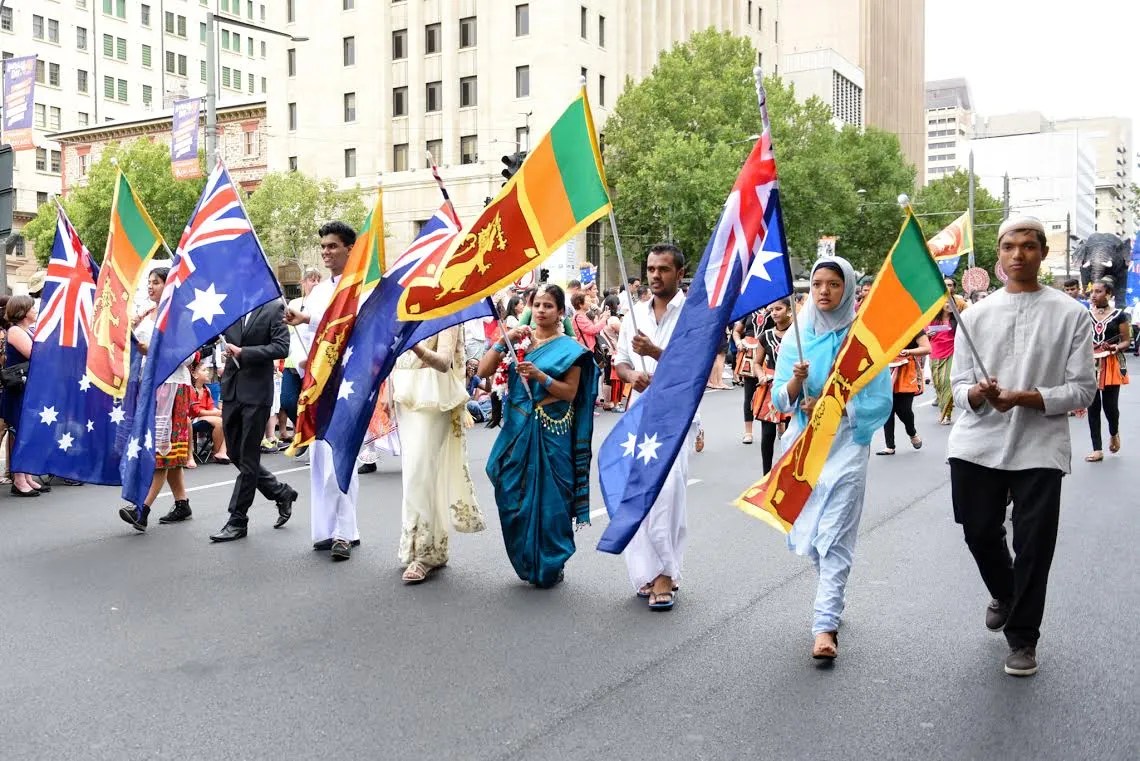
Sri Lankans in Australia: 2016 Census Data …… The Demographic Profile

Item sent to Thuppahi by Victor Melder ….  at https://www.abs.gov.au/census/find-census-data/quickstats/2016/7107_0 …. presented here with some selective highlights from the Thuppahi pen

People 109,853
Male 57,280
Female 52,573
Australian citizen 60.3%
Not an Australian citizen 38.3%

Families 43,816
Couples with children 26,914
Couples without children 13,326
One parent families 2,972
Other families 592

All private dwellings 52,548
Median monthly mortgage repayment $2,100
Median weekly rent paid $351


Continue reading

1 Comment

Filed under accountability, Australian culture, australian media, communal relations, demography, economic processes, education, ethnicity, governance, heritage, historical interpretation, immigration, island economy, legal issues, life stories, literary achievements, performance, population, self-reflexivity, sri lankan society, travelogue, unusual people, working class conditions, world events & processes

Rare Items marking Queen Elizabeth’s Visit to Ceylon in 1954

The Rupee Notes and A Stamp


Continue reading

Leave a comment

Filed under accountability, British colonialism, cultural transmission, Empire loyalism, heritage, island economy, landscape wondrous, life stories, patriotism, performance, politIcal discourse, power politics, self-reflexivity, sri lankan society, the imaginary and the real, world events & processes

Deeply Wounded. Also Divided? Sri Lanka Today

Neloufer De Mel, in History Today, Vol 72/8, September 2022, where the title reads “Sri Lanka’s Deep Wounds” **

On 31 March 2022 a public protest occurred in the vicinity of the home of the Sri Lankan president Gotabhaya Rajapakse. The protest marked frustration at the shortages of essential commodities (gas, medicines, fuel) and the gruelling ten-to-13-hour power cuts imposed by a cash-strapped government with insufficient dollars to pay for imported fuel. The protestors also sought answers as to why certain neighbourhoods (such as Mirihana, where the president lived) continued to enjoy uninterrupted power.

Continue reading

Leave a comment

Filed under accountability, authoritarian regimes, centre-periphery relations, communal relations, debt restructuring, democratic measures, discrimination, disparagement, economic processes, governance, historical interpretation, human rights, island economy, landscape wondrous, legal issues, life stories, Muslims in Lanka, political demonstrations, politIcal discourse, power politics, self-reflexivity, Sinhala-Tamil Relations, social justice, sri lankan society, Tamil civilians, truth as casualty of war, unusual people, working class conditions, world events & processes