Category Archives: Hitler

Suicide Warriors in the Modern Era: Contrasts, Puzzles, Challenges

Richard Koenigsberg

Douglas Haig was the British General who planned and executed the Battle of the Somme, which began on July 1, 1916. Visiting the battlefield on March 31, 1917, Haig reflected (De Groot, 1989) upon the hundreds of thousands of British casualties: “Credit must be paid to the splendid young officers who were able time and time again to attack these tremendous positions…To many it meant certain death, and all must have known that before they started.”

WW One 3 Continue reading

2 Comments

Filed under cultural transmission, Fascism, historical interpretation, Hitler, Islamic fundamentalism, life stories, LTTE, martyrdom, military strategy, patriotism, politIcal discourse, power politics, self-reflexivity, suicide bombing, world affairs

The psychoanalysis of racism, nationalism and revolution

Richard Koenigsberg

KoenigsbergEXTRACTS as introduction….

Faith in the NationThe idea of the nation is a fundamental “assumption” that defines the manner in which modern man perceives, and experiences, social reality. Just as people in earlier historical periods possessed an absolute faith in the reality of God, so do people in contemporary cultures possess an absolute faith in the reality of the nation.

In a democratic culture, people differ regarding the stance taken in relation to the nation: the country may be “loved” or hated; perceived to be “healthy” or sick; “strong” or weak. But whatever stance is adopted, people are united by their absolute faith in the reality of this entity, and their belief that this entity constitutes a fundamental determinant of the nature, and of the quality, of their daily lives. Continue reading

Leave a comment

Filed under atrocities, Fascism, Hitler, life stories, nationalism, performance, politIcal discourse, power politics, propaganda, unusual people, violence of language, zealotry

The dark charisma of Adolf Hitler

SEE http://www.youtube.com/watch?v=AG4YMNg_viw

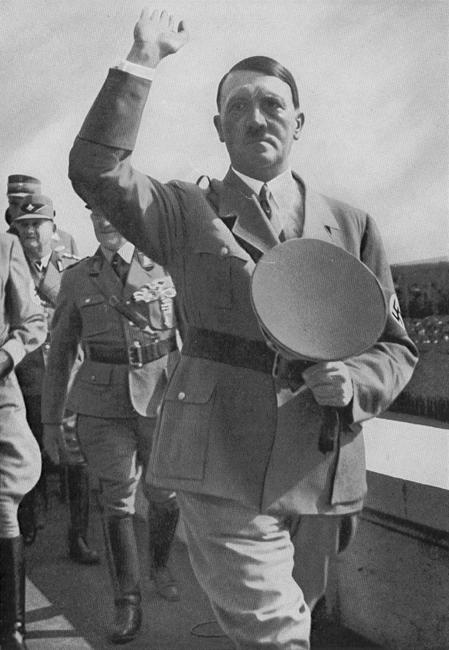
HILER & GOERING - LIB OF CONGRESS Pic from the Library of C0ngress

Adolf Hitler seemed an unlikely leader – fuelled by anger, incapable of forming normal human relationships and unwilling to debate political issues. Such was the depth of his hatred that he would become a war criminal arguably without precedent in history. Yet this strange character was once loved by millions. How was this possible, and what role did Hitler’s alleged ‘charisma’ play in his success? Continue reading

Leave a comment

Filed under Fascism, historical interpretation, Hitler, law of armed conflict, life stories, martyrdom, politIcal discourse, power politics, racist thinking, truth as casualty of war, unusual people, world events & processes

Kavudha Rajaa! Who is to be King? Mahinda or Prabhaa? Misjudgements that changed the course of history

Somapala Gunadheera, in The Sunday Island, 11 November 2012

Misjudgements are anathema to justice. Nevertheless even they may accidentally ensure ‘the greater good of the greater number’ in very exceptional circumstances. The following judgements made by the Supreme Court since 2005 have turned out to be one such instance.

1. Injunction to prevent the Police from further investigating alleged misappropriation of tsunami funds by Mr. Mahinda Rajapaksa (MR)

2. Ruling that President Kumaratunga (PK), steps down from office one year earlier than stipulated

3. Decision that allowed any “cross over” in Parliament to continue as an elected MP, despite his or her political party’s objections

These decisions have been widely criticized with cogent reasons by legal luminaries. Recently there has even been an implied confession on the tenability of the injunction at 1 above. However, my intention is not to go into the legality of these decisions but to reflect on how they changed the course of history of this island. Continue reading

Leave a comment

Filed under accountability, Fascism, historical interpretation, Hitler, Indian Ocean politics, LTTE, military strategy, politIcal discourse, power politics, prabhakaran, propaganda, racist thinking, Rajapaksa regime, Sinhala-Tamil Relations, sri lankan society, terrorism, violence of language, world events & processes

Enlightened reform a prerequisite today in order to counter Sampanthan’s insidious programme of autonomy-to-secession

Dayan Jayatilleka, in The Island, 5 June 2012, where the title was “Prabhakaran Paraphrased: The ‘autonomist-secessionist continuum’ in Tamil politics.”

Professor Urmila Phadnis the late doyenne of Lankanology in Indian academia was utterly discerning when she concluded over two decades ago in her last book (‘Ethnicity and nation-building in South Asia’) that Lankan Tamil ‘sub-nationalism’ was unique in the region in that it alone displayed an ‘autonomist-secessionist continuum’. It was with shock and dismay that I found that the keynote speech of R Sampanthan at the 14th Convention of the ITAK in May 2012, echoes in significant respects those of Velupillai Prabhakaran, to the extent that that there are near-identical passages. Continue reading

1 Comment

Filed under accountability, historical interpretation, Hitler, Indian Ocean politics, LTTE, nationalism, patriotism, politIcal discourse, power politics, power sharing, prabhakaran, propaganda, reconciliation, Sinhala-Tamil Relations, truth as casualty of war, violence of language, world affairs

A projected book on “Paranoid Fantasy and Enemy Creation”

Statement of Purpose:   This book will explore the hypothesis that there is a common dynamic underlying enemy  creation. While cultural contexts and historical situations differ (and are often complex), warfare may arise out of a fundamental template revolving  around the identification  of an enemy perceived to be a threat to one’s nation or ideology. To defend or rescue the sacred ideal, the class of persons designated as enemy must be defeated,  eliminated or destroyed. Continue reading

Leave a comment

Filed under authoritarian regimes, Fascism, fundamentalism, historical interpretation, Hitler, power politics, propaganda, world events & processes

Pirapāharan, LTTE and the Tamil Struggle: A Slanted Bibliography

 Pirapahran as Guevera -Pic by Tekwani
Young Pirapaharan and his wife– BBC pic
This abbreviated bibliography is incomplete and is directed towards (a) informing us about the role of the talaivar in the light of new evidence provided by Bavinck, Ganeshan Iyer, Rāgavan and Tekwani; and (b) providing background for the discussion of Tamil Tigress. One must, of course, also visit the UTHR web site. Michael Roberts.
 Courtesy of Colombo Telegraph
 
Ambalavanar, Arun 2011 “the farce of a Fake Tigress,”  http://www.srilankaguardian.org/2011/08/farce-of-fake-tigress.html
Bavinck, Ben 2011a “Val Daniel’s Introduction of Ben Bavinck and Ben’s Diary over the Years of Conflict in Lanka,” http://thuppahis.com/2011/09/11/val-daniels-introduction-of-ben-bavinck-and-bens-dairy-over-the-years-of-conflict-in-lanka Continue reading

3 Comments

Filed under accountability, Eelam, historical interpretation, Hitler, Indian Ocean politics, life stories, LTTE, military strategy, politIcal discourse, power politics, prabhakaran, propaganda, Rajiv Gandhi, Sinhala-Tamil Relations, Tamil Tiger fighters, truth as casualty of war, unusual people, world events & processes

Blackmail during the Endgame in Eelam War IV

Michael Roberts,13 April 2012 … courtesy Eurasia Review, where you will find blog comments. Also see Colombo Telegraph for a different set of comments. The essay here has some embellishments and refinements.

Blackmailing Sri Lanka, 2009

The long and episodic war between the Government of Sri Lanka (GSL) and the Tamil liberation forces commanded by the LTTE from the 1980s to 2009 involved numerous atrocities on both sides, notably those in the Eastern Province in 1990. It is puzzling why, today, certain Western states and the human rights lobby (HR) are concentrating solely on the crunch situation in 2009 at the end of Eelam War IV in pressing alleged war crimes charges against the Sri Lankan government; and why symbolic LTTE figures such as V. Rudrakumaran and Adele Balasingham are also not being placed within the bars of moral justice.

 David Miliband with Tamils for Labour

he puzzle serves as a backdrop for my argument that the Western nations, both individually and collectively, were sucked into and thus complicit in one of the most outstanding acts of political blackmail the world has seen in recent centuries.[i] This was when the LTTE utilised its own people, some 320-350,000 citizens of Thamilīlam as a hostage-bargaining chip that would enable them to pursue their fight another day.

Guided by their well-placed connections in media and other circles in the West, the LTTE had read the international scene well. Strands of secular fundamentalism had prominent voice and humanitarian impulses[ii] could be persuaded Continue reading

30 Comments

Filed under discrimination, historical interpretation, Hitler, Indian Ocean politics, law of armed conflict, life stories, LTTE, mass conscription, military strategy, NGOs, politIcal discourse, population, power politics, prabhakaran, propaganda, Rajapaksa regime, reconciliation, Sinhala-Tamil Relations, sri lankan society, Tamil civilians, Tamil migration, truth as casualty of war, unusual people, war crimes, world events & processes

Hitler’s parents’ grave in Austria: headstone removed

Courtesy of the Associated Press, http://www.usatoday.com/news/world/story/2012-03-30/hitler-parents-grave/53893852/1

The tombstone marking the grave of Adolf Hitler‘s parents, Continue reading

Leave a comment

Filed under Hitler, life stories, patriotism, politIcal discourse, world events & processes

Addressing Two Angry Tamils: Heat, Distortion, Truth, Fact, Mendacity and Eternal Enmity

Michael Roberts, Courtesy of Colombo Telegraph where it appeared on 6 March 2012 under a different title 

Whenever my articles have been posted on web sites, I have generally not engaged those readers who have inserted comments. Unlike Dayan Jayatilleke, I do not have the energy to participate in what often turn into dog fights. Besides, the blog format is not conducive to lengthy clarifications of the article type. It would also be difficult in many instances to defend myself without adopting a pontifical tone that would be self-defeating.

However, my presentation of “Victor Rajakulendran’s Tirade at the Exposure of Pirapaharan’s Admiration for Hitler” in the web outlet Colombo Telegraph drew extended comments of a political character from two Tamil gentlemen that induce me to respond at length in a measured manner for the benefit of the audience-at-large. This is called for because the ideological positions they adopted[i] are of considerable significance, so much so that they have been displayed prominently as separate items in my thuppahi web site.

Let me stress here neither their comments nor my present article can be fully comprehended without a reading of my previous article “Inspirations: Hero Figures and Hitler in Young Pirapāharan’s Thinking;”[ii] and the preceding companion piece involving the work of Ganeshan Iyer, namely, “Military Training in the German Nazi Mould amidst Internal Dissension in the early LTTE, late 1970s,” translated by Parames Blacker.[iii]

Kathiravan and Thanga are clearly Tamils of the diaspora who are explicitly committed to the cause of Thamilīlam and its pursuit by the Transnational Government of Tamil Eelam (TGTE) and its affiliates. In my reading they are hard core Tamil nationalists and are strongly committed to the Tamil Tiger legacy. It is precisely because of this commitment that their lines of thought call for analysis. In pursuing this work of decoding I am not seeking to convert them. In my conjecture both are incorrigible ultra-nationalists. Continue reading

10 Comments

Filed under citizen journalism, communal relations, cultural transmission, Eelam, historical interpretation, Hitler, life stories, LTTE, military strategy, politIcal discourse, racist thinking, Sinhala-Tamil Relations, sri lankan society, Tamil civilians, Tamil migration, Tamil Tiger fighters, terrorism, truth as casualty of war