
Category Archives: heritage

The National Archives of Sri Lanka

Haris de Silva, in The Island, 18 December 2012**
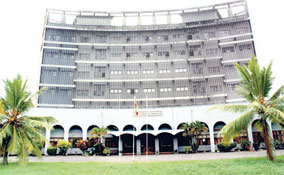
ARCHIVESThe New Wing of the National Archives, constructed adjacent to its present building, down Philip Gunawardena Mawata, Colombo 7, will be declared open today, the 18th December, 2012, at 1000 hrs, by President Mahinda Rajapaksa.. It will provide some badly needed extra space for some of its activities.

What are state archives? Records created or received by any state institution during the course of conducting its legitimate business, and held by it as evidence of its activities, when transferred to the National Archives, become state archives.  Such records/archives provide legal validity at judicial inquiries and provide primary historical evidence for the country’s history. However, in respect of legal validity, it is a requirement that the records should have had unbroken custody in the office which created/received them. Such records when transferred to the National Archives, in terms of legal requirements, continue to have that unbroken legal custody, as they are considered to be  maintained in the National Archives as if they were in the offices of origin. However, if, by chance, continuous custody of such records had not been maintained in the offices of origin they will not have the required legal validity, although their historical importance will remain. Continue reading

Leave a comment

Filed under cultural transmission, heritage, historical interpretation, sri lankan society

To be or not to be Sri Lankan? … That is the question!

Theruni Sebastiampillai, from The Island, 10 November 2012 … noting *** at end

How do I define my identity? At first glance, the answer would be simple and clear: I am a French citizen with Sri Lankan origins. This would be enough for any administrative paperwork. But in daily life, the reality is quite different depending on the situations that we are facing.

The first question would be:  Am I French or Sri Lankan? I was born in France, I studied in France, I live and work in France. So what could be more natural than to feel French? Continue reading

1 Comment

Filed under communal relations, cultural transmission, ethnicity, heritage, historical interpretation, life stories, patriotism, world affairs

Janaka Goonetileke’s Atapattu Walawwa

Hemantha Situge, courtesy of The Nation, 28 October 2012, where the title is “Enthusiasts’ Guide to unique Sri Lankan Real Estate

Atapattu Walawwa, the residence of the Gooneratne and Dias Abeysinghe families, is a richly illustrated antiquarian miscellany on one of Sri Lanka’s well preserved treasure trove walauwwas – an ancient manor house – found in Galle – the capital of the Southern province of Sri Lanka.

A Consultant Obstetrician and Gynecologist in Britain, Janaka Goonetileke, with his marriage to Dharshani Dias Abeysinghe, the sole heir to the Atapattu Walauwwa, which has survived in the family for well nigh 23 decades, has gone in search of his wife’s roots and has documented the same for posterity. The book states that the other contributors of this work are Senaka Bandaranayake and Susil Sirivardana. Continue reading

7 Comments

Filed under cultural transmission, heritage, historical interpretation, sri lankan society, unusual people

The ’43 Group’: Inspiring an Artistic Transformation

Anukshi Jayasinha, courtesy of Ceylon Today online where the title is “Th Rebels of ’43″… see http://www.ceylontoday.lk/64-14169-news-detail-the-rebels-of-43.html where more illustrations of their work can be found.

 Pix by Nuwan Amarawansa

In 1943, a young, restless group of artists came together to tear down the rigid and only form of art that was appreciated at the time in Colombo. What started as small, frequent gatherings of a few like-minded individuals soon expanded and flourished, creating a lasting impact on the art scene in Colombo and changing it forever. The ’43 Group was one of the most influential movements in Sri Lankan contemporary art, and its artists and their work are of utmost value, both in Sri Lanka and internationally. Continue reading

Leave a comment

Filed under British imperialism, cultural transmission, heritage, historical interpretation, life stories, literary achievements, sri lankan society, unusual people, world affairs

Photographs of Ceylon 1850-1915: Collections in Sri Lanka

Benita Stambler, The John and Mable Ringling Museum of Art, Sarasota, Florida, USA, benita.stambler@ringling.org

My search for collections of photographs taken during the British colonial period in Ceylon is ongoing, but has been enhanced by my recent visit to Sri Lanka.  I wish to thank the readers of this blog who provided information about existing collections before my trip.  I appreciate all the suggestions I received, and am presently working to incorporate the photograph collections I examined in Sri Lanka into a comprehensive list documenting collections around the world.  The output of the individuals and commercial firms who captured the people and sights of Ceylon in such variety is truly impressive. Continue reading

4 Comments

Filed under cultural transmission, heritage, historical interpretation, sri lankan society, unusual people, world affairs

Jaffna Fort Renovation on Course

Priyanka Kurugala in the Daily News, 6 October 2012

The Department of Archaeology will build a museum at the entrance to Jaffna Fort. The work is to be completed before the end of this year, Archaeological Director General Senerath Dissanayake told the Daily News.

Continue reading

Leave a comment

Filed under heritage, historical interpretation, Sinhala-Tamil Relations, sri lankan society, world affairs

An Imperial Saga: The Kandyan Sinhalese Prisoners in Mauritius, 1819-1832

Michael Roberts, reviewing Raja C. Bandaranayake:  Betwixt Isles: The Story of the Kandyan Prisoners in Mauritius, Colombo: Vijitha Yapa Publications, 2006. 360pp, ISBN 13 9789551266417 and 10 955-1266-41-2

 Ähalēpola – a contemporary etching and his gravesite epitaph (with contradictory dates in Sinhala and English) as photographed by Bandaranayake  recently

Raja Bandaranayake ventures bold. He unravels and describes the story of the 29 Kandyan prisoners and 11 convicts who were sent to Mauritius by the British authorities between 1819 and 1832. This ‘contingent’ also extended to others, namely, (1) one convict named John Herman Haas; (2) an English speaking gentleman “Translator” with his retainer; and (3) a few retainers for Ähalēpola Nilame when he was sent there in 1825 without facing prosecution simply because the British Governors were fearful of his capacity to incite discontent.

The British Empire, as we know, was far-flung. They used manpower from one area, notably India, to conquer and control other areas. They also used some of their colonial territories as a “repository’ for rebels and recalcitrant from other colonies. Sending Arabi Pasha and his lieutenants to Ceylon in 1883 and a large contingent of Boer prisoners of war to Ceylon in 1900 are perhaps the best-known of these instances. Now, Bandaranayake has placed the saga of the Sri Lankans on the imperial map. Continue reading

7 Comments

Filed under heritage, historical interpretation, Indian Ocean politics, military expenditure, politIcal discourse, power politics, unusual people, world events & processes

Disparaging Ethnic Epithets in Lanka: A Chat – Van Arkadie and Roberts

I: Preamble:Alex Van Arkadie is not known to me but seems to have received a stack of reports on the humanitarian side of the IDP camps [2009-12], which had recently been posted in http://thuppahi.wordpress.com from some circuits of email, perhaps that generated by Victor Melder. This conversation was an incidental outcome. Michael Roberts.

II: Alex Van Arkadie to Michael Roberts, 30 September 2012

Pardon me for the intrusion. Tell me please, what relevance does the word ‘thuppahi‘ have in relation to your works of mercy for the abandoned, helpless and needy?  I am rather concerned, because not all of the contemporary Burghers in Sri Lanka would consider it user-friendly? Continue reading

6 Comments

Filed under Australian culture, caste issues, citizen journalism, cultural transmission, ethnicity, heritage, historical interpretation, Left politics, life stories, nationalism, politIcal discourse, racist thinking, Sinhala-Tamil Relations, sri lankan society, tolerance, violence of language

Encapsulating two and half millennia History, Culture and Politics: The Problem of “The Sri Lanka Reader”

DGB de Silva, in Journal of the Royal Asiatic Society, Sri Lanka, New Series  No. LVII, 2012, pp. 135-172, reviewing John Holt, The Sri Lanka Reader : History, Culture Politics,

The present work on Sri Lanka under discussion here which is the ninth volume in the “Readers’  Series” published by the Duke University under the general editorship of Robin Kirk and Orin Starn is the second on an Asian country, (the first was on Indonesia). That points to the extent, both from the perspective of modern day tourism and a general perspective, the continuing interest placed on Sri Lanka as a destination as well as a land of particular interest.  Albeit its voluminous content of over 750 pages, the volume may look more than a handbook for the traveler. It might also serve the reader who wishes to get a deeper insight into the past and present of this country, to understand the different perceptions formed about the people, their former rulers, their customs and manners, history, culture, religion, way of governance, justice and communication of ideas as well as modern day writings on contemporary issues. The anthology framework may seem to leave the reader free to make up his/her mind on the wide spectrum of subjects covered without much prompting by the editor. But this need not be so. There lurk some problems about the book. First, it has to do with the choice of texts and their authorship. Second, in the process of trying to introduce a balance, some of the texts used from modern writers could be seen to present particular emphasis on controversial issues like questions over ethnic identity which the editor seemed constrained to avoid.   Continue reading

Leave a comment

Filed under British imperialism, cultural transmission, economic processes, heritage, historical interpretation, island economy, literary achievements, nationalism, Sinhala-Tamil Relations, sri lankan society, world events & processes

Betwixt Isles: The Story of the Kandyan Prisoners in Mauritius

Raja C. Bandaranayake

A combination of cunning interlopers, scheming aliens and factious in-fighting among the nobility brought about the downfall of the KandyanKingdom at the hands of the British, on 14th February 1815, after an uninterrupted history of over three centuries. The sense of bewilderment and resignation of the Kandyan peasantry soon gave way to one of frustration, as they observed their traditions being gradually eroded by the conquerors, and the lack of respect shown to their religious leaders and erstwhile chiefs. The time was ripe for the some of the nobility to assert their authority. The British lost no time in crushing the resulting rebellion of 1817-1818. Their troops ruthlessly and unashamedly devastated Kandyan villages. Rebel leaders were captured or surrendered. While many were executed, some had their sentences commuted to banishment. Continue reading

5 Comments

Filed under authoritarian regimes, British imperialism, heritage, historical interpretation, Indian Ocean politics, life stories, sri lankan society, world events & processes