Category Archives: Eelam

Sharika Thiranagama in Profound Q & A on Sri Lanka’s Traumatic Past

Kaniyan Pungundran – Editor-in-Chief of Jaffna Monitor .September 2025 … ..where the title runs thus: “JVP Still Denies the Tamil Ethnic Question: Sharika Thiranagama Speaks to Jaffna Monitor”

It feels like yesterday. As a student, I remember flipping through Amuthu, a Tamil-language magazine published by Lake House. One day, I came across an article about Dr. Rajani Thiranagama—her brilliant career, and how she was cowardly and mercilessly assassinated. More than the tragedy of that brave woman, what seared itself into me was the image of her two young daughters standing beside their mother. Even as a boy, I felt a deep and overwhelming compassion for them. That night, I hugged my mother tightly, whispering questions to the God I was raised to believe in: How could anyone kill the mother of two small children?

Years later, I found myself sitting across from one of those children—Sharika Thiranagama—interviewing her in detail for Jaffna Monitor. As we spoke, what struck me repeatedly was not only her brilliance as an academic but also the warmth, composure, and clarity that radiated from her. That evening, I watched as she disagreed with some of my friends. The way she objected—polite, firm, and unshakably precise—made me realize that though her life was marked by loss at the most vulnerable age, she had absorbed her mother’s humility, bravery, and steady mind. It was in that moment I understood how personal tragedy had forged not bitterness, but intellectual rigorhow the child who once heard gunshots from her doorstep had grown into a scholar determined to dissect the very forces that create such violence.

Continue reading

1 Comment

Filed under accountability, anti-racism, asylum-seekers, atrocities, authoritarian regimes, centre-periphery relations, communal relations, cultural transmission, democratic measures, discrimination, economic processes, education, Eelam, electoral structures, ethnicity, female empowerment, governance, historical interpretation, human rights, IDP camps, island economy, language policies, legal issues, life stories, LTTE, martyrdom, mass conscription, military strategy, Muslims in Lanka, nationalism, outmigration, patriotism, politIcal discourse, power politics, prabhakaran, racist thinking, Rajapaksa regime, security, self-reflexivity, Sinhala-Tamil Relations, sri lankan society, Tamil civilians, Tamil migration, tamil refugees, Tamil Tiger fighters, terrorism, trauma, truth as casualty of war, unusual people, vengeance, war crimes, war reportage, world events & processes, zealotry

Lankan Tamil Migration in Wintry Norway: “Working For Our Sisters”

Oivund Fugleruud in  ???? where the the title runs  thus:“Working for  Sisters”  — Tamil Life on the 71st Parallel’

The article discusses the phenomenon of migration of Sri Lankan Tamils to Finnmark, the northemmost part of Nonvay. While most other groups of immigrants in Nonvay tend to settle in the larger Cities, this particular group has a tradition of settlement in the fishing villages in Finnmark, facing the Barents Sem.

[t is argued fhat there is a continuity in this pattem from the early migration workers in the 1970s ro present•day asylum-seekers. The “imicrohistory” of Tamil migration to one particular village is presented and discussed. It shows an overlap from one type of  migration to another.

Continue reading

Leave a comment

Filed under accountability, asylum-seekers, authoritarian regimes, centre-periphery relations, commoditification, demography, economic processes, education, Eelam, ethnicity, heritage, historical interpretation, island economy, life stories, LTTE, migrant experiences, outmigration, politIcal discourse, prabhakaran, self-reflexivity, Sinhala-Tamil Relations, sri lankan society, Tamil civilians, Tamil migration, tamil refugees, transport and communications, travelogue, war reportage, working class conditions, world events & processes

War Crimes Issue Develops in Sri Lanka: Chemmani & Beyond

N.  Sathiya Moorthy, in Ceylon Today, 22 August  2025, where the  title reads  “How Historic is the Opportunity” ... with highlighting being  the intervention of The Editor Thuppahi

 In what has become the ritualistic report of the UN Human Rights Commissioner to the UNHRC Council of 48-member nations, elected by rotation, incumbent Volker Türk seems to have settled for a credible, independent mechanism to probe Sri Lanka’s war crimes and other allegations of human rights violations. This is in contrast to the decade-plus-long attempts by the ‘international community’ (read: West) to impose an ‘independent, international mechanism’ for the purpose.

Continue reading

1 Comment

Filed under accountability, atrocities, authoritarian regimes, centre-periphery relations, communal relations, discrimination, disparagement, Eelam, ethnicity, governance, historical interpretation, human rights, legal issues, life stories, LTTE, politIcal discourse, security, self-reflexivity, Sinhala-Tamil Relations, social justice, sri lankan society, Tamil civilians, trauma, truth as casualty of war, vengeance, war crimes, war reportage

Sachi’s Review of Bradman Weerakoon’s Autobiography

Sachi Sri Kantha,  reviewing  Bradman Weerakoon, Rendering Unto Caesar, Vijitha Publications, Colombo, 2004, 396 pp. under the title  “Rendering Unto Caesar: a Book Review”**

Of the millions of Sri Lankans born in the 20th century, Bradman Weerakoon is the only fellow to be blessed uniquely.  He was blessed for the first time in the year of his birth (1930), when his police officer father Edmund R.Weerakoon christened the name of legendary Australian cricket batsman Donald Bradman to him.  In 1930, Bradman became a phenomenon in the cricket arena by scoring 974 test runs in his England tour.  Bradman Weerakoon was blessed again – the only Sri Lankan – to serve nine Sinhalese politicians who held nominal executive power from 1954 to 2004.  Thus, Weerakoon was privy to the thoughts and work styles of these nine politicians (John Kotelawela, Solomon W.R.D. Bandaranaike, W. Dahanayake, Dudley Senanayake, Sirimavo Bandaranaike, J.R. Jayewardene, R. Premadasa, D.B. Wijetunga and Ranil Wickremesinghe) whom he has sketched in this memoir.  In addition to the nine leaders, even the first prime minister Don Stepehn Senanayake also receives passing mention, as the father of Dudley Senanayake.

Bradman Weerakoon

Continue reading

Leave a comment

Filed under accountability, British colonialism, centre-periphery relations, communal relations, cultural transmission, economic processes, Eelam, ethnicity, governance, historical interpretation, language policies, life stories, modernity & modernization, nationalism, performance, politIcal discourse, self-reflexivity, Sinhala-Tamil Relations, sri lankan society, truth as casualty of war, unusual people

Facing A Tsunami & A Civil War

Dennis  M. McGilvray, in an  article  pubd in 2006 in the India Review, vol. 5, nos. 3–4, July/October, 2006, pp. 372–393 Copyright © Taylor & Francis Group, LLC  …. ISSN 1473-6489 print; 1557-3036 online DOI:10.1080/14736480600939132 … one bearing this title:  “Tsunami and Civil War in Sri Lanka: An Anthropologist Confronts the Real World

Recent calls for a new “public anthropology” to promote greater visibility for ethnographic research in the eyes of the press and the general public, and to bolster the courage of anthropologists to address urgent issues of the day, are laudable although probably also too hopeful. Yet, while public anthropology could certainly be more salient in American life, it already exists in parts of the world such as Sri Lanka where social change, ethnic conflict, and natural catastrophe have unavoidably altered the local context of ethnographic fieldwork. Much of the anthropology of Sri Lanka in the last three decades would have to count as “public” scholarship, because it has been forced to address the contemporary realities of labor migration, religious politics, the global economy, and the rise of violent ethno-nationalist movements. As a long-term observer of the Tamil-speaking Hindu and Muslim communities in Sri Lanka’s eastern coastal region, I have always been attracted to the classic anthropological issues of caste, popular religion, and matrilineal kinship. However, in the wake of the civil wars for Tamil Eelam and the 2004 tsunami disaster, I have been forced to confront (somewhat uneasily) a fundamentally altered field- work situation. This gives my current work a stronger flavor of public anthropology, while providing an opportunity for me to trace older matrilocal family patterns and Hindu-Muslim religious traditions under radically changed conditions.

 BEACHFRONT HOME DESTROYED BY TSUNAMI, MARUTHAMUNAI. AUGUST 2005

Continue reading

Leave a comment

Filed under accountability, atrocities, authoritarian regimes, centre-periphery relations, charitable outreach, communal relations, counter-insurgency, demography, disaster relief team, economic processes, Eelam, ethnicity, governance, historical interpretation, human rights, insurrections, island economy, landscape wondrous, life stories, LTTE, military strategy, Muslims in Lanka, politIcal discourse, racist thinking, rehabilitation, religiosity, security, self-reflexivity, Sinhala-Tamil Relations, sri lankan society, Tamil civilians, the imaginary and the real, the tsunami 2004, transport and communications, truth as casualty of war, voluntary workers, war crimes, war reportage, welfare & philanthophy, world events & processes

UNHRO Calls for Investigation of Past Killings in Lanka


Tamil and Sinhala versions attached

Sri Lanka has opportunity to break from past – Türk

GENEVA (13 August 2025) – A report published today by the UN Human Rights Office calls on Sri Lanka’s Government to seize the historic opportunity to break with entrenched impunity, implement transformative reforms, and deliver long-overdue justice and accountability for serious violations and abuses committed in the past, including international crimes.

Continue reading

1 Comment

Filed under accountability, atrocities, authoritarian regimes, centre-periphery relations, communal relations, demography, Eelam, ethnicity, governance, historical interpretation, landscape wondrous, life stories, LTTE, migrant experiences, military expenditure, military strategy, parliamentary elections, patriotism, photography, political demonstrations, politIcal discourse, population, power politics, racism, Rajapaksa regime, security, self-reflexivity, Sinhala-Tamil Relations, social justice, sri lankan society, suicide bombing, Tamil civilians, Tamil migration, tamil refugees, Tamil Tiger fighters, the imaginary and the real, trauma, truth as casualty of war, vengeance, violence of language, war crimes, world events & processes, zealotry

Neelan Tiruchelvam: An Appreciation of His Mediatory Politics

Kagusthan Ariaratnam in Groundviews, 8 August 2025, where the title  reads “Neelan Unsilenced …” while highlights here have been added by The Editor, Thuppahi

Photo courtesy of Pitasanna Shanmugathas

NEELAN: UNSILENCED is a compelling and vital documentary that successfully situates the life of Dr. Neelan Tiruchelvam within the turbulent history of the Sri Lankan conflict. Its greatest achievement is providing a nuanced entry point into the war by focusing on the non-violent, intellectual and pluralistic dimensions of Tamil resistance – a perspective often eclipsed by the narrative of armed struggle. By foregrounding Neelan’s journey, the film illuminates a leader who dedicated his life to constitutional reform and reconciliation.

   Photo courtesy of Pitasanna Shanmugathas

Continue reading

1 Comment

Filed under accountability, anti-racism, centre-periphery relations, communal relations, democratic measures, economic processes, education, Eelam, electoral structures, ethnicity, governance, historical interpretation, human rights, Indian Ocean politics, landscape wondrous, language policies, Left politics, legal issues, life stories, modernity & modernization, nationalism, NGOs, patriotism, performance, politIcal discourse, power politics, power sharing, reconciliation, self-reflexivity, Sinhala-Tamil Relations, social justice, sri lankan society, unusual people

About Sharika Thiranagama ……. Today

Rohan Gunaratna  in  FACEBOOK, August 2025

Rohan Gunaratna

nopordtesS43ag881f170i0ihg99ic5ay0ic8luml74u9m2l8 61t4Mct4a0 ·

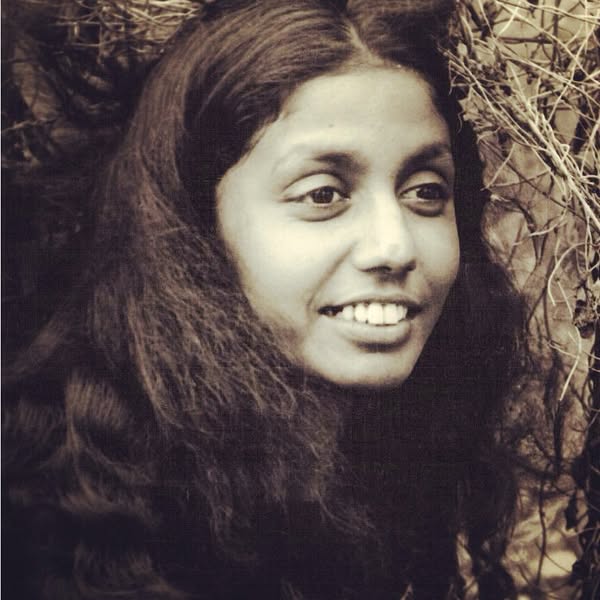
Congratulations to Sri Lankan-born American Anthropologist, Prof. Sharika Thiranagama, on winning the Davidson Prize at Cambridge University, where she was appointed a Scholar of St Johns.

Winner of Stanford University’s “Lifetime award for Academic achievement in Archaeology and Anthropology”, Sharika wrote “In My Mother’s House: Civil War in Sri Lanka” published by University of Pennsylvania Press in 2011.

Sharika

…Rajini Continue reading

2 Comments

Filed under accountability, atrocities, authoritarian regimes, communal relations, Eelam, ethnicity, governance, historical interpretation, human rights, life stories, literary achievements, performance, politIcal discourse, refugees, self-reflexivity, Sinhala-Tamil Relations, sri lankan society, Tamil migration, tamil refugees, teaching profession, trauma, unusual people, war crimes, world events & processes, zealotry

In Memoriam: Vijaya Kumaratunga

DBS Jeyaraj in 2022 at https://dbsjeyaraj.com/dbsj/?p=67620 where the title reads “Vijaya Kumaratunga: Charismatic Actor-Politician May Have Changed Nation’s Destiny” …… Posted by Administrator on 21 February 2022, 1:11 am

The political landscape of Sri Lanka seems gloomy and desolate. Most of the actors who strut about the political stage posing as visionaries and leaders are in actuality empty vessels devoid of substance. Proverbial wisdom tells us that empty vessels make most sound. This is most apparent in the cacophony of voices currently prevalent in the polity. In the words of William Butler Yeats “ The best lack all conviction, while the worst Are full of passionate intensity.” The positive dream of Sri Lanka evolving into an inclusive, plural nation is slowly turning into a numerical majoritarian hegemonic nightmare.

 Vijaya Kumaratunga in Jaffna

Continue reading

1 Comment

Filed under accountability, anti-racism, art & allure bewitching, atrocities, authoritarian regimes, centre-periphery relations, chauvinism, communal relations, Eelam, ethnicity, historical interpretation, insurrections, JVP, language policies, Left politics, life stories, nationalism, patriotism, performance, political demonstrations, politIcal discourse, self-reflexivity, Sinhala-Tamil Relations, sri lankan society, unusual people, vengeance, zealotry

Is Prabakaran NOT a Hitler! …. Goodness Gracious Me!

Shenali D. Waduge, whose slashing sarcastic essay is entitledLet’s Celebrate Prabakaran & the LTTE’s Glorious Achievements!”  ... with the highlighting being that in  the original item

A tribute to the world’s most misunderstood mass murderer and his liberation-through-terror campaign.

They say greatness demands sacrifice—and Velupillai Prabakaran understood this better than most. He wasn’t content with speeches; he offered the world a blueprint: to build a homeland, first destroy the present; to claim justice, first silence every voice—especially your own people’s; to prove your worth, leave no witness behind. For over three decades, he led with unmatched precision: dismantling democracy, eliminating dissent, recruiting children, and bleeding civilians dry—all while demanding the world call it liberation. Some build nations through unity; he built his with bunkers, landmines, cyanide, and the bones of the innocent. And still, they light candles for him. They hold commemorations in universities. UN officials attend. Foreign parliamentarians give speeches. So, in the spirit of glorifying terror, let’s not just mourn Velupillai Prabakaran—let’s celebrate the man who redefined cruelty and called it Eelam, by honoring every child stolen, every right violated, and every drop of blood shed in his name.

Continue reading

1 Comment

Filed under accountability, atrocities, authoritarian regimes, centre-periphery relations, chauvinism, Eelam, ethnicity, female empowerment, governance, historical interpretation, human rights, Indian Ocean politics, insurrections, law of armed conflict, life stories, LTTE, martyrdom, military strategy, nationalism, patriotism, politIcal discourse, power politics, prabhakaran, self-reflexivity, Sinhala-Tamil Relations, slanted reportage, sri lankan society, suicide bombing, Tamil civilians, Tamil migration, tamil refugees, Tamil Tiger fighters, terrorism, the imaginary and the real, truth as casualty of war, unusual people, vengeance, war crimes, war reportage, world events & processes