Category Archives: disparagement

Hot Press! Terrorist Attacks on Russian Sites in the Caspian

Observer in a Black Sea Resort Town

On Sunday 23 June, which was the Orthodox holiday of Trinity, a public holiday in Russia, three coordinated attacks took place.

The first was a Ukrainian-US attack on a popular Black Sea resort near Sevastopol in Russia’s Crimea, which killed four, including two children playing on a beach. Over 150 people were wounded. In this Ukrainian-US strike, five ATACMS ballistic missiles–requiring American servicemen to operate them–were fired at a popular beach near Sevastopol. Four missiles were intercepted but the explosion of the cluster warhead in the fifth missile in the air resulted in many civilian casualties.

Attending to casualities yesterday in a Black Sea resort town near Sevastopol after cluster munitions from a US made ATACMS missile exploded above the beach resort.


Continue reading

Leave a comment

Filed under accountability, Al Qaeda, american imperialism, atrocities, authoritarian regimes, communal relations, disparagement, ethnicity, foreign policy, insurrections, Islamic fundamentalism, jihadists, landscape wondrous, life stories, martyrdom, Middle Eastern Politics, military strategy, Palestine, politIcal discourse, power politics, religious nationalism, Russian history, self-reflexivity, slanted reportage, terrorism, trauma, truth as casualty of war, unusual people, vengeance, war reportage, world events & processes, zealotry

The Work of Anthropologists from Sri Lanka: Reviewing the World Scenario in 1987

Presenting an academic article published in Contributions to  Indian Sociology , n.s, Vol 21, 1-25 also reproduced subsequently in Sri Lanka in 1989 as No, 10 within the SSC Pamphlet Series marshalled by the late Ana Chittambalam, Willa Wickremasinghe , Hari hulugalle and Michael Roberts

Elizabeth Nissan: “The work of Sri Lankan anthropologists: A bibliographic survey”

 Introduction: Although many of the studies included in this essay are concerned with Sri Lanka, this is not a bibliographic essay on the anthropology of that country. It is, instead, a survey of the work of Sri Lankan anthropologists, wherever they may have carried out their research.

Continue reading

Leave a comment

Filed under Aboriginality, accountability, art & allure bewitching, authoritarian regimes, British colonialism, Buddhism, caste issues, centre-periphery relations, Colombo and Its Spaces, colonisation schemes, commoditification, communal relations, cultural transmission, democratic measures, demography, discrimination, disparagement, Dutch colonialism, economic processes, education, ethnicity, fundamentalism, governance, hatan kavi, heritage, historical interpretation, immigration, Indian Ocean politics, Indian traditions, irrigation, Islamic fundamentalism, island economy, landscape wondrous, language policies, Left politics, life stories, literary achievements, modernity & modernization, nationalism, performance, pilgrimages, plantations, plural society, political demonstrations, politIcal discourse, Portuguese in Indian Ocean, power politics, racism, religiosity, religious nationalism, riots and pogroms, self-reflexivity, Sinhala-Tamil Relations, social justice, sri lankan society, Tamil civilians, terrorism, the imaginary and the real, travelogue, vengeance, violence of language, welfare & philanthophy, working class conditions, world events & processes, zealotry

Crisis and Doctor Shortages in Sri Lanka’s Health Sector

Saroj Pathirana, in Al-Jazeera, 20 June 2024 where the title reads “Sri Lanka loses 10 percent of its doctors amid exodus after economic crisis”

Faced with spiralling inflation and poor pay, Sri Lanka’s doctors have migrated en masse to other nations in the past two years, crippling hospitals.

The bullying from a senior health official was bad enough. A sense of betrayal by government authorities during COVID-19 made it worse. But the economic crisis that pummelled Sri Lanka in the wake of the pandemic was the breaking point for Lahiru Prabodha Gamage.

Sri Lankan government doctors protest against the government near the national hospital in Colombo, Sri Lanka, Wednesday, April 6, 2022. For several months, Sri Lankans have endured long lines to buy fuel, cooking gas, foods and medicine, most of which come from abroad. Placards read " No medicines," "Health service is in danger." (AP Photo/Eranga Jayawardena) Sri Lankan government doctors protest against the government near the National Hospital in Colombo, Sri Lanka, on April 6, 2022, carrying placards that read ‘No medicines’ and ‘Health service is in danger’ .... Eranga Jayawardena/AP Photo        

Continue reading

1 Comment

Filed under accountability, centre-periphery relations, disparagement, economic processes, governance, historical interpretation, island economy, life stories, patriotism, performance, politIcal discourse, self-reflexivity, sri lankan society, taking the piss, trauma, world events & processes

Facing Fortress Australia: Ceylonese Migrants in the 1950s & 1960s

Earlson Forbes, whose title in THE CEYLANKAN, vol 27/2, May 2024 is Fortress White Australia: What early Ceylonese migrants [1949 t0 1969] were up against” … [now … with most of the author’s documentary illustrations]

The Six Australian Colonies came together on the 1st  of January 1901 to form the independent Nation of the Commonwealth of Australia.  From 1788 (First Fleet arrival at Sydney Cove) to the time of Federation, Australia was populated by convict and free settlers almost exclusively from Britain.  The 1901 census put the population at 3.7 million.   Aboriginals were not counted in this census. A small percentage of the population was made up of Pacific Islanders and Chinese.  The Chinese entered Australia in the second half of the 19th century at the time of the Gold Rush in Australia (mid-19th century) and in the years following. Between 1851 and 1870 about 50,000 Chinese were estimated to have entered Australia. Pacific Islanders had been brought to Australia in the second half of the 19th century as labourers.

From its inception the Nation of Australia embarked on a highly protective policy regarding entry into the country.  Within one year of formation of the Nation, the Australian Parliament passed two Acts limiting immigration.  These two Acts were The Immigration Restriction Act 1901, and the Pacific Islander Labourers Act 1901.  The Pacific Islander Labourers Act aimed specifically at putting a stop to admission of persons from this region.  The Act stated, ‘No Pacific Island Labourer shall enter Australia on or after the thirty first day of March one thousand nine hundred and four’.

Continue reading

Leave a comment

Filed under accountability, Australian culture, australian media, centre-periphery relations, charitable outreach, communal relations, cultural transmission, demography, discrimination, disparagement, economic processes, education, ethnicity, governance, heritage, historical interpretation, immigration, island economy, landscape wondrous, language policies, legal issues, life stories, patriotism, plural society, politIcal discourse, racist thinking, self-reflexivity, social justice, sri lankan society, taking the piss, transport and communications, travelogue, unusual people, world events & processes

Reading Donald Friend’s Paintbrush ‘Reading’ of the Bandaranaike Assassination

Thuppahi invited its Limited Circle of Readers to Interpret the Brushwork Reading of the Awful Act of a Buddhist Monk a named Somarama Thero on  29th September 1959 …. who pulled out a revolver as the Prime Minister bowed in the customary worship of a Buddhist religiosi…. and killed him.[1]

Continue reading

3 Comments

Filed under accountability, art & allure bewitching, atrocities, Buddhism, centre-periphery relations, Colombo and Its Spaces, conspiracies, disparagement, ethnicity, fundamentalism, historical interpretation, landscape wondrous, life stories, meditations, paintings, politIcal discourse, religious nationalism, self-reflexivity, sri lankan society, the imaginary and the real, trauma, unusual people, world events & processes

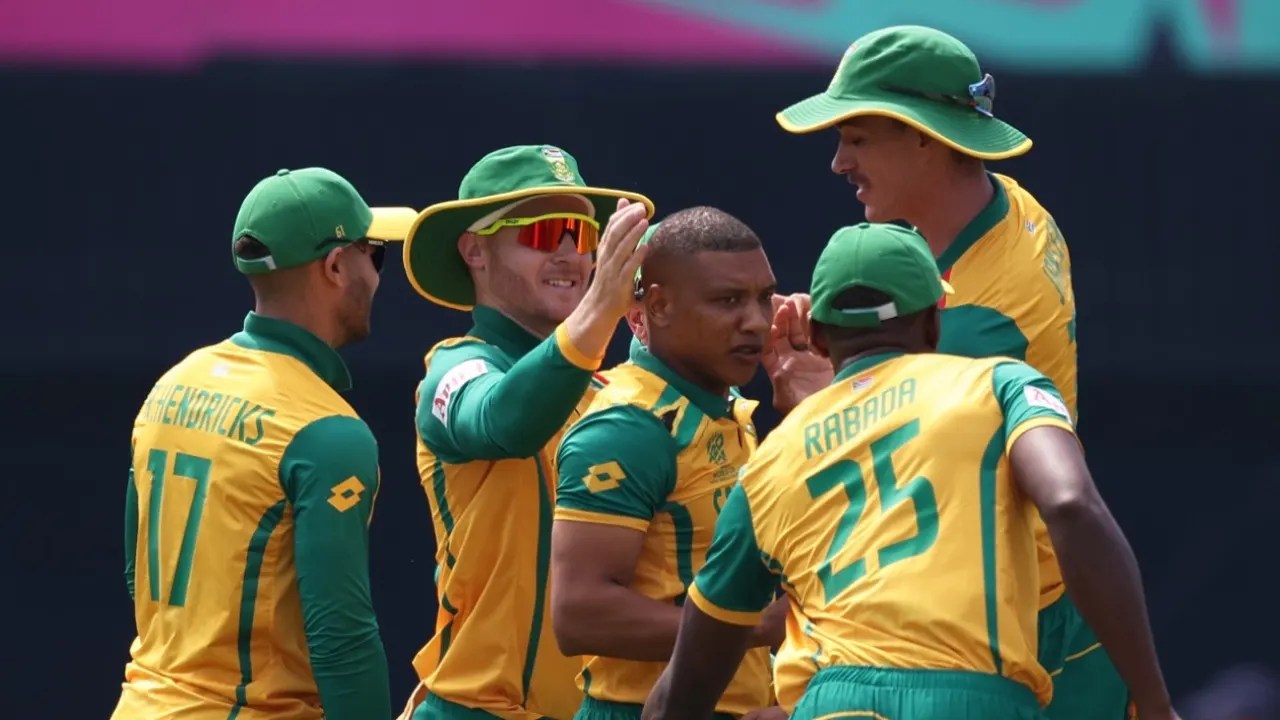
Lankan Cricketers Mauled by Travel-Toss Decision-Safs

Sidarth Monga, in ESPNcricinfo, 3 June 2024 where the title reads thus: “So unfair – Sri Lanka, given a raw scheduling deal, struggle to find their bearings”

Delayed flights, matches at different venues, hotels far from the game venues have made life difficult for Hasaranga’s team. Sri Lanka’s players were in a hurry to complete the media commitments after their first match of this T20 World Cup. That’s because immediately after the match, they had to rush to their hotel in Brooklyn, an hour-and-a-half away, pack, check out, and then make their 6pm flight to Dallas where they will be playing what is now a must-win match against Bangladesh. This after they had to wait for seven hours at the Miami airport to take their delayed flight to New York to play this match.

Continue reading

1 Comment

Filed under accountability, atrocities, centre-periphery relations, cricket selections, discrimination, disparagement, governance, life stories, meditations, performance, self-reflexivity, taking the piss, trauma, travelogue, world events & processes

A Classic Painting: Donald Friend’s ‘Reading’ of the Bandaranaike Legacy

https://thuppahis.com/2020/07/20/donald-friend-assessed-by-venerable-bhikkhu-dhammika-in-2003/Helene De Rosayro

This is an artwork seen at Retford Park, Bowral NSW,  hung on the wall of the residence of James Fairfax former owner of Fairfax Media. It is one of many paintings hung in his dining room where he had entertained many, including Heads of State and guests .

Continue reading

1 Comment

Filed under accountability, art & allure bewitching, australian media, British colonialism, citizen journalism, communal relations, cultural transmission, disparagement, heritage, historical interpretation, landscape wondrous, language policies, life stories, paintings, performance, politIcal discourse, self-reflexivity, Sinhala-Tamil Relations, slanted reportage, sri lankan society, taking the piss, the imaginary and the real, travelogue, unusual people, world affairs

Gross Ignorance displayed by USA’s Parliamentarians

Daya Gamage, whose chosen title runs thus: “US lawmakers ignorance of civilian casualties in Lanka’s war on terrorism”

Declaring that the government of Sri Lanka, while combating ‘Tamil Organizations’ which were fighting for a Tamil Homeland in the North-East, committed genocide against the Tamil people, a resolution was tabled in the US House of Representatives, on May 15, 2024, to coincide with the 15th anniversary of the conclusion of the LTTE’s terrorist war; it states, “Recognizing the hundreds of thousands of lives lost during Sri Lanka’s almost 30-year armed conflict, which ended 15 years ago on May 18, 2009, and ensuring nonrecurrence of past violence, including the Tamil Genocide, by supporting the right to self-determination of Eelam Tamil people and their call for an independence referendum for a lasting peaceful resolution”.

Continue reading

Leave a comment

Filed under accountability, american imperialism, atrocities, authoritarian regimes, centre-periphery relations, communal relations, demography, disparagement, doctoring evidence, Eelam, ethnicity, historical interpretation, legal issues, life stories, military strategy, patriotism, photography, politIcal discourse, power politics, prabhakaran, propaganda, security, self-reflexivity, Sinhala-Tamil Relations, slanted reportage, sri lankan society, suicide bombing, Tamil civilians, Tamil migration, tamil refugees, Tamil Tiger fighters, trauma, truth as casualty of war, unusual people, vengeance, war crimes, war reportage, world events & processes, zealotry

Why the US is no longer the indispensable nation …

Theodore K …. with the underlining in red imposed by The Editor, Thuppahi

On 25 May 2024, President Biden gave a speech to new graduates at West Point to prepare them for war. It was a delusional speech in which Biden attempted to assert the right of the US to control the world under the guise of meaningless platitudes such as the US is the “indispensable nation”, “the world’s only superpower”,”and “the leading democracy in the world”. All the evidence of US security, defence and foreign policy over the past 32 years shows these claims are false. Biden fails to recognize the reality of a changing world – a world that has moved on since 1994. US hegemony is declining. We now live in a multipolar world when the emphasis is on international democratization. The US has inflicted terrible damage to the world, especially over the past three decades due to the Neocons.

President Joe Biden delivers the commencement address for the U.S. Military Academy class of 2024, Saturday, May 25, 2024, in West Point, New York.
(Official White House Photo by Erin Scott)

Continue reading

1 Comment

Filed under accountability, american imperialism, centre-periphery relations, China and Chinese influences, disparagement, economic processes, ethnicity, governance, historical interpretation, life stories, Middle Eastern Politics, military strategy, politIcal discourse, power politics, psychological urges, self-reflexivity, truth as casualty of war, war reportage, world events & processes, World War Three?, zealotry

A Lament: Biased US Media Coverage of the Pro-Palestinian Protests at Columbia University

Mobashra Tazamal’s LAMENT from The Campus at Columbia University

“I am left with the understanding that to be Muslim at Columbia is to face extreme censorship of your language to appease an audience that doesn’t represent nor respect you. To be Muslim at Columbia is to be racially profiled and doxxed, beg for administrative resources and support, and still receive none. To be Muslim at Columbia is to face Islamophobia on campus—to be spat on and called “terrorists”—and receive no University acknowledgment or recognition. Instead, our experiences are interrogated, as administrators try to poke holes in our narratives, questioning whether they even happened, while others get seats at the table with the University President and the governor of New York, dedicated to making sure they feel seen, heard, and valued.

To be Muslim at Columbia is to have your community and peers be suspended, arrested, and brutalized by the New York Police Department for peacefully protesting the genocide of those who widely look and practice like us, and still being made out to be the aggressors.”

Continue reading

1 Comment

Filed under accountability, centre-periphery relations, discrimination, disparagement, education, ethnicity, governance, Islamic fundamentalism, landscape wondrous, life stories, Middle Eastern Politics, Palestine, political demonstrations, politIcal discourse, power politics, racism, religious nationalism, self-reflexivity, slanted reportage, trauma, truth as casualty of war, unusual people, war reportage, world events & processes