
Category Archives: British colonialism

The School Thombos in Dutch Ceylon: Their Purpose

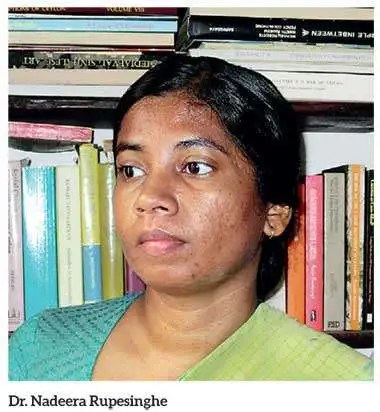
Bente de Leede & Nadeera Rupesinghe, whose article appeared in the  Law and History Review , Volume 41 , Issue 3 , August 2023 , pp. 501 – 521 …. DOI: https://doi.org/10.1017/S0738248022000499 ……. with the full title of the article being thus:  “Registering and Regulating Family Life: The School Thombos in Dutch Sri Lanka”

An Abstract: In eighteenth-century, colonial Sri Lanka, the Dutch church kept extensive registers of the local population. These “school thombos” contain individual registration of baptism, marriage, school attendance and death. This article argues that the school thombos reveal moral control over family life by the Dutch East India Company and the Dutch Reformed Church, while offering locals a legal and religious identity to employ in negotiating the Dutch colonial bureaucracy. These rarely studied registers shed new light on Sri Lankan family history and the practices of Dutch colonialism. What do they tell us about conjunctures of locals with colonial religion in eighteenth-century Sri Lanka? The school thombo was an instrument used to register and regulate family life, with specific functions and uses by different actors. This article explores the format, objectives and use of the school thombo. Why was the school thombo created and who were registered in these sources? What were the micro practices of drawing up the school thombo? The article is supported by several case studies that illustrate how the school thombo found its way into family life while demonstrating the value of written identities.
Continue reading →

Leave a comment

Filed under accountability, British colonialism, cultural transmission, demography, Dutch colonialism, economic processes, education, governance, heritage, historical interpretation, island economy, legal issues, life stories, modernity & modernization, politIcal discourse, self-reflexivity, sri lankan society, travelogue, unusual people, world events & processes

Caste Issues in Sri Lanka: A Partial Bibliography

Michael Roberts

I came across this undated list in my computer files — one drawn up quite sometime back, maybe 20 years back. Though I would seem to have been part of the enterprise, some spellings suggest the involvement of others; while Iranga Silva of the ICES Kandy also seems to have been one of the compilers. It will, nevertheless, interest some readers & scholars and could assisit budding researchers. The items or authors presented in black were part of the File I found. I have taken the liberty of deploying a colour scheme, with red indicating rare items that I have not seen/studied; blue some highly important studies; ….

Continue reading →

2 Comments

Filed under British colonialism, caste issues, centre-periphery relations, communal relations, cultural transmission, demography, discrimination, economic processes, ethnicity, governance, heritage, historical interpretation, island economy, landscape wondrous, life stories, politIcal discourse, revenue registers, sri lankan society, working class conditions

A Lifetime Addressing Nationalist Political Currents & Zealotry

Michael Roberts

As I attend a friend’s funeral every now and then in Adelaide or receive mail conveying sad tidings re good friends and other acquaintances, I am reminded that I will disappear into the dust in due course relatively soon. So be it.

However there has been a lifetime of endeavour in various fields. One range of activity has been in the academic realm investigating socio-political events and processes in the world …. with particular attention directed towards my home-country Sri Lanka’s affairs.

Continue reading →

1 Comment

Filed under accountability, anti-racism, atrocities, authoritarian regimes, British colonialism, Buddhism, centre-periphery relations, communal relations, cultural transmission, discrimination, disparagement, economic processes, electoral structures, ethnicity, governance, hatan kavi, historical interpretation, insurrections, Islamic fundamentalism, island economy, language policies, Left politics, legal issues, life stories, LTTE, martyrdom, modernity & modernization, Muslims in Lanka, nationalism, parliamentary elections, patriotism, political demonstrations, politIcal discourse, power politics, racism, religious nationalism, self-reflexivity, Sinhala-Tamil Relations, sri lankan society, suicide bombing, Tamil civilians, Tamil Tiger fighters, terrorism, truth as casualty of war, unusual people, vengeance, violence of language, war reportage, world events & processes, zealotry

The Story of Palestinian Christians from 1948 ….. Submerged & Sidelined

An Item in Journeyman Pictures on 19 March 2024 with this title: ”   “The Story Of Palestinian Christians | The Stones Cry Out (2013) … Full Film”  … an item referred to me by Dulip Karunaratne of Brisbane

In 1948 the history of Palestine changed forever, but little is ever said about the upheaval faced by its Christian minority. Christians have lived side by side with Muslims and Jews for almost two thousand years. An integral part of Palestinian society, they have shared in the events of recent history, yet their voices are seldom heard and worse: their existence often ignored.

A NOTE: by 19 March 2024  this TALE had received 109,306 views Mar 19, 2024

Leave a comment

Filed under accountability, anti-racism, arab regimes, British colonialism, centre-periphery relations, communal relations, economic processes, governance, historical interpretation, Jews in Asia, legal issues, life stories, Middle Eastern Politics, Palestine, politIcal discourse, power politics, racism, religiosity, religious nationalism, terrorism, trauma, truth as casualty of war, unusual people

SSC: The Studies in Society & Culture Project, 1992 et seq

SSC PAMPHLET PROJECT

Some of you may remember this project in Sri Lanka in the 1990s directed towards making selected academic articles on the history & politics of Sri Lanka available to the English-reading public at affordable rates. My unreliable memory indicates that the personnel behind this enterprise were myself, Ananda Chittampalam, Willa Wickramasinghe and our engine, so to speak, was the press operated by Haris Hulugalla.

Continue reading →

Leave a comment

Filed under accountability, anti-racism, British colonialism, caste issues, centre-periphery relations, chauvinism, communal relations, democratic measures, economic processes, education policy, ethnicity, fundamentalism, governance, heritage, historical interpretation, Indian Ocean politics, island economy, JVP, landscape wondrous, language policies, Left politics, life stories, modernity & modernization, nationalism, parliamentary elections, patriotism, photography, plantations, political demonstrations, politIcal discourse, press freedom & censorship, racist thinking, religious nationalism, Sinhala-Tamil Relations, sri lankan society, Tamil civilians, terrorism, violence of language, world events & processes, zealotry

Amiable Academic Reciprocities: Peebles & Roberts, 1970

Michael Roberts

The academic world and its scholarship is marked by cooperative work as well as animosities and rivalry – whether personal or based on political affiliations. The Sri Lankan scenario was/is no different. As I participated in this environment as a lecturer in History at Peradeniya University,[1] I was extremely fortunate in: (A) benefitting from a salubrious physical setting and a favourable arrangement of buildings and a super library; and (B) a bunch of dons who were as inspiring as amiable –so that the “Senior Common Room’ in the Faculty of Arts was not only a spot for invigorating tea, but also a site for the exchange of ideas.

Continue reading →

3 Comments

Filed under accountability, British colonialism, centre-periphery relations, communal relations, cultural transmission, education, ethnicity, historical interpretation, island economy, land policies, language policies, Left politics, life stories, modernity & modernization, nationalism, plantations, plural society, politIcal discourse, power politics, self-reflexivity, Sinhala-Tamil Relations, sri lankan society, teaching profession, transport and communications

The Magpies Cricket Club in British Ceylon: An Exclusive & Peculiar Enclave

Michael Roberts

MAGPIES_FLG_CRICKET_1923

I came across this unusual photograph in loose-leaf form amidst my files and lata pata in my study.  David Sansoni in Sydney has rendered it more presentable, while Mevan Pieris has provided me with critical information on this unusual club and pointed me to pertinent data in that classic work by SS Perera reproduced as The Janashakthi Book of Sri Lanka Cricket (Colombo 1999).

Continue reading →

1 Comment

Filed under British colonialism, centre-periphery relations, communal relations, cricket for amity, economic processes, education, Empire loyalism, governance, heritage, historical interpretation, island economy, landscape wondrous, life stories, patriotism, politIcal discourse, power politics, racism, S. Thomas College, self-reflexivity, Sri Lankan cricket, sri lankan society, unusual people

The Royal-Thomian: Yesterday & Today

Uditha Devapriya & Uthpala Wijesuriya, in https://scroll.in/where the title reads thus: “Cricket, class and baila: The many layers of Sri Lanka’s celebrated Royal Thomian sports encounter”

With an unbroken 145-year streak, the face-off between two of the island-nation’s oldest schools has become a cultural rite of passage for the nation’s elite.

Prefects leading a cheer at the 144th Royal Thomian, 2023. |

Uthpala & Uditha … in match fervour

Continue reading →

Leave a comment

Filed under accountability, art & allure bewitching, British colonialism, Colombo and Its Spaces, cricket for amity, cultural transmission, education, heritage, historical interpretation, landscape wondrous, life stories, modernity & modernization, patriotism, performance, politIcal discourse, propaganda, Royal College, S. Thomas College, Sri Lankan cricket, sri lankan society, tolerance

Roman Szechowycz: A Discerning Eye for Past & Present in the Gal Oya’s History

This is a presentation of an article entitled “The “Rock River” Story” by Roman W. Szechowycz in the Loris Magazine, Vol. 8 No. 6  December, 1960. Page 348. Its presentation here has been made feasible by my Aloysian pal KK De Silva.  I have underlined aspects of this account with highlights.

Let me stress here that Roman Szechowycz’s searching eye and mind leaves me amazed. This essay links the landscape to its medieval and ancient history and dwells on the history of Sinhalese civilization in revealing manner. 

Continue reading →

1 Comment

Filed under ancient civilisations, architects & architecture, art & allure bewitching, British colonialism, colonisation schemes, cultural transmission, economic processes, ethnicity, governance, heritage, historical interpretation, insurrections, island economy, Kandyan kingdom, land policies, landscape wondrous, life stories, nationalism, patriotism, politIcal discourse, sri lankan society, travelogue, unusual people, war reportage, world events & processes

“Colonization and Ethnic Conflict in the Dry Zone of Sri Lanka” – Article in 1990

Patrick Peebles in a refereed article in The Journal of Asian Studies, Vol. 49, No. 1 (Feb., 1990), pp. 30-55 …. which John De Silva in Melbourne, my Aloysian sporting mate, has worked on to make it feasible for me to present it in the Thuppahi format-style. The supporting Maps & Diagrams are presented via web-references, while the web-reference to the article as a whole is placed herein in pdf format.

Sri LANKA’S INABILITY to contain ethnic violence as it escalated from sporadic terrorism to mob violence to civil war in recent years has disheartened observers who had looked to the nation as a success story of social and political development. In retrospect, Sri Lanka lacked effective local institutions to integrate the society, and the Sinhalese elite relied on welfare and preferential policies for the Sinhalese majority to maintain power. These alienated the minorities and resulted in Tamil demands for a separate state. 1

Continue reading →

1 Comment

Filed under authoritarian regimes, British colonialism, centre-periphery relations, chauvinism, colonisation schemes, cultural transmission, demography, economic processes, ethnicity, governance, heritage, island economy, land policies, landscape wondrous, language policies, Left politics, life stories, plural society, politIcal discourse, power politics, racism, self-reflexivity, Sinhala-Tamil Relations, sri lankan society, Tamil civilians, transport and communications, working class conditions, world events & processes