Category Archives: accountability

Encountering Extremism: Biographical Tracks and Twists

Michael Roberts reproducing an article that originally appeared on the 19th March 2010 in https://sacrificialdevotionnetwork.wordpress.com/

One’s academic trajectories and journeys are invariably subject to vagaries and contingencies. The events and researches leading to my interest in “communal violence” and “zealotry” in the 1990s, and thereafter to what I have called ‘sacrificial devotion” (embracing the topics of “terrorism,” suicide bombers and Tamil Tigers),[i] were shaped by such contingencies. Since my web site will present some short essays on both these topics in the course of this month, let me detail some moments during my research work that resulted in the journeys that produced such outcomes.

In 1986-87 I spent about 14 months in Sri Lanka on research work during my sabbatical year. I was completing my research and writing on the history of Colombo in British times and the associated rise of a Westernized middle class-cum-bourgeoisie – work that resulted in the book People Inbetween (Sarvodaya, 1989).[ii] The island was still under the clouds cast by the attacks on Tamils in the southern parts of the island in July 1983. Following the British colonial lexicon this momentous and tragic set of events was generally described as the “1983 riots.” But such politically-aware scholars as Newton Gunasinghe and Shelton Kodikara were among those who depicted the event as a “pogrom.” This was a sensitizing revision that I accepted.

 Riots May 1958 – A Tamil passenger was taken out of the vehicle and beaten up

Continue reading

1 Comment

Filed under accountability, atrocities, British colonialism, centre-periphery relations, chauvinism, communal relations, cultural transmission, disparagement, economic processes, ethnicity, historical interpretation, landscape wondrous, life stories, meditations, modernity & modernization, photography, politIcal discourse, power politics, racist thinking, riots and pogroms, self-reflexivity, Sinhala-Tamil Relations, sri lankan society, Tamil civilians, the imaginary and the real, vengeance, violence of language, world events & processes

Sir Garfield Sobers: A Cricketing Genius

Rex Clementine, in The Island, 28 July 2021, where the title is “Cricket’s greatest is 85 today”

Sir Don Bradman called him the ‘greatest cricketing being to have ever walked the earth,’ and in Sri Lanka, he is considered as someone who shaped the careers of many players. Sir Garry Sobers turns 85 today. He was hired by the Board of Control for Cricket in Sri Lanka in 1980s and his influence benefited a young cricket team, enaabling them  to rub shoulders with formidable opponents of the game.

Continue reading

1 Comment

Filed under accountability, British imperialism, cricket for amity, cultural transmission, life stories, performance, world events & processes

Murderous Mayhem at a Rural Junction in North Western Lanka, 1983-1989

Liyanage Amarakeerthi, whose chosen title is “A Fatal Intersection: Three Small Shops in North  Western Sri Lanka that No Longer Exist” …. with highlighting imposed by The Editor Thuppahi

I was born and raised in a little community in Kuliyapitiya, a typical agricultural area with three small tanks (wewa), which watered paddy fields, within walking distance on three sides of my house. Of course, there were also three Buddhist temples, almost within walking distance from each other. It was a typical village in the North-Western province, a part of which is known as bath kooralee or ‘rice province’. Where there were no tanks or paddy fields there were coconut plantations, big and small. Not surprisingly, much of the ‘coconut triangle’ is also in this province.

Stephen Champion’s cover photo has been deployed here  by Thuppahi as an external intervention to highlight the scenario of the 1980s 

Continue reading

Leave a comment

Filed under accountability, atrocities, authoritarian regimes, chauvinism, conspiracies, economic processes, ethnicity, historical interpretation, insurrections, island economy, JVP, life stories, meditations, politIcal discourse, power politics, self-reflexivity, Sinhala-Tamil Relations, sri lankan society, Tamil civilians, terrorism, the imaginary and the real, trauma, vengeance, working class conditions, world events & processes

Columbathurai School for Disadvantaged Tamil Children

A THANK YOU NOTE addressed to MOHAN SAMARASINHE, 27 July 2021

Dear Respected Sir

I would like to extend my sincere thanks for coming forward to establish a Pre-school in our place and begin for the poor and needy. I highly appreciate your great service towards our people especially it is how important to see that a Sinhala  person has come forward to help Tamil  who have suffered so much since 1983. Even though we tried to get help from many people they didnt give us proper reply. Then only I requested Mr.Mohan Samarasingha. You accepted our request without any hesitation to support us to begin the school succesfully. You have already given nearly four hundred thousand rupees to renovate the building. Now the building has come up  yet we have to do little work to finish. So we hope to receive  your support in future too. Once again I extend my sincere thanks to your love and grate service towards us.

Thank you
Amitha
Colombuthurai
Jaffna.

Continue reading

Leave a comment

Filed under accountability, architects & architecture, charitable outreach, cultural transmission, economic processes, education, life stories, patriotism, social justice, sri lankan society, Tamil civilians, tolerance, unusual people, welfare & philanthophy, world events & processes

Scott Atran on Unconditional Commitment draws Reflections from Thuppahi Roberts

  ONE: Scott Atran: “The Devoted Actor Unconditional Commitment and Intractable Conflict across Cultures,” ... as introduced to Thuppahi by The Library of Social Science,in New York,with this abstract at journals.uchicago.edu/doi/pdf/10.1086/685495

Uncompromising wars, revolution, rights movements, and today’s global terrorism are in part driven by “devoted actors” who adhere to sacred, transcendent values that generate actions dissociated from rationally expected risks and rewards. Studies in real-world conflicts show ways that devoted actors, who are unconditionally committed to sacred causes and whose personal identities are fused within a unique collective identity, willingly make costly sacrifices. This enables low-power groups to endure and often prevail against materially stronger foes. Explaining how devoted actors come to sacrifice for cause and comrades not only is a scientific goal but a practical imperative to address intergroup disputes that can spiral out of control in a rapidly interconnecting world of collapsing and conflicting cultural traditions. From the recent massive media-driven global political awakening, horizontal peer-to-peer transcultural niches, geographically disconnected, are emerging to replace vertical generation-to-generation territorial traditions. Devoted actors of the global jihadi archipelago militate within such a novel transcultural niche, which is socially tight, ideationally narrow, and globe spanning. Nevertheless, its evolutionary maintenance depends on costly commitments to transcendental values, rituals and sacrifices, and parochial altruism, which may have deep roots even in the earliest and most traditional human societies. Fieldwork results from the Kurdish battlefront with the Islamic State are highlighted.

Continue reading

Leave a comment

Filed under accountability, art & allure bewitching, atrocities, authoritarian regimes, chauvinism, communal relations, Eelam, ethnicity, Fascism, heritage, historical interpretation, Indian religions, Islamic fundamentalism, jihad, landscape wondrous, life stories, LTTE, military strategy, performance, photography, politIcal discourse, religiosity, self-reflexivity, suicide bombing, Tamil Tiger fighters, terrorism, the imaginary and the real, trauma, unusual people, vengeance, war reportage, world events & processes

Remembering Manouri Muttetuwegama nee De Silva

ONE REQUEIM from Gamini Seneviratne , in The Island, 25 July 2021  v

In the early nineteen sixties when we met, politics here was in a kind of crisis. The Left parties were defining themselves and each other in terms that emasculated such terms as ‘socialist’ of the meanings assigned to them not just in the literature but in the practice of revolution. We had sama samaja ‘new’ or without qualification, united socialist, revolutionary socialist, Bolshevik Leninist, Stalinist aka Communist, Trotskyite, Maoist and, lurking not far behind them every nuance of Democracy and Socialism. In hindsight all that seems innocent given the skulduggery that came to be sort of enshrined in a “Constitution” that enjoyed the distinction of being totally unconstitutional / illegal. So much more has been done since that J R J, the breaker of laws and trasher of justice would be chortling in whatever shades he now resides.

Continue reading

Leave a comment

Filed under accountability, democratic measures, governance, heritage, legal issues, life stories, performance, politIcal discourse, press freedom, social justice, sri lankan society, the imaginary and the real, tolerance, unusual people, women in ethnic conflcits, working class conditions, world events & processes

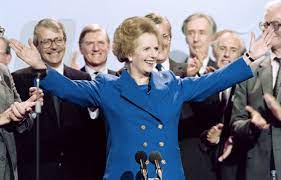
Lessons from Margaret Thatcher for Sri Lanka Today

Sanjeewa Jayaweera, in The Island, 25 July 2021, where the title is SRI LANKA’S ECONOMIC QUAGMIRE AND HOW MARGRET THATCHER SMASHED THE KEYNESIAN CONSENSUS”

For quite some time, experts in economics and finance not associated with any political party have been raising the red flag about the severe economic challenges that our country was facing. Unfortunately, the politicians have consistently ignored these challenges. Many in the private sector believed that commonsense would prevail and necessary course correction will occur, and the ship will sail smoothly.

Continue reading

1 Comment

Filed under accountability, centre-periphery relations, disparagement, economic processes, education, governance, historical interpretation, island economy, life stories, modernity & modernization, performance, politIcal discourse, power politics, self-reflexivity, sri lankan society, unusual people, world events & processes

Aiyyo! Aiyyo! — AIYYO penetrates the English Dictionary

2 Comments

Filed under accountability, conspiracies, cultural transmission, heritage, landscape wondrous, politIcal discourse, sri lankan society, taking the piss, travelogue, wild life, world events & processes

Nihal Seneviratne on Lanka’s MPs Through the Decades

Nihal Seneviratne in Riveting Q and A with Sharlton Benedict, 16 July 2021

A Clerk Reminisces: Nihal Seneviratne (former Sec. Gen. of Parliament) on #NewslineSL – 16 July 2021

PS: Nihal has always been known as “Galba” in my circle … and never posed as a Lord or Walauwwa Hamu. He was raised initially in my home town of Galle and it was pleasing to see his honesty of purpose in this set of exchanges….. The Editor Thuppahi

Leave a comment

Filed under accountability, cultural transmission, democratic measures, education, governance, heritage, historical interpretation, island economy, landscape wondrous, legal issues, life stories, parliamentary elections, performance, political demonstrations, politIcal discourse, power politics, reconciliation, self-reflexivity, sri lankan society, unusual people, world events & processes

Dissecting Robert Kaplan’s Jaundiced Reportage: “Orientalism” Savaging Lanka

Michael Roberts 

Robert Kaplan is a well-connected Jewish American author and journalist. As one he travels widely and chose to visit Sri Lanka as a newshound in mid-2009 just after the Sri Lankan government forces had vanquished the Tamil Tiger forces and rescued about 280-290,000 Tamil ‘civilians’[1] who had been deployed as a defensive barrier and bargaining chip for about 15-17 months by the LTTE as they, the Tigers, were forced into a west-to-east retreat in the northern Vanni.

Situation Map on 23rd December 2008 & then on  8th March 2009 

Continue reading

Leave a comment

Filed under accountability, atrocities, authoritarian regimes, centre-periphery relations, chauvinism, disparagement, doctoring evidence, ethnicity, historical interpretation, IDP camps, insurrections, landscape wondrous, life stories, LTTE, martyrdom, photography, politIcal discourse, power politics, prabhakaran, Rajapaksa regime, self-reflexivity, Sinhala-Tamil Relations, slanted reportage, sri lankan society, Tamil civilians, tamil refugees, Tamil Tiger fighters, trauma, truth as casualty of war, unusual people, vengeance, war reportage, world events & processes