

It is an advantage to be well-heeled and well-connected is it not?

Madapatha Uditha, in The Island, 17/18 June 2020, with this title “Searching for Irangani” …. while highlighting is an imposition from The Editor, Thuppahi
 Irangani Serasinghe turned 93 on Tuesday, June 9
If the reputations of actors can be compared to shares in a company, there’s no doubt that Irangani Serasinghe’s has always been oversubscribed: public interest in her career in not just the cinema and television, but also the theatre, has never been matched by an adequate level of quality in coverage by the media. There’s never been a shortage of articles, of course, and Kumar de Silva’s sketchy yet comprehensive portrait of her does establish the links between several aspects of her life and family and the career she eventually chose.
Filed under accountability, architects & architecture, British colonialism, centre-periphery relations, charitable outreach, cultural transmission, economic processes, education, female empowerment, heritage, historical interpretation, landscape wondrous, language policies, Left politics, life stories, literary achievements, patriotism, performance, politIcal discourse, self-reflexivity, social justice, Sri Lankan scoiety, teaching profession, the imaginary and the real, travelogue, unusual people, women in ethnic conflcits, working class conditions, world events & processes
An Anonymous Collective of Concerned Citizen Retirees**
)This Memorandum is meant to Assist the Sri Lanka Government to face the Economic, Fiscal Policy and Social impacts due to COVID-19. This is a PUBLIC SERVICE by us for the benefit of the entire Country & its People. We would like the widest possible public discussion & debate of this Memorandum. Please forward this Document to ANY and ALL the Email Addresses, FaceBook Accounts, News Websites that you have contact with.


(2) Those among you who can do so, please Translate this Memo into SINHALA and TAMIL and then fwd it to your friends, Sinhala & Tamil Newspapers & Websites. We are unable to operate the Sinhala or Tamil Keyboard.
Filed under accountability, centre-periphery relations, charitable outreach, coronavirus, economic processes, education, governance, legal issues, life stories, performance, politIcal discourse, power politics, rehabilitation, self-reflexivity, transport and communications, welfare & philanthophy, world events & processes
Darshana Sanjeeva Balasuriya, Daily Mirror, 17 June 2020, with this title
Following the opening of the Sri Lanka’s first underwater museum in Galle, the Navy is also planning to build two more underwater museums in Trincomalee and Tangalle.
 Following the opening of the Sri Lanka’s first underwater museum in Galle, the Navy is also planning to build two more underwater museums in Trincomalee and Tangalle.
Gus Mathews of England and Lanka
Thank you all for your condolences. Rajeewa was a good friend. When I last saw him in January, he was rather subdued and not his usual ebullient self. It didn’t strike me that he was depressed, but one never knows what lurks behind the mantle of normality.
 Rajeewa & Sanjeewa Jayaweera on tour in Vietnam in 2019
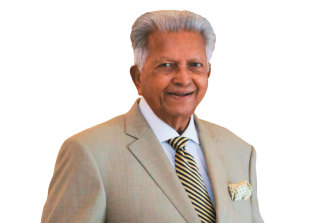
Benjamin Law, in The Age, 13 June 2020, with this title “Tea mogul Merrill J. Fernando: ‘I owe everything to Australian consumers’.”
Each week, Benjamin Law asks public figures to discuss the subjects we’re told to keep private by getting them to roll a die. The numbers they land on are the topics they’re given. This week he talks to Merrill J. Fernando. After high school, this businessman was one of the first local people in the then British colony of Ceylon to train as a tea-taster in London. At age 58, he launched his own brand of tea, Dilmah, in Australia. He is now 90.
Filed under accountability, australian media, British colonialism, centre-periphery relations, charitable outreach, commoditification, cultural transmission, economic processes, ethnicity, heritage, historical interpretation, life stories, politIcal discourse, religiosity, self-reflexivity, sri lankan society, travelogue, unusual people, welfare & philanthophy, world events & processes
Gurminder K. Bhambra, in New York Times, 12 June 2020, with this title “A statue was toppled. Can we talk about the British Empire? “
 The statue of the slave trader Edward Colston falling into the water on Sunday after protesters in Bristol, England, pulled it down.Credit…Keir Gravil, via Reuters
BRIGHTON, England — Tens of thousands of people protested in British cities in solidarity with those rising up against police brutality against black Americans in the past week. They highlighted similar injustices in Britain. Protesters in the city of Bristol drew connections between a white police officer’s killing of George Floyd, a black man in Minneapolis, and the histories of colonialism and the slave trade. On Sunday, they toppled the statue of Edward Colston, a 17th-century slave trader, trampled over it and rolled it into Bristol Harbor.
Filed under accountability, architects & architecture, British colonialism, British imperialism, centre-periphery relations, colonisation schemes, democratic measures, discrimination, disparagement, economic processes, education, European history, fundamentalism, heritage, historical interpretation, landscape wondrous, legal issues, life stories, performance, political demonstrations, politIcal discourse, power politics, self-reflexivity, slanted reportage, taking the piss, the imaginary and the real, transport and communications, travelogue, truth as casualty of war, world events & processes
Tissa Devendra in Island, 14 June 2020, where the title reads “Irangani Meedeniya and Ludowyk’s ‘DramSoc’ “

Madapatha Uditha’s interesting socio-cultural essay, ‘Searching for Irangani’, refers only very briefly to the University plays she adorned – 1947 to 1951. I am probably, the only survivor of the University, at Thurstan Road, who associated, briefly, with Irangani when she was fondly called ‘Chandy’ Meedeniya. As a student of English and French, I was an acolyte of Professor Lyn Ludowyk and, thus, gravitated to his Dram Soc and the unusual plays he produced. I was flattered when he slotted me into some minor role. It was both inspirational and educative to experience his interpretation of roles and gentle direction of undergrads who had never acted before.
ONE = DailyFT 12 June 2020. …. http://www.ft.lk/news/S-K-Wickremesinghe-no-more/56-701586
S.K. Wickremesinghe, a well-known and much respected figure both in Sri Lankan business and diplomatic circles and eldest son of Martin Wickremesinghe, has passed away on Thursday at the age of 94.

Ananda Wijesuriya, in Island, 12 June 2020, carrying this title “An administrator of skill, competence and understanding”

I had the occasion to read a full middle page article published in the Sunday Observer, I think in the late 60s, about the transport of a high-powered antenna brought to enhance the broadcasting capacity of SLBC. I was fascinated by the attention to details, explaining how the antenna, shipped as fabricated, transported from Colombo harbour all the way to Pidurutalagala mountain. I cannot remember whether the author was a journalist but it did identify who was the brains behind the meticulous planning, the then Chairman of newly incorporated SLBC – Neville Jayaweera. Later I again read about his exploits, with the change of the Government in 1970. He was removed from SLBC and being a CCS officer was posted to Anuradhapura, where during the 1971 JVP insurgency he rallied the police and a depleted army post and held the town against the attacks by the JVP.
 thuppahi