Author Archives: thuppahi

About thuppahi

Sri Lankan and Australian nationality; student of Sri Lankan society and politics; sociology of cricket;

The UNHRC and US Agenda in Critical Perspective

Raj Gonsalkorale in Daily FT, 25 February 2021, where the title runs thus:  “UNHRC What is the real agenda?”

The US Secretary of State Antony J. Blinken seems to give an indication as to what the real agenda behind his and his country’s support for this resolution. [the UNHRC one]. He speaks of “lack of accountability for past atrocities”. This statement implies that atrocities were committed if there is to be accountability for them.

US Secretary of State Antony J. Blinken

Continue reading

Leave a comment

Filed under accountability, american imperialism, centre-periphery relations, communal relations, doctoring evidence, foreign policy, governance, historical interpretation, life stories, LTTE, patriotism, politIcal discourse, power sharing, prabhakaran, self-reflexivity, Sinhala-Tamil Relations, social justice, sri lankan society, Tamil Tiger fighters, truth as casualty of war, UN reports, world events & processes

Gus Mathews on Western Power Jinks Worldwide

An Email Memorandum from Gus Mathews in London, c. 24 February 2021[i]

Michael, I am afraid there are no niceties in war. War is brutal as is the detritus of war. Unlike in a conventional war where the behaviours of troops are defined by the ‘Geneva Convention,’ it is not applicable in a civil insurrection especially one that attacks a legitimately elected democratic governmentNo country is bound to tolerate a secessionist group especially one that utilises terror to achieve its ends. History is replete with examples of civil wars that were prompted by secession. The most glaring example is the United States civil war. We also have an example from Vietnam and currently ongoing is the Korean debacle.

 Tiger dead collected by the SL Army  …. and Tamil civlians incl Tigers in civies leaving the final battle arena east  of Nandhikadal Lagoon 

 see Roberts, Tamil Person & State. Pictorial, Colombo, 2014 for details and more Pix

Continue reading

4 Comments

Filed under accountability, american imperialism, authoritarian regimes, British imperialism, communal relations, discrimination, disparagement, doctoring evidence, foreign policy, governance, historical interpretation, human rights, landscape wondrous, legal issues, life stories, LTTE, military strategy, politIcal discourse, power politics, propaganda, Rajapaksa regime, refugees, security, self-reflexivity, Sinhala-Tamil Relations, slanted reportage, sri lankan society, Tamil civilians, tamil refugees, Tamil Tiger fighters, the imaginary and the real, trauma, truth as casualty of war, unusual people, war reportage, world events & processes

Significant Cooperation between China and Singapore: Naval Exercises

Teddy Ng, South China Morning Post, 24 February 2021:  “China and Singapore start joint naval drills

  • Military cooperation with its neighbours to counter US pressure
  • Beijing aims to counter growing challenge from Washington to its claims of sovereignty in the South China Sea
Singapore naval servicemen wave to a departing Chinese frigate after a previous joint exercise. Photo: Xinhua

Continue reading

Leave a comment

Filed under authoritarian regimes, China and Chinese influences, economic processes, foreign policy, governance, historical interpretation, military strategy, politIcal discourse, power politics, security, transport and communications, world events & processes

Sunil Wettimuny. Stylish Opening Batsman — Felled Twice … Remains Indestructible

Alston Mahadevan:  “Sunil Wettimuny was a stylish opening batsman”

Continue reading

Leave a comment

Filed under accountability, Australian culture, cricket for amity, historical interpretation, landscape wondrous, life stories, performance, Sri Lankan cricket, taking the piss, the imaginary and the real, trauma, unusual people, world events & processes

Hocus-Pocus: Scrutinizing China’s Alleged Debt-Trap Diplomacy

, in South China Morning Post, 21 February 2021, with this title Debt-trap diplomacy’ a myth: no evidence China pushes poor nations to seize their assets, says academic

There is no evidence China aims to deliberately push poor countries into debt as a way of seizing their assets or gaining a greater say in their internal affairs, researchers and analysts said – countering Washington’s narrative that China was engaging in “debt-trap diplomacy”. Deborah Brautigam, a professor of international political economy at Johns Hopkins University and founding director of the China Africa Research Initiative (Cari), considers the “debt-trap” narrative a myth.

Continue reading

Leave a comment

Filed under accountability, authoritarian regimes, centre-periphery relations, China and Chinese influences, commoditification, disparagement, economic processes, foreign policy, governance, historical interpretation, Indian Ocean politics, island economy, landscape wondrous, legal issues, modernity & modernization, politIcal discourse, power politics, security, sri lankan society, the imaginary and the real, transport and communications, truth as casualty of war, world events & processes

A German Scholar’s Incisive Review of the Western Powers’ Treatment of Sri Lanka, 2009-21

Mathias Keitle, a German scholar from Statalendorf ++

Sri Lanka eliminated a dreaded terrorist group, with intricate global links, but receives little credit for it! Unlike elsewhere in the world, Sri Lanka has succeeded in resettling 300,000 IDPs (Internal Displaced Persons). There are no starving children for the NGOs to feed but this gets ignored!

Sri Lanka has avoided mass misery, epidemics and starvation, but the West takes no notice of this. Sri Lanka has attained enviable socio-economic standards for a developing country while eliminating terrorism but gets no
acknowledgement.

Continue reading

3 Comments

Filed under accountability, american imperialism, asylum-seekers, atrocities, British imperialism, centre-periphery relations, communal relations, democratic measures, devolution, economic processes, Eelam, ethnicity, foreign policy, governance, historical interpretation, human rights, IDP camps, Indian Ocean politics, insurrections, island economy, landscape wondrous, life stories, LTTE, military strategy, politIcal discourse, power politics, prabhakaran, self-reflexivity, Sinhala-Tamil Relations, sri lankan society, Tamil migration, Tamil Tiger fighters, the imaginary and the real, truth as casualty of war, UN reports, unusual people, war crimes, war reportage, world events & processes

About the Kāberi in Colonial Ceilao and the Fort of Galle

Michael Roberts

Writing in the Daily News in March 2019 and deploying the affirmation of a South African diplomat, Jeevan Thiagarajah has lamented the alleged fact that the VOC Black African used slave labour to build the imposing Fort of Galle – even asserting that “an estimated 15,000 Africans brought from Portuguese and Dutch colonies” worked on this project.[1] Thiagarajah is a political scientist and not a historian. His essay is clearly riding on the back of the movement “Black Lives Matter.” But in this populist move to earn kudos (as I speculate), he displays abysmal historical background and has failed to consult the many personnel next door to him in Colombo who would have served up solid data on the topic – notably Ashley De Vos (who has subsequently, albeit briefly, questioned Jeevan’s claim).

The Fort of Galle in the late 19th century

Storming of Galle fort in 1640

Continue reading

1 Comment

Filed under ancient civilisations, authoritarian regimes, British imperialism, caste issues, centre-periphery relations, cultural transmission, discrimination, disparagement, ethnicity, heritage, historical interpretation, Kandyan kingdom, landscape wondrous, life stories, military strategy, politIcal discourse, self-reflexivity, sri lankan society, the imaginary and the real, travelogue, truth as casualty of war, unusual people, working class conditions, world events & processes

Lord Naseby’s Scathing Review of the UNHRC Report on Sri Lanka

  Sri Lanka – UNHRC-Ref A/HRC/46/20- 12 January 2021  = Report of the Office of the United Nations High Commissioner for Human Rights on Sri Lanka’

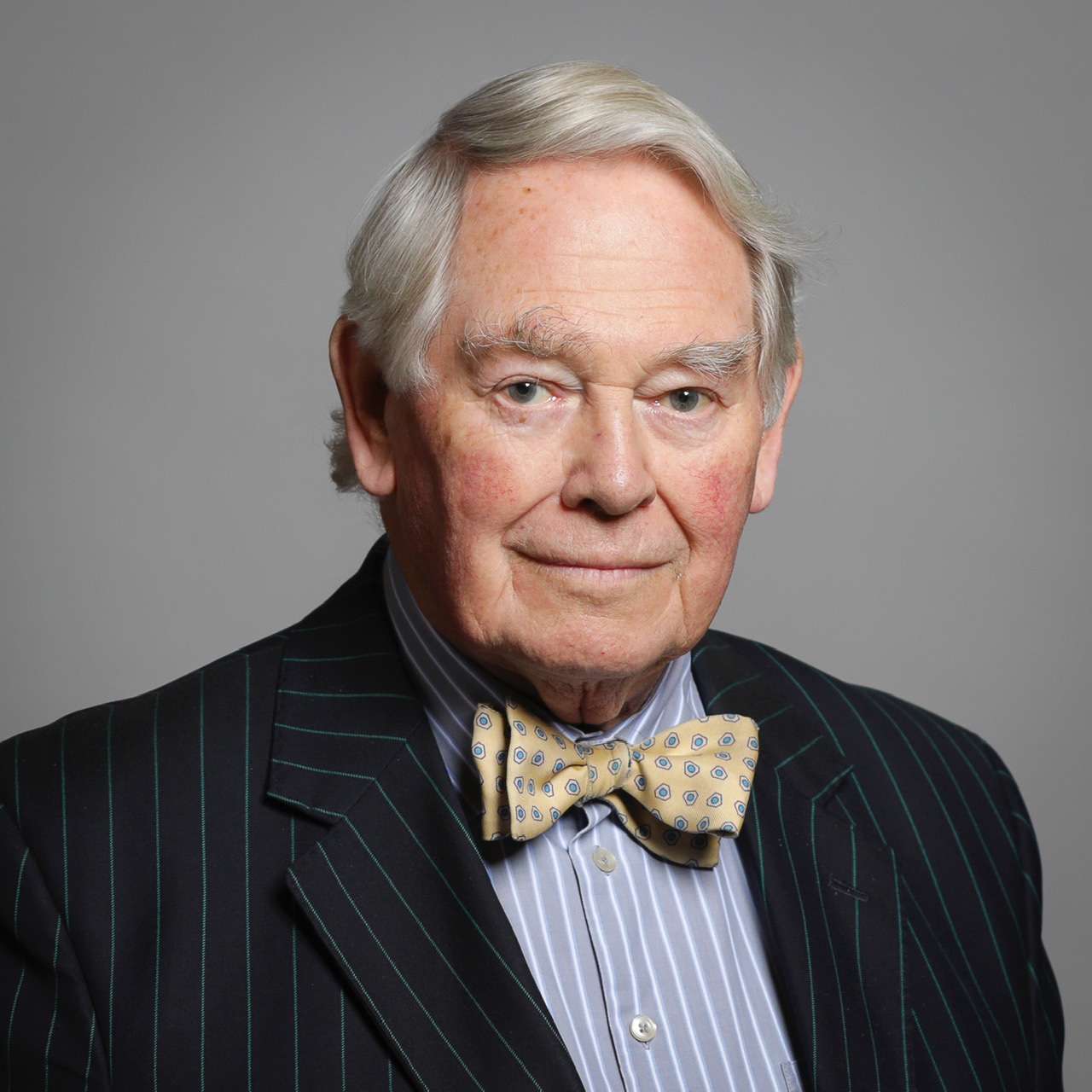
Assessment by the Rt. Hon. the Lord Naseby PC- Hon President All Party British-Sri Lanka Parliamentary Group. **++**

I have just finished a careful read of this extraordinary document which glosses over the full extent of the War when a group of vindictive terrorists tried to create a Tamil quasi neo-socialist revolutionary state by first murdering all the moderate Tamil leaders, then murdering President Premadasa and Prime Minister Rajiv Gandhi, as well as countless ministers, parliamentarians, civil society leaders and finally using extreme violence to wage war against the armed forces of the democratically elected Government of Sri Lanka. All in the name of Eelam.

Continue reading

Leave a comment

Filed under accountability, authoritarian regimes, centre-periphery relations, communal relations, disparagement, doctoring evidence, foreign policy, historical interpretation, human rights, island economy, legal issues, life stories, LTTE, military strategy, politIcal discourse, power politics, prabhakaran, security, self-reflexivity, Sinhala-Tamil Relations, sri lankan society, Tamil civilians, Tamil migration, Tamil Tiger fighters, terrorism, trauma, truth as casualty of war, UN reports, unusual people, vengeance, war crimes, war reportage, world events & processes

Shihan De Silva Jayasuriya’s Wide-ranging Work on Portuguese Creole and the Kaffir

Shihan de Silva Jayasuriya of the University of London has been researching the Portuguese in the East for over twenty years and has generated a significant number of studies on Portuguese Creole peoples, their life-style ad  languages in Sri Lanka and elsewhere. Her output of work has been as varied as commendable and I begin with a summary of one article dealing with “a nineteenth-century manuscript in Sri Lankan Portuguese Creole” because i am presently fashioning an article that refers to the work of Hugh Nevill on the Kāberi Hatana in order to ‘educate’ those who have touched on African slave labour at Galle without possessing any background information on the topic. This essay is in process and will appear soon….. Michael Roberts

Continue reading

7 Comments

Filed under ancient civilisations, British colonialism, centre-periphery relations, colonisation schemes, communal relations, cultural transmission, disparagement, education, ethnicity, heritage, historical interpretation, Indian Ocean politics, landscape wondrous, life stories, literary achievements, performance, photography, politIcal discourse, Portuguese in Indian Ocean, power politics, religiosity, self-reflexivity, sri lankan society, travelogue, unusual people, world events & processes

Vaccination against Covid: Ridiculous Priorities, Confusions … Et Cetera. Lankavey Neydha!

Sanjeewa Jayaweera, whose preferred title is “How Did MPs jump the Vaccine Queue?” …. Note that highlighting is the work of the naughty Thuppahi Editor

 mey Raja Kavudha?

It was so typical! None were too surprised when it was announced in the media that the 225 Members of Parliament (MP’s) were to be vaccinated against Covid19 ahead of many others whose exposure to the virus was significantly higher. A photograph of a government minister vaccinated at the Army Hospital was published in the media before this announcement. A few erstwhile cabinet colleagues justified this by saying the Minister had twice served quarantine time due to some of his close contacts being infected with Covid19. The presumption is that the Minister was unable to carry out his duties whilst being in quarantine?

Continue reading

1 Comment

Filed under accountability, centre-periphery relations, coronavirus, discrimination, disparagement, governance, life stories, performance, politIcal discourse, self-reflexivity, social justice, sri lankan society, trauma, unusual people, world events & processes