
Riyaz Aluher: “Mr Sunimal Silva: A Remarkable Teacher, A Lifelong Learner and an Inspiration to Generations of Royalists”
An inspiring personal story shared by his daughter Supuni who lives in USA, A STORY ADDRESSING THE QUESTION: “Are Sri Lankans afraid of speaking English? If so, why?A deeply personal story shared by the daughter of Mr Sunimal Silva, a respected Sinhala language teacher, swimming master, coach and primary school principal who served Royal College for three decades, offers an interesting perspective on the history of English education in Sri Lanka.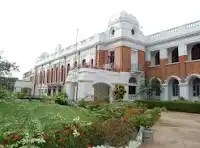
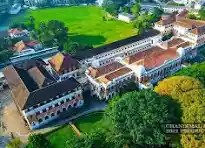
His story is not merely about learning a language. It is about how national policies, social attitudes and changing times can influence individual lives, and how determination can help a person overcome even the barriers created by an entire generation.
It is also the story of a dedicated teacher whose influence extended far beyond the classroom, touching the lives of generations of Royalists.
A childhood surrounded by English
Mr Sunimal Silva was born in 1943 in Mount Lavinia.
His father, born in 1901, was a gentleman who dressed in a tie, coat and hat and walked with a walking stick. Although his daughter never had the opportunity to meet her grandfather, she grew up hearing stories about him.
He was apparently highly proficient in both Sinhala and English and was also knowledgeable in astrology. His family belonged to a generation that commonly spoke English at home during the British colonial period.
Growing up in this environment, young Sunimal developed a strong foundation in English.
During his early school years, he excelled in the subject, winning class and grade prizes and even English speech competitions.
However, the social and political changes that followed the introduction of the Sinhala Only Act in 1956 would significantly alter the course of his relationship with the English language.
The impact of 1956
The Sinhala Only Act made Sinhala the sole official language of Ceylon, marking a major turning point in the country’s linguistic and political history.
A strong wave of Sinhala nationalism swept across the country. The importance of the Sinhala language and national identity was widely promoted, while English increasingly came to be viewed by sections of society as a language associated with the colonial past.
Sunimal, then a young student in Grade 7, was also influenced by this atmosphere.
His family was temporarily living in Wattala, where his father was employed, although their family home was in Mount Lavinia. He attended St Anthony’s College, Wattala.
He had previously gone to school wearing shoes, socks and a hat. With the changing social attitudes, he decided to remove his hat as part of embracing the new Sinhala cultural identity.
His father, too, experimented with traditional Sinhala attire, even having new outfits tailored with a satakaya. However, finding that the new attire did not suit him, he soon returned to his familiar Western dress.
The young Sunimal made an even more significant decision.
He decided that there was no longer any point in learning English and announced that he would stop attending English lessons.
Interestingly, he communicated this decision to his English teacher, Mr Dabra, in English itself!
He eventually sat for his GCE Ordinary Level examination without offering English as a subject.
His thinking reflected the attitudes that had taken root among sections of the younger generation at the time: why should Sri Lankans learn English when foreigners could learn Sinhala instead?
A reality check at Royal College
Sunimal pursued his Advanced Level studies in the Arts stream, attended a Teachers’ College and subsequently studied at Vidyodaya University.
His teaching career began at Gonakowila Vidyalaya in Ratmalana. He later served in several schools, including Kahatawatte Primary School, where he taught Veddah children, Anura Vidyalaya in Padaviya, Dehahuwa Boralukanda Junior School and Budugehinna Vidyalaya in Kekirawa.
After gaining experience in these schools, he returned to Colombo in 1973.
He was appointed as a Grade 7 class teacher at Royal College, Colombo 7.
This appointment brought him face to face with a reality he had not fully anticipated.
English was widely used at Royal College, even among the younger students.
Although Sunimal had grown up in an English-speaking family and had once excelled in the subject, he now found himself struggling with the language.
One particular experience remained memorable.
Whenever a student was absent, the child’s mother would send a short letter explaining the reason for the absence. These letters were written in English.
To his embarrassment, he could not easily understand even these simple messages.
He had to depend on a large English-Sinhala dictionary, checking the meaning of words one by one.
He soon realised that he could not continue this way. If he wanted to develop professionally and serve effectively in an institution such as Royal College, he had to regain his command of English.
The determination to start again
In a remarkable decision, Sunimal resolved to sit for the GCE Ordinary Level English examination as a private candidate.
He was already over 30 years old.
His primary motivation was to rebuild his confidence and prove to himself that he could overcome the challenge.
He wanted to be able to say:
“Yes! I have passed my O/L English!”
He dedicated three months to studying and successfully passed the examination.
From then onwards, he continued improving his English, gradually developing the confidence he had lost.
His daughter looks back at this decision with immense pride and admiration.
It was not simply an examination he passed. It was a personal victory over the limitations imposed by circumstances and the attitudes of the time.
A remarkable journey at Royal College
Mr Sunimal Silva went on to serve Royal College for 30 years, as part of a distinguished 40-year teaching career.
He eventually became the Principal of the Primary Section of Royal College.
He was remembered not only as a dedicated Sinhala language teacher but also as a swimming master and coach who played an important role in the lives of many students.
Through his teaching, guidance and involvement in school activities, he touched generations of young Royalists.
The man who once struggled to read a simple letter in English eventually reached a stage where he could communicate confidently with students, teachers and parents.
He even addressed gatherings from the prestigious Navarangahala stage in English.
What a transformation!
His journey stands as a powerful example of what determination, continuous learning and self-belief can achieve.
This story also has a personal connection to me.
I was a student at Royal College during the period Sunimal Sir served the institution. Although I did not have the opportunity to study under him, I later joined the same college as an English Language teacher.
During my years at Royal, I served as Assistant Principal and Senior Games Master, and had many opportunities to meet and interact with him, particularly after his retirement.
I still remember meeting him on several occasions at the Royal College swimming pool.
Those encounters gave me an opportunity to appreciate the respect and affection he continued to enjoy among students and members of the Royal College community.
He was not merely a Sinhala language teacher or a swimming master and coach. He was one of those teachers whose influence extended far beyond the classroom and whose contribution remained in the memories of generations of students.
It is always special to meet a retired teacher who continues to be remembered, respected and welcomed by the school community long after leaving active service.
Sunimal Sir was clearly one such teacher.
His journey also carries a message that resonates with me as an English Language teacher. A person’s ability to learn, improve and overcome challenges should never be limited by age, background or the circumstances of a particular generation.
I have great respect for teachers like him who dedicate their lives to educating children and leave behind memories that continue to live on long after their retirement.
Seven decades later, are we still facing the same challenge?
The Sinhala Only Act was introduced 70 years ago.
While strengthening Sinhala and recognising the rights of Sinhala-speaking citizens were legitimate concerns, the wider consequences of marginalising English and failing to maintain opportunities for multilingual education deserve serious reflection.
The effects of those changes were not limited to one generation.
Even today, many Sri Lankans find it difficult to speak English confidently, despite the widespread availability of English tuition classes.
For many, English remains a subject to be studied rather than a language to be used.
There is also a social problem.
People are often laughed at when they make mistakes while speaking English. This discourages them from trying.
We rarely laugh at someone for making a mistake in their mother tongue, but mistakes in English often become a source of amusement.
As a result, people become hesitant, lose confidence and avoid speaking altogether.
English should never be treated as an ornament or a measure of social status. It is simply a language and an important tool for communication, education, employment and access to knowledge.
We must create an environment where children and adults feel comfortable speaking English, even if they make mistakes.
After all, even native English speakers sometimes struggle to find the right words. Just as we occasionally hesitate when speaking Sinhala or Tamil, people can hesitate in any language.
The objective should not be to produce celebrities who speak perfect English or to turn every student into a public speaker.
It should be to help ordinary people communicate confidently in everyday situations.
At the same time, those representing Sri Lanka at diplomatic engagements and important international forums must have the language skills and preparation required for such responsibilities.
What can we learn from Mr Sunimal Silva?
His story carries a message that goes beyond English education.
He did not blame his circumstances. He did not allow his age to become an excuse. He recognised a weakness, made a decision and worked towards overcoming it.
A man who had once abandoned English became a confident user of the language in his professional life.
Yet he remained a proud Sinhala teacher who dedicated his life to teaching and nurturing young people.
There is an important lesson here, loving one’s mother tongue does not require rejecting another language.
We can be proud of Sinhala, Tamil or any other mother tongue while embracing English as a language of opportunity.
The answer to Sri Lanka’s English language challenge cannot simply be another tuition class. We need a change in attitudes, more opportunities for practical communication and, above all, a society that encourages rather than ridicules those who try.
Perhaps the best way to honour the journey of teachers like Mr Sunimal Silva is to ensure that future generations do not have to overcome the same barriers.
His daughter has shared this deeply personal story, but its message belongs to all of us.
Let us build a Sri Lanka where children are proud of their mother tongue, confident in English and never afraid to learn another language.
And let us remember Mr Sunimal Silva not only for the languages he taught or the students he coached, but also for the lives he touched and the example he left behind.
A great teacher may retire from service, but never from the hearts of the students whose lives he has influenced.
&&&&&&&&&&&&&&&&

