
Harold Pulse, whose title runs thus: “Our Gentle Giants Are Dying — Electric Fences Alone Cannot Save Them”
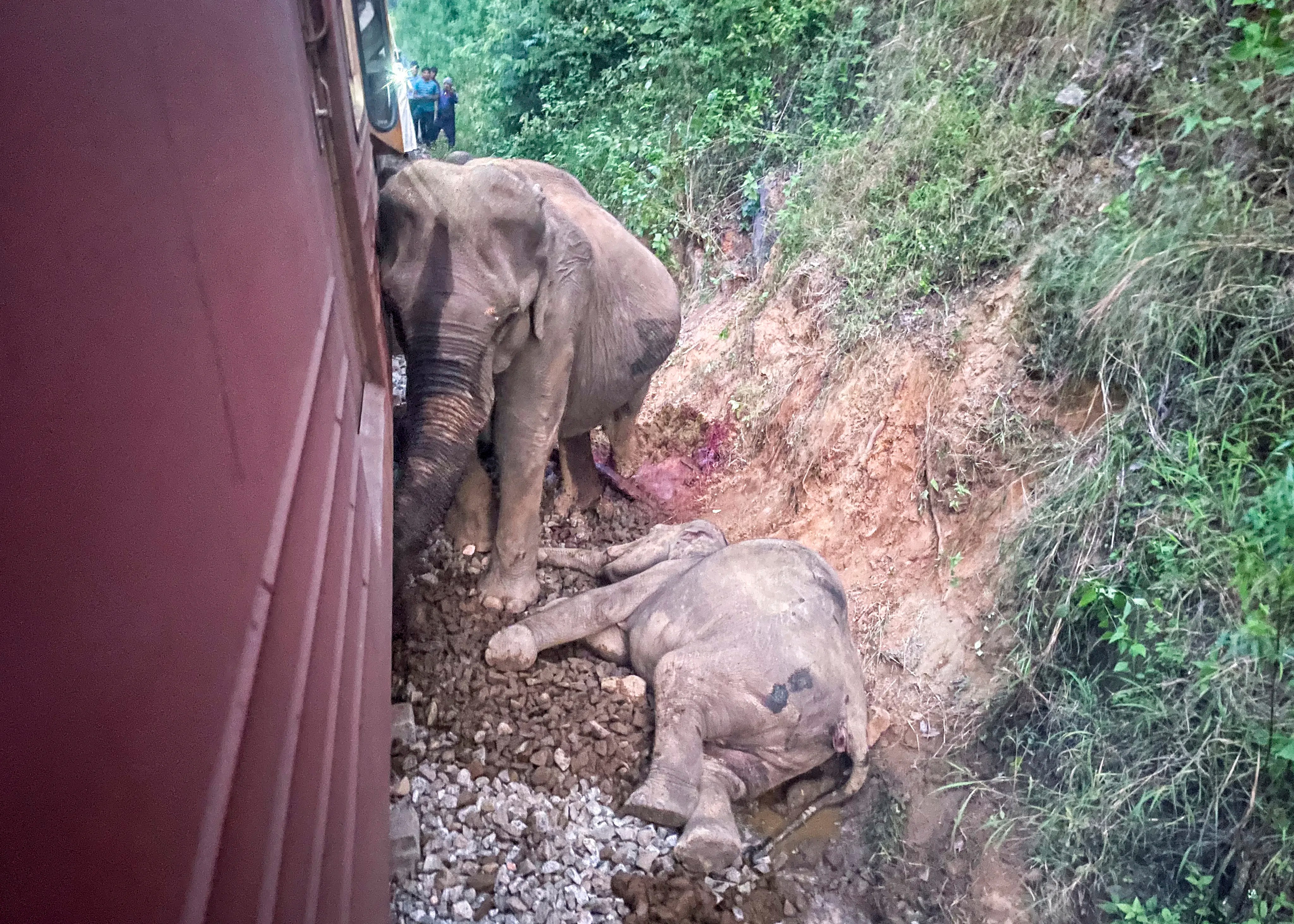
Why have successive governments failed to protect Sri Lanka’s wild elephants, except for stringing up electric fences to protect people who are occupying elephant territories?
Let us ask it plainly. The elephant is not a pest. The elephant is our greatest living treasure. It is our cultural icon, our religious symbol, our eco-tourism asset, and a highly intelligent, gentle being that has walked this island for thousands of years before us.
And we are killing more than one a day.
The Department of Wildlife Conservation figures tabled in Parliament last month are heart-breaking: 455 wild elephants killed in 2025, up from 388 in 2024, and 488 in 2023.
In the last ten years, 3,484 elephants and 1,195 people have died in this conflict.
Sri Lanka now has the highest elephant death rate in South Asia, despite having only 7,000 elephants compared to India’s 25,000. dailymirror.lk How did they die in 2025?
71 shot dead, 56 electrocuted by illegal fences, 46 crushed by trains, 20 blown up by hakka patas — explosive balls hidden in food. And one elephant in Mihintale was set on fire by men. This is not conservation. This is cruelty. ceylontoday.lk
Previous governments have taken the easy path: erect electric fences. Today we have 5,787 kilometres of electric fence — and spent Rs. 618 million on fences in 2025 alone. Yet 70% of our 7,451 elephants live outside protected areas, because their ancient migratory paths have been blocked by settlements, sugar plantations, and unplanned chena cultivation. colombotribune.comdailymirror.lk
A fence is not a policy. It is an admission of failure. When you block a traditional elephant corridor with a village and then put a fence around the village, where do you expect the elephant to go?
He will break the fence to find food and water, as his memory tells him to. Then he will be shot, electrocuted, or blown up.
The recent death of the majestic tusker Kavantissa in Galgamuwa — who died on October 16 after weeks of treatment for a gunshot wound — brought national grief.
But as scientist Dr Prithiviraj Fernando rightly said, Kavantissa’s death is no different in ecological terms from the death of any other of the 455 elephants.
We should not mourn only iconic tuskers. Every elephant matters.
What should past governments have done, and what must this government do now?
Protect and Restore Elephant Corridors: The National Action Plan for Human-Elephant Conflict (2023) already identifies corridors. It must be implemented, not shelved.
Stop issuing land in corridors.
Managed Electric Fences, Not Haphazard Fences: Fences must protect both — fence the corridor for elephants, not just fence villages against them.
Community-managed, properly maintained fences with solar power.
Stop Giving Firearms to Farmers: Distributing shotguns to protect crops has only increased shooting deaths.
Provide compensation for crop damage, insurance, and early warning systems.
Fix the Railway Death Trap: 46 elephants killed by trains in one year is shameful.
Speed limits, underpasses, and night-time elephant detection systems on the Habarana-Batticaloa and Anuradhapura lines are overdue.
Ban Hakka Patas with Real Enforcement: Manufacturing these explosives must be treated as a serious wildlife crime with jail time.
Elephants bring us millions in tourism. A single live tusker in Minneriya brings more foreign exchange in a season than a dead one ever will.
But more than economics, this is a moral question. The Buddha preached compassion to all living beings. How can a Buddhist nation allow this daily slaughter?
We did not inherit Sri Lanka from our ancestors to destroy its most noble creature. We borrowed it from our grandchildren. If we cannot protect the elephant, we do not deserve to call this a civilized country.
Fix the policy, not just the fence.
Next article: Government Moves to Strengthen Wild Elephant Protection Amid Rising Poaching Fears
————————————————————————————————
- —Insight for the Global Sri Lankan
- Harold Pulse is an independent editorial platform offering clear, thoughtful analysis on Sri Lanka’s political direction, governance reforms, diaspora concerns, and the evolving health landscape of Sri Lankans living abroad. Built for global Sri Lankans who value informed perspectives, it clarifies the issues shaping the nation’s future—from domestic policy shifts to the well-being of expatriate communities navigating new health systems, lifestyles, and challenges worldwide.
Harold Pulse speaks to Sri Lankans everywhere: those shaping change at home, and those building lives overseas while staying deeply connected to the island’s progress. It is a space where political clarity, community insight, and diaspora health awareness come together to support a stronger, more informed global Sri Lankan identity
———————————————————————————————–

