| Second, because kavadi troupes represent families or neighbourhoods, disputes over limited places in the troupe in the procession can mobilise competing local networks.
In Gandara and neighbouring areas, kavadi troupes are often organised along these lines, with participation continuing across generations. Being selected in the procession therefore brings more than the chance to perform. It gives the group prominence in one of the area’s main religious and cultural events.
For the figures named above, influence over troupe selection would offer a way to support particular groups and mobilise followers by helping them be selected in the procession. A disagreement over participation could therefore widen into a confrontation between rival local networks.
Third, competition to sponsor or influence troupes can turn the procession into a contest for local influence.
Those who finance or organise a troupe can present themselves as patrons who help a group secure participation. For figures associated with crime, this can turn illicit wealth into influence through an institution the community respects.
The dispute therefore appeared to concern more than troupe selection. It suggested a struggle over which alleged drug networks could exercise greater influence in the area. The July 21 shooting, which police suspected may have been linked to the troupe dispute, suggests that the rivalry may already have moved beyond verbal threats.
3. The Sinhala media discourse on the events
The Sinhala media discourse raised concern about the apparent reach of organised crime into respected areas of religious and community life.
Public anger was directed mainly towards the alleged criminal figures involved. The concern was not only that rival drug networks had threatened violence, but that they appeared able to influence participation in an important religious procession.
Sinhala commentary also drew attention to the ways in which involvement in a troupe — financing it, recruiting dancers, arranging transport or influencing selection — could let criminal figures present themselves as community patrons.
The wider unease was that organised crime had moved beyond narcotics routes and integrated itself into the institutions through which communities express faith, identity and belonging.
4. The impact on the government
The government had to balance two competing demands: acting on a specific security warning and allowing a highly regarded religious event to take place.
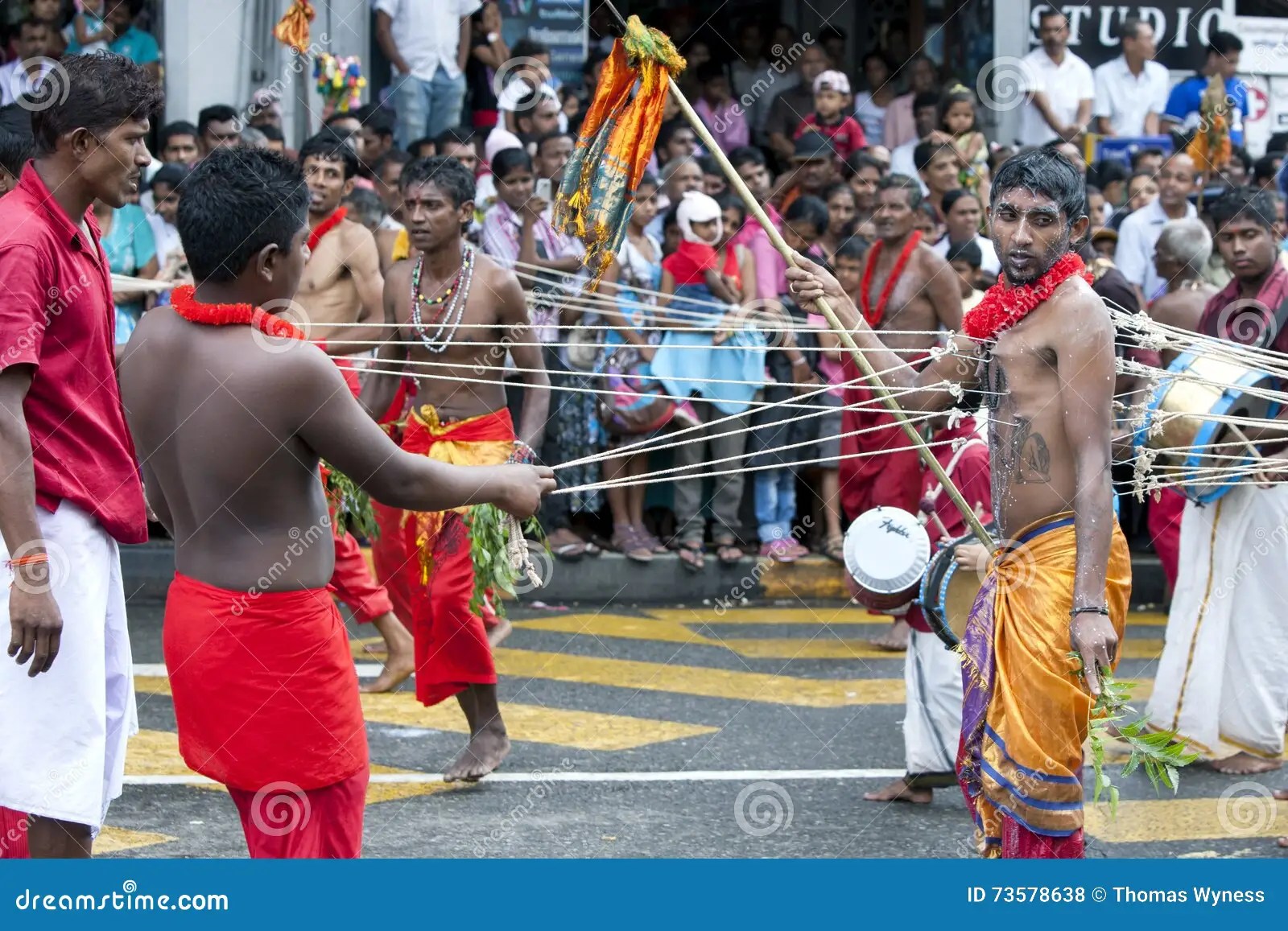
On July 25, the Matara district secretary, acting on the recommendation of the IGP, instructed the basnayake nilame to suspend the kavadi segment of the perahera. That order left the government balancing two competing demands: acting on a specific security warning to ensure safety and avoiding suspension of a long-standing and much anticipated annual religious festival.
Maintaining the suspension of the kavadi segment would have prioritised the police warning. The assessment was detailed and in writing, and it referred to the possibility of a violent clash and even a drone attack. In Sri Lanka, such warnings are viewed against the public memory of past failures to act on warnings: for instance, the 2019 Easter Sunday attacks and, more recently, the failure to respond adequately to warnings before Cyclone Ditwah.
At the same time, keeping the suspension in place would have disappointed the families and communities involved. It would also have been interpreted as a capitulation by government in the face of threats linked to criminal drug networks. The restrictions were set aside on July 27, and the kavadi proceeded the following day under heavy security.
This produced two political readings.
The criticism: Some questioned whether the scale of the security deployment was excessive. The government also came under ridicule for dispatching around 1,500 security personnel (see memes published in this issue of MPA).
The validation: The more prominent reading was that the government had prevented criminal groups from undermining the procession. The event went ahead under security, and the state remained visibly in control. This supported the wider government narrative of firm action against narcotics and organised crime.
This validation reading echoes the findings of the February 2026 Sentiment Survey by Verité Research. The survey found that 61.9 per cent of respondents believed the current government was doing a better job than previous administrations at reducing drugs and crime. This was its highest positive rating across the governance areas assessed, even above the rating for reducing corruption at 57.4 per cent and for improving public services at 51.4 per cent (see Figure 1).
Against this background, the secure completion of the procession was more likely to be read as evidence of effective handling than as evidence of failure. The government managed the immediate security risk without cancelling the kavadi. The larger test is whether it can reduce the criminal influence that made such a security operation necessary. |





Thanks for this post about kavadi-related item from VERITE RESEARCH in Colombo. I’m also interested in the author’s by-line. Is it possible for you to find out?
Since reading Prof. Gananath Obeyesekere’s study on kavadi religiosity among Kataragama devotees in 1978 decades ago (J. Asian Stud., 37: 457-476), I have been collecting published literature on the cross cultural significance of this kavadi dance art form.
Allow me to provide etymological snippets briefly. The Tamil word ‘kavadi’ is a combined word from two words (‘kavu’ = carry, and ‘thadi’ = stick). Here, the stick is a bowed arch, decorated with peacock feathers and other Lord Muruga (Skanda) related accessories. The Kavadi dance is a penance of devotees of Lord Muruga who have sworn a vow to go on a pilgrimage to a temple of his residence. In Tamil Nadu, it was to Palani Hill temple.
60 years ago, during my school days in Colombo, the word ‘Paal- Kavadi’ was prevalent as a slang in Tamil with sexual overtones. Short stories were written around the theme it implied. It referred to newly married men working in Colombo, visiting his spouse left in Jaffna, on a weekend by Yarl Devi train (usually once a month or two months) for conjugal pleasure, akin to a devotee with a sworn vow. The word ‘Paal’ (literally, milk) carries multiple meanings in Tamil, including sex.