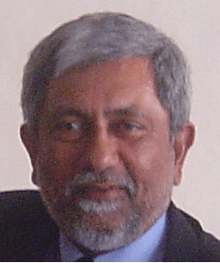
The Investiture of the Archbishop of Canterbury and Evangeline Kanagasooriam

ACNS staff

EVNAGELINE KANAGA SOORIYAThe Most Revd Justin Welby was today enthroned as the 105th Archbishop of Canterbury in a service that celebrated the diversity of the Anglican Communion. More than 2,000 people from around the world gathered in Canterbury Cathedral for a celebration marked by traditional elements of Anglican worship blended with contemporary music, vibrant Ghanaian dancing and African drums, a Punjabi hymn and a blessing spoken in French.

Guests included clergy from across the Church of England; and lay people including the UK’s Prince of Wales and Prime Minister David Cameron. A host of ecumenical guests were present including well-known US megachurch pastor and author Rick Warren, a friend of Archbishop Welby. All but one of the Anglican Communion Primates had travelled to Canterbury for the inauguration and the members of the Standing Committee were also present. The event saw the Archbishop installed as both Bishop of Canterbury—by, for the first time in history, a female Archdeacon—and Primate of All England. The Archbishop of Canterbury is also the spiritual leader of the worldwide Anglican Communion. Continue reading

1 Comment

Filed under heritage, life stories, tolerance, world affairs

Unusual Pictorials on Water, Coast and Land

Wonderman  Wonderman- walking on water at Punyelroo – on the Murray Pic by Alan Marriage

Pelican Pelican flotilla- Pic by Alan Marriage Continue reading

Leave a comment

Filed under Uncategorized

Prisoners of the Past — says Dayan Jayatilleka

Elmo Jayawardane, reviewing Dayan Jayatilleka: Long War, Cold Peace

DAYAN J in mountainsDr. Dayan Jayatilleka has not stopped at merely hitting the nail on the head; he’s gone a lot deeper! The man has taken a Black and Decker and drilled the skull of the reader and carefully pushed in 498 pages of faction and action (shameful and laudable) that relate to our “Long War” of almost three decades.

It is a timely publication too. The International Tambourine Men gathered in Geneva flaunting their lily white innocence in attempts to barbecue us. At least, we the ordinary habitants of this land should know how the cookie crumbled while we suffered the consequences of divisibility for thirty grisly years. Of course the ‘mea culpa’ rests with none other than the leadership. They festered the wound of ethnic divide and titillated political maggots that nearly annihilated us as a nation. We need to know some truths that have been gagged and swept under the carpets by both sides, ably assisted by the good Samaritans who sat on the third seat preaching negotiated peace. ‘Long War, Cold Peace’ is the answer. Dr. Dayan is punching hard, in a ring where he knows the rules, and he is not holding anything back. There is a good possibility that the book may take him to the mouth of a long menacing serpent in the political game of ‘Snakes and Ladders.” But then, with his historically valuable contribution in ‘Long war, Cold peace’, he will walk tall among people who really matter.  Continue reading

Leave a comment

Filed under accountability, Eelam, governance, historical interpretation, indian armed forces, Indian Ocean politics, Left politics, LTTE, mass conscription, military strategy, politIcal discourse, power politics, power sharing, prabhakaran, Rajapaksa regime, Sinhala-Tamil Relations, sri lankan society, truth as casualty of war, UN reports, unusual people, world events & processes

Eelamist Extremism in Tamilnadu on the road to NOWHERE

Kusal Perera, in The Hindu with different title: “Martyrdom does not help Sri Lanka’s Tamils”

I read with much sorrow that Vikram, 30, set himself on fire and died in a hospital. He was the second such victim of the new campaign in Tamil Nadu for Eelam. The first was Mani, 41, from Cuddalore who set himself ablaze on March 4. Mani and Vikram will be remembered only when the numbers have to be counted if there is another self-immolation. But wait, where do they want this Eelam established and for whom? The separate State cannot be for Tamil Nadu. It cannot be for anybody there, nor for those students who are fasting and agitating.

tAMIL PROTESTS IN T-NADU--APThe Dravida Munnetra Kazhagam (DMK) raised a separatist demand for a “Dravida Nadu” many decades ago, but had to give up its call as, after the creation of linguistic States, there were no takers for Dravidian separatism. In 1963, the DMK officially dropped its demand. Murasoli Maran had said, “I am Tamil first, but I am also an Indian. Both can exist together, provided there is space for cultural nationalism.” A leading theoretician in the DMK, Era Sezhiyan, had said it was more practical to demand a higher degree of autonomy for Tamil Nadu, instead of a separate State. Continue reading

1 Comment

Filed under democratic measures, Indian Ocean politics, LTTE, politIcal discourse, population, power politics, power sharing, Rajapaksa regime, Sinhala-Tamil Relations, sri lankan society, Tamil civilians, Tamil migration, terrorism, tolerance, truth as casualty of war, world affairs

Turning back the boats helps stem the Sri Lankan tide. Is this part of the solution for Australia?

Joe Kelly & Amanda Hodge, in The Australian, 28 March 2013

CO-OPERATION between Sri Lanka and Australia – and turning back asylum boats – is helping to beat people-smugglers, says Sri Lanka’s high commissioner Thisara Samarasinghe. As the Sri Lankan navy yesterday intercepted the first asylum boat to be picked up there for more than a month, the former naval chief said authorities had stopped more than 3000 asylum-seekers leaving on more than 60 boats last year. He defended the practice as safe and manageable.

Lankan as-seekers-march 2013 Thisara_Samarasinghe-WIKI Continue reading

Leave a comment

Filed under accountability, australian media, economic processes, Indian Ocean politics, life stories, people smugglers, politIcal discourse, population, Sinhala-Tamil Relations, sri lankan society, Tamil migration, tamil refugees, truth as casualty of war, welfare & philanthophy, world events & processes

Anticipated but avoidable extremisms, machinations, failures

Kalana Senaratne in The Island, 27 March 2013 where the title isGeneva and Bodu Bala Sena: Two Dimensions of a Crisis

There are tensions and schisms erupting, there is a crisis in the making. One dimension of this crisis is the unfolding diplomatic debacle: the Geneva-crisis. The group Bodu Bala Sena (BBS) represents, and gives expression to, another dimension. The emergence of both was to be expected; both, however, were avoidable.

Geneva-crisis: After Sri Lanka’s sui generis performance in 2009, the Geneva-story has been a depressing one to a lot of people. Sri Lanka’s support-base has dwindled drastically. India which, in 2009, opposed a Western-sponsored resolution against Sri Lanka stood up to remind the UN High Commissioner for Human Rights, Navi Pillai, where to get off. Today, India is endorsing Western or US-sponsored resolutions, and acknowledging in the process reports produced by Ms. Pillai. The contrast couldn’t have been more damaging than this. Continue reading

2 Comments

Filed under accountability, Eelam, fundamentalism, Indian Ocean politics, law of armed conflict, LTTE, Muslims in Lanka, patriotism, political demonstrations, politIcal discourse, power politics, power sharing, Rajapaksa regime, reconciliation, self-reflexivity, Sinhala-Tamil Relations, sri lankan society, Tamil migration, tolerance, truth as casualty of war, violence of language, world events & processes

A Paper Tiger? Sri Lanka and the UNHRC Resolution

Jegan Jeganaathan, courtesy of the Institute of Peace and Conflict Studies …… http://www.ipcs.org/

JEGANThe 22nd regular session of the United Nations Human Rights Council (UNHRC) has successfully adopted a US-sponsored Resolution on “Promoting Reconciliation and Accountability in Sri Lanka” by a vote of 25 in favour, 13 against and 8 abstentions. India voted in favour of the resolution for the second consecutive time.  However, India’s vote either in favour or against will hardly make any difference to the plight of Sri Lankan Tamils as the resolution will neither bind nor bite the Government of Sri Lanka (GoSL) on accountability to war crimes allegedly committed during the final phase of the war. Nevertheless, it had a ripple effect in Indian domestic politics when the DMK finally pulled out its support to the ruling United Progressive Alliance (UPA).  This article will critically appraise the spirit and letter of the resolution and the impact of India’s vote in favour of the resolution on Indo-Sri Lankan relations as well as its domestic constituency. Continue reading

Leave a comment

Filed under accountability, governance, Indian Ocean politics, LTTE, patriotism, politIcal discourse, power politics, power sharing, propaganda, Rajapaksa regime, Rajiv Gandhi, Sinhala-Tamil Relations, sri lankan society, world events & processes

Sahni slams Indian foreign policy at UNHCR sessions in Geneva

Ajai Sahni in article entitled Ambivalence, Opportunism, Deceit”

 ajaisahniOn March 21, 2013, at the 22nd session of the United Nations Human Rights Council (UNHRC) a United States-sponsored resolution on Human Rights (HR) violation in Sri Lanka was adopted with 25 countries, including India, voting in favour of the resolution in the 47-nation body. While 13 countries voted against, eight member-states abstained from voting on the resolution. The resolution urged the Government of Sri Lanka to implement the Government’s National Action Plan (NAP), including the recommendations of the Lessons Learnt and Reconciliation Commission (LLRC) addressing outstanding issues related to reconciliation, and to meet its obligations for accountability. Earlier, on March 22, 2012, UNHRC had adopted a resolution urging Sri Lanka to investigate alleged abuses during the final phase of war with the rebel Liberation Tigers of Tamil Eelam (LTTE), with 24 votes in favour, 15 against and eight abstentions. Continue reading

2 Comments

Filed under accountability, economic processes, historical interpretation, IDP camps, Indian Ocean politics, island economy, LTTE, military strategy, nationalism, politIcal discourse, power politics, reconciliation, rehabilitation, Sinhala-Tamil Relations, sri lankan society, terrorism, tolerance, truth as casualty of war, world events & processes

The Original Cave Man at PUNYELROO in Outback Australia

 Cave1 … captured by Alan Marriage

Leave a comment

Filed under accountability, ethnicity, heritage, historical interpretation, immigration, law of armed conflict, life stories, news fabrication, people smugglers, photography, pulling the leg, racist thinking, trauma, truth as casualty of war, wikileaks

India’s ‘Rotten Diplomacy’ in Sri Lanka Breeds Loathing in Lanka

Samanthi Subramanium in New York Times …. http://india.blogs.nytimes.com/2013/03/25/indias-rotten-diplomacy-in-sri-lanka-breeds-loathing/imes

stop Sri lankaAs a rule, living in Sri Lanka means encountering some of the friendliest people on earth. But since the civil war ended in 2009, it must be said, there is a startlingly consistent loathing for India, and a doubled such loathing for Tamils from India. This manifests all in the abstract, for the most part, but it is there nonetheless. Among other reasons, the Sinhalese are angry with India for funding and training the Tamil Tigers in their infancy, helping them become the monsters they became, and it is difficult to argue this point. The Tamils are angry with India for not intervening more decisively in the waning weeks of the war, to help stop the civilian carnage that occurred – and it is difficult to argue this point also. Continue reading

Leave a comment

Filed under accountability, cultural transmission, disparagement, ethnicity, Indian Ocean politics, life stories, LTTE, politIcal discourse, power politics, Rajapaksa regime, Rajiv Gandhi, Sinhala-Tamil Relations, sri lankan society, Tamil civilians, Tamil migration, terrorism, tolerance, truth as casualty of war, world events & processes