Collective Memorials, Anniversaries and Reflection … at Sites & Endings of Violence

Tissa Jayatilaka, courtesy of Groundviews, 14 August 2015, anniversary marking Japan’ surrender in World War Two … and thus its end. See Editorial Note at end. In GV the title reads “Sights of violence, sites of memory: Reframing the past.”

The subject of war, memory, memorials, memorialization and the violence of the state has been rekindled both domestically and internationally in recent weeks. Sri Lanka’s ongoing general election campaign has focused on our long and brutal internecine war and the need for reconciliation. Internationally  the 70th anniversary of the awful events in Hiroshima and Nagasaki has been observed. The Hiroshima Peace Memorial commonly called the Atomic Bomb Dome in Hiroshima is part of the Hiroshima Peace Memorial Park, designated a UNESCO World Heritage Site in 1996. It serves as a memorial to the atomic bombing of Hiroshima on 6 August, 1945. Over 70, 000 is reported killed instantly and a similar number is said to have suffered fatal injuries from radiation. Bombs were dropped on Nagasaki on 9 August, 1945. Nagasaki’s Atomic Bomb Museum was  built in 2003 around the  only structure left standing near the bomb’s hypocenter. Some locals opposed the building of the Atomic Bomb Museum while some others were for it. It is now 70 years since the dropping of atomic bombs by the United States. Postwar Japan limited its military to self defence. Now Prime Minister Shinzo Abe’ plans to loosen the restrictions on what Japan’s military can do. Opinion is divided as most in Nagasaki and Hiroshima continue to be supportive of peace and disarmament. According to the Mayor of Nagasaki Tomihisha Taue , there is ‘widespread unease’ about Mr. Abe’ s legislation that will alter the constitutional requirement limiting Japan’s military to self defence.

Kanchanaburi_cemetery Kanchanaburi cemetery in Thailand

E-PASS MEMORIAL Dawn at SL Army Memorial Elephant Pass 

24Tamil maaveerar at Vadamaratchchi Tuyilam Illam, 2004

Continue reading

Leave a comment

Filed under accountability, atrocities, Fascism, heritage, historical interpretation, landscape wondrous, law of armed conflict, life stories, LTTE, military strategy, nationalism, patriotism, pilgrimages, politIcal discourse, power politics, reconciliation, riots and pogroms, self-reflexivity, Sinhala-Tamil Relations, sri lankan society, terrorism, the imaginary and the real, tolerance, truth as casualty of war, vengeance, world events & processes, zealotry, Zen at war

Methodist Church of Sri Lanka ordains a New President & reaffirms Its Calling

Leo Fonseka,courtesy of The Island, 15 August 2015,

The sacred celebration and the installation service of the 12th President of the Methodist Church Sri Lanka will take place on the 18th of August 2015. A large gathering including the Officials & Representatives of the Sri Lanka Government, other religious dignitaries , Heads of Foreign Missions, Heads of churches in Sri Lanka & overseas , Roman Catholic Church and other Christian denominations will grace this occasion. The Methodist Church Sri Lanka has been in existence in Sri Lanka for the past 201 years and has contributed immensely to the country’s religious, spiritual, educational and social advancement. It‘s members come from all over the island and spread from Dondara to Point Pedro.

Rev ASIRI PERERARev Asiri P. Perera who hails from Moratuwa is the younger son of a former Methodist Minister late Rev. Theodore H. Perera and Mrs. Delicia Perera. Rev Theodore pioneered the Ministry of Healing in the Methodist Church Sri Lanka. Continue reading

3 Comments

Filed under British colonialism, cultural transmission, historical interpretation, life stories, modernity & modernization, plural society, religiosity, sri lankan society, teaching profession, welfare & philanthophy, world events & processes

Sri Lankan Elections: Gonsalkorale in One Corner vs Amanda Hodge in Other Corner

I. Amanda Hodge: Dirt files open on eve of Sri Lanka election,” in The Australian, 14 August 2015

Sri Lankan Prime Minister Ranil Wickremasinghe yesterday ­pre­dicted a “comfortable majority” for his United National Front in Monday’s crucial parliamentary elections. The confident call came as his once all-powerful rival Mahinda Rajapaksa faced allegations he paid millions of dollars to Tamil Tiger commanders to enforce a boycott of the 2005 polls.

RANIL - Sri Lankan Prime Minister Ranil Wickremesinghe in Colombo on August 13, 2015 --  AFP Ranil Wickremasinghe

Just seven months after Mr Rajapaksa’s shock defeat in January presidential elections by his former health minister Maithripala Sirisena, he is contesting the parliamentary polls with an eye on the prime ministership. With his legacy now marred by serious corruption allegations, the former president has been forced to campaign on his credentials as the leader who ended the three-decade long civil war. Continue reading

Leave a comment

Filed under accountability, governance, life stories, news fabrication, parliamentary elections, politIcal discourse, power politics, propaganda, Rajapaksa regime, slanted reportage, social justice, sri lankan society, the imaginary and the real, truth as casualty of war, vengeance, wikileaks

VOTE. Election Statements from Elmo and George

I. Elmo Jayawardena: “Wipe them off the walls”

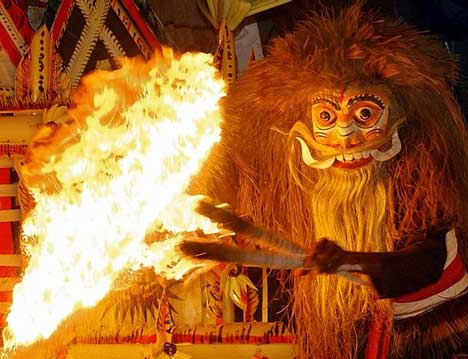
One morning I was out, Sunday the 9th, on some errands and saw a policeman walking with a gun accompanied by a young man in a grey jacket. Seemed like some serious ‘hora police’ business on the Sabbath. Crowds were following them and I too watched whilst jammed in traffic wondering which criminal they were hunting. “Sir, horu nemai Sir, boru karayo” (not thieves Sir, but liars) a passer-by answered my query with a deflated shrug. That was an election poster tearing team, the gun-toting constable and his grey companion. ‘You paste them, we tear them’ seemed like the silent slogan and I saw some ‘political pseudo-grinning’ getting torn and wiped off the walls at a cost of 75 million rupees. Yes, that is what the newspapers said, the Election Commissioner allocated that vast amount of money to remove the posters and cut-outs of the political leaders who are promising us a honey-laden moon and cheese-cakes to munch, and at that, as much as we can eat. devil-dancer Continue reading

Leave a comment

Filed under accountability, governance, historical interpretation, island economy, life stories, LTTE, politIcal discourse, power politics, propaganda, Rajapaksa regime, self-reflexivity, Sinhala-Tamil Relations, sri lankan society, Tamil civilians, the imaginary and the real, world affairs

Dr Sanjiva Wijesinha at Lone Pine, Gallipoli, 6 August 2015

SAJIVA at LONE PINE

Major (Doctor) Sanjiva Wijesinha of the Australian Army Medical Corps at Lone Pine Offensive Centenary Commemoration Service, Lone Pine Cemetery, Gallipoli Peninsula, Turkey on Thursday August 6, 2015. ……..Still photo by Roger Thiedeman (from ABC-TV Australia video footage)

Continue reading

4 Comments

Filed under Australian culture, australian media, British colonialism, cultural transmission, heritage, historical interpretation, landscape wondrous, life stories, military strategy, patriotism, self-reflexivity, unusual people, war reportage, world affairs

Aussie Cricketers in Asylum Mode in Britain

AUSSIES SEEK ASYLUMALSO SEE https://cricketique.wordpress.com/2015/08/08/clearance-sale-of-aussie-cricket-bats/ ….. for

Clearance Sale of Aussie Cricket Bats …. before they become ashes

August 8, 2015

Leave a comment

Filed under accountability, asylum-seekers, atrocities, economic processes, taking the piss, the imaginary and the real, world events & processes

Statistics!! GDP, 1981-2015, and an Election Forecast … Bite it or Strike it!

GDP Continue reading

1 Comment

Filed under Uncategorized

Why am I silent ! A Condemnation of Sri Lanka’s Politicians

Elmo Jayawardena, 

article_image Two hugely popular local entertainers prompted me to write this article. They are Nanda Malini and Sunil Perera. I need not say more; everybody knows them. Of course, we are all aware that the current flavour of the season is the August 17 election. If one listens to what is amplified and trumpeted by the lily white contestants, one may get the impression that there are no more saints left in heaven or wherever people with halos gather. They have all descended here to take part in the parliamentary elections with one intention––to serve the people. All that is missing is the presence of Pope Francis to canonise them all and make them official saints. That being the script, let me get back to my story and pause elaborating on the ‘holier-than-thou’ politicians of the two colours responsible for ruling us for 67 years. Avurudhu Dedahas Panseeyak is a thought-provoking song by the mercurial Nanda Malini. If you have not heard it just listen to it. By God! She says it all in the three minutes. Nanda Malini is no stranger where protest songs are concerned. Remember her song, Udangu Liyan banned by the powers of the yesteryear. The reason was that the haunting lyrics speak of a flower thrown in the path of a funeral procession in honour of a person who has died for the country. That was good enough for the politicians to ban the song! Continue reading

Leave a comment

Filed under accountability, democratic measures, doctoring evidence, governance, historical interpretation, life stories, meditations, politIcal discourse, self-reflexivity, social justice, sri lankan society

People Inbetween: Ethnic and Class Prejudices in British Ceylon

 Michael Roberts, courtesy of The National Trust — see http://www.thenationaltrust.lk/activities/PEOPLE-INBETWEEN-Ethnic-and-Class-Prejudices-in-the-British-Period.docx This is the elaborated and clarified text of a verbal presentation at the National Trust’s LECTURE SERIES in Colombo in late May 2015. I note here my appreciation of the National Trust for the manner in which it fosters interest in the history and culture of the land.

The National Trust’s brief was for me to present motifs from the book People Inbetween. The Burghers and the Middle Class in the Transformations within Sri Lanka, 1790-1960s, (Ratmalana, Sarvodaya Book Publishing Services, 1989) and more specifically its first chapter viz. “Pejorative Phrases: the Anti-colonial Response and Sinhala Perceptions of the Self through Images of the Burghers .” LORENZ

Many think People Inbetween is a history of the Burghers. Not so. It is multi-faceted. It describes (a) the rise of the middle class in British times, an influential force within which the Burghers were a critical element and a vanguard in the questioning of British rule; (b) the initial strands in the development of Ceylonese nationalism and (c) the development of Colombo into a metropolitan hub that became the island’s hegemonic centre. Continue reading

13 Comments

Filed under British colonialism, cultural transmission, disparagement, economic processes, ethnicity, heritage, historical interpretation, island economy, life stories, modernity & modernization, politIcal discourse, self-reflexivity, sri lankan society, world affairs

Galle Literary Festival Revived

Sunday Times, 3 August 2015

GLF back with a bang:  Festival Director Amrita Pieris steps up to the podium and with that the press conference announcing the Fairway Galle Literary Festival (FGLF) of 2016 is underway. Her speech is full of good news. Not only will FGLF be returning on January 13, 2016, after a hiatus that has lasted three years, but Shyam Selvadurai is also back as one of a team of international curators, counted among whom are founder Geoffrey Dobbs and well-known author Sebastian Faulks.

Galle Lit FestExciting collaborations: Festival Director Amrita Pieris addressing the news conference as other festival sponsors look on

Two new “mini-festivals” have been added in Kandy (January 9) and Jaffna (January 23), which will span two days each. An exciting collaboration with the Electric Peacock Festival will bring a series of live musical performances for festival-goers, while the announcement of the winner of the DSC Prize for South Asian Literature will make headlines around the world. Most exciting though for Amrita is perhaps the chance to celebrate Sri Lankan literature with the newly minted Fairway National Literary Award which will recognize the Best Novel in Sinhala, Tamil and English in conjunction with the Fairway Galle Literary Festival. Continue reading

Leave a comment

Filed under cultural transmission, heritage, landscape wondrous, life stories, literary achievements, performance, politIcal discourse, self-reflexivity, sri lankan society, the imaginary and the real, unusual people, world affairs