Courtesy of IMGUR, Ajantha Wickramasinghe and Chandra Wickramasinghe of Mahinda, Peradeniya & the World-at-Large
 Gandhiji at 10, Downing Street, 1931
Courtesy of IMGUR, Ajantha Wickramasinghe and Chandra Wickramasinghe of Mahinda, Peradeniya & the World-at-Large
Gandhiji at 10, Downing Street, 1931
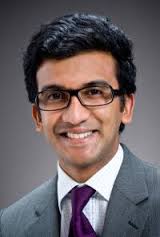
Asanga Welikala, courtesy of LSE web site and institution = http://blogs.lse.ac.uk/southasia/2015/09/01/sri-lanka-and-its-democratic-revolution-the-constitutional-challenge-of-unity-and-diversity/ where the is slightly different
 The results of Sri Lanka’s parliamentary election on 17 August can be seen as an endorsement of recent reforms to limit the powers of the executive presidency and strengthen democratic governance. But Asanga Welikala stresses that the political difficulties ahead must not be underestimated, particularly the challenge of finding a constitutional settlement that addresses ethnic and religious pluralism while maintaining the unitary character of the Sri Lankan state.
Sri Lanka concluded its most peaceful and orderly parliamentary election in living memory on 17 August, demonstrating how even a modest de-politicisation of state institutions, together with a political leadership that broadly respects the rule of law and civic freedoms, can significantly improve the quality of democracy almost overnight. The election result, which returned the government headed by President Maithripala Sirisena and Prime Minister Ranil Wickremesinghe, can be seen as an endorsement of the constitutional reforms enacted in April to significantly prune the powers of the executive presidency and strengthen democratic governance; and a mandate for further reforms to consolidate these and to address minority aspirations to devolution. Even though several other measures of the government’s 100-day programme were not successfully enacted, this can be welcomed as an important re-validation of the democratic revolution at the presidential election in January, which deposed the corrupt and autocratic Rajapaksa regime.

Filed under accountability, authoritarian regimes, constitutional amendments, democratic measures, devolution, economic processes, fundamentalism, governance, historical interpretation, legal issues, life stories, parliamentary elections, plural society, power politics, power sharing, Presidential elections, Rajapaksa regime, reconciliation, Sinhala-Tamil Relations, social justice, sri lankan society, tolerance, world events & processes
Asanga Welikala, courtesy of CONSTITUTIONNET, where the title is “Sri Lanka after the Elections: Challenges and Opportunities for Further Reform”
 photo credit: AFP, Getty Images
On 17th August 2015 Sri Lankans elected a new Parliament with a mandate for a series of far-reaching constitutional reforms, which if implemented successfully, could extensively change the institutional form of the Sri Lankan state. In the presidential election of 8th January 2015, the sitting President Mahinda Rajapaksa had suffered a shock defeat by the common opposition candidate, Maithripala Sirisena. The common opposition had fought that election with the promise of abolishing or substantially reducing the powers of the executive presidency and re-establishing an institutional framework for de-politicisation and good governance. The reforms that focused on limiting presidential powers and establishing the Constitutional Council along with various independent commissions were enacted in April by the Nineteenth Amendment to the Constitution, a democratic milestone, even though it fell short of a complete abolition of the executive presidency. By returning the minority government headed by President Sirisena and Prime Minister Ranil Wickremesinghe (which had served since January) as the largest party in the legislature in the parliamentary election, the electorate endorsed the Nineteenth Amendment and mandated the reform proposals outlined in the United National Front for Good Governance (UNFGG) manifesto. Sri Lanka’s constitutional reform process therefore looks set to continue for the foreseeable future. This raises a number of substantive and process challenges that are well illustrated by the two major constitutional restructurings undertaken by the last Parliament in the first and last six months of its life. Continue reading
Filed under accountability, constitutional amendments, democratic measures, governance, historical interpretation, legal issues, plural society, politIcal discourse, power politics, power sharing, Presidential elections, reconciliation, Sinhala-Tamil Relations, sri lankan society, tolerance, world events & processes
I. Nira Wickramasinghe: “It’s No Revolution …. more a revolt within the ruling classes, courtesy of the Indian Express, 23 August 2015
When Sri Lanka’s parliamentary election results were announced on August 18, there were few celebrations on the streets of Colombo. Many Sri Lankan citizens had voted for the incumbents simply for want of something better. On August 17, when they cast their votes to elect MPs, they had a clear choice: A return to the iron grip of former President Mahinda Rajapaksa, or a mandate to continue and consolidate the changes set in motion in January 2015.


A sizeable number of citizens (45.7 per cent) opted to continue the partial changes brought about by President Maithripala Sirisena and Prime Minister Ranil Wickremesinghe’s minority United National Party (UNP) government. The UNP-led coalition, the United National Front for Good Governance (UNFGG) won 106 seats. If this was a victory for change and a verdict that stymied Rajapaksa’s hopes of staging a Vladimir Putin-style comeback, it is not as resounding a victory as the UNP needed. Still, a UNP-led government — with Sirisena’s Sri Lanka Freedom Party as its coalition partner — with Wickremesinghe as PM was sworn in. Continue reading
Filed under accountability, american imperialism, citizen journalism, communal relations, democratic measures, devolution, foreign policy, governance, historical interpretation, Indian Ocean politics, legal issues, life stories, LTTE, parliamentary elections, plural society, politIcal discourse, power politics, Rajapaksa regime, reconciliation, Sinhala-Tamil Relations, sri lankan society, truth as casualty of war, UN reports, war crimes, world events & processes
Michael Roberts, courtesy of Colombo Telegraph, https://www.colombotelegraph.com/index.php/dishonest-reportage-by-ai-aussie-journalists-remains-unmasked-a-drama-in-two-acts/, 2 September 2015, where it is presented in Two Acts
On the 31st March 2011 a panel of lawyers appointed by Ban Ki-Moon submitted a review of the Sri Lankan War IV without ever visiting the island. The report was composed in the manner of a prosecuting team rather than a judicial assessment. It was as slipshod in its methodology as flawed in several of its conclusions. Nevertheless, it is widely cited in a number of quarters, quarters hostile to the admittedly distasteful Rajapaksa Regime and happy to have any cane to beat up their activities.
A headmaster wielding a cane must have judiciousness on his side. Moral crusaders such as, say, Amnesty International must adhere to ethics in presentation and quotation. But, as it happens, the last four years have seen blatant dishonesty in quotation as well as interpretation.
Though aware that the LTTE personnel were often fighting without wearing uniforms and that it was well-nigh impossible to differentiate between “civilians” and “soldiers” in some situations, the UNPoE proceeded to this conclusion in one of its key segments: “a number of credible sources have estimated that there could have been as many as 40,000 civilian deaths” (para 137 on page 41).
What has transpired since? Take one early instance: Amnesty International substituted “credible” allegations with “credible evidence” when quoting this report. ‘A report submitted to UN Secretary-General Ban Ki-Moon on 12 April 2011 by the Panel of Experts he appointed to advise him on accountability issues in Sri Lanka “found credible evidence, which if proven, indicate that a wide range of serious violations of international humanitarian law and international human rights law was committed by both the Government of Sri Lanka and the LTTE, some of which would amount to war crimes and crimes against humanity” (from one of their reports as quoted by Harshula in Groundviews in 2011).
 Fig. 1a – from TamilNet, 9th May 2009 … is typical of the crowded scenes displaying the difficulties faced by the Tamil peoples trapped in the Vanni Pocket and thereafter within the Last Redoubt on the north eastern shoreline.
 Figs. 2 & 3 from TamilNet …Injured and ill at makeshift clinic or hospital. For other snapshots of death & grief, see Roberts, Tamil Person & State. Pictorial, 2014: Figs. 84-88. In line with LTTE policy as outlined by Pulidevan (see quotation in the text below) the Western media circuit and Western observers in Colombo were fed exaggerated and/or concocted reports of shellfire hits on hospitals and widespread casualties. There can be no doubt that civilian casualties occurred as a result of SL Army shelling and the sporadic aerial strikes. The issue is: HOW o work out the numbers and to decide on proportionality in terms of the context set up by the LTTE’s refusal to let the people (those who wished to) leave. On this issue, see IDAG 2013 and Noble 2013. Note that in a recent communication PK Balachandran (Indian Express) said this in passing: “Towards the end of the war, when civilians were massed into a very small place, no shelling was resorted to but ground operations were going on day and night mopping up the remnants of the LTTE.”
Filed under accountability, atrocities, australian media, authoritarian regimes, disparagement, doctoring evidence, economic processes, gordon weiss, historical interpretation, Indian Ocean politics, landscape wondrous, legal issues, life stories, LTTE, military strategy, news fabrication, patriotism, politIcal discourse, power politics, propaganda, Rajapaksa regime, self-reflexivity, Sinhala-Tamil Relations, slanted reportage, sri lankan society, Tamil civilians, tamil refugees, the imaginary and the real, truth as casualty of war, UN reports, vengeance, war crimes, war reportage, wikileaks, world events & processes
 Asanga Welikala, courtesy of South Asian History and Culture, 2015, vol. 6/5 where one finds Welikala’s review of A Political Legacy of the British Empire: Power and the Parliamentary System in Post-Colonial India and Sri Lanka, by Harshan Kumarasingham, New York and London, I.B. Tauris, 2013, 297 pp., (hardback), ISBN 978-1-78076-228-9. [Special lower priced South Asia edition (2014) available from Viva Books: http://vivagroupindia.com/frmBookDetail.aspx?BookId=10884&Status=N%5D
The comparative study of India and Sri Lanka – the only two uninterrupted post-colonial democracies in South Asia – makes for promising investigations in any branch of the social sciences including comparative constitutional law and politics. The convergences and the divergences in the two countries’ constitutional forms and traditions, the character of their democracies, their trajectories of post-colonial nation-building, the nature of the state, the contrasting ways in which they have responded to the challenges and opportunities of constitutional modernity, and for lawyers especially, the functioning of the two common law Supreme Courts, yield insights that are relevant far beyond South Asia. From the point of view at independence from the British Empire, the one is an improbable success as a secular, pluralistic federation and constitutional democracy; the other was the most promising prospect among the decolonising states which nonetheless deteriorated into conflict, authoritarianism and ethnocracy. The Indian republic rejected the monarchical forms of the British inheritance early, while ardently embracing its liberal democratic substance, whereas Sri Lanka, much later, repudiated both.
Filed under British colonialism, constitutional amendments, cultural transmission, democratic measures, devolution, governance, historical interpretation, Indian Ocean politics, legal issues, modernity & modernization, parliamentary elections, plural society, politIcal discourse, Sinhala-Tamil Relations, sri lankan society, world affairs
 Simon Jenkins, in The Guardian, where the title is “Refugees: this is the human tide the west doesn’t want”
The global crisis engendered by people fleeing war seems unstoppable. But open borders carry an unacceptable political price for national governments Who now cries, “Give me your tired, your poor, / Your huddled masses yearning to breathe free, / The wretched refuse of your teeming shore”? We stand appalled as boatloads of refugees wash up on the beaches of the northern Mediterranean. Men, women and children scramble up rocks and plead: “Is this Europe?” We arrest the traffickers, yet aid their task with rescue and shelter for their clients. We know this only adds to the flow, but in truth we have no clue what else to do.
 Syrians force their way through border fences to enter Turkish territory illegally on 14 June. ‘Is it nemesis for Europe’s history of economic supremacism? It is even stoppable?’ Photograph: Bulent Kilic/AFP/Getty
This week the UN declared 2014 the worst year since records began for refugees: 55 million people worldwide were driven from their homes by force. Of those on the move, 40,000 have reached Italy through Libya this year and 30,000 have reached Greece. Continue reading
Christina Lamb, courtesy of The Sunday Times & The Australian, 1 September 2015, where the title is “Europe’s asylum-seekers form a human tide of desperation

It took perhaps an hour for them to die. The children would have suffocated first: the baby girl of around 18 months, the three boys aged about eight to 10, watched by their anguished mothers, helpless to give them air inside the hot, sealed truck. By the time it crossed the border from Hungary into western Europe where the asylum-seekers must have hoped for a new life, all 71 were dead: 59 men, eight women, four children. The Austrian police who found them said their bodies were piled one on top of the other inside the vehicle as if they had tried to climb up. With four bodies for every square metre, they had been so desperate to get air that the side of the truck was bent out of shape.
 Blankets hide the chicken delivery truck in which 71 people, believed to be Syrian, suffocated in Austria last week. Continue reading
Gayle Bartholomeusz

SEE http://www.burghersuk.com/index.html ..… And thank you for visiting ‘Burghers In The UK‘, the website which celebrates and plays tribute to the lives, contributions and adventures of Ceylonese Burghers in the United Kingdom. Ceylonese Burghers were once a thriving and vibrant community in Ceylon (renamed Sri Lanka in 1972) for over 500 years. They are now scattered around the globe mainly in English Speaking countries and on the brink of extinction.
Burghers who came to the UK since Ceylon achieved Dominion Status in 1948 have, up to now, been an invisible group of people unrecorded by data recording agencies and their lives and contributions undocumented. The Heritage Lottery Fund and ‘Burghers In The UK ‘ are changing this beginning in 2014 initially, by conducting interviews with 20 older Burghers and capturing visual and written information which demonstrates the uniqueness of the Ceylonese Burgher. Materials will be archived at the Harrow Museum. Continue reading
 A. R. Venkatachalapathy, courtesy of South Asian History and Culture 2015, Vol.6/4, pp. 510-12…. reviewing The Past Before Us: Historical Traditions of Early India, By Romila Thapar. Harvard University Press. Cambridge, Mass. 2013. pp. xvii+758. Maps, tables, bibliography, index.
Marx, following Orientalists of his times, famously declared that India had no history. No history, in the orientalist discourse, meant that not only was there no history writing but there was no history to be written about. Since the time of the nationalist movement Indian historians have been grappling with this question and making various claims. The present Chairman of the Indian Council of Historical Research (ICHR) appointed by the Hindu nationalist BJP government has now declared that the Ramayana and Mahabharata are historical texts!
 Romila Thapar, arguably India’s greatest living historian, has pursued both historical and historiographical concerns in her long and productive career spanning more than half a century. Over the years she has tackled the question of the existence or otherwise of historical consciousness in early Indian society. Her popular radio broadcast on this subject, delivered as the Vallabhbhai Patel lectures in 1972, continue to be in print (Past and Prejudice). In these lectures Thapar not only interrogated Orientalist notions of Indian society but also made an epistemological distinction between ‘the past’ and ‘history’. Many long essays on the subject have appeared since, and the present volume, with the alluring and suggestive title of The Past Before Us sums up a lifetime’s work on the nature of historical knowledge in what can be termed pre-Islamic (a term she of course eschews) India. This book is unlikely to be surpassed in the near future, and will hopefully trigger further work. Continue reading
 thuppahi