Dharmasena Pathiraja takes to the Pen on Sinhala Theatre

Item in Sunday Times, 27 August 2017, entitled “Dr. Pathiraja presents three books on theatre”

The veteran film maker Dr. Dharmasena Pathiraja is hardly known to the present day generations as a dramatist but today it is revealed that the early stage of his career as an artiste was committed to the stage theatre of Sri Lanka. Why we say this is that he has produced several theatrical texts in the 1970s and today the stage has been set to launch some of those early works by him on the Sinhalese theatre very soon. Continue reading

1 Comment

Filed under art & allure bewitching, cultural transmission, education, female empowerment, heritage, Indian traditions, meditations, performance, religiosity, self-reflexivity, sri lankan society, unusual people

The Special Task Force as an Arm of the Police

Pioneers of the STF”

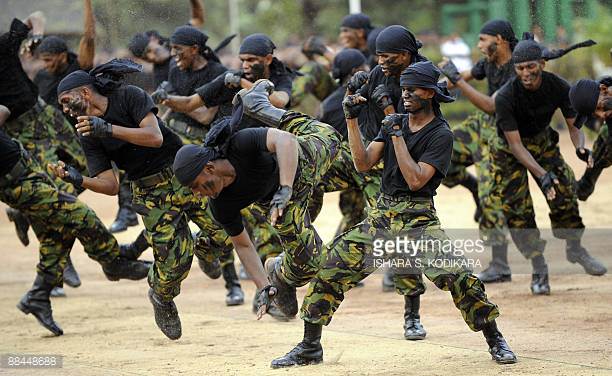
The Special Task Force (STF) is actually a police organisation, but in scope and structure is flavoured by military features. It is therefore a blend of both disciplines and as a product has been a blessing to the police since it’s inception in the mid 1980’s because of it’s proven record against terrorism and lawlessness. It is now the pride of the police. They owe a debt of deep gratitude to late Ravi Jayewardene for he was it’s founder and author.


Continue reading

Leave a comment

Filed under accountability, governance, historical interpretation, law of armed conflict, legal issues, life stories, military strategy, patriotism, performance, politIcal discourse, security, sri lankan society, unusual people

Click! Click! Instances of Perfect Pictorial Timing

With a BIG THANK YOU to http://www.worldation.com/opinions/70-epic-perfectly-timed-photos/22/

Continue reading

Leave a comment

Filed under news fabrication, performance, pulling the leg, taking the piss, the imaginary and the real, unusual people, wild life, world events & processes

Orientations to Knowledge in the World of the Sinhala

G. Usvatte-Aratchi, Courtesy of the National Trust, where the title of his talk was “Sinhala Attitudes to Knowledge” …….. http://www.thenationaltrust.lk/resources/images/Sinhala-Attitude-to-Knowledge.pdf

Some of you may have noticed that I have been a frequent though not a regular part of this audience. I have learnt much and found these lectures full of wit and wisdom.  I have often felt guilty that I drank from this seemingly horn of plenty and did not care to refill it.  One evening, about two years ago, as my wife and I waited for the lift to go down, someone tapped me on the shoulder and asked me whether I would talk at one of the monthly meetings. I promised Mr. Wickremaratne that I would try to find a theme on which to talk. And there was the nub. I had no theme on which to speak on. I avoided him in those little clever ways we have learnt to dodge people to whom we have promised to deliver but failed. Continue reading

1 Comment

Filed under art & allure bewitching, Buddhism, cultural transmission, education, heritage, historical interpretation, life stories, politIcal discourse, self-reflexivity, sri lankan society, world affairs

Sri Lanka in 2016: Professor CR de Silva’s Capsule Review

Chandra R. de Silva reviews the achievements of Sri Lanka’s new regime led by President Maitripala Sirisena and Prime Minister Ranil Wickremesinghe in 2016 for ASIAN SURVEY. He also assesses the challenges that lie ahead in 2017, as political divisions are likely to intensify over local and regional government elections, and foreign loans and inefficient state enterprises could disrupt the country’s positive economic outlook.

Two years after the defeat of the incumbent President Mahinda Rajapaksa, and the emergence of a coalition government consisting of the two major political alliances, Sri Lanka has made some progress but faces major challenges in 2017.The current government led by President Maitripala Sirisena, leader of the Sri Lanka Freedom Party (SLFP), and Prime Minister Ranil Wickremesinghe leader of the United National Party (UNP) has an overwhelming majority in Parliament. Although they lead groups which had long standing political rivalries, the two leaders have planned for a long-term alliance. One of their signal political achievements was the approval of the 19th Amendment to the Constitution in 2015. This provision circumscribed the power of the President by restricting the hitherto virtually unfettered power of the president to appoint a number of officers (such as judges of the Supreme Court) and also limited presidents to a maximum of two terms. In addition, the amendment prohibited the President from dissolving Parliament without its consent for four and a half years after the date of the last parliamentary election.

Continue reading

Leave a comment

Filed under accountability, island economy, life stories, modernity & modernization, parliamentary elections, performance, politIcal discourse, power politics, social justice, sri lankan society, welfare & philanthophy, world events & processes

The Lalith Athulathmudali Assassination: Context, Rumours, Smokescreens

rVijitha Yapa, courtesy of Lanka Monthly Digest 7 June 2017 and DBS Jeyaraj  ..where the original title is  “The Whole Truth About Lalith Athulathmudali’s Assassination is Delved Into in Detail By Prof. Ravindra Fernando in his Book.


If asked who is the single individual in politics whose life affected me most, the choice with no hesitation would be Lalith Athulathmudali. I live in Claessen Place and he moved in to Paget Road as Minister of National Security and was my rear neighbour, once removed on the left. (Interestingly President Sirisena’s residence is now a rear neighbour, once removed, but on the right).

Continue reading

1 Comment

Filed under accountability, anton balasingham, communal relations, doctoring evidence, historical interpretation, landscape wondrous, life stories, LTTE, politIcal discourse, power politics, prabhakaran, security, self-reflexivity, Sinhala-Tamil Relations, slanted reportage, sri lankan society, suicide bombing, the imaginary and the real, truth as casualty of war, vengeance, world events & processes

Solheim and Sri Lanka: Q and A Today

Padma Rao Sundarji  courtesy of Asian Tribune, 20 August 2017, where the title reads Ërik Solheim : “Regret we could not spend more time with Prabhakaran”

Erik Solheim, Norwegian peace mediator in the 30-year-long Sri Lanka civil war breaks his silence on his controversial role to Padama Rao Sundarji.

If we had spent more time with him (Prabhakaran), we would probably be able to influence him more,’ said Solheim

Padma Rao Sundarji: How and when did the government of Norway decide to mediate in Sri Lanka and why did they pick you?

Erik Solheim: We were invited in absolute secrecy by the then President Chandrika Kumaratunga. At the time, only two people in Colombo knew — she and foreign minister Lakshman Kadiragamar. It stayed like that for one-and-a-half years. Only later, it became public. I believe we were invited because we could potentially be acceptable to India as a small nation. And, we were invited because we had, at that time, seen some successes in the Middle East. They were small successes. But as a small, faraway nation it was felt that we could not really mess up Sri Lanka and could be acceptable to both the Tigers and the government of Sri Lanka at the same time. Continue reading

7 Comments

Filed under accountability, american imperialism, authoritarian regimes, charitable outreach, democratic measures, Eelam, governance, historical interpretation, human rights, Indian Ocean politics, law of armed conflict, legal issues, LTTE, military strategy, nationalism, politIcal discourse, power politics, prabhakaran, Rajapaksa regime, reconciliation, self-reflexivity, Sinhala-Tamil Relations, slanted reportage, sri lankan society, suicide bombing, Tamil civilians, tamil refugees, Tamil Tiger fighters, terrorism, the imaginary and the real, truth as casualty of war, war crimes, war reportage, world events & processes, zealotry

The Karāva People in Fable and Tale

S. N. Arseculeratne

The Karāva people of Ceylon claim to be descended from the Kuru refugees, who scattered after their defeat in the Great War between the Pandavas  and the Kauravas1 or Kurus, related in the Mahabharata. The Kauravas settled in many parts of India, Bengal and in Ceylon. In Ceylon, the recorded descriptions of the Kauravas have been few, but mention has been made from around the 11th century to the 15th century due mainly to the military involvements of the Kauravas (now called the Karavas).

 A flag which belonged to Don Pedro Arsecularatna of Maggona, depicting the arrival of a group of Karāva chiefs and retainers …. The square towards the bottom has the peacock with 3 people on it. (a) King Rajasinghe II; (b) The Dutch ship’s captain [off Negombo]; (c)  Mudaliyar  Arseculeratne of Negombo

Continue reading

Leave a comment

Filed under art & allure bewitching, caste issues, cultural transmission, heritage, historical interpretation, Indian religions, Indian traditions, island economy, life stories, patriotism, politIcal discourse, Portuguese in Indian Ocean, religiosity, sri lankan society, world events & processes

The Traumatic and Devastating Partition of Indian and Pakistan, 1947

Yasmin Khan,  courtesy of  The Guardian, 6 August 2017, where the title is “Why Pakistan and India remain in denial 70 years on from partition” 

On 3 June 1947, only six weeks before British India was carved up, a group of eight men sat around a table in New Delhi and agreed to partition the south Asian subcontinent. Photographs taken at that moment reveal the haunted and nervous faces of Jawaharlal Nehru, the Indian National Congress leader soon to become independent India’s first prime minister, Mohammad Ali Jinnah, head of the Muslim League and Pakistan’s first governor-general and Louis Mountbatten,the last British viceroy

  A convoy of Sikhs travels to Punjab after the partition of India in August 1947. Photograph: Margaret Bourke-White/The Life Picture Collection/Getty

Continue reading

2 Comments

Filed under accountability, asylum-seekers, atrocities, British imperialism, cultural transmission, historical interpretation, Indian religions, language policies, legal issues, life stories, nationalism, politIcal discourse, power politics, power sharing, psychological urges, riots and pogroms, self-reflexivity, the imaginary and the real, vengeance, working class conditions, world events & processes

Remembering Sir Christopher Bayly, Historian and Scholar for All Times

Richard Drayton, In search of Christopher Bayly,” keynote, for the Memorial Symposium for Sir Christopher Alan Bayly St Catharine’s College, Cambridge May 21, 2016 

‘Va, pensiero, su alli’ dorate’ Fly thought on wings of gold’, spread from a small choir to a crowd of thousands in Paris on the night of April 30, the 30th night of the “Nuit Debout” occupation of the Place de La Republique.1 The “Song of the Hebrew slaves” from Verdi’s Nabucco, once the anthem through which Garibaldi and Mazzini’s followers had lamented Austria’s Babylonian tyranny, became a symbol in 2016 of a month’s defiance of the French state’s proscription of public protest. Continue reading

Leave a comment

Filed under British colonialism, centre-periphery relations, communal relations, cultural transmission, economic processes, governance, heritage, Hinduism, historical interpretation, Indian religions, Indian traditions, life stories, meditations, modernity & modernization, pilgrimages, politIcal discourse, power politics, the imaginary and the real, unusual people, world events & processes