
Lord Naseby’s Scathing Review of the UNHRC Report on Sri Lanka

  Sri Lanka – UNHRC-Ref A/HRC/46/20- 12 January 2021  = Report of the Office of the United Nations High Commissioner for Human Rights on Sri Lanka’
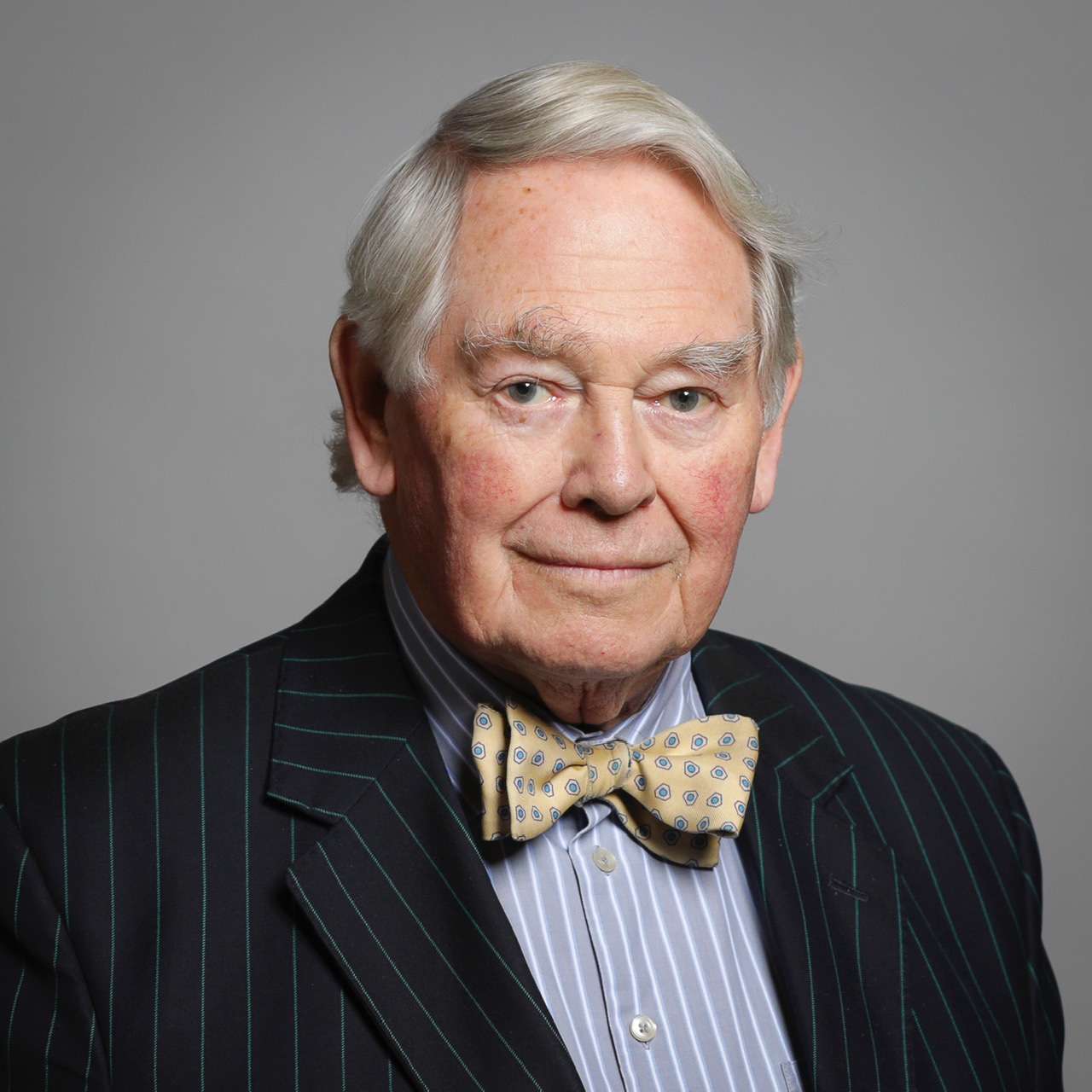
Assessment by the Rt. Hon. the Lord Naseby PC- Hon President All Party British-Sri Lanka Parliamentary Group. **++**

I have just finished a careful read of this extraordinary document which glosses over the full extent of the War when a group of vindictive terrorists tried to create a Tamil quasi neo-socialist revolutionary state by first murdering all the moderate Tamil leaders, then murdering President Premadasa and Prime Minister Rajiv Gandhi, as well as countless ministers, parliamentarians, civil society leaders and finally using extreme violence to wage war against the armed forces of the democratically elected Government of Sri Lanka. All in the name of Eelam.

Continue reading

Leave a comment

Filed under accountability, authoritarian regimes, centre-periphery relations, communal relations, disparagement, doctoring evidence, foreign policy, historical interpretation, human rights, island economy, legal issues, life stories, LTTE, military strategy, politIcal discourse, power politics, prabhakaran, security, self-reflexivity, Sinhala-Tamil Relations, sri lankan society, Tamil civilians, Tamil migration, Tamil Tiger fighters, terrorism, trauma, truth as casualty of war, UN reports, unusual people, vengeance, war crimes, war reportage, world events & processes

Shihan De Silva Jayasuriya’s Wide-ranging Work on Portuguese Creole and the Kaffir

Shihan de Silva Jayasuriya of the University of London has been researching the Portuguese in the East for over twenty years and has generated a significant number of studies on Portuguese Creole peoples, their life-style ad  languages in Sri Lanka and elsewhere. Her output of work has been as varied as commendable and I begin with a summary of one article dealing with “a nineteenth-century manuscript in Sri Lankan Portuguese Creole” because i am presently fashioning an article that refers to the work of Hugh Nevill on the Kāberi Hatana in order to ‘educate’ those who have touched on African slave labour at Galle without possessing any background information on the topic. This essay is in process and will appear soon….. Michael Roberts

Continue reading

7 Comments

Filed under ancient civilisations, British colonialism, centre-periphery relations, colonisation schemes, communal relations, cultural transmission, disparagement, education, ethnicity, heritage, historical interpretation, Indian Ocean politics, landscape wondrous, life stories, literary achievements, performance, photography, politIcal discourse, Portuguese in Indian Ocean, power politics, religiosity, self-reflexivity, sri lankan society, travelogue, unusual people, world events & processes

Vaccination against Covid: Ridiculous Priorities, Confusions … Et Cetera. Lankavey Neydha!

Sanjeewa Jayaweera, whose preferred title is “How Did MPs jump the Vaccine Queue?” …. Note that highlighting is the work of the naughty Thuppahi Editor

 mey Raja Kavudha?

It was so typical! None were too surprised when it was announced in the media that the 225 Members of Parliament (MP’s) were to be vaccinated against Covid19 ahead of many others whose exposure to the virus was significantly higher. A photograph of a government minister vaccinated at the Army Hospital was published in the media before this announcement. A few erstwhile cabinet colleagues justified this by saying the Minister had twice served quarantine time due to some of his close contacts being infected with Covid19. The presumption is that the Minister was unable to carry out his duties whilst being in quarantine?

Continue reading

1 Comment

Filed under accountability, centre-periphery relations, coronavirus, discrimination, disparagement, governance, life stories, performance, politIcal discourse, self-reflexivity, social justice, sri lankan society, trauma, unusual people, world events & processes

Lakshman Watawala’s Wild Life Video in Sri Lanka

Lakshman Watawala

posted on 21 February 2021 …. https://www.youtube.com/watch?v=IEJpRasqJKA&feature=youtu.be

with this NOTE: “This video is made from photos I have shot at these locations in Sri Lanka : Kumana, Bundala, Sinharaja, Yala, Uda Walawe, Maskeliya, Horton Plains, Polonnaruwa, Dambulla, Galle and Kandy.” …

And supplemented here by some stills 

Leopards in Congress

Continue reading

Leave a comment

Filed under landscape wondrous, wild life

When the Sun and Moon meet at the North Pole

Leave a comment

Filed under landscape wondrous

Indian Scaremongering misrepresents China’s Danger

Fair Dinkum in Email Message:  “Michael,  Have you seen this? Do you think it is a fair assessment? Or is this about making India look good and China bad?  In other words,  propaganda.”

India’s main propaganda obsession is to persuade the people of Sri Lanka that China will not be the friends they claim to be.  The wave of xenophobia sweeping the western world today (which India and Japan draw on) is being fanned into an angry flame by Western propagandists. The “Neighbourhood First” concept is stolen from Pompeo’s America First mantra, and adapted to suit India’s national interests. 

Continue reading

1 Comment

Filed under accountability, China and Chinese influences, communal relations, disparagement, doctoring evidence, economic processes, foreign policy, historical interpretation, Indian Ocean politics, island economy, landscape wondrous, legal issues, life stories, modernity & modernization, politIcal discourse, power politics, Rajapaksa regime, slanted reportage, sri lankan society, the imaginary and the real, transport and communications, truth as casualty of war, unusual people, world events & processes

Tamara’s Biography from Her Pen in Answer to Wikileak Twists

Tamara Kunanayakam, with black highlights being her para headlines and the others my imposition as Editor, Thuppahi

Dear All,

This is in response to Hiran Cooray and extracts he posted about me from Wiki[eaks]. I would like to make the following corrections and clarifications.

On my family: I was born in Nuwara Eliya (not Colombo), where my father, as a government servant, had been posted. As an active member of the GCSU, he spent his working life as a government servant being transferred from one ‘punishment station’ to another for his trade union activities. In 1947, as Colombo leader of the GCSU (with TB Illangaratne as its President then), he led the Colombo walk-out that led to Sri Lanka’s first General Strike, (Sri Lanka was(then “Ceylon” and still under British colonial rule). Because of his eternal transfers (Polonnaruwa, Matale, Anuradhapura, Badulla, Nuwara Eliya …), until he took early retirement and began working full time training trade unionists, we all lived literally out of our suitcases with my brother and I in boarding school in Colombo. Continue reading

2 Comments

Filed under accountability, american imperialism, centre-periphery relations, communal relations, cultural transmission, disparagement, doctoring evidence, economic processes, ethnicity, female empowerment, foreign policy, governance, historical interpretation, landscape wondrous, language policies, Left politics, legal issues, life stories, LTTE, news fabrication, politIcal discourse, Tamil civilians, the imaginary and the real, travelogue, truth as casualty of war, unusual people, world events & processes

The Anglican Church at S. Thomas’ College

Dishan Joseph,  in Daily News, 20 February 2021

The Anglican Church in Sri Lanka (Church of Ceylon) has made an immense contribution to education. The great school by the sea has educated thousands of young men, imparting in them core values of Christianity. When we read the Bible we find that Jesus was taken to the synagogue by his parents and continued to learn the scriptures, which shows the importance of a holistic education. To all who have been associated with S. Thomas’ College (STC), the magnificent College chapel has influenced their lives, touching them in significant ways. It is the vibrant heart of STC. This beautiful chapel and more importantly the good work done through it enriches the student mentally, emotionally and spiritually.

Continue reading

2 Comments

Filed under cultural transmission, economic processes, education, heritage, life stories, meditations, patriotism, S. Thomas College, self-reflexivity, sri lankan society, unusual people, welfare & philanthophy, world events & processes

Tamara’s Letter on Events in Geneva August 2011- June 2012

Email Letter from Tamara Kunanayakam, 20 February 2021with highlighting emphais from The Editor, Thuppahi

Dear All,  To set the record straights about my time in Geneva. I was there from August 2011 to June 2012. I covered 2=sessions, September 2011 session and March 2012.
In September 2011 there was a US-Canada draft to put Sri Lanka on the Agenda of HRC’s March 2012 session. The US also tried to have the informal Darusman Report made an official UN document by getting the President of HRC to submit it the Council.

Continue reading

1 Comment

Filed under accountability, centre-periphery relations, historical interpretation, Indian Ocean politics, life stories, patriotism, performance, politIcal discourse, power politics, Rajapaksa regime, self-reflexivity, Sinhala-Tamil Relations, sri lankan society, trauma, truth as casualty of war, unusual people, world events & processes

Ethnic Categories in Sri Lanka: Issues

Chandre Dharmawardana — in a response directed at Michael Roberts’s Comment**

When we make a blood test, we don’t specify all the items found in blood. Depending on the objective, we may list sugar, triglycerides, Heavy cholesterol and light cholesterol. If our objectives were different, we may list ALT, ALP, AST, bilirubin, albumin and total protein. So, what one lists is based on the purpose.

Continue reading

Leave a comment

Filed under accountability, centre-periphery relations, communal relations, cultural transmission, discrimination, disparagement, education, ethnicity, heritage, historical interpretation, life stories, politIcal discourse, power politics, self-reflexivity, sri lankan society, taking the piss, the imaginary and the real, travelogue, world events & processes