Atuel Canyon in Argentina

The Atuel Canyon (in Spanish Cañón del Atuel) is a narrow canyon and popular tourist attraction within Valle Grande, Argentina. The canyon is popular location for adventure sports, including river rafting, hiking, climbing, horse riding and mountain biking.[1][2] The Atuel River flows through the base of the canyon and contains several rapids, which are used for rafting and canoeing. Those rapids are classified between class II (novice) and IV (advanced) in the International Scale of River Difficulty.[3] The surrounding area includes many hotels, camping sites, country clubs and other lodging facilities.[4]

Continue reading

Leave a comment

Filed under landscape wondrous, travelogue

Ananda Dias Jayasinghe: Indelible Genealogy

Michael Roberts

The Dias Jayasinghes are etched deeply in memory as sons of Galle who were committed to schooling its generations in cricket and in history, while yet aiding all and sundry. At St Aloysius College in the mid-1950s I had the good fortune to have Marcus Dias-Jayasinghe as my coach – a gentleman figure who nurtured all of us. I then encountered DD Jayasinghe as an opponent on cricket-field playing for the Education Department against University of Ceylon teams.

Continue reading

Leave a comment

Filed under cultural transmission, education, heritage, historical interpretation, life stories, self-reflexivity, sri lankan society, Uncategorized

Basil Fernando’s Searing Protest against Violence in All Its Forms

Basil Fernando: A Short Abstract re the book Body, Mind, Soul, Society: An Autobiographical Account

 This book (176 pages) is an attempt to contribute towards an understanding of the impact of violence on human persons and the society. It is based on the direct experience of living and working in Sri Lanka and Cambodia. However, references are also made to several more developing countries in Asia with which I have been engaged in working after the experiences in Sri Lanka and Cambodia. The book is written from the perspective of a victim who is also an observer.

Continue reading

2 Comments

Filed under accountability, atrocities, authoritarian regimes, British colonialism, caste issues, centre-periphery relations, chauvinism, communal relations, cultural transmission, discrimination, disparagement, economic processes, ethnicity, governance, historical interpretation, human rights, Indian traditions, island economy, JVP, landscape wondrous, legal issues, life stories, Muslims in Lanka, nationalism, political demonstrations, politIcal discourse, power politics, psychological urges, racist thinking, riots and pogroms, self-reflexivity, Sinhala-Tamil Relations, sri lankan society, Tamil civilians, Tamil migration, terrorism, trauma, truth as casualty of war, vengeance, violence of language, working class conditions, world events & processes

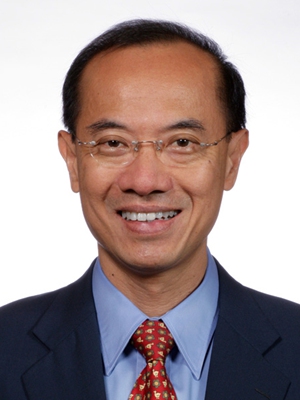
China: Lessons for Australia from George Yeo

George Yeo in Global Times, 16 June 2021, where the title is “China is a democracy by Lincoln’s definition: former Singaporean FM”

Editor’s Note: As tensions between China and the West continue to heat up, the Communist Party of China (CPC) has become the target of myriad attacks of the US-led Western countries. George Yeo, former Singaporean minister of foreign affairs, thinks this is because many in the West perceive China as a threat to American dominance in the world. Yet Yeo believes the nature of China’s rise is very different from that of the US – and hopefully Americans will eventually realize this. What does Yeo think of the development the CPC over the past 100 years? What are its challenges in the future? Why is China constantly being labeled as conducting “wolf warrior diplomacy?” Yeo shared his insights with Global Times (GT) reporters Li Aixin and Bai Yunyi.

Continue reading

Leave a comment

Filed under accountability, Australian culture, australian media, authoritarian regimes, centre-periphery relations, China and Chinese influences, economic processes, education, foreign policy, governance, historical interpretation, modernity & modernization, politIcal discourse, power politics, propaganda, security, self-reflexivity, transport and communications, unusual people, world events & processes

The Early History of Sociology at the University of Ceylon

H.L. Seneviratne,** Department of Anthropology, University of Virginia, USA, in Social Affairs: A Journal for the Social Sciences, ISSN 2478-107X (online) …. www.socialaffairsjournal.com

This paper is an account of the Department of Sociology of the University of Ceylon in approximately the first decade of its existence. The most significant development during this period was the transition of the department from one that provided courses for other departments, in particular Economics, to one that awarded its own degrees, making it a full-fledged and autonomous entity. The inability to grant its own degrees was not a plight rooted in any statutory limitation but a limitation of resources, in particular the want of adequate teaching staff. This may partly have been due to the ‘late comer’ status of Sociology in relation to other disciplines, and a related vicious circle of inadequate resources and low enrollments. Being a subordinate partner of Economics was also a part of the legacy of the department’s structural origin in the model of British universities. The oldest Department of Sociology in the UK was at the London School of Economics (LSE) and only goes back to the beginning of the 20th century; and it started as a subsidiary of the Economics Department. This paper makes an attempt to assess the relative contribution of the two major figures that strived in their own ways to secure the progress of the department towards achieving full-fledged status as a department that granted its own degrees.

Continue reading

Leave a comment

Filed under accountability, centre-periphery relations, cultural transmission, education, governance, heritage, historical interpretation, life stories, literary achievements, patriotism, performance, politIcal discourse, self-reflexivity, sri lankan society, teaching profession, unusual people, world events & processes

The Wikipedia Tale of the Murugappans of Biloela … Today, Mid-2021

Murugappan family asylum claims  .https://en.wikipedia.org/wiki/Murugappan_family_asylum_claims

Kokilapathmapriya Nadesalingam (Priya) and Nadesalingam Murugappan (Nades)[1] are two Sri Lankan Tamils seeking asylum in Australia. The couple married in Australia and have two Australian-born children. Until their detention by Australian Border Force in March 2018, the family was resident in the central Queensland town of Biloela, and consequently referred to as the Biloela family by some media.[2][3] The cause of the couple and their children has been supported by some residents of Biloela as well as asylum-seeker advocates.[4]

Continue reading

Leave a comment

Filed under accountability, asylum-seekers, Australian culture, australian media, charitable outreach, democratic measures, discrimination, disparagement, doctoring evidence, economic processes, education, ethnicity, historical interpretation, human rights, immigration, island economy, landscape wondrous, legal issues, life stories, medical puzzles, meditations, performance, political demonstrations, politIcal discourse, power politics, refugees, self-reflexivity, Sinhala-Tamil Relations, slanted reportage, sri lankan society, Tamil civilians, Tamil migration, tamil refugees, the imaginary and the real, tolerance, trauma, travelogue, truth as casualty of war, unusual people, welfare & philanthophy, world events & processes

High Noon in Mid-Air, August 2019: For the Murugappans of Biloela

ABC Account on 30 August 2019, with this title “Who are the Tamil family from Biloela and why are they being deported?” ……  https://www.abc.net.au/news/2019-08-30/who-are-tamil-family-from-biloela-why-are-they-being-deported/11463276

Last-minute injunctions have stalled the deportation of a Tamil family who have spent years fighting to stay in Australia. The plane carrying the Sri Lankan couple and their Australian-born daughters had already left the tarmac at Melbourne Airport when a judge granted a reprieve over the phone. Here’s what we know about the family’s case:

Dozens of people rushed to Melbourne Airport in a bid to stop the family being deported on Thursday night..   … Supplied: @HometoBilo)

Continue reading

Leave a comment

Filed under accountability, asylum-seekers, Australian culture, australian media, centre-periphery relations, charitable outreach, communal relations, democratic measures, discrimination, disparagement, economic processes, ethnicity, governance, historical interpretation, human rights, immigration, landscape wondrous, legal issues, life stories, meditations, performance, political demonstrations, politIcal discourse, security, self-reflexivity, Sinhala-Tamil Relations, slanted reportage, social justice, sri lankan society, taking the piss, Tamil civilians, Tamil migration, tamil refugees, tolerance, transport and communications, trauma, travelogue, truth as casualty of war, unusual people, welfare & philanthophy, women in ethnic conflcits, world events & processes

Danger! US Aggression towards China & Russia … Motives Criticised by Richard Wolff

LISTEN to cspeaking here https://youtu.be/QlNPa2qDJbg

Continue reading

Leave a comment

Filed under accountability, american imperialism, centre-periphery relations, China and Chinese influences, conspiracies, disparagement, economic processes, foreign policy, historical interpretation, politIcal discourse, power politics, self-reflexivity, sri lankan society, the imaginary and the real, truth as casualty of war, unusual people, violence of language, world events & processes

USA’s Poodle: Australia’s Foolish Feud with China

Sam Roggeveen, in Sydney Morning Herald, 16 June 2021, with this Headline: “The West is not coming to Australia’s rescue. We need new alliances”

The summits of the G7 group and the NATO alliance over the past few days have produced an avalanche of headlines about a growing anti-China mood among Western nations and an appetite to stand up to Beijing’s assertiveness.

Let’s hope the Australian government is not taking these headlines too seriously, because the harsh truth is that there will be no Western alliance to contain China, and no united democratic front against Beijing’s authoritarianism. The sooner we realise this and build it into our foreign and defence policies, the safer we will be.

French President Emmanuel Macron speaks at the end of a NATO summit in Brussels.French President Emmanuel Macron speaks at the end of a NATO summit in Brussels.CREDIT:AP

Continue reading

3 Comments

Filed under accountability, american imperialism, australian media, authoritarian regimes, centre-periphery relations, China and Chinese influences, economic processes, foreign policy, historical interpretation, military strategy, politIcal discourse, power politics, self-reflexivity, the imaginary and the real, world events & processes

Bernard Ziegler’s Innovative Impact on Air Travel: Manifold

Times Obituary, 9 June 2021 ….  https://www.thetimes.co.uk/article/bernard-ziegler-obituary-lhzx5txbc

Ziegler oversaw the advance of technology on aircraft such as the Airbus A320. In 1993 Bernard Ziegler flew what was then the longest recorded flight by a civil aircraft when he piloted an Airbus 340-200 around the world in 48 hours, stopping once in Auckland.  Yet the veteran French fighter pilot and director of the multinational aircraft manufacturer Airbus was self-deprecating about his abilities in the cockpit, attributing most of the skill involved to the automated systems he had developed. “After all, airline pilots are no more than taxi drivers,” he said.

Continue reading

Leave a comment

Filed under accountability, architects & architecture, economic processes, education, historical interpretation, life stories, modernity & modernization, performance, the imaginary and the real, transport and communications, unusual people, world events & processes