Sri Lankans in The Australian Foreign Service

Victor Melder, in Memo dated 28 December 2022, correcting a major error in the recent Daily News Item

The news item in the Daily News of yesterday (see below) is NOT correct, we have had two Sri Lankan born Australian Ambassadors. There could even be more.

The first: David Ian WILLÉ:  born 1942, educated at Royal College, Colombo. Emigrated with his parents to Melbourne, Australia in 1957. Studied at Melbourne University, obtaining a BA and LLB. Appointed to the Australian Diplomatic Service and posted as Australian High Commissioner to the West Indies, on his return was appointed Head of the Russian desk at the Department of Foreign Affairs, Canberra. (see The Burghers of Ceylon Worldwide – Kelaart, 2007)

Continue reading

Leave a comment

Filed under accountability, Australian culture, cultural transmission, heritage, historical interpretation, life stories, performance, self-reflexivity, sri lankan society, unusual people, world affairs

Fraternal Polyandry in Ceylon in Dutch Times

Jan Kok, Luc Bulten and Bente M. de Leede:

“Persecuted or permitted? Fraternal Polyandry in a Calvinist colony, Sri Lanka (Ceylon), seventeenth and eighteenth centuries,” a work published by Cambridge University Press, 2022 … presented here in Thuppahi in synopsis

Abstract: Several studies assume that Calvinist Christianity severely undermined or even persecuted the practice of polyandry in the Sri Lankan areas under Dutch control. We analyze Dutch colonial policy and Church activities toward polyandry by combining ecclesiastical and legal sources. Moreover, we use the Dutch colonial administration of the Sinhalese population to estimate the prevalence of polyandry. We conclude that polyandry was far from extinct by the end of the Dutch period and we argue that the colonial government was simply not knowledgeable, interested and effective enough to persecute the practice in the rural areas under its control.


Continue reading

4 Comments

Filed under accountability, authoritarian regimes, British colonialism, centre-periphery relations, commoditification, cultural transmission, disparagement, economic processes, ethnicity, gender norms, heritage, historical interpretation, island economy, Kandyan kingdom, landscape wondrous, life stories, modernity & modernization, politIcal discourse, religiosity, self-reflexivity, sri lankan society, travelogue, unusual people, world events & processes

Dil Jayawardena: An Outstanding & Upstanding Lady

Nan, in the Island, 18 December 2022, where the title runs thus: 

 I had met, listened to, read, and spoken to Elmo Jayawardena. Admired him very much too. He invariably brought his wife into any public address he made or personal conversation. Hence my emails conveyed my regards to Dil though I had not met her. Then I did. I invited the two of them to visit and as she stood in my doorway smiling so friendly, I immediately warmed to her. I felt she was a friend I knew so well. I was struck by the fact that there was no remarkably outstanding facial feature in Dil but she was truly beautiful, very beautiful. I surmised her loveliness was because her warm and generous personality shone through. She gives the impression of sincere friendliness and puts one at ease.

Continue reading

Leave a comment

Filed under Uncategorized

A Royal-Thomian Cricket Match Remembered Not Only for the Cricket

Hugh Karunanayake

                                               “Oft in the stilly night

                                                Ere slumber’s chains has bound me

                                                Fond memory brings the light

                                                Of other days around me

                                               The smiles, the tears,

                                               Of boyhood years”  

The Royal Thomian match of 1951 will for long be remembered for its nail-biting finish, and for the manner in which the Royal College team led by skipper T. Vairavanathan  extracted a victory from the jaws of defeat. It will certainly occupy a top position in the history of the series, the second oldest school cricket encounter in the world, (the first game being played in 1880).

Continue reading

1 Comment

Filed under accountability, charitable outreach, Colombo and Its Spaces, cricket for amity, cultural transmission, education, hatan kavi, heritage, historical interpretation, landscape wondrous, law of armed conflict, life stories, patriotism, performance, Royal College, self-reflexivity, sri lankan society, tolerance, unusual people

Murali the ‘Chucker’ Now An Aussie Consultant

Malcolm Conn in Newscorp.Australia, dated 22 December 2022 … SEE https://www.foxsports.com.au/cricket/australia/hiring-suspect-spin-king-muttiah-muralitharan-a-huge-philosophy-shift-for-australian-cricket/news-story/89e05872e303384ef66a1472f048c649… But Note the Thuppahi Note at the bottom

THE appointment of Muttiah Muralitharan as a spin bowling consultant by the Australian cricket team shows a huge philosophical shift in Australian cricket and the ruthless pragmatism of Darren Lehmann.

Previous Australian spin bowling coaches such as Terry Jenner and Ashley Mallett have refused to teach the doosra to their understudies in the belief it cannot be bowled legally.

Continue reading

Leave a comment

Filed under accountability, art & allure bewitching, Australian culture, australian media, centre-periphery relations, cricket for amity, cultural transmission, disparagement, ethnicity, fundamentalism, historical interpretation, legal issues, life stories, performance, photography, politIcal discourse, self-reflexivity, trauma, unusual people

The Paravas in Sri Lanka and South India in the Sixteenth Century

Chandra R. de Silva

It is likely that the paravas (also known as Bharathas in Sri Lanka to indicate their Indian origin) were working as fishermen and mercenaries in South India and the north western coast of Sri Lanka well before the sixteenth century. Tradition links them to the evolution of the catamaran (a small craft with two hulls) and with a major role in pearl fishing in the Gulf of Mannar. They were also proficient in chank (turbinella pyrum) fishing: chanks being seashells that were used to make ornaments and drinking vessels. The coming of the Portuguese to the region in the sixteenth century provides us many Portuguese records that illuminate the history and seafaring skills of this community.. Historian Jorge Manuel Flores, for example, quotes a mid-sixteenth century Portuguese document which records thanks to a parava convert named Duarte de Miranda for assistance in navigating the seas off South India.

Continue reading

Leave a comment

Filed under authoritarian regimes, centre-periphery relations, communal relations, cultural transmission, economic processes, ethnicity, governance, heritage, historical interpretation, Indian religions, island economy, landscape wondrous, life stories, Portuguese imperialism, Portuguese in Indian Ocean, religiosity, sri lankan society, transport and communications, travelogue, unusual people, working class conditions, world events & processes

Chatting with Clive Inman on His Cricketing Past for the Quadrangle’s “Scoop”

Sujith Silva in an exclusive Interview with Clive Inman for  Quadrangle  ….. The Scoop

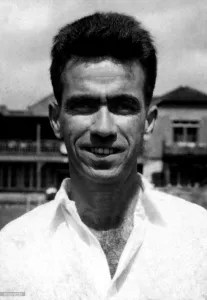
 Clive Clay Inman (born 29 January 1936 in Colombo died 07th December 2022 in England) former Ceylon Cricketer, represented N.C.C in domestic Club Cricket and later played in English Country Cricket representing turned out for Leicestershire & Derbyshire. He captained his alma mater St Peter’s College, Colombo 04 in 1954 and 1955 and won the Battle of the Saints Big match against St. Joseph’s College Colombo in 1955. He comes from a family of cricketers. His father Harry Inman played for Ceylon teams as an all rounder. Clive had four brothers all cricketers of which Roger played and captained S. Thomas’ College in 1952 (Clive played against him for St. Peter’s College). Clive was a prolific Left-hand batsman and also a right arm off break bowler who excelled during his school career, later on, built a name for himself as an outstanding batsman for Ceylon and English Country Leicestershire during the 60’s.

Continue reading

Leave a comment

Filed under accountability, art & allure bewitching, centre-periphery relations, cricket for amity, cricket selections, cultural transmission, heritage, historical interpretation, life stories, patriotism, performance, self-reflexivity, Sri Lankan cricket, sri lankan society, travelogue, unusual people, world events & processes

In Memory of Clive Inman: Manifold “Voices”

Desmond Kelly in Vale in e-Lanka: https://www.elanka.com.au/vale-clive-inman-by-des-kelly/

VALE, CLIVE INMAN: yet another ‘Legend’ from Ceylon (now Sri Lanka, and someone who was both a friend and College-mate of mine, back in the “fab-fifties”, as I remember them. As everyone knew, this guy was a top Cricketer, we were all very proud to have him at St. Peter’s College, by far the best College in Colombo at the time, as well. Clive was in the same ‘form’ & I was proud & privileged to keep his company & boast about his superb prowess on the field to all & sundry.

Continue reading

3 Comments

Filed under cricket for amity, cricket selections, cultural transmission, ethnicity, heritage, landscape wondrous, life stories, performance, Sri Lankan cricket, sri lankan society, unusual people, world events & processes

Five Sturdy Men Who Saved Murali’s Doosra Innovation

Michael Roberts

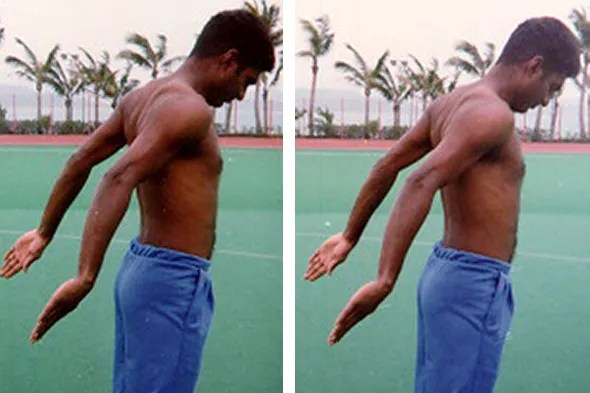
Dr Barclay Reid, “Buddy Reid” in most minds, has this week related his role in medically examining Muralitharan’s peculiar physiognomy and clarifying the  process of mystification that led some Australian umpires to no-ball him in late 1995 as part of a process  — as they thought — of cleansing the cricket field of “throwers” (see https://thuppahis.com/2022/12/21/muralitharan-the-arm-that-did-not-chuck/).

Jacqueline Alderson of UWA’s Technology team preparing Murali for a test as part of Foster’s team …

Continue reading

2 Comments

Filed under accountability, anti-racism, Australian culture, australian media, biotechnology, centre-periphery relations, cultural transmission, discrimination, education, historical interpretation, language policies, life stories, patriotism, performance, photography, politIcal discourse, power politics, self-reflexivity, Sri Lankan cricket, trauma, unusual people, world events & processes

Re-ordering Sri Lanka’s Debt: The China-Lanka Relations Now

Demystifying China’s Role in Sri Lanka’s Debt RestructuringChina’s President Xi Jinping, left, waves as he walks with then Sri Lankan President Mahinda Rajapaksa upon arrival at the airport in Colombo, Sri Lanka, Sept. 16, 2014 ….. Credit: AP Photo/Eranga Jayawardena
Currently, Sri Lanka is in the process of restructuring its foreign debt after announcing the country’s first sovereign default on April 12. As the largest bilateral creditor, China is playing a key role in Sri Lanka’s debt restructuring process.

Continue reading

3 Comments

Filed under accountability, authoritarian regimes, centre-periphery relations, China and Chinese influences, debt restructuring, economic processes, foreign policy, governance, historical interpretation, Indian Ocean politics, legal issues, life stories, modernity & modernization, politIcal discourse, power politics, security, self-reflexivity, sri lankan society, transport and communications, world events & processes