Category Archives: working class conditions

Confronting Two Calamities in Eastern Sri Lanka in 2005

Dennis B. McGilvray, in India Review 5(2-3) November 2006, special issue on public anthropology, …. where the title reads  Tsunami and Civil War in Sri Lanka: An Anthropologist Confronts the Real World”  …. with highlighting in different colours imposed by the Editor, Thuppahi

Recent calls for a new “public anthropology” to promote greater visibility for ethnographic research in the eyes of the press and the general public, and to bolster the courage of anthropologists to address urgent issues of the day, are laudable although probably too hopeful as well.  Yet, while public anthropology could certainly be more salient in American life, it already exists in parts of the world such as Sri Lanka where social change, ethnic conflict, and natural catastrophe have unavoidably altered the local context of ethnographic fieldwork.  Much of the anthropology of Sri Lanka in the last three decades would have to count as “public” scholarship, because it has been forced to address the contemporary realities of labor migration, religious politics, the global economy, and the rise of violent ethno-nationalist movements.  As a long-term observer of the Tamil-speaking Hindu and Muslim communities in Sri Lanka’s eastern coastal region, I have always been attracted to the classic anthropological issues of caste, popular religion, and matrilineal kinship.  However, in the wake of the civil wars for Tamil Eelam and the 2004 tsunami disaster, I have been forced to confront (somewhat uneasily) a fundamentally altered fieldwork situation. This gives my current work a stronger flavor of public anthropology, while providing an opportunity for me to trace older matrilocal family patterns and Hindu-Muslim religious traditions under radically changed conditions.

Continue reading

Leave a comment

Filed under accountability, authoritarian regimes, centre-periphery relations, communal relations, disaster relief team, economic processes, ethnicity, governance, heritage, historical interpretation, human rights, insurrections, island economy, landscape wondrous, legal issues, life stories, LTTE, meditations, Muslims in Lanka, nationalism, nature's wonders, politIcal discourse, power politics, rehabilitation, security, social justice, sri lankan society, Tamil civilians, teaching profession, the imaginary and the real, trauma, unusual people, war reportage, welfare & philanthophy, women in ethnic conflcits, working class conditions, world events & processes

The Kaffir in Sri Lanka: A Partial Bibliography from Thuppahi

Michael Roberts 

The first two photographs provide just a glimpse of their ‘markings’; while the map composed I think by Shihan de Silva Jayasuriya indicates the long history of African migratory flows (sometimes as slaves) to Asian lands.


Continue reading

2 Comments

Filed under atrocities, British colonialism, British imperialism, centre-periphery relations, communal relations, cultural transmission, demography, discrimination, disparagement, Dutch colonialism, economic processes, ethnicity, hatan kavi, heritage, historical interpretation, landscape wondrous, life stories, performance, politIcal discourse, population, racism, religiosity, self-reflexivity, sri lankan society, travelogue, unusual people, working class conditions, world events & processes

In Memoriam. The War Dead … within “A Clear Blue Sky”

Elmo Jayawardena, in The Island4 March 2021, where the title reads “A Clear Blue Sky” … bearing this ’emphasis’…. I publish this article just so that we can remember how sad the times were during the war for both sides. Let us hope and pray such will never happen again)

The one unforgettable memory that Selva always carried within himself was the colour of the vast Jaffna sky, spotless and shimmering in brilliant blue. It appeared as if the Gods had decided to spread a sheet and tucked it taut to the corners of the horizon as if to show off how perfectly they could do things. Off and on there would be fluffy white clouds, being sheep-dogged by winds aloft, harmless cartoons scattered in the sky, men and dogs, trees and castles or whatever a child wanted to imagine them to be. The clouds were seldom grey and laden with rain. That’s how the dry climate came about to roast the soil where Selva’s family toiled under the merciless sun, for generations, to grow chilli on. The kochika as they called it, were the thin and long kind, blood red, extremely hot and mouth-burning. Selva’s people sold the chilli harvest at the week-end market in the closest town. That was Vaddukodai, located an hour’s distance away, by bullock cart, from their nameless village of nowhere and no one; just blood red kochika and blue skies.

Continue reading

Leave a comment

Filed under accountability, atrocities, centre-periphery relations, communal relations, cultural transmission, ethnicity, heritage, historical interpretation, human rights, landscape wondrous, life stories, LTTE, mass conscription, politIcal discourse, power politics, self-reflexivity, Sinhala-Tamil Relations, sri lankan society, Tamil civilians, tamil refugees, Tamil Tiger fighters, the imaginary and the real, trauma, truth as casualty of war, working class conditions

CJR Le Mesurier: A British Civil Servant who challenged the Imperial Order

Michael Powell: article published in 2007 and entitled “Fragile Identities: The Colonial Consequences of CJR Le Mesurier in Ceylon”

ABSTRACT of Article: In the many layered life of CJR Le Mesurier in Ceylon are themes that repeat and recur throughout the British colonial world, touching on marriage and morals, religion and race, archival retention and colonial employment.

Cecil Le Mesurier in Western Australia c 1920s …. Courtesy of Rod Cantley

In particular, his strenuous litigious attack on assumptions of Crown title challenged the philosophic and legal framework of colonial land policy, revealing its ideological foundation, and illuminating the pattern and impulse of land policy throughout Empire.

The increasing effrontery of his actions induces an equally escalating reaction from colonial authority that pares away the preferred patina of civilizing mission to reveal a far more base intent – a colonial impulse more discernible and the actions of authority more disclosing – contributing to a much richer comparative understanding of the dynamics of colonial land dealings.

Continue reading

Leave a comment

Filed under accountability, authoritarian regimes, British colonialism, centre-periphery relations, colonisation schemes, cultural transmission, discrimination, disparagement, economic processes, ethnicity, governance, historical interpretation, island economy, Kandyan kingdom, land policies, landscape wondrous, legal issues, life stories, plantations, politIcal discourse, power politics, religiosity, self-reflexivity, social justice, sri lankan society, trauma, unusual people, welfare & philanthophy, working class conditions, world events & processes

Sustaining Cultural Performance Practices across the Indian Ocean

Shihan De Silva Jayasuriya et al

PREFACE to her new book entitled “Sustaining Support for Intangible Cultural Heritage” (ICH)

Sustaining Support for Intangible Cultural Heritage (ICH) continues the conversations on cultural heritage which commenced at a virtual conference held on August 3, 2020, at the Institute of Commonwealth Studies. The conference was spurred by the screening of my film – “Indian Ocean Memories and African Migrants” – at the Social Scientists Association, Colombo. The interest shown by UNESCO Global Network Facilitators, Dr Bilinda Nandadeva and Dr Gamini Wijesuriya, who attended the screening, was a catalyst to convening the conference. The Covid-19 pandemic further exposed the significance of heritage and the vulnerability of intangible culture. The book is a call to value ICH and an inspiration for academics, researchers, stakeholders, civil society, cultural practitioners and policymakers to understand the threats to sustaining heritage.

Continue reading

Leave a comment

Filed under Aboriginality, Africans in Asia, ancient civilisations, art & allure bewitching, centre-periphery relations, cultural transmission, demography, economic processes, ethnicity, female empowerment, heritage, historical interpretation, Indian traditions, landscape wondrous, life stories, literary achievements, performance, population, religiosity, self-reflexivity, sri lankan society, the imaginary and the real, transport and communications, travelogue, unusual people, working class conditions, world events & processes

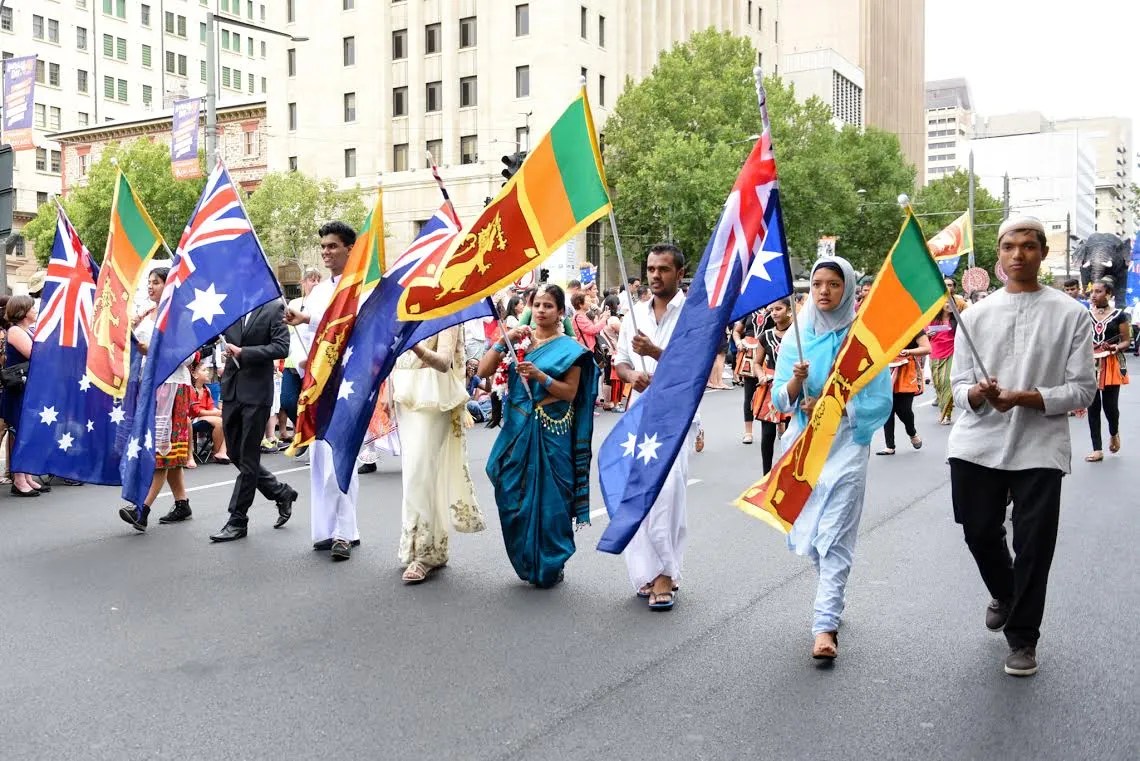
Sri Lankans in Australia: 2016 Census Data …… The Demographic Profile

Item sent to Thuppahi by Victor Melder ….  at https://www.abs.gov.au/census/find-census-data/quickstats/2016/7107_0 …. presented here with some selective highlights from the Thuppahi pen

People 109,853
Male 57,280
Female 52,573
Australian citizen 60.3%
Not an Australian citizen 38.3%

Families 43,816
Couples with children 26,914
Couples without children 13,326
One parent families 2,972
Other families 592

All private dwellings 52,548
Median monthly mortgage repayment $2,100
Median weekly rent paid $351


Continue reading

1 Comment

Filed under accountability, Australian culture, australian media, communal relations, demography, economic processes, education, ethnicity, governance, heritage, historical interpretation, immigration, island economy, legal issues, life stories, literary achievements, performance, population, self-reflexivity, sri lankan society, travelogue, unusual people, working class conditions, world events & processes

Deeply Wounded. Also Divided? Sri Lanka Today

Neloufer De Mel, in History Today, Vol 72/8, September 2022, where the title reads “Sri Lanka’s Deep Wounds” **

On 31 March 2022 a public protest occurred in the vicinity of the home of the Sri Lankan president Gotabhaya Rajapakse. The protest marked frustration at the shortages of essential commodities (gas, medicines, fuel) and the gruelling ten-to-13-hour power cuts imposed by a cash-strapped government with insufficient dollars to pay for imported fuel. The protestors also sought answers as to why certain neighbourhoods (such as Mirihana, where the president lived) continued to enjoy uninterrupted power.

Continue reading

Leave a comment

Filed under accountability, authoritarian regimes, centre-periphery relations, communal relations, debt restructuring, democratic measures, discrimination, disparagement, economic processes, governance, historical interpretation, human rights, island economy, landscape wondrous, legal issues, life stories, Muslims in Lanka, political demonstrations, politIcal discourse, power politics, self-reflexivity, Sinhala-Tamil Relations, social justice, sri lankan society, Tamil civilians, truth as casualty of war, unusual people, working class conditions, world events & processes

Thoughts on Planter Lifeways in Ceylon evoked by the Braine Biography

Joe Paiva[1]

Camellia sinensis is a species of evergreen shrubs or small trees in the flowering plant family Theaceae. Its leaves and leaf buds are used to produce tea. Common names include tea plant, tea shrub, and tea tree. Wikipedia. If allowed to grow freely can reach up to 6 ft or more. For commercial agronomic purposes they are maintained as a compact shrub at approximately 4 ft, to increase productivity. And to suit the stature of female tea pickers.

Tea plants grow at the tea plantation in Trabzon, Turkey on June 27, 2022. (Photo by Resul Kaboglu/NurPhoto via Getty Images)

Ratnapura, Sri Lanka – April 23: R. Chitrakumari (left) and K. A. Punchimeneke pick tea leaves in a tea garden on April 23, 2022 in Eheliyagoda, Sri Lanka. 2022

BOP = Broken Orange Pekoe, the very best grade of marketed tea. Flavour. Aroma, Colour. A very refreshing brew.


Continue reading

3 Comments

Filed under British colonialism, centre-periphery relations, communal relations, cultural transmission, economic processes, Empire loyalism, ethnicity, heritage, landscape wondrous, life stories, plantations, self-reflexivity, sri lankan society, travelogue, working class conditions

From my Mother “Elizabeth” to Elizabeth Truss: Downhill …

Michael O’Leary in Sunday Island, 17 September 2022, where the title reads: “A Tale of Three Elizabeths” … with highlighting being the work of The Editor, Thuppahi

England’s Glory: My mother had the same name as the UK’s latest and current (as I write) prime minister. My mother was Elizabeth Jane King and when she married Jeremiah O’Leary, the Irish labourer who helped to build her parents’ house, number 9, Stanway Road, Coney Hill, Gloucester, she became Elizabeth O’Leary. When Mary Elizabeth Truss married Liverpool accountant Hugh O’Leary she became Elizabeth O’Leary, just like my mother.

Queen Elizabeth II at Trinity in 1954 

Continue reading

1 Comment

Filed under accountability, disparagement, economic processes, governance, historical interpretation, life stories, performance, politIcal discourse, power politics, self-reflexivity, taking the piss, transport and communications, unusual people, welfare & philanthophy, working class conditions, world events & processes

In Appreciation of Professor Riaz Hassan: Two Accolades as Vale


ONE …. Joanne Barker: A Memory about RIAZ HASSAN

From 1992-2006 I worked at Flinders University in various positions, finally leaving in 2006 as the faculty general manager of one of the four faculties. In around 1993-4 when I was still in my early 30s and quite new at the university, I came to know Riaz Hassan as one of the professors. He probably didn’t know my name, but he was always kind and smiled and said hello if we passed on campus.

Continue reading

Leave a comment

Filed under accountability, Australian culture, centre-periphery relations, communal relations, cultural transmission, economic processes, education, ethnicity, governance, heritage, historical interpretation, Indian religions, Islamic fundamentalism, landscape wondrous, life stories, literary achievements, martyrdom, modernity & modernization, nationalism, performance, politIcal discourse, power politics, psychological urges, religious nationalism, self-reflexivity, social justice, suicide bombing, teaching profession, trauma, truth as casualty of war, unusual people, welfare & philanthophy, working class conditions, world events & processes