Category Archives: Tamil migration

Sharika Thiranagama in Profound Q & A on Sri Lanka’s Traumatic Past

Kaniyan Pungundran – Editor-in-Chief of Jaffna Monitor .September 2025 … ..where the title runs thus: “JVP Still Denies the Tamil Ethnic Question: Sharika Thiranagama Speaks to Jaffna Monitor”

It feels like yesterday. As a student, I remember flipping through Amuthu, a Tamil-language magazine published by Lake House. One day, I came across an article about Dr. Rajani Thiranagama—her brilliant career, and how she was cowardly and mercilessly assassinated. More than the tragedy of that brave woman, what seared itself into me was the image of her two young daughters standing beside their mother. Even as a boy, I felt a deep and overwhelming compassion for them. That night, I hugged my mother tightly, whispering questions to the God I was raised to believe in: How could anyone kill the mother of two small children?

Years later, I found myself sitting across from one of those children—Sharika Thiranagama—interviewing her in detail for Jaffna Monitor. As we spoke, what struck me repeatedly was not only her brilliance as an academic but also the warmth, composure, and clarity that radiated from her. That evening, I watched as she disagreed with some of my friends. The way she objected—polite, firm, and unshakably precise—made me realize that though her life was marked by loss at the most vulnerable age, she had absorbed her mother’s humility, bravery, and steady mind. It was in that moment I understood how personal tragedy had forged not bitterness, but intellectual rigorhow the child who once heard gunshots from her doorstep had grown into a scholar determined to dissect the very forces that create such violence.

Continue reading

1 Comment

Filed under accountability, anti-racism, asylum-seekers, atrocities, authoritarian regimes, centre-periphery relations, communal relations, cultural transmission, democratic measures, discrimination, economic processes, education, Eelam, electoral structures, ethnicity, female empowerment, governance, historical interpretation, human rights, IDP camps, island economy, language policies, legal issues, life stories, LTTE, martyrdom, mass conscription, military strategy, Muslims in Lanka, nationalism, outmigration, patriotism, politIcal discourse, power politics, prabhakaran, racist thinking, Rajapaksa regime, security, self-reflexivity, Sinhala-Tamil Relations, sri lankan society, Tamil civilians, Tamil migration, tamil refugees, Tamil Tiger fighters, terrorism, trauma, truth as casualty of war, unusual people, vengeance, war crimes, war reportage, world events & processes, zealotry

Shattered Lives in Sri Lanka’s Wars: Several Lesser-Known Strands

Dennis McGilvray in ASIAN  ETHNOLOGY Vol 73, 1&2, pp 348-49, reviewing  Sharika Thiranagama, In My Mother’s House: Civil War in Sri Lanka. Philadelphia PA: University of Pennsylvania Press, 2011

The title of this book points to the author’s personal connection with the decades-long Sri Lankan ethnic conflict, which ended abruptly in 2009 after much of the manuscript had been written. Her mother was a Tamil academician and human rights activist assassinated by the LTTE (Liberation Tigers of Tamil Eelam) in 1986 in Jaffna because of her outspoken condemnation of brutalities committed by the Tamil Tigers as well as by the Sri Lankan armed forces. This volume offers a scholarly analysis of the deep effects of the civil war upon a generation of displaced Sri Lankan Tamils and Tamil-speaking Muslims, but the author’s family history will be immediately recognized by many readers familiar with Sri Lanka.

Continue reading

1 Comment

Filed under accountability, asylum-seekers, atrocities, authoritarian regimes, citizen journalism, communal relations, demography, ethnicity, Fascism, historical interpretation, human rights, IDP camps, insurrections, language policies, life stories, LTTE, migrant experiences, Muslims in Lanka, outmigration, pilgrimages, politIcal discourse, power politics, prabhakaran, refugees, religiosity, self-reflexivity, Sinhala-Tamil Relations, social justice, sri lankan society, Tamil civilians, Tamil migration, tamil refugees, Tamil Tiger fighters, teaching profession, terrorism, trauma, truth as casualty of war, unusual people, vengeance, war crimes, war reportage, women in ethnic conflcits, world events & processes

Long-Distance Tamil Nationalism in Toronto

Sharika Thiranagama …. Abstract of her refereed article in the American Anthropologist, Vol. 116, No. 2 (JUNE 2014), pp. 265-278 (14 pages) …. where the title reads thus: “Making Tigers from Tamils: Long-Distance Nationalism and Sri Lankan Tamils in Toronto”

This article discusses the Sri Lankan Tamil diaspora in Toronto and its relationship to the Tamil separatist group, the Liberation Tigers of Tamil Eelam (LTTE). Taking the case of the Sri Lankan Tamils, oft-cited as the example par excellence of long-distance nationalism, I argue against naturalizing diasporic ethnonationalism to investigate instead how diasporas are fashioned into specific kinds of actors. I examine tensions that emerged as an earlier elite Tamil movement gave way to the contemporary migration of much larger class-and caste-fractured communities, while a cultural imaginary of migration as a form of mobility persisted. I suggest that concomitant status anxieties have propelled culturalist imaginations of a unified Tamil community in Toronto who, through the actions of LTTE-affiliated organizations, have condensed the Tigers and their imagined homeland, Tamil Eelam, into representing Tamil community life. While most Tamils may not have explicitly espoused LTTE ideology, as a result of the LTTE becoming the backbone of community life, Tamils became complicit with and reaffirmed the LTTE project of defending “Tamilness” militarily in Sri Lanka and culturally in Toronto. I suggest that the self-presentation of diasporic communities should be analyzed within specific histories, contemporary conflicts and fractures, and active mobilizing structures.

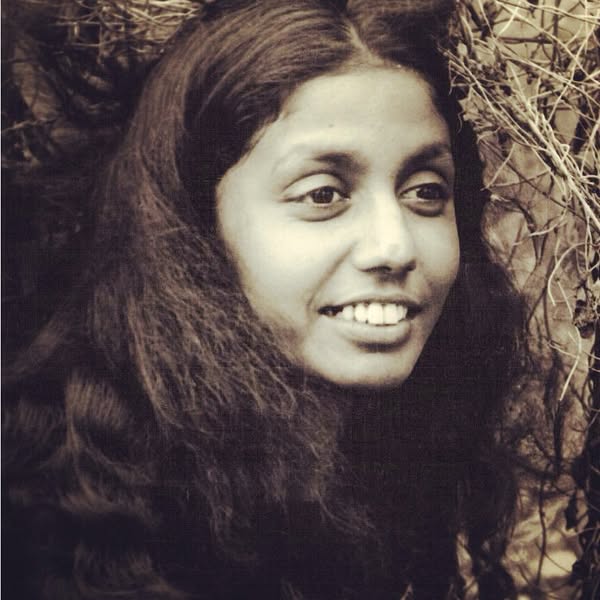
Rajini Thiranagama Continue reading

Leave a comment

Filed under accountability, anti-racism, art & allure bewitching, asylum-seekers, atrocities, authoritarian regimes, centre-periphery relations, communal relations, discrimination, disparagement, education, ethnicity, female empowerment, historical interpretation, human rights, insurrections, language policies, Left politics, life stories, literary achievements, migrant experiences, nationalism, patriotism, politIcal discourse, power politics, racism, refugees, religiosity, security, self-reflexivity, Sinhala-Tamil Relations, social justice, sri lankan society, Tamil migration, tamil refugees, Tamil Tiger fighters, teaching profession, trauma, travelogue, unusual people, vengeance, war crimes, war reportage, world events & processes, zealotry

Lankan Tamil Migration in Wintry Norway: “Working For Our Sisters”

Oivund Fugleruud in  ???? where the the title runs  thus:“Working for  Sisters”  — Tamil Life on the 71st Parallel’

The article discusses the phenomenon of migration of Sri Lankan Tamils to Finnmark, the northemmost part of Nonvay. While most other groups of immigrants in Nonvay tend to settle in the larger Cities, this particular group has a tradition of settlement in the fishing villages in Finnmark, facing the Barents Sem.

[t is argued fhat there is a continuity in this pattem from the early migration workers in the 1970s ro present•day asylum-seekers. The “imicrohistory” of Tamil migration to one particular village is presented and discussed. It shows an overlap from one type of  migration to another.

Continue reading

Leave a comment

Filed under accountability, asylum-seekers, authoritarian regimes, centre-periphery relations, commoditification, demography, economic processes, education, Eelam, ethnicity, heritage, historical interpretation, island economy, life stories, LTTE, migrant experiences, outmigration, politIcal discourse, prabhakaran, self-reflexivity, Sinhala-Tamil Relations, sri lankan society, Tamil civilians, Tamil migration, tamil refugees, transport and communications, travelogue, war reportage, working class conditions, world events & processes

My Decision to leave Ceylon in 1981

Sachi Sri Kantha      

Sachi examining a winged bean pod in 1981

Prelude

Willingly, I opt to use the ‘Ceylon’ word, because I was born in the blessed island Ceylon in May 1953. The place of my birth was Chilaw, solely for the reason it was the then work location of my father Sachithanantham, then employed as a clerk in the hospital services of the Department of Health. He was 30, but my mother was only 17. My parents are from Point Pedro, and it was an arranged marriage among the kin in Point Pedro’s adjacent regions.

From 1961 to 1971, I had primary and secondly schooling at the Colombo Hindu College (Bambalapitiya, Ratmalana) and Aquinas University College. I entered the University of Sri Lanka (Colombo Campus) in January 1972, at the age of 18 years and 8 months. This entry was delayed by months, due to the JVP insurrection in April 1971. Ceylon was re-named as Sri Lanka in May 1972.

Continue reading

4 Comments

Filed under accountability, atrocities, centre-periphery relations, communal relations, cultural transmission, discrimination, economic processes, education, ethnicity, heritage, historical interpretation, language policies, life stories, nationalism, outmigration, politIcal discourse, racism, riots and pogroms, self-reflexivity, Sinhala-Tamil Relations, sri lankan society, Tamil civilians, Tamil migration, teaching profession, travelogue, unusual people, world events & processes

UNHRO Calls for Investigation of Past Killings in Lanka


Tamil and Sinhala versions attached

Sri Lanka has opportunity to break from past – Türk

GENEVA (13 August 2025) – A report published today by the UN Human Rights Office calls on Sri Lanka’s Government to seize the historic opportunity to break with entrenched impunity, implement transformative reforms, and deliver long-overdue justice and accountability for serious violations and abuses committed in the past, including international crimes.

Continue reading

1 Comment

Filed under accountability, atrocities, authoritarian regimes, centre-periphery relations, communal relations, demography, Eelam, ethnicity, governance, historical interpretation, landscape wondrous, life stories, LTTE, migrant experiences, military expenditure, military strategy, parliamentary elections, patriotism, photography, political demonstrations, politIcal discourse, population, power politics, racism, Rajapaksa regime, security, self-reflexivity, Sinhala-Tamil Relations, social justice, sri lankan society, suicide bombing, Tamil civilians, Tamil migration, tamil refugees, Tamil Tiger fighters, the imaginary and the real, trauma, truth as casualty of war, vengeance, violence of language, war crimes, world events & processes, zealotry

About Sharika Thiranagama ……. Today

Rohan Gunaratna  in  FACEBOOK, August 2025

Rohan Gunaratna

nopordtesS43ag881f170i0ihg99ic5ay0ic8luml74u9m2l8 61t4Mct4a0 ·

Congratulations to Sri Lankan-born American Anthropologist, Prof. Sharika Thiranagama, on winning the Davidson Prize at Cambridge University, where she was appointed a Scholar of St Johns.

Winner of Stanford University’s “Lifetime award for Academic achievement in Archaeology and Anthropology”, Sharika wrote “In My Mother’s House: Civil War in Sri Lanka” published by University of Pennsylvania Press in 2011.

Sharika

…Rajini Continue reading

2 Comments

Filed under accountability, atrocities, authoritarian regimes, communal relations, Eelam, ethnicity, governance, historical interpretation, human rights, life stories, literary achievements, performance, politIcal discourse, refugees, self-reflexivity, Sinhala-Tamil Relations, sri lankan society, Tamil migration, tamil refugees, teaching profession, trauma, unusual people, war crimes, world events & processes, zealotry

Sri Lankan Migrants Abroad as Productive Oysters for the Island

Item circulated by Sunil Thenabadu, Keith Bennett and  one Dee de  Silva

The Sri Lankan diaspora consists of approximately three million Sri Lankans living abroad, significantly contributing to their host countries and maintaining ties with Sri Lanka.

Demographics and Distribution

The Sri Lankan diaspora includes emigrants and expatriates from Sri Lanka residing in various countries, with significant populations in Europe, the Middle East, East Asia, Australia, and North America. An estimate from 2013 indicated that around three million Sri Lankans live outside their home country, with about one million permanently settled abroad. This diaspora is characterized by a diverse mix of ethnicities, including Tamils, Sinhalese, and Burghers, each contributing uniquely to the cultural landscape of their host nations. 

Continue reading

1 Comment

Filed under accountability, centre-periphery relations, demography, economic processes, heritage, historical interpretation, island economy, life stories, modernity & modernization, patriotism, performance, population, sri lankan society, Tamil migration, travelogue, world events & processes

Is Prabakaran NOT a Hitler! …. Goodness Gracious Me!

Shenali D. Waduge, whose slashing sarcastic essay is entitledLet’s Celebrate Prabakaran & the LTTE’s Glorious Achievements!”  ... with the highlighting being that in  the original item

A tribute to the world’s most misunderstood mass murderer and his liberation-through-terror campaign.

They say greatness demands sacrifice—and Velupillai Prabakaran understood this better than most. He wasn’t content with speeches; he offered the world a blueprint: to build a homeland, first destroy the present; to claim justice, first silence every voice—especially your own people’s; to prove your worth, leave no witness behind. For over three decades, he led with unmatched precision: dismantling democracy, eliminating dissent, recruiting children, and bleeding civilians dry—all while demanding the world call it liberation. Some build nations through unity; he built his with bunkers, landmines, cyanide, and the bones of the innocent. And still, they light candles for him. They hold commemorations in universities. UN officials attend. Foreign parliamentarians give speeches. So, in the spirit of glorifying terror, let’s not just mourn Velupillai Prabakaran—let’s celebrate the man who redefined cruelty and called it Eelam, by honoring every child stolen, every right violated, and every drop of blood shed in his name.

Continue reading

1 Comment

Filed under accountability, atrocities, authoritarian regimes, centre-periphery relations, chauvinism, Eelam, ethnicity, female empowerment, governance, historical interpretation, human rights, Indian Ocean politics, insurrections, law of armed conflict, life stories, LTTE, martyrdom, military strategy, nationalism, patriotism, politIcal discourse, power politics, prabhakaran, self-reflexivity, Sinhala-Tamil Relations, slanted reportage, sri lankan society, suicide bombing, Tamil civilians, Tamil migration, tamil refugees, Tamil Tiger fighters, terrorism, the imaginary and the real, truth as casualty of war, unusual people, vengeance, war crimes, war reportage, world events & processes

FIRE AND STORM analyses Sinhala-Tamil Confrontations Over the Decades

Neil Jayasekera introduces FIRE AND STORM by Michael Roberts … printed by Vijitha Yapa Publications in 2010 …. ISBN 978955-665-14-8  ….presenting 28 articles & an Amalgamated Bibliography …. Posted by  Feb 28, 2023 

Unique JewelsAnonymous Reviewer in Sunday Times, 21 July 2013 where the title runs Important contribution towards a dialogue on Lankan polity. Book facts”

When Michael Roberts left Peradeniya in the late seventies, he was part of an exodus of intellectuals from the University of Ceylon, Peradeniya, arguably one of the best universities at that time. The exodus of academics at that time was compelled by the economic difficulties faced by university dons. It was the second wave of such emigration that diminished the intellectual life of the university and country.

Unique Jewels

Pirapāharan and leading Tiger Commanders at the Indian sponsored training camp at Sirimalai in 1984

Continue reading

Leave a comment

Filed under accountability, atrocities, authoritarian regimes, centre-periphery relations, communal relations, counter-insurgency, disparagement, Eelam, electoral structures, ethnicity, governance, historical interpretation, Indian Ocean politics, insurrections, island economy, language policies, Left politics, legal issues, liberation tigers of tamil eelam, life stories, LTTE, martyrdom, military strategy, modernity & modernization, nationalism, parliamentary elections, patriotism, photography, pilgrimages, politIcal discourse, power politics, prabhakaran, propaganda, racist thinking, Rajapaksa regime, Rajiv Gandhi, religiosity, security, self-reflexivity, Sinhala-Tamil Relations, slanted reportage, social justice, sri lankan society, suicide bombing, Tamil civilians, Tamil migration, tamil refugees, Tamil Tiger fighters, terrorism, trauma, truth as casualty of war, unusual people, vengeance, violence of language, war crimes, war reportage, women in ethnic conflcits, zealotry