Category Archives: sri lankan society

For Sri Lanka: follow Coomaraswamy and Kadirgamar and consolidate the Middle Ground in Sri Lanka

Raj Gonsalkorale & an Anonymous Tamil Moderate, courtesy of Asian Tribune

This article is about suggestions made by a moderate member of the Tamil Diaspora for a political solution in Sri Lanka. The person concerned is a professional and someone who loathes the extremist elements within the Diaspora as much as he loathes similar elements within the Sinhala community.

national unity convention april 2014  Pic from National Unity Convention, April 2014

He opines that extremism is contagious and breeds competition to outdo each other and develop contempt of each other, leaving moderates in a helpless situation to have their voices heard. He says that when political leaders on both sides do not show leadership to give voice to the moderates, they end up being held captive by the extremists and their lack of will and honest intention has led to the impasse that one continues to witnesses in Sri Lanka. In his words, he states he is a great believer that in the end it is the intention (or that beautiful Sinhala word – ‘Chetanawa’) that counts. If that ‘Chetanawa’ is enforcing an exclusive Sinhala Buddhist identity, it is bound to fail, .not through the ‘betrayal’ / ‘conspiracy’ of the Tamil Diaspora or the famous ‘Batahira Kumanthranaya’, but as that is the natural order of things in this world.” Continue reading

Leave a comment

Filed under accountability, Buddhism, cultural transmission, democratic measures, Hinduism, historical interpretation, island economy, legal issues, life stories, LTTE, politIcal discourse, power politics, power sharing, Rajapaksa regime, reconciliation, self-reflexivity, Sinhala-Tamil Relations, sri lankan society, Tamil civilians, Tamil migration, tolerance, truth as casualty of war, welfare & philanthophy, world events & processes

Products from the northern Tamil districts impress visitors at Colombo ‘fair’

Courtesy of the Daily News, May 2014

northern handicraftsA variety of products from the Northern Province made an eye catching display at the newly built market stalls at the Diyatha Uyana, close to the Diyawanna Lake in Kotte on Thursday. Products showcased by over 250 individuals representing various villages in the Jaffna, Kilinochchi, Mulaithivu, Mannar and Vavuniya districts at the Diyatha Uyana premises were a major attraction among the local and foreign visitors. The government facilitated the opportunity with the financial and organising support of several organisations, including the USAID and Nucleus, to allow these producers to promote their products, and make commercially viable interactions. Continue reading

Leave a comment

Filed under economic processes, life stories, NGOs, politIcal discourse, Sinhala-Tamil Relations, sri lankan society, Tamil civilians, welfare & philanthophy, working class conditions

About Ceylon: Arthur C. Clarke, Pablo Neruda & Ananda K. Coomaraswamy

Jane Russell and Ruth Allaun** Foreword to their essay on Leonard Woolf

ARTHUR C CLARKEWhen I’m in the Strand or 42nd Street, or at NASA Headquarters or the Beverley Hills Hotel, my surroundings are liable to give a sudden tremor and I see through the insubstantial fabric to the reality beneath…” These words by Arthur C. Clarke, the sci-fi writer, are quoted at the end of Roloff Beny’s photographic chronicle Island Ceylon. But where does Clark’s reality reside? He writes, “No other place is so convincing as Sri Lanka.” As he spent almost fifty years there, we are tempted to believe him. Continue reading

3 Comments

Filed under heritage, life stories, literary achievements, sri lankan society, unusual people, world affairs

Skewed Advancement Patterns in Public and Private Sector Employment: Women and Minorities disadvantaged?

Verite Research, courtesy of The Island, 7 May 2013, where the title is “Do women and minorities in Sri Lanka face glass ceilings in employment?”

Should economics be able to explain divorce rates amongst married couples? Normally that is something that would be left to the techniques of psychology and anthropology. But surprisingly enough Gary Becker won the Nobel Prize in Economics in 1992, and one of his most celebrated papers was precisely in explaining divorce. What enables economists to venture into such unlikely terrain? It is the legitimizing power of their tools of trade: and in this case, it was the legitimising power of carefully examined data. Scrutinizing data for the hidden stories is an important pastime of Economists.

Scrutinising some of the employment data in Sri Lanka, in the public and private sectors also seems to reveal a hidden story: this time it is not about divorce, but about discrimination. Continue reading

Leave a comment

Filed under economic processes, reconciliation, sri lankan society, welfare & philanthophy, women in ethnic conflcits

Charles Haviland’s Farewell Political Travelogue on Sri Lanka

haviland SEE Sri Lankan journey at http://www.bbc.com/news/world-27494822#sa-ns_mchannel=rss&ns_source=PublicRSS20-sa…..20 May 2014 Last updated at 17:24 BST

About 300 miles separate the old Dutch fort of Galle on Sri Lanka’s southern tip and Mullivaikal, the strip of land in the north where an army assault on Tamil rebels ended a civil war five years ago. The BBC’s Charles Haviland travelled up the coast passing fish markets and seaside resorts, eventually turning inland towards the ancient capital and ending up in a desolate former war zone. These are the stories of the people he met on the way.

Photofilm production by Paul Kerley. Publication date 21 May 2014

Leave a comment

Filed under discrimination, life stories, politIcal discourse, population, slanted reportage, sri lankan society, Tamil civilians, travelogue, truth as casualty of war, unusual people, vengeance, World Bank

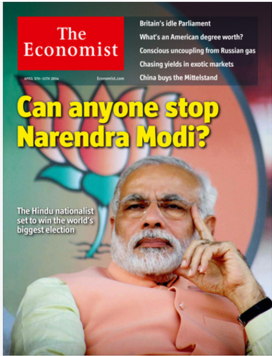
Modi’s comprehensive triumph: Lucien Rajakarunayake’s review

Lucien Rajakarunanayake …. in the Daily News, 17 May 2014

modi VICTORY CELEBRATIONS

By the time this is published, Narendra Modi, who leads the National Democratic Alliance (NDA) the centre-right alliance of political parties led by the Bharathiya Janatha Party (BJP), will be elected the next Prime Minister of India. The results so far (on Friday 16 morning) give Modi and the NDA he leads more than the 272 needed to form a single party government. This takes away the possibility of the BJP having to bargain with regional political parties, to form a government. Yet, the trend as counting continued yesterday largely in favour of the NDA – with Narendra Modi as Prime Minister from the BJP, has already resulted in intense jockeying for key Cabinet positions by leading members of the BJP such as Sushma Swaraj, Opposition leader in the Lok Sabha, Arun Jaitley, Opposition leader in the Rajya Sabha, Rajnath Singh, Chairman of the BJP, and LK Advani, the BJP’s Parliamentary Chairperson. Continue reading

1 Comment

Filed under accountability, governance, heritage, historical interpretation, life stories, performance, politIcal discourse, power politics, Rajapaksa regime, religious nationalism, security, Sinhala-Tamil Relations, sri lankan society, the imaginary and the real, unusual people, welfare & philanthophy, world events & processes

Rajiva in Q and A with Deutsche Welle: Government Reconciliaiton Programme in Tamil Areas is not People-centred

From http://rajivawijesinha.wordpress.com/2014/05/15/deutsche-welle-colombo-failing-to-engage-with-tamil-minority/#more-6932 Rajiva and waterfall Shortly after the Sri Lankan army defeated the separatist “Liberation Tigers of Tamil Eelam” in May 2009, President Mahinda Rajapaksa declared an end to the country’s bloody civil war which had lasted more than 25 years during that period claimed the lives of at least 100,000 people. Five years after the end of the separatist conflict, Sri Lanka is still struggling with reconciliation between the majority Sinhala community and the Tamil minority. International human rights organizations hold the army as well as the LTTE-separatists responsible for crimes committed during the civil war. UN High commissioner Navi Pillay has repeatedly criticized the government in Colombo for having failed to establish a “credible national process to address abuses.” As a result the UN Human Rights Council recently decided to launch an independent international investigation of human rights violations during the war. Continue reading

Leave a comment

Filed under accountability, historical interpretation, performance, politIcal discourse, power sharing, Rajapaksa regime, reconciliation, Sinhala-Tamil Relations, sri lankan society, Tamil civilians, transport and communications, welfare & philanthophy, world events & processes

Roadblocks in the Path of Reconciliation in Lanka: Ideological Cancers within the Sinhala Universe

Michael Roberts, courtesy of Groundviews, where the title is a variation on that utilized here

Way back in the 1970s the manner in which Anagārika Dharmapāla conflated the concepts of “Ceylonese” and “Sinhalese” in one of his public exhortations (Guruge 1965) led me to argue that this was a powerful tendency in Sinhalese nationalist thinking and that this unexamined tendency was a major problem in securing political accommodation that would assuage the growing dissent among the Sri Lankan Tamils (Roberts 1978). The problem remains and has been marked in the theme motif for my thuppahi site, viz., “the Sinhala Mindset” (2009a).

It was highlighted once again in my article “Pillars for the Future” in Frontline on 22 May 2009 immediately after the Government of Sri Lanka, marshalled by the Rajapaksas and UPFA, defeated the LTTE military machine (Roberts 2009b). I argued here for a multi-faceted approach directed towards dismantling the practices which encouraged the majoritarian Sinhala part to elide itself as the whole of Lanka in ways that naturalized domination. Continue reading

4 Comments

Filed under accountability, authoritarian regimes, centre-periphery relations, communal relations, cultural transmission, discrimination, governance, historical interpretation, language policies, legal issues, life stories, nationalism, patriotism, politIcal discourse, power politics, power sharing, Rajapaksa regime, reconciliation, self-reflexivity, Sinhala-Tamil Relations, sri lankan society, Tamil civilians, TNA

Julie Bishop canes Weiss

Courtesy of The Herald and Daily News

The opinion piece by Gordon Weiss (“Stance on Sri Lanka needs urgent rethink”, 4/4) includes a number of assertions that need correction. Most seriously, Mr. Weiss makes the untrue claim that during a visit to Tamil regions in Sri Lanka’s North and North-East just over 12 months ago I was given a guided tour by the Sri Lankan military. I led a delegation that included Immigration Minister Scott Morrison and Justice Minister Michael Keenan. A precondition of our visit to the Tamil regions was that we would be driven around by leading members of the Tamil National Alliance. This took place over more than two days, with no military, government or police accompanying our delegation. Tamil community representatives Our Tamil hosts were free to take us to any location of their choice and we were unhindered by any arm of the Sri Lankan government.

gordon weiss Continue reading

2 Comments

Filed under accountability, australian media, democratic measures, economic processes, gordon weiss, governance, historical interpretation, legal issues, politIcal discourse, power sharing, reconciliation, Sinhala-Tamil Relations, sri lankan society, Tamil civilians, Tamil migration, welfare & philanthophy, world affairs

New Light on the Hela Havula

Abstract of Garrett Field’s Essay in the Sri Lanka Journal of the Humanities, 2012, vol. 38: 1/2 entitled “Commonalities of Creative Resistance: Regional Nationalism in Rapiyel Tennakoon’s Bat Language and Sunil Santha’s Song for the Mother Tongue.” 

This article highlights commonalities of regional nationalism between the poetry and song of two Hela Havula (The Pure Sinhala Fraternity) members: Rapiyel Tennakoon and Sunil Santha. I reveal how their creative works advocated indigenous empowerment in opposition to Indian cultural hegemony, and against state solicitations for foreign consultation about Sinhala language planning and Sinhalese music development. Tennakoon challenged the negative portrayal of Sri Lankan characters in the Indian epic, the Ramayana, and Santha fashioned a Sri Lankan form of song that could stand autonomous from Indian musical influence. Tennakoon lashed out against the Sinhala-language dictionary office’s hire of German professor Wilhelm Geiger as consultant, and Santha quit Radio Ceylon in 1953 when the station appealed to Professor S.N. Ratanjankar, from North India, for advise on designing a national form of Sri Lankan music. Such dissent betrays an effort to define the nation not in relation to the West, but to explicitly position it in relation to India. A study of Tennekoon and Santha’s careers and compositions supplement the many works that focus on how native elite in South Asia fashioned a modern national culture in relation to the West, with an awareness of regional nationalist, non-elite communities—who also had a stake in defining the nation—struggling against inter-South Asian cultural hegemony. Continue reading

1 Comment

Filed under cultural transmission, heritage, historical interpretation, life stories, literary achievements, patriotism, politIcal discourse, sri lankan society