Category Archives: Sinhala-Tamil Relations

UNHRO Calls for Investigation of Past Killings in Lanka


Tamil and Sinhala versions attached

Sri Lanka has opportunity to break from past – Türk

GENEVA (13 August 2025) – A report published today by the UN Human Rights Office calls on Sri Lanka’s Government to seize the historic opportunity to break with entrenched impunity, implement transformative reforms, and deliver long-overdue justice and accountability for serious violations and abuses committed in the past, including international crimes.

Continue reading

1 Comment

Filed under accountability, atrocities, authoritarian regimes, centre-periphery relations, communal relations, demography, Eelam, ethnicity, governance, historical interpretation, landscape wondrous, life stories, LTTE, migrant experiences, military expenditure, military strategy, parliamentary elections, patriotism, photography, political demonstrations, politIcal discourse, population, power politics, racism, Rajapaksa regime, security, self-reflexivity, Sinhala-Tamil Relations, social justice, sri lankan society, suicide bombing, Tamil civilians, Tamil migration, tamil refugees, Tamil Tiger fighters, the imaginary and the real, trauma, truth as casualty of war, vengeance, violence of language, war crimes, world events & processes, zealotry

Neelan Tiruchelvam: An Appreciation of His Mediatory Politics

Kagusthan Ariaratnam in Groundviews, 8 August 2025, where the title  reads “Neelan Unsilenced …” while highlights here have been added by The Editor, Thuppahi

Photo courtesy of Pitasanna Shanmugathas

NEELAN: UNSILENCED is a compelling and vital documentary that successfully situates the life of Dr. Neelan Tiruchelvam within the turbulent history of the Sri Lankan conflict. Its greatest achievement is providing a nuanced entry point into the war by focusing on the non-violent, intellectual and pluralistic dimensions of Tamil resistance – a perspective often eclipsed by the narrative of armed struggle. By foregrounding Neelan’s journey, the film illuminates a leader who dedicated his life to constitutional reform and reconciliation.

   Photo courtesy of Pitasanna Shanmugathas

Continue reading

1 Comment

Filed under accountability, anti-racism, centre-periphery relations, communal relations, democratic measures, economic processes, education, Eelam, electoral structures, ethnicity, governance, historical interpretation, human rights, Indian Ocean politics, landscape wondrous, language policies, Left politics, legal issues, life stories, modernity & modernization, nationalism, NGOs, patriotism, performance, politIcal discourse, power politics, power sharing, reconciliation, self-reflexivity, Sinhala-Tamil Relations, social justice, sri lankan society, unusual people

About Sharika Thiranagama ……. Today

Rohan Gunaratna  in  FACEBOOK, August 2025

Rohan Gunaratna

nopordtesS43ag881f170i0ihg99ic5ay0ic8luml74u9m2l8 61t4Mct4a0 ·

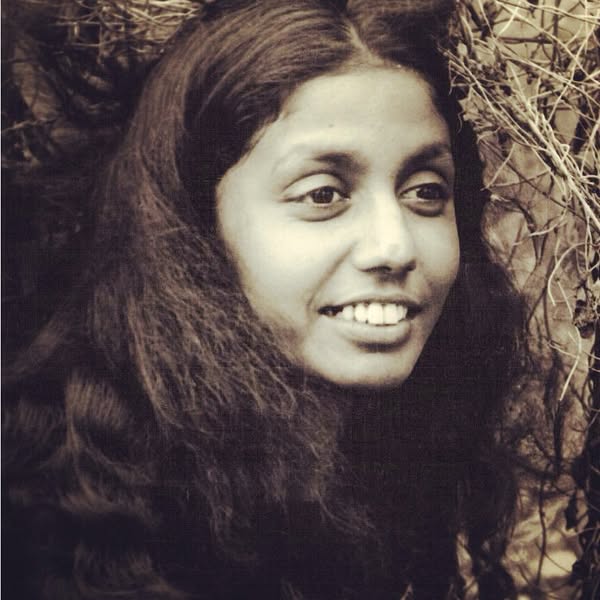
Congratulations to Sri Lankan-born American Anthropologist, Prof. Sharika Thiranagama, on winning the Davidson Prize at Cambridge University, where she was appointed a Scholar of St Johns.

Winner of Stanford University’s “Lifetime award for Academic achievement in Archaeology and Anthropology”, Sharika wrote “In My Mother’s House: Civil War in Sri Lanka” published by University of Pennsylvania Press in 2011.

Sharika

…Rajini Continue reading

2 Comments

Filed under accountability, atrocities, authoritarian regimes, communal relations, Eelam, ethnicity, governance, historical interpretation, human rights, life stories, literary achievements, performance, politIcal discourse, refugees, self-reflexivity, Sinhala-Tamil Relations, sri lankan society, Tamil migration, tamil refugees, teaching profession, trauma, unusual people, war crimes, world events & processes, zealotry

In Memoriam: Vijaya Kumaratunga

DBS Jeyaraj in 2022 at https://dbsjeyaraj.com/dbsj/?p=67620 where the title reads “Vijaya Kumaratunga: Charismatic Actor-Politician May Have Changed Nation’s Destiny” …… Posted by Administrator on 21 February 2022, 1:11 am

The political landscape of Sri Lanka seems gloomy and desolate. Most of the actors who strut about the political stage posing as visionaries and leaders are in actuality empty vessels devoid of substance. Proverbial wisdom tells us that empty vessels make most sound. This is most apparent in the cacophony of voices currently prevalent in the polity. In the words of William Butler Yeats “ The best lack all conviction, while the worst Are full of passionate intensity.” The positive dream of Sri Lanka evolving into an inclusive, plural nation is slowly turning into a numerical majoritarian hegemonic nightmare.

 Vijaya Kumaratunga in Jaffna

Continue reading

1 Comment

Filed under accountability, anti-racism, art & allure bewitching, atrocities, authoritarian regimes, centre-periphery relations, chauvinism, communal relations, Eelam, ethnicity, historical interpretation, insurrections, JVP, language policies, Left politics, life stories, nationalism, patriotism, performance, political demonstrations, politIcal discourse, self-reflexivity, Sinhala-Tamil Relations, sri lankan society, unusual people, vengeance, zealotry

Is Prabakaran NOT a Hitler! …. Goodness Gracious Me!

Shenali D. Waduge, whose slashing sarcastic essay is entitledLet’s Celebrate Prabakaran & the LTTE’s Glorious Achievements!”  ... with the highlighting being that in  the original item

A tribute to the world’s most misunderstood mass murderer and his liberation-through-terror campaign.

They say greatness demands sacrifice—and Velupillai Prabakaran understood this better than most. He wasn’t content with speeches; he offered the world a blueprint: to build a homeland, first destroy the present; to claim justice, first silence every voice—especially your own people’s; to prove your worth, leave no witness behind. For over three decades, he led with unmatched precision: dismantling democracy, eliminating dissent, recruiting children, and bleeding civilians dry—all while demanding the world call it liberation. Some build nations through unity; he built his with bunkers, landmines, cyanide, and the bones of the innocent. And still, they light candles for him. They hold commemorations in universities. UN officials attend. Foreign parliamentarians give speeches. So, in the spirit of glorifying terror, let’s not just mourn Velupillai Prabakaran—let’s celebrate the man who redefined cruelty and called it Eelam, by honoring every child stolen, every right violated, and every drop of blood shed in his name.

Continue reading

1 Comment

Filed under accountability, atrocities, authoritarian regimes, centre-periphery relations, chauvinism, Eelam, ethnicity, female empowerment, governance, historical interpretation, human rights, Indian Ocean politics, insurrections, law of armed conflict, life stories, LTTE, martyrdom, military strategy, nationalism, patriotism, politIcal discourse, power politics, prabhakaran, self-reflexivity, Sinhala-Tamil Relations, slanted reportage, sri lankan society, suicide bombing, Tamil civilians, Tamil migration, tamil refugees, Tamil Tiger fighters, terrorism, the imaginary and the real, truth as casualty of war, unusual people, vengeance, war crimes, war reportage, world events & processes

Chemmani Graves: The Site Today

Map  and Photos supplied by a friend


Continue reading

Leave a comment

Filed under accountability, atrocities, counter-insurgency, Eelam, ethnicity, historical interpretation, human rights, insurrections, law of armed conflict, legal issues, life stories, photography, politIcal discourse, self-reflexivity, Sinhala-Tamil Relations, slanted reportage, sri lankan society, Tamil civilians, trauma, truth as casualty of war, vengeance, war reportage

Chemmani Graves Site & OCHCR Finds

N. Sathiya Moorthy, in CEYLON TODAY, 1 August 2025,  with this  title “Hundred Not Out” **

For the uninitiated readers of the national media, and possibly the majority Sinhala media, Chemmani may yet to happen. But after weeks of digging up unmarked graves in Northern Jaffna town, Government officials under Court supervision have already taken out over a hundred human skeletons, including those of infants and grown-up children. The numbers are growing with each passing day of digging, which is at times halted for logistics reasons, one should assume.

Yes, only scientific studies would show if they are of recent origin, but the fact that they have been recovered from dig-outs six to eight metres deep may indicate that they are not ancient. Yet, they are historic in their own way, adding heft to the Tamils’ charges that the Armed Forces ruthlessly killed their civilians during the three-decade-long ethnic war – and are yet to be held accountable.


Continue reading

Leave a comment

Filed under accountability, atrocities, centre-periphery relations, ethnicity, historical interpretation, human rights, law of armed conflict, legal issues, life stories, politIcal discourse, self-reflexivity, Sinhala-Tamil Relations, sri lankan society, Tamil civilians, the imaginary and the real, trauma, truth as casualty of war, war reportage

Deciphering Patriotic Devotion: The Japanese in the 1940s & the Lankan Tamil People For the LTTE

Michael Roberts reproducing an article presented in a popular website during the final stages in Eelam War IV in 2008/09 within the context TODAY of a horrendous war-situation in Palestine and its environs — the website being GROUNDVIEWS: …………….. https://groundviews.org/2009/04/21/ltte-and-tamil-people-i-preamble/ ….. This article was just the first essay in a four-part enterprise.**

LTTE and Tamil people, I: preamble,” http://www.groundviews.org, 21 April 2009.

This set of essays on “LTTE and Tamil People” submitted to Groundviews is a sequel to the four articles on “Suicidal Political Action” reproduced in http://www.transcurrents.com from 2 April onwards. Both sets of essays are interconnected and involve a measure of repetition because they are set out as separate articles. All of them are a product of a comparative survey that I embarked on about five years ago: namely, reviewing the cultural ingredients which have motivated the projects of the jihadists (holy warriors) and mujahideen (fighters for cause) on the one hand and, on the other, the

Continue reading

Leave a comment

Filed under accountability, atrocities, centre-periphery relations, Eelam, ethnicity, governance, heritage, human rights, island economy, landscape wondrous, legal issues, life stories, LTTE, martyrdom, military strategy, nationalism, Pacific Ocean issues, patriotism, political demonstrations, politIcal discourse, power politics, psychological urges, self-reflexivity, Sinhala-Tamil Relations, sri lankan society, Tamil civilians, tamil refugees, Tamil Tiger fighters, trauma, unusual people

Is Sri Lanka permanently Kota Uda?

Jehan Perera in The  Island, 29 July  2025, where the title runs thus“Engagement is essential for national progress”

Chandrika Bandaranaike Kumaratunga

Continue reading

3 Comments

Filed under accountability, governance, historical interpretation, island economy, legal issues, parliamentary elections, performance, politIcal discourse, power politics, self-reflexivity, Sinhala-Tamil Relations, social justice, sri lankan society, working class conditions, world events & processes

In Appreciation of James T. Rutnam

Sachi Sri Kantha, whose preferred title is James T Rutnam (1905-1988): Noted Bibliophile and a Valued Mentor” with the highlighting in colour being impositions from The Editor Thuppahi

Introduction

My destiny to meet and interact with James T Rutnam came in the aftermath of the August 1977 anti-Tamil riots. Previously, I had written a little about the anti-Tamil riots that engulfed the island then, and my initial attempts to make a grade as a writer in English. [Please check this link. https://sangam.org/s-p-amarasingam-1977-anti-tamil-pogrom/].

I wrote to Mr. S.P. Amarasingam, the editor of the Tribune (Colombo). At that time, I was unaware that James Rutnam was an influential contributor to the Tribune, since its inception in 1954.

Continue reading

1 Comment

Filed under accountability, anti-racism, art & allure bewitching, authoritarian regimes, centre-periphery relations, citizen journalism, communal relations, cultural transmission, economic processes, education, electoral structures, ethnicity, historical interpretation, language policies, Left politics, legal issues, life stories, nationalism, politIcal discourse, power politics, racism, riots and pogroms, security, self-reflexivity, Sinhala-Tamil Relations, social justice, sri lankan society, tamil refugees, trauma, travelogue, unusual people