Category Archives: refugees

Shattered Lives in Sri Lanka’s Wars: Several Lesser-Known Strands

Dennis McGilvray in ASIAN  ETHNOLOGY Vol 73, 1&2, pp 348-49, reviewing  Sharika Thiranagama, In My Mother’s House: Civil War in Sri Lanka. Philadelphia PA: University of Pennsylvania Press, 2011

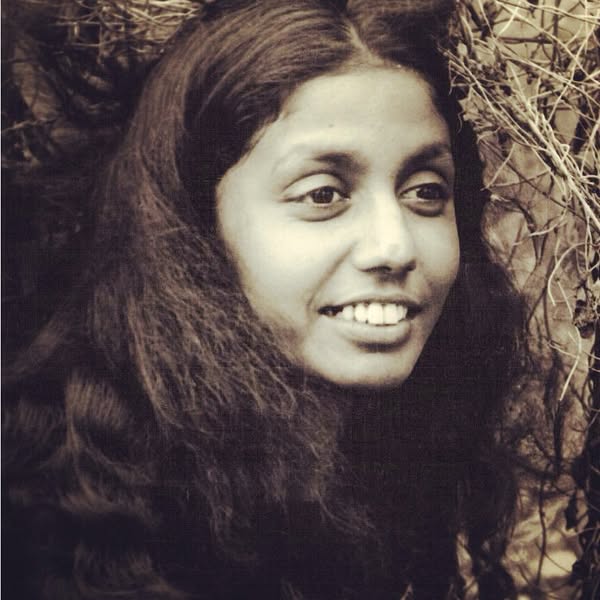
The title of this book points to the author’s personal connection with the decades-long Sri Lankan ethnic conflict, which ended abruptly in 2009 after much of the manuscript had been written. Her mother was a Tamil academician and human rights activist assassinated by the LTTE (Liberation Tigers of Tamil Eelam) in 1986 in Jaffna because of her outspoken condemnation of brutalities committed by the Tamil Tigers as well as by the Sri Lankan armed forces. This volume offers a scholarly analysis of the deep effects of the civil war upon a generation of displaced Sri Lankan Tamils and Tamil-speaking Muslims, but the author’s family history will be immediately recognized by many readers familiar with Sri Lanka.

Continue reading

1 Comment

Filed under accountability, asylum-seekers, atrocities, authoritarian regimes, citizen journalism, communal relations, demography, ethnicity, Fascism, historical interpretation, human rights, IDP camps, insurrections, language policies, life stories, LTTE, migrant experiences, Muslims in Lanka, outmigration, pilgrimages, politIcal discourse, power politics, prabhakaran, refugees, religiosity, self-reflexivity, Sinhala-Tamil Relations, social justice, sri lankan society, Tamil civilians, Tamil migration, tamil refugees, Tamil Tiger fighters, teaching profession, terrorism, trauma, truth as casualty of war, unusual people, vengeance, war crimes, war reportage, women in ethnic conflcits, world events & processes

Long-Distance Tamil Nationalism in Toronto

Sharika Thiranagama …. Abstract of her refereed article in the American Anthropologist, Vol. 116, No. 2 (JUNE 2014), pp. 265-278 (14 pages) …. where the title reads thus: “Making Tigers from Tamils: Long-Distance Nationalism and Sri Lankan Tamils in Toronto”

This article discusses the Sri Lankan Tamil diaspora in Toronto and its relationship to the Tamil separatist group, the Liberation Tigers of Tamil Eelam (LTTE). Taking the case of the Sri Lankan Tamils, oft-cited as the example par excellence of long-distance nationalism, I argue against naturalizing diasporic ethnonationalism to investigate instead how diasporas are fashioned into specific kinds of actors. I examine tensions that emerged as an earlier elite Tamil movement gave way to the contemporary migration of much larger class-and caste-fractured communities, while a cultural imaginary of migration as a form of mobility persisted. I suggest that concomitant status anxieties have propelled culturalist imaginations of a unified Tamil community in Toronto who, through the actions of LTTE-affiliated organizations, have condensed the Tigers and their imagined homeland, Tamil Eelam, into representing Tamil community life. While most Tamils may not have explicitly espoused LTTE ideology, as a result of the LTTE becoming the backbone of community life, Tamils became complicit with and reaffirmed the LTTE project of defending “Tamilness” militarily in Sri Lanka and culturally in Toronto. I suggest that the self-presentation of diasporic communities should be analyzed within specific histories, contemporary conflicts and fractures, and active mobilizing structures.

Rajini Thiranagama Continue reading

Leave a comment

Filed under accountability, anti-racism, art & allure bewitching, asylum-seekers, atrocities, authoritarian regimes, centre-periphery relations, communal relations, discrimination, disparagement, education, ethnicity, female empowerment, historical interpretation, human rights, insurrections, language policies, Left politics, life stories, literary achievements, migrant experiences, nationalism, patriotism, politIcal discourse, power politics, racism, refugees, religiosity, security, self-reflexivity, Sinhala-Tamil Relations, social justice, sri lankan society, Tamil migration, tamil refugees, Tamil Tiger fighters, teaching profession, trauma, travelogue, unusual people, vengeance, war crimes, war reportage, world events & processes, zealotry

The Ethnic Abyss in Sri Lanka Still Remains

Dr S.  I. Keethaponcalan,in where  the title reads Sri Lanka’s Ethnic Conflict: From Reconciliation To Reescalation – Analysis,” … pubd on 21 September 2023 at EURASIA REVIEW ++

The national discourse in Sri Lanka moved from conflict termination to reconciliation with the end of the war in 2009. This essay argues that the concerned parties should shift the discourse from reconciliation to de-escalation because (1) the reconciliation project failed, and (2) the ethnic conflict shows signs of reescalation. It also argues that the possibility of anti-Tamil riots in the future cannot be dismissed.

               Reconciliation Failed

When the war ended in 2009, domestically, none of the parties were interested in reconciliation. The Tamils had more severe problems to deal with. For example, mourning their dead, finding disappeared members of their families, and resettling the internally displaced community members were some of the immediate issues the Tamil community encountered. Reconciling with the Sinhalese was the last thought in their minds. Therefore, they were not concerned about postwar reconciliation. None of the Tamil leaders discussed the need to promote reconciliation.

Continue reading

1 Comment

Filed under accountability, centre-periphery relations, communal relations, discrimination, disparagement, doctoring evidence, ethnicity, governance, historical interpretation, human rights, IDP camps, life stories, LTTE, NGOs, politIcal discourse, propaganda, refugees, rehabilitation, self-reflexivity, Sinhala-Tamil Relations, slanted reportage, sri lankan society, Tamil civilians, tamil refugees, Tamil Tiger fighters, trauma, truth as casualty of war, war reportage, world events & processes

Lankan Migrants to Australia in Limbo

Lisa McGregor in ABC.Net.Au,  15 August 2025, bearing this  title “Former immigration minister Alex Hawke calls for action on bridging visa backlog with thousands left in limbo”

Rathy Barthlote and her two daughters live in fear of their future. (ABC News: Simon Winter)

A former Coalition immigration minister has joined calls for the government to resolve the status of thousands of asylum seekers on bridging visas. A group of around 8,000 asylum seekers who arrived between 2012 and 2013 and whose claims were rejected under a now abolished system remain in legal limbo. The Department of Home Affairs says people with new, credible claims relating to their asylum applications may request ministerial intervention.

Continue reading

Leave a comment

Filed under accountability, asylum-seekers, australian media, centre-periphery relations, communal relations, cultural transmission, economic processes, ethnicity, historical interpretation, human rights, legal issues, life stories, outmigration, politIcal discourse, refugees, self-reflexivity, sri lankan society, trauma, travelogue, truth as casualty of war, world events & processes

Hahndorf in the Adelaide Hills: German Settlers From 1839 On ….

Keith Conlon in a Genealogical Society of Queensland – GSQ’s post =deospnoStrg8 r42uti9lf3m8pgff0il26tl5f1tag2f57flti74h033aA5t · … entitled  “From Prussa to Hahndorf in South Australia. Thanks to Keith Conlon”

The end of an epic pioneer voyage:  it began in Silesia, Prussia, for the ‘Old Lutheran’ religious refugees who founded Hahndorf in South Australia in August 1839.

John Ford waterccolour    


Monument Australia Continue reading

Leave a comment

Filed under architects & architecture, Australian culture, centre-periphery relations, colonisation schemes, cultural transmission, economic processes, ethnicity, European history, heritage, historical interpretation, landscape wondrous, life stories, migrant experiences, outmigration, refugees, religiosity, transport and communications, travelogue, world events & processes

About Sharika Thiranagama ……. Today

Rohan Gunaratna  in  FACEBOOK, August 2025

Rohan Gunaratna

nopordtesS43ag881f170i0ihg99ic5ay0ic8luml74u9m2l8 61t4Mct4a0 ·

Congratulations to Sri Lankan-born American Anthropologist, Prof. Sharika Thiranagama, on winning the Davidson Prize at Cambridge University, where she was appointed a Scholar of St Johns.

Winner of Stanford University’s “Lifetime award for Academic achievement in Archaeology and Anthropology”, Sharika wrote “In My Mother’s House: Civil War in Sri Lanka” published by University of Pennsylvania Press in 2011.

Sharika

…Rajini Continue reading

2 Comments

Filed under accountability, atrocities, authoritarian regimes, communal relations, Eelam, ethnicity, governance, historical interpretation, human rights, life stories, literary achievements, performance, politIcal discourse, refugees, self-reflexivity, Sinhala-Tamil Relations, sri lankan society, Tamil migration, tamil refugees, teaching profession, trauma, unusual people, war crimes, world events & processes, zealotry

Karuna in Britain in 2008: The Legal ‘Knots’

DBS Jeyaraj, in the Financial Times, 28 March 2025 where the title reads How UK-sanctioned “Col” Karuna was deported from Britain 17 years ago”

Vinayagamoorthy Muralitharan alias “Col” Karuna 

After the UK sanctions were imposed the Tamil newspaper “Thamilan” interviewed Karuna about it. Karuna was dismissive saying that the UK sanctions would not affect him or his politics in any way. Karuna denied that he was responsible for any human rights violation. Speaking further he said that if he was guilty of any human rights violation, the UK could have penalised him when he sought refugee status there. “Why didn’t they do it then? Instead they sent me back home safely,” pointed out Karuna. He went on to say that he was not bothered by the UK sanctions.

It is indeed ironic that a man who was deported from the UK years ago has now been forbidden from travelling to the UK due to the sanctions imposed in a different context. Is Karuna being honest in saying that the UK authorities deported him instead of penalising him for alleged human rights violations because he was not guilty of any such offence? What were the circumstances under which he went to the UK 17 years ago and what exactly happened to him then?

Continue reading

Leave a comment

Filed under accountability, asylum-seekers, authoritarian regimes, Britain's politics, centre-periphery relations, ethnicity, governance, historical interpretation, human rights, legal issues, life stories, LTTE, politIcal discourse, refugees, Sinhala-Tamil Relations, sri lankan society, Tamil migration, tamil refugees, travelogue, unusual people, world events & processes

A Poignant Tale … “I Am Not Lighting A Candle Today”

Buddhika Dassanayake, …. reflections presented on 26th December 2006

Its been two years since a friend called one morning, as we were studying for exams, to ask why lamp-posts were shaking. Two years since another friend called from Galle Hospital; tired, depressed, fiercely determined to see things through, utterly helpless. Two years since we heard that Tharini was missing; that the place we stayed at the last time we visited Unawatuna had disappeared along with the occupants.


Murali , Mahela & Kumar at a refugee camp on the east coast …having taken emergency supplies

Continue reading

Leave a comment

Filed under accountability, centre-periphery relations, charitable outreach, citizen journalism, communal relations, cultural transmission, ethnicity, heritage, historical interpretation, landscape wondrous, life stories, patriotism, performance, politIcal discourse, refugees, rehabilitation, self-reflexivity, Sinhala-Tamil Relations, sri lankan society, tolerance, trauma

Dr Narendran Rajasingham: A Grounded Sri Lankan Tamil Patriot

Michael Roberts

Naren Rajasingham was a trifle junior to me at Peradeniya University when he pursued a Vet/Science Degree before proceeding to postgraduate qualifications in the same field. It was only when I was fully enmeshed in researching the Eelam Wars and visiting Colombo with some frequency that I got to know him. My memory is imprecise in its notation of time; and I cannot fix precise dates to our exchanges.

Continue reading

2 Comments

Filed under accountability, anti-racism, authoritarian regimes, centre-periphery relations, communal relations, constitutional amendments, economic processes, education, Eelam, ethnicity, governance, historical interpretation, human rights, IDP camps, law of armed conflict, life stories, LTTE, military strategy, patriotism, politIcal discourse, power politics, prabhakaran, Rajapaksa regime, refugees, rehabilitation, security, self-reflexivity, Sinhala-Tamil Relations, sri lankan society, tolerance, travelogue, truth as casualty of war, world events & processes

Noel Nadesan’s Critical Reflections on the Sri Lankan Tamils’Armed Struggle

Rajeswary Balasubramaniam, reviewing Odyssey of War by Noel Nadesan **

The ‘Odyssey of War’, a novel by Dr. Noel Nadesan published by Sarasavi Publishers, reflects the struggle for the liberation of Tamils in Sri Lanka (1977-2009) and the failure of interwoven world politics. The novel illustrates how upper-class Tamils overcame caste, religion, and regions and united for the liberation of Tamils, but went beyond the spirit of liberation, migrated, and eventually made the liberation struggle of Tamils a profitable business.

Continue reading

1 Comment

Filed under accountability, anti-racism, asylum-seekers, atrocities, authoritarian regimes, centre-periphery relations, communal relations, constitutional amendments, counter-insurgency, demography, discrimination, Eelam, ethnicity, governance, historical interpretation, Indian Ocean politics, insurrections, language policies, life stories, LTTE, military strategy, patriotism, politIcal discourse, power politics, prabhakaran, refugees, security, self-reflexivity, Sinhala-Tamil Relations, sri lankan society, Tamil migration, tamil refugees, Tamil Tiger fighters, terrorism, trauma, truth as casualty of war, unusual people, vengeance, war reportage, world events & processes